
(7% discount is applied at checkout)
Cart is empty
Your go-to destination for cutting-edge server products
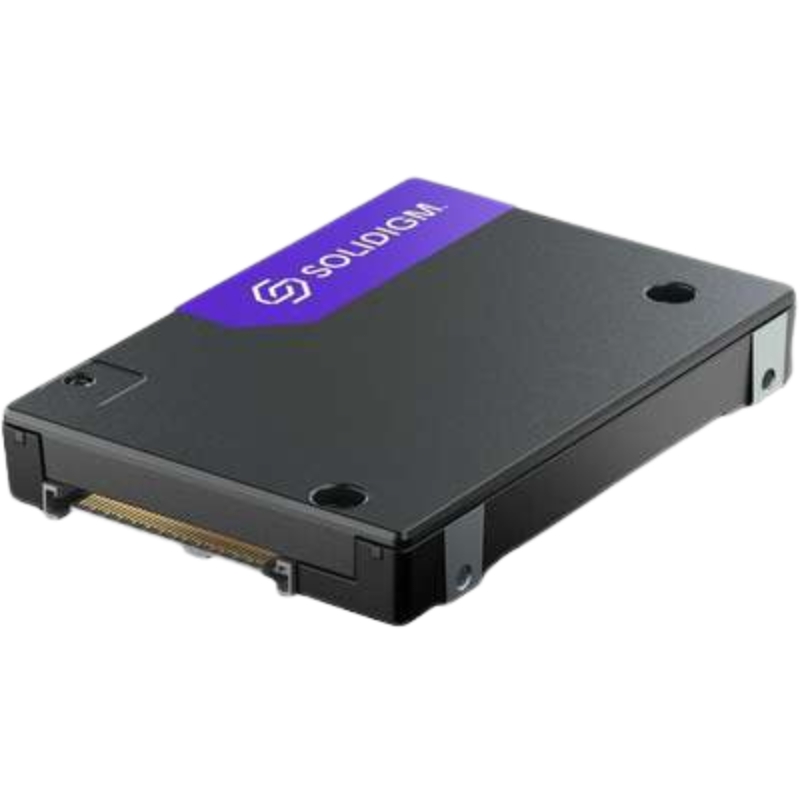
Solidigm SB5PH27E128T001 D7-PS1030 Series 12.8TB SFF NVMe PCI-Express 5.0 X4 V7 TLC Generic No Opal Single U.2 15mm Solid State Drive. New (Box Not Sealed) MOQ-5
The SB5PH27E128T001 from the D7-PS1030 family is a high-density solid-state drive engineered for demanding data-center workloads. With 12.80 TB of usable flash capacity and a PCI Express NVMe interface, it delivers fast access times and consistent throughput for latency-sensitive applications.
U.2 15mm — a robust enterprise form factor designed for hot-swap bays and rack servers, offering high capacity in a 2.5-inch compatible footprint.
The Solidigm SB5PH27E128T001—part of the D7-PS1030 family—is a purpose-built enterprise NVMe solid state drive designed to meet the intense throughput, IOPS, endurance and reliability requirements of modern cloud, hyperscale and enterprise data centers. This model pairs a very large 12.8TB user capacity in a short 2.5-inch / U.2 15mm small form factor with the bandwidth headroom of PCI-Express 5.0 x4 and modern V7 TLC 3D NAND to deliver a blend of sustained sequential bandwidth and high random I/O performance that suits demanding mixed workloads, metadata logging, OLTP databases, and AI/ML data pipelines.
The technical pedigree of the D7-PS1030 series emphasizes sustained throughput and robust random IOPS at enterprise queue depths. Drives in this family leverage PCI-Express 5.0 x4 links to provide markedly higher sequential throughput than PCIe 4.0 designs, enabling faster rebuilds, accelerated bulk data movement, and shorter time-to-data for analytics pipelines. Manufacturers and resellers list maximum sequential read throughput figures that reflect this capability, and real-world performance under mixed-IO workloads tends to show notable gains in throughput-bound operations.
Vendor product pages and datasheets for the D7-PS1030 family report high sequential throughput and strong random I/O figures, with enterprise random read and write IOPS scaled for 4KB block sizes and high queue depths—numbers that translate to lower transaction latency and faster response under database, caching, and metadata workloads. For vendors and system designers, these metrics drive placement decisions: drives that deliver both high sequential bandwidth and high small-block IOPS are rarely specialized to only one workload, making them a versatile choice across tiers.
The SB5PH27E128T001 offers 12.8TB of usable capacity in a single U.2 device, enabling high density configurations where administrators need fewer devices to reach petabyte scale. Large capacity devices simplify capacity planning, decrease network and controller overhead, and reduce the number of device-level failures per rack by consolidating storage. Endurance for D7-PS1030 series drives is positioned as mid-endurance (ME), with endurance ratings and PBW (petabytes written) engineered for data center endurance profiles rather than consumer desktop workloads. These endurance characteristics make the drives suitable for heavy read-intensive and mixed workloads while still providing reasonable write endurance for metadata and transactional logging.
Drive endurance is commonly expressed as drive writes per day (DWPD) over a warranty period and total petabytes written. Enterprise SSDs such as the D7-PS1030 are specified to support multi-year deployment cycles with predictable behavior; administrators should align DWPD figures with workload write intensities and factor in spare capacity, overprovisioning, and RAID/erasure coding policies to plan replacement and refresh cycles. When used in environments that frequently write large volumes of telemetry, logs, or analytics checkpoints, consider tiering cold or archival data to high-capacity HDDs or lower-cost SSD tiers where appropriate to preserve the endurance headroom of these high-performing PCIe 5.0 drives.
The SB5PH27E128T001 is commonly available in the U.2 15mm 2.5-inch form factor, a widely adopted enterprise standard for hot-swappable NVMe drives. This retains compatibility with a broad ecosystem of server backplanes, drive sleds, and enterprise storage enclosures designed for multi-drive trays. Compared with E3.S or E1.S hyperscaler form factors, U.2 is a conservative choice for operators who prioritize easy serviceability and existing infrastructure compatibility. System builders must check backplane clearances and bay depth when deploying 15mm devices, but the U.2 format generally provides plug-and-play integration in data center racks that already support 2.5-inch NVMe devices.
High-density enterprise NVMe drives demand thoughtful power and thermal management. Although PCIe 5.0 enables higher bandwidth, higher transfer rates can also increase average power draw under heavy sustained transfers; server chassis should therefore ensure adequate airflow and thermal dissipation across all drive bays. Enterprise drives like this model are typically designed with thermal throttling and telemetry features to protect data integrity; however, to prevent frequent throttling and to sustain peak throughput, administrators should pair them with server cooling strategies that focus on per-bay airflow and ambient temperature control. Vendors often publish thermal guidance and operating temperature envelopes in product briefs and datasheets—review those documents before large-scale deployment.
In active-active clustered databases, place these drives on nodes that serve high metadata or hot-data volumes to reduce cross-node latency and improve transaction throughput. For converged infrastructure, use them as the fast tier for write-heavy caches that feed slower, larger capacity tiers. In hyperconverged designs, these capacity-dense NVMe drives reduce the number of drives per node required to achieve a given effective capacity, simplifying maintenance and lowering the number of firmware and hardware variables to manage. When planning RAID or erasure coding stripe widths, remember the large capacity per device will influence rebuild times; design rebuild policies and spare pools accordingly.
Some SKUs in this family are offered with Opal encryption support (self-encrypting drive features) while others are marked “No Opal”—meaning they do not include hardware Opal SED functionality. The SB5PH27E128T001 is frequently listed as a “Generic No Opal” SKU in reseller catalogs, which affects on-device encryption options. When hardware encryption is a procurement requirement—either due to regulatory or corporate policy—confirm the exact SKU and whether it includes Opal/SED support or whether encryption will need to be handled at the controller or software layer. Always verify security features with the vendor before purchase.
For drives without hardware Opal support, encrypt-at-rest can be achieved with software encryption layers, drive-encryption within storage arrays, or with controllers that perform inline encryption. Each of these approaches has trade-offs in performance and manageability; evaluate them against your key management policy and performance SLAs. If minimizing performance overhead is crucial, test your chosen encryption approach under representative load to measure CPU and I/O impact.
Operational readiness includes: establishing SMART and telemetry baselines on new devices, scripting automated health-checks, documenting firmware revision pins for server fleets, defining thresholds for endurance and media errors, and rehearsing a replacement and rebuild plan. Maintain a change log for drive firmware and hardware swaps so that you can correlate performance regressions or failures with specific updates. In many cases, manufacturers provide field notices or PCNs for firmware changes—monitor those notices to avoid unexpected compatibility issues during maintenance windows.


 Contact Us
 Information
 Catalog
 Solid State Drives (SSD)
 Network Switches
 Hard Disk Drives
 HBA & Controllers
 PC & Servers
 PC & Server Memory
 CPU & Processors
 Network Routers
 Power Supplies
 Tape Drives & Libraries
 Network Devices
 Computer & Network Cables