Your go-to destination for cutting-edge server products
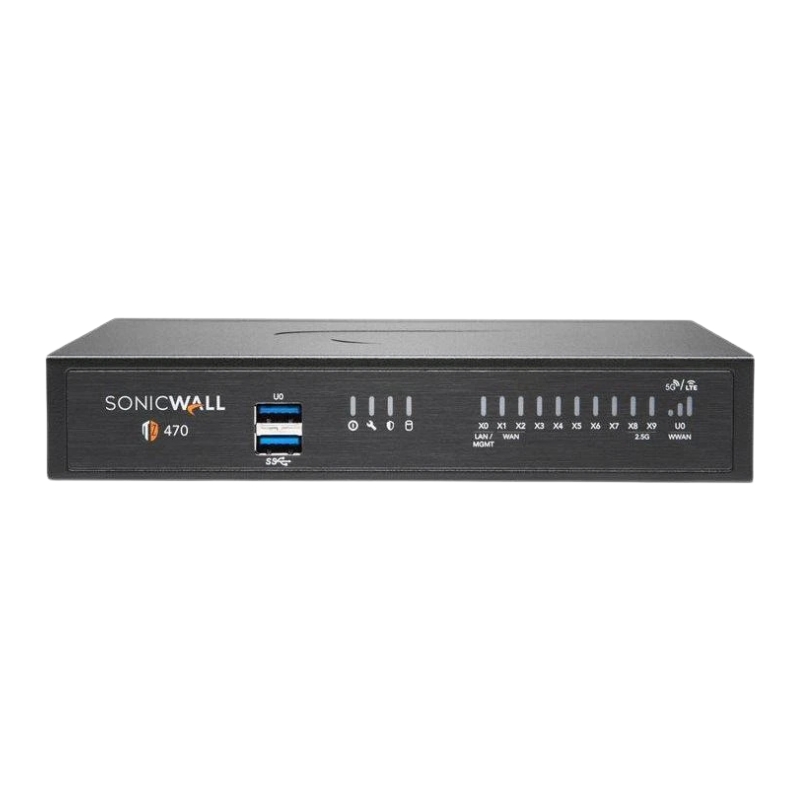
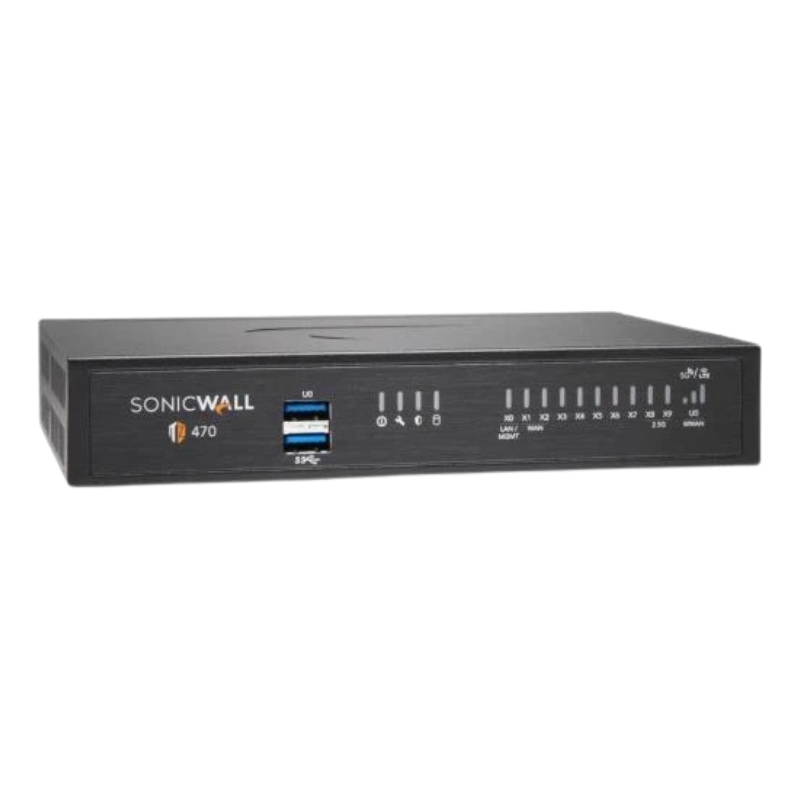
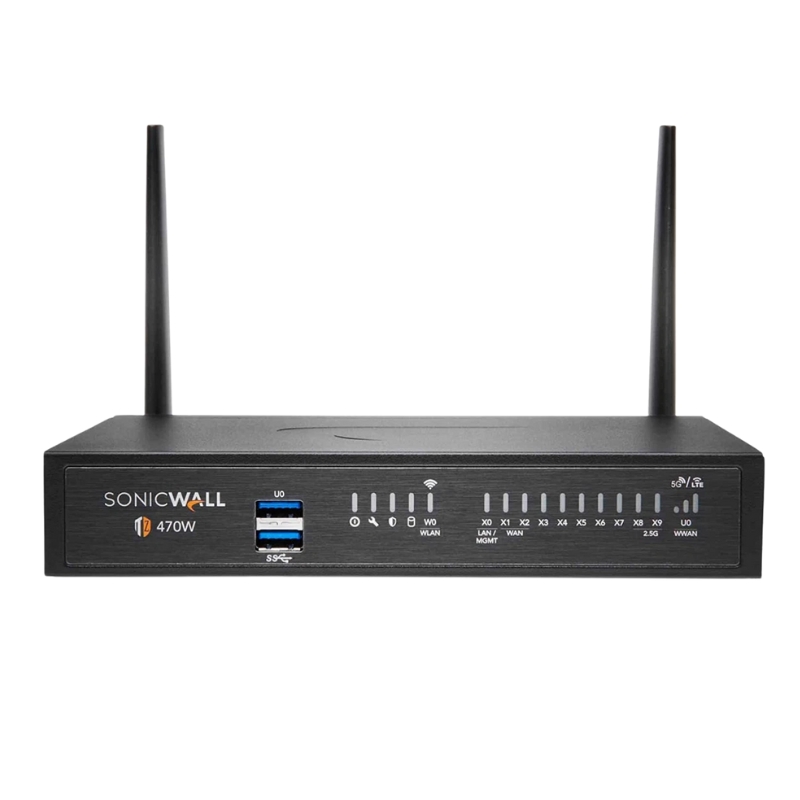
02-SSC-6792 Sonicwall Tz470 2.5 Gbps Gigabit Ethernet Security Appliance

02-SSC-6792
* Product may have slight variations vs. image
Hover on image to enlarge

Brief Overview of 02-SSC-6792

Sonicwall 02-SSC-6792 Tz470 2.5 Gbps Gigabit Ethernet Suite-next-generation Firewall Network Security Appliance. Factory-Sealed New in Original Box (FSB) With 3 Years Warranty

$2,335.50
$1,710.00
You save: $625.50 (27%)
Ask a question
Price in points: 1710 points
+
Quote

Additional 7% discount at checkout

SKU/MPN02-SSC-6792Availability✅ In StockProcessing TimeUsually ships same day ManufacturerSonicWALL Manufacturer Warranty3 Years Warranty from Original Brand Product/Item ConditionFactory-Sealed New in Original Box (FSB) ServerOrbit Replacement Warranty1 Year Warranty
Google Top Quality Store Customer Reviews
Our Advantages
Payment Options
  • — Visa, MasterCard, Discover, and Amex
  • — JCB, Diners Club, UnionPay
  • — PayPal, ACH/Bank Transfer (11% Off)
  • — Apple Pay, Amazon Pay, Google Pay
  • — Buy Now, Pay Later - Affirm, Afterpay
  • — GOV/EDU/Institutions PO's Accepted 
  • — Invoices
Delivery
  • — Deliver Anywhere
  • — Express Delivery in the USA and Worldwide
  • — Ship to -APO -FPO
  • For USA - Free Ground Shipping
  • — Worldwide - from $30
Description

SonicWall 02-SSC-6792 TZ470 Firewall – Advanced Security Solution

The SonicWall 02-SSC-6792 TZ470 delivers enterprise-grade security features in a compact desktop form factor. Designed for businesses that require high-speed protection and reliable performance, this next-generation firewall integrates advanced filtering, VPN capabilities, and superior throughput, ensuring robust network safety against modern cyber threats.

Key Product Attributes

  • Device Type: Firewall security appliance
  • Manufacturer Part Number: 02-SSC-6792
  • Model: TZ470
  • Form Factor: Desktop-based design
  • Networking Technology: Ethernet-based connectivity
  • Maximum Data Transfer Rate: 2.5 Gbps

Networking Capabilities

Engineered with cutting-edge Gigabit Ethernet technology, the TZ470 ensures seamless data traffic handling with reduced latency. Its multi-port structure provides flexible connectivity for diverse business requirements.

Supported Protocols

  • Gigabit Ethernet transport layer
  • Remote management via SNMP, SSH, and DHCP
  • Support for 13 available ports to handle network devices

System Requirements

This firewall operates on the SonicOS 7 platform, offering an intuitive interface for administrators. The advanced operating system provides policy-driven controls, enhanced monitoring, and real-time threat intelligence.

Performance Metrics

The SonicWall TZ470 ensures secure connectivity without compromising on speed. High throughput allows businesses to manage data-intensive applications effectively while maintaining security.

Throughput Specifications

  • VPN IPsec Performance: Up to 1.5 Gbps
  • IPS Inspection Speed: 2 Gbps
  • Maximum Firewall Speed: 2.5 Gbps

Interface Options

Designed for versatility, the TZ470 provides multiple interfaces to support various operational setups including fiber, copper, and USB connections.

Available Interfaces

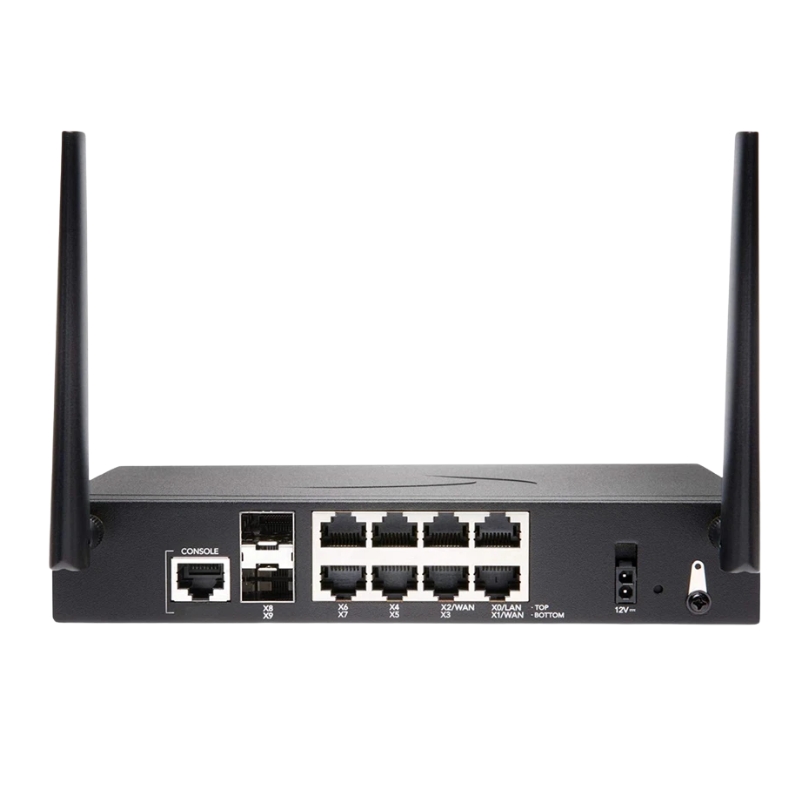
  • 8 × 1 GbE ports for standard networking
  • 2 × 2.5G SFP+ for fiber-based high-speed links
  • 2 × USB 3.0 ports for external device integration
  • 1 × console port for administration

Power and Energy Efficiency

The TZ470 is engineered with energy efficiency in mind, ensuring reliable operation with minimal power consumption. This feature is particularly beneficial for organizations seeking cost-effective, eco-friendly solutions.

Electrical Details

  • Power Supply: Internal
  • Maximum Consumption: 19.95 Watts
  • Voltage Support: 100–240 VAC, 50–60Hz

Business Benefits

Organizations adopting the SonicWall TZ470 can achieve a balance between performance, manageability, and advanced security features. It is particularly suited for small to mid-sized enterprises that require scalable security without unnecessary complexity.

Highlighted Advantages

  • High-speed firewall with next-generation security
  • Flexible management through multiple protocols
  • Energy-efficient with low operational costs
  • Comprehensive protection via Essential Protection Suite
  • Multiple ports for flexible deployment strategies

Ideal Use Cases

The SonicWall 02-SSC-6792 TZ470 is tailored for organizations requiring reliable network defense, including financial services, educational institutions, healthcare providers, and distributed offices. It is optimized to secure cloud applications, IoT environments, and high-bandwidth operations.

Recommended Deployment Environments
  • Branch offices with high traffic demands
  • Educational networks requiring strict policy enforcement
  • Healthcare facilities managing sensitive data
  • Retail stores with POS system integrations
  • SMBs seeking cost-effective enterprise-grade protection

SonicWall 02-SSC-6792 TZ470 — Product overview and category scope

The SonicWall 02-SSC-6792 TZ470 2.5 Gbps Gigabit Ethernet Suite-next-generation Firewall Network Security Appliance category covers a focused range of next-generation perimeter and branch firewalls engineered for small-to-medium businesses, distributed enterprises, branch offices, and retail deployments that demand high-throughput security without sacrificing manageability. This category page description explains the appliance’s position in modern networks, highlights its key technical and operational attributes, and lays out practical guidance for selection, deployment, and long-term management.

What the TZ470 category represents

Products in this category deliver multi-layered protection—combining traditional packet inspection and access control with application awareness, intrusion prevention, advanced malware detection, and secure remote access. The term “Suite-next-generation” emphasizes bundled security services and centralized management features that are frequently offered as subscription bundles or license-based suites. Expect focused capabilities that accelerate secure connectivity at up to 2.5 Gbps—a throughput class appropriate for many modern branch networks and small datacenter edge points.

Core positioning

This appliance class is positioned between consumer-grade routers and high-end data center firewalls: perfect when business continuity, compliance, and secure remote connectivity are prioritized but the environment does not justify large chassis or modular security platforms. The TZ470 category supports both hardware-accelerated packet handling and deep protocol inspection to protect against evolving threats while maintaining low latency for critical applications.

Key features and technical highlights

Below are the most important functional areas buyers and administrators evaluate when comparing SonicWall TZ470 listings and subcategories.

Performance and throughput

- 2.5 Gbps class throughput: Designed to handle multi-gigabit broadband links and aggregation of multiple site connections. Throughput figures are frequently advertised as maximums under ideal conditions; real-world performance depends on enabled features such as TLS/SSL inspection and deep packet inspection (DPI).

- Low-latency packet processing: Optimized by hardware accelerators and ASICs for fast stateful inspection, important for VoIP, video conferencing, and interactive applications.

Security functionality

  • Next-Generation Firewall (NGFW) — application-aware policies, user identity integration, and fine-grained access controls.
  • Intrusion Prevention System (IPS) — signature-based and behavioral detection to block network attacks.
  • Deep Packet Inspection — visibility into application payloads for threat detection and policy enforcement.
  • Anti-malware and sandboxing — cloud and/or on-prem threat analysis for suspicious files (often available as part of a security services bundle).
  • Secure Remote Access / VPN — SSL and IPSec VPNs for encrypted site-to-site and user-to-site connectivity.
  • Content filtering and application control — URL filtering, category-based web control, and granular app policies for productivity and compliance.

Connectivity and interfaces

The TZ470 category typically includes multiple gigabit Ethernet ports and faster uplink options. Look for flexible WAN ports, support for link aggregation (LACP), dedicated management interfaces, and USB or SFP options for resilience and fiber connectivity.

Management and visibility

Centralized management consoles, real-time logging, analytics dashboards, and easy firmware updates are standard expectations. Many deployments leverage a cloud-based console or SonicWall’s management suites for policy templating across multiple TZ470 devices.

Deployment scenarios and use cases

Branch office perimeter protection

For branch offices with medium to high user counts, the TZ470 provides a robust mix of performance and advanced security. Its ability to inspect traffic while preserving application performance makes it ideal for branches handling sensitive customer data, point-of-sale systems, or unified communications.

Retail stores and point-of-sale (PoS) environments

Retail environments require strong segmentation, PCI-awareness, and reliable connectivity. TZ470-class appliances facilitate network segmentation between PoS terminals, guest Wi-Fi, and back-office systems; enforce strict access rules; and maintain audit trails required for compliance.

Remote workforce and site-to-site VPNs

When the remote or hybrid workforce needs secure access to corporate resources, this appliance category supports robust VPN features—site-to-site tunnels for branch interconnectivity and client VPNs for remote workers—often combined with multifactor authentication and granular access policies.

Small datacenter edge and aggregation points

Organizations consolidating internet traffic or providing edge security for small datacenters benefit from the appliance’s balance of throughput and inspection features. When properly licensed, TZ470 devices can protect east-west and north-south traffic and integrate with logging and SIEM tools.

Licensing, bundles, and subscription services

The “Suite” in the product title signals bundled licensing: a mix of firewall subscriptions, intrusion prevention, anti-spam, content filtering, advanced threat protection, and support. Subscription tiers vary; selecting the right combination affects both protection level and total cost of ownership.

Common license components

  • Gateway Anti-Virus and Anti-Spyware — signature and heuristics-based scanning to detect known threats.
  • Intrusion Prevention — continual signature updates to stop exploits and network-based attacks.
  • Application Control — categorization and control of web and cloud apps.
  • Content Filtering — URL categorization for web usage policies and regulatory compliance.
  • Advanced Threat Protection (ATP) — sandboxing and cloud-based analysis for zero-day detection.
  • VPN and SSL inspection licenses — to enable encrypted traffic inspection and secure remote access.
  • Support and firmware updates — different levels (basic, professional, premier) with varying RMA and SLA options.

Choosing the right bundle

Match the subscription to your risk profile and regulatory requirements. Organizations handling regulated data will benefit from ATP and content filtering, while budget-conscious deployments may select a more limited set of services and extend protection with third-party endpoint controls.

Hardware considerations and physical footprint

While the TZ470 category is compact compared to modular devices, consider rack-mounting options, ventilation, and power redundancy needs. Many models are designed for desktop or 1U rack use—verify power input (AC voltage range) and thermal specifications when planning equipment rooms or cabinets.

Physical installation checklist

  • Confirm required port types (RJ-45, SFP) and plan uplink cabling.
  • Reserve space for airflow and cable management to avoid overheating and accidental disconnections.
  • Document serial numbers and warranty information at installation time.
  • Plan for UPS-backed power where availability is critical.

Security policies and best-practice configuration

Implementing effective policies is as important as choosing the right appliance. Below are configuration best practices tailored to the TZ470 category.

Network segmentation and least privilege

Use VLANs and separate interface zones to isolate guest networks, IoT devices, PoS systems, and corporate resources. Apply least-privilege access models and restrict intra-zone communication by default, explicitly opening required flows only.

Strong administrative controls

- Change default credentials immediately and enforce complex passwords.
- Enable role-based administration for separation of duties.
- Use MFA for both device management and VPN users wherever supported.

Encrypt and inspect encrypted traffic

TLS/SSL inspection prevents threat actors from leveraging encrypted channels. Plan inspection policies carefully to avoid privacy violations and balance inspection with performance impact—enable inspection for risky categories and high-value targets first.

Regular updates and vulnerability management

Keep firmware and signature databases current; subscribe to vendor advisories and incorporate firewall appliance updates into your change-control calendar. Test major firmware upgrades in a staging environment when possible.

Management, monitoring, and reporting

Centralized management platforms

Enterprises with multiple TZ470 devices typically deploy centralized management tools to push policies, collect logs, and orchestrate updates. This consolidates visibility and reduces configuration drift across distributed sites.

Logging and SIEM integration

Enable robust logging—connection logs, threat logs, and system events—and forward to SIEM or log-aggregation tools for long-term retention, searchability, and incident correlation. Many organizations implement log retention policies to meet audit and compliance obligations.

Alerts and health monitoring

Configure health checks for interface status, VPN tunnel availability, and subscription expirations. Use SNMP or API integrations for automated monitoring and alerting to IT operations teams.

Interoperability and integrations

The TZ470 class commonly integrates with identity providers, endpoint security platforms, cloud services, and orchestration tools. Common integrations include:

  • Directory services (LDAP/Active Directory) for user-based policies.
  • Endpoint detection and response (EDR) for coordinated threat remediation.
  • Cloud management and logging platforms for centralized operations.
  • SD-WAN controllers and WAN optimization appliances for improved branch performance.

API and automation

Modern administrative workflows often rely on APIs for automation. Check whether the appliance supports RESTful APIs or orchestration connectors to integrate with configuration management and DevOps pipelines.

Performance tuning and capacity planning

Right-sizing the appliance requires an understanding of concurrent sessions, expected throughput with inspection enabled, peak connection rates, and future growth. Capacity planning should account for:

  • Number of concurrent VPN tunnels and remote users.
  • Expected number of simultaneous connections and burst traffic patterns.
  • Percentage of traffic subject to deep inspection or TLS decryption.
  • Retention periods for logs and the impact on storage or forwarding.

Benchmarks and realistic expectations

Benchmarks published by vendors are useful starting points but always validate with real traffic profiles. DPI, ATP, and decryption significantly reduce achievable throughput—plan for margin and consider higher-capacity models or clustering if inspection must be applied broadly.

High availability and redundancy

For deployments that cannot tolerate single points of failure, the TZ470 category can be paired in active/passive high-availability (HA) configurations. HA synchronization should include policies, session state (if supported), and licensing considerations.

HA setup checklist

  • Synchronize firmware versions before entering HA mode.
  • Ensure both units have identical license entitlements and service bundles.
  • Test failover in a maintenance window to validate session recovery and route reconvergence.

Comparisons and alternatives

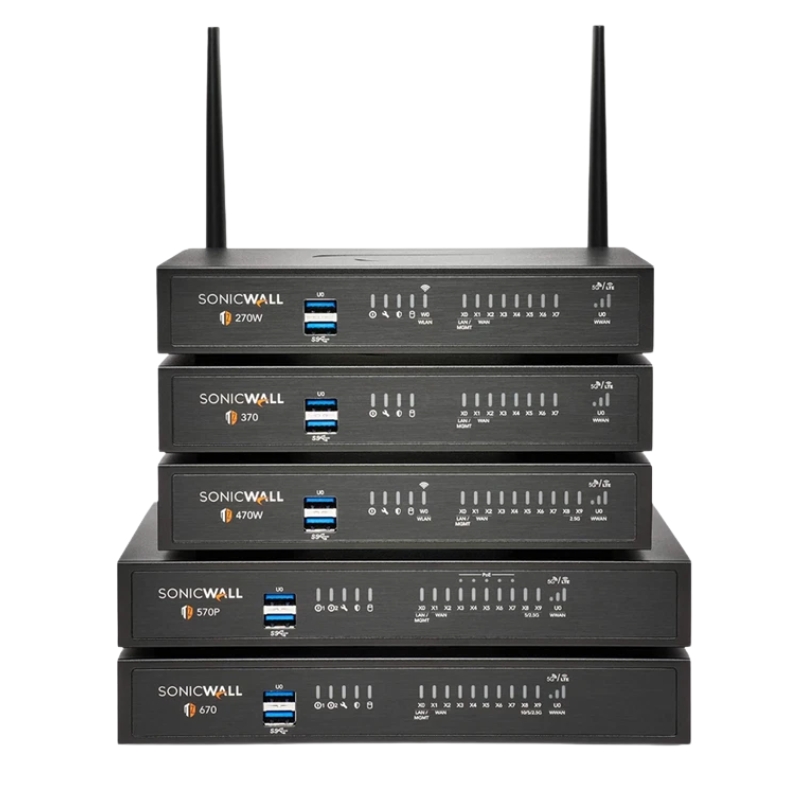
When evaluating the TZ470 category versus other product lines, focus on three dimensions: performance envelope, security capabilities (especially ATP and HTTPS inspection), and management ecosystem. Alternatives include lower-tier appliances for small offices and higher-tier chassis-based platforms for data centers. Also compare with SD-WAN integrated appliances if centralized WAN management is a higher priority than raw inspection capability.

How to compare models

  1. List critical features required (e.g., number of VPN peers, application awareness, ATP).
  2. Measure anticipated bandwidth with inspection enabled.
  3. Evaluate subscription bundles and total recurring cost.
  4. Consider vendor support SLAs and local support presence.

Procurement guidance and total cost of ownership (TCO)

Purchasing decisions should weigh upfront hardware costs, subscription licensing for security services, support plans, and operational expenses for administration and monitoring. A device with a lower initial price may cost more over time if advanced threat services and frequent updates are required to meet organizational risk tolerance.

Budgeting checklist

  • Hardware price, including optional SFP or rack accessories.
  • Annual subscription fees for security services and ATP.
  • Support contract tiers—response times and RMA policies.
  • Training and administration time required to manage policies.

SEO-friendly content elements and metadata suggestions

For category pages that list the TZ470 02-SSC-6792 and similar appliances, apply on-page SEO best practices to improve discoverability:

Keyword strategy

Target long-tail keywords and variations: “SonicWall TZ470 2.5 Gbps firewall”, “02-SSC-6792 network security appliance”, “Suite next-generation firewall SonicWall TZ470”, “branch office firewall 2.5Gbps”, and “SonicWall TZ470 licensing bundles”. Use these variations naturally in headings, product summaries, and product attribute lists.

Structured data and technical SEO

- Implement JSON-LD product schema for each SKU to expose price, availability, model number (02-SSC-6792), and aggregate ratings to search engines.
- Use hreflang where multilingual pages exist; provide canonical tags for duplicate listings.
- Optimize image alt text to include model and category phrases, e.g., “SonicWall TZ470 front panel 02-SSC-6792”.

Content organization

Organize category content into clear, scannable blocks—technical specs, features, use cases, licensing, and FAQs—so both users and search engines can quickly find relevant information. Include internal links to related pages such as “SonicWall support”, “TZ series comparison”, and “security subscriptions” to improve crawl depth.

Migration and upgrade paths

For organizations replacing older SonicWall models or other vendors’ gear, the TZ470 category supports staged migrations. Export and validate existing policy sets, develop a migration plan with parallel testing, and leverage centralized management to roll out policies in phases. Consider performing a pilot at a low-risk site to validate VPN interoperability, policy behavior, and performance.

Integration tips for a smooth cutover

  1. Map existing firewall rules and network zones to the new appliance’s configuration model.
  2. Recreate NAT and VPN configurations in parallel; test connectivity before decommissioning legacy gear.
  3. Monitor performance and logs intensively during the first 72 hours post-migration.

Training, documentation, and knowledge transfer

Invest in training for network and security teams. Vendor training and certification paths—along with well-maintained internal runbooks—reduce human error and speed incident response. Maintain a knowledge base with common procedures: firmware rollback, emergency access, and escalation contacts.

Documentation best practices

  • Keep a secure copy of device factory defaults and admin passwords in an encrypted credential manager.
  • Document IP addressing schemes, NAT policies, tunnel endpoints, and ACLs.
  • Record firmware and patch history alongside observed impacts for future upgrades.

Return on investment (ROI) and business justification

Justify investment in the TZ470 category by aligning security services with risk reduction, compliance attainment, and operational continuity. Quantify avoided costs from incidents, downtime reduction, and simplified management of distributed locations. Demonstrate how modern threat detection and automated response reduce manual remediation time and limit the blast radius of breaches.

Measuring effectiveness

Track metrics such as blocked threats, successful VPN sessions, time-to-detect, and mean-time-to-recover. Use these KPIs to report value to stakeholders and to tune service levels and subscription choices over time.

Final product attributes to display on category pages

When constructing product tiles and detailed listings for 02-SSC-6792 and related SKUs, display these essential attributes prominently:

  • Model number and alternate SKUs (e.g., 02-SSC-6792).
  • Advertised throughput with notes about inspection impact.
  • Port count and types (Gigabit Ethernet / SFP / uplink ports).
  • Included and optional security service bundles.
  • Warranty level, support tiers, and available training.
  • Typical use cases and recommended deployment types.

Example product bullet (for listing pages)

SonicWall TZ470 (02-SSC-6792) — Next-generation firewall with 2.5 Gbps class throughput, advanced threat protection suite options, flexible WAN ports, centralized management compatibility, and SSL/TLS inspection capabilities ideal for branches and medium-sized businesses.

Encourage conversions with informative content and trust signals

To convert visitors into buyers or leads, combine technical depth with trust-building elements:

  • Customer case studies and real-world deployment stories that showcase solved problems.
  • Third-party reviews and security lab test results where available.
  • Clear calls to action—request a quote, download a datasheet, or schedule a demo.
  • Visible warranty and support details to reduce purchase hesitation.

Accessible content and compliance considerations

Ensure all technical documentation and web content follow accessibility best practices—alt text for images, clear heading structure (use <h2> to <h5> as shown), and semantic HTML to improve both accessibility and SEO. Where regulatory compliance matters (PCI, HIPAA, GDPR), include explicit references to how deployment guides, logging, and segmentation support compliance goals.

Wrap-up of page elements (no introduction and no conclusion required)

This category copy is designed to be dropped into a continuous product category body: it includes technical details, procurement and deployment guidance, configuration best practices, and SEO-oriented suggestions to help buyers find and evaluate the SonicWall 02-SSC-6792 TZ470 2.5 Gbps Gigabit Ethernet Suite-next-generation Firewall Network Security Appliance. Use these sections as modular blocks for landing pages, product comparison charts, and knowledge base links to create an informative, high-converting category experience.

Features
Manufacturer Warranty:
3 Years Warranty from Original Brand
Product/Item Condition:
Factory-Sealed New in Original Box (FSB)
ServerOrbit Replacement Warranty:
1 Year Warranty