(7% discount is applied at checkout)
Cart is empty
Your go-to destination for cutting-edge server products
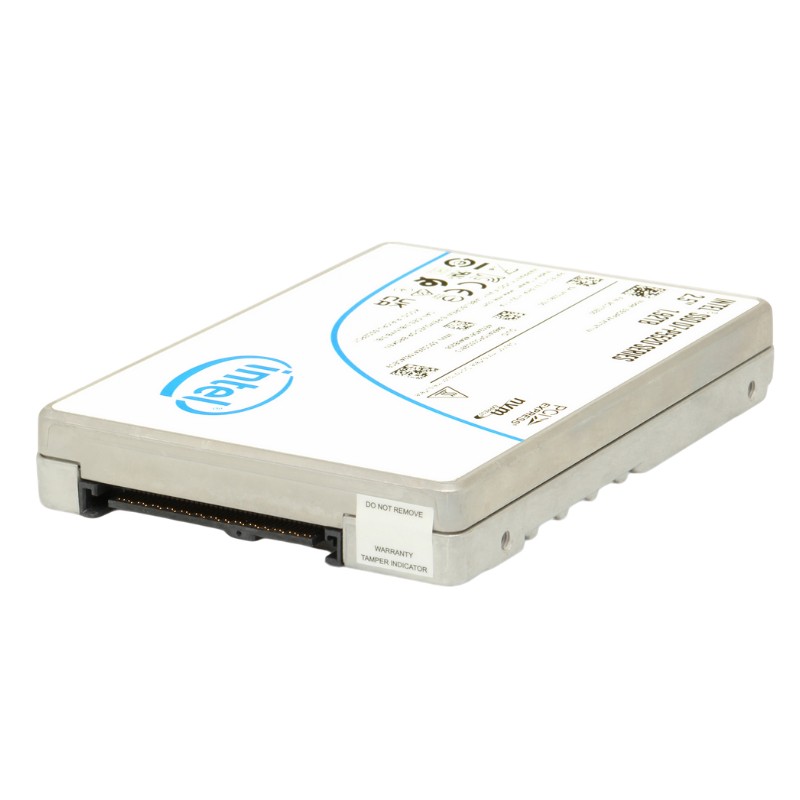


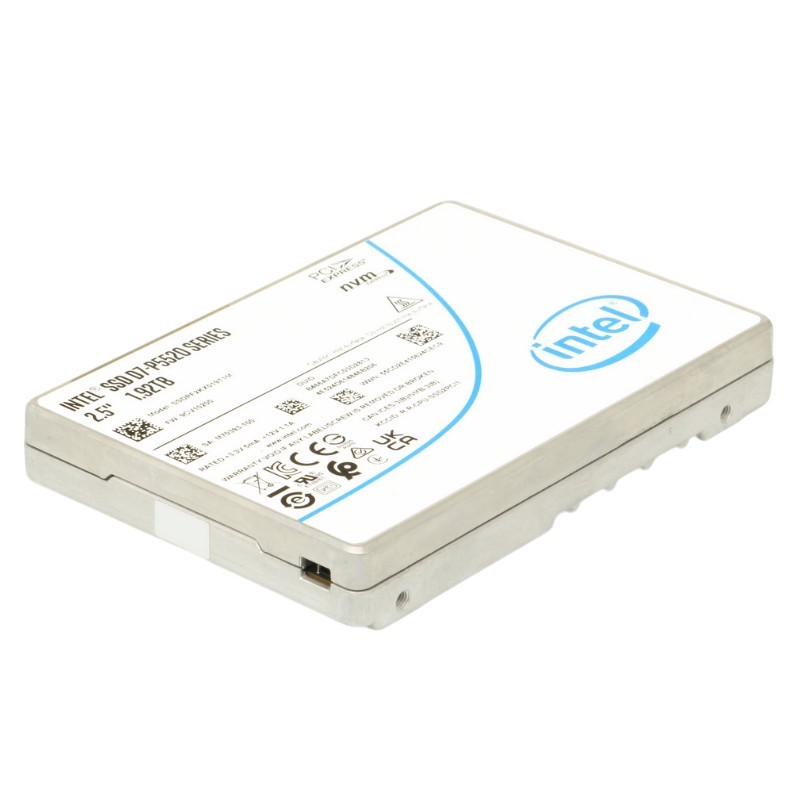
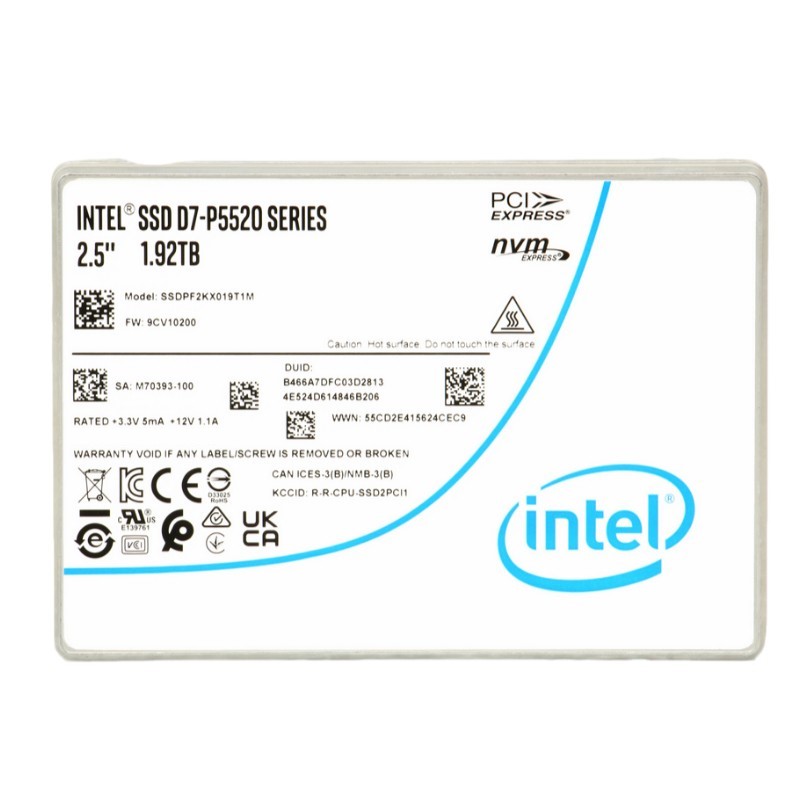
Intel SSDPF2KX019T1E D7-P5520 1.92TB PCI Express 4.0 x4 NVMe SFF Internal Solid State Drive. New Sealed in Box (NIB) with 3 years Warranty - Dell Version
The Intel SSDPF2KX019T1E D7-P5520 represents the pinnacle of read-intensive storage technology for modern data center environments. This 1.92TB U.2 form factor NVMe SSD delivers exceptional performance, reliability, and efficiency for workloads demanding consistent low latency and high throughput. Engineered specifically for cloud computing, content delivery networks, and data analytics applications, the D7-P5520 combines Intel's advanced 3D NAND technology with a purpose-built controller architecture to optimize total cost of ownership while maintaining enterprise-grade endurance.
This data center SSD operates on the PCI Express 4.0 x4 interface, leveraging the NVMe 1.3 protocol to maximize bandwidth potential and reduce protocol overhead. The drive delivers sequential read speeds up to 7,000 MB/s and sequential write speeds up to 3,200 MB/s, with random read performance reaching 1,000,000 IOPS and random write performance up to 170,000 IOPS at queue depth 256. These performance metrics ensure that the drive can handle the most demanding read-centric workloads while maintaining consistent latency profiles under varying load conditions.
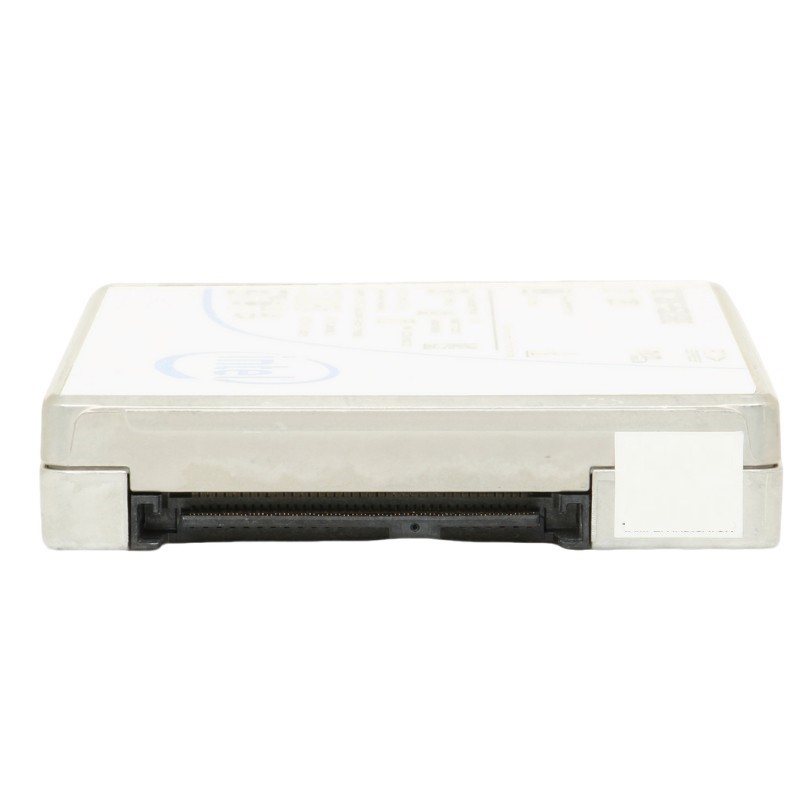
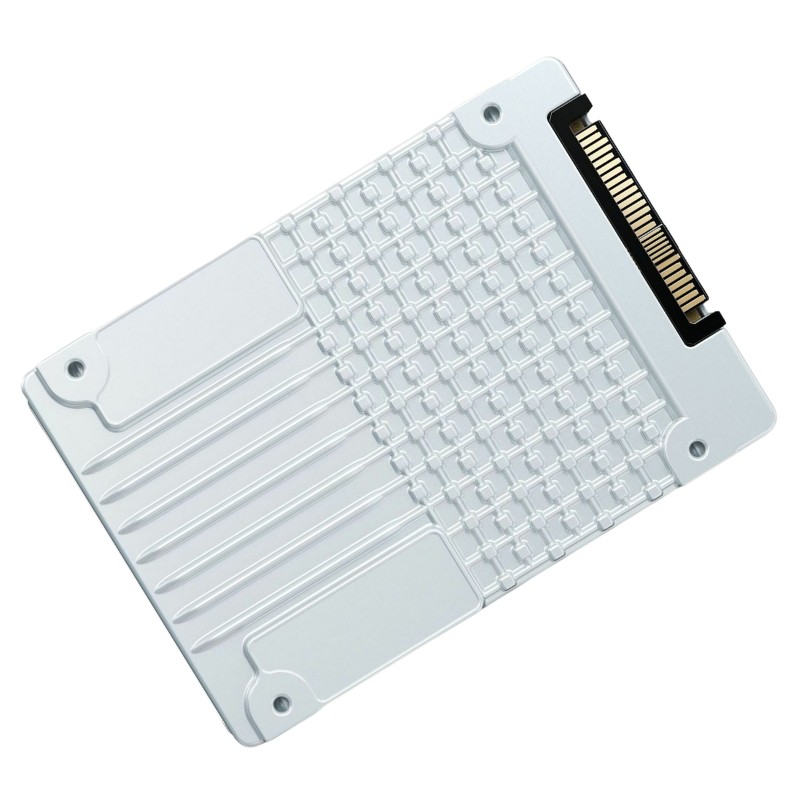
The Intel SSDPF2KX019T1E D7-P5520 utilizes the 2.5-inch U.2 (SFF-8639) form factor with a thickness of 15mm, making it compatible with most modern server and storage enclosure configurations. This industry-standard form factor ensures easy integration into existing data center infrastructure while providing the necessary thermal envelope for sustained performance. The drive operates within a temperature range of 0°C to 70°C during active operation and -40°C to 85°C during storage, ensuring reliability across diverse environmental conditions.
Featuring a PCI Express 4.0 x4 host interface, the D7-P5520 doubles the available bandwidth compared to previous generation PCIe 3.0 solutions. The drive fully implements the NVMe 1.3 specification, including support for multiple namespaces, end-to-end data protection, and enhanced power management features. This combination enables the drive to deliver exceptional performance while maintaining compatibility with current and future server platforms that support the U.2 interface form factor.
The SSDPF2KX019T1E 1.92TB capacity point represents an optimal balance between storage density and performance characteristics for read-intensive applications. Intel employs their advanced 3D TLC NAND technology with 64-layer cell structure, providing the ideal combination of endurance, performance, and cost-effectiveness. The drive features over-provisioning at approximately 7.2% of the total NAND capacity, which enhances write amplification factors and extends the drive's operational lifespan under write-intensive conditions.
Rated for 1.3 drive writes per day (DWPD) over a 5-year warranty period, the D7-P5520 can withstand 3.42 petabytes written (PBW) throughout its lifespan. This endurance rating makes it suitable for mixed-use workloads that occasionally require significant write operations. The drive's advanced garbage collection algorithms and wear-leveling technologies minimize write amplification, typically maintaining a factor between 1.1 and 1.5 depending on workload characteristics and available over-provisioning.
Intel has incorporated numerous enterprise-specific features into the D7-P5520 to ensure optimal performance in data center environments. These include power loss protection with integrated capacitors that provide sufficient hold-up time to complete in-flight writes and preserve data integrity during unexpected power events. The drive also supports multiple data path architectures and features end-to-end data protection with advanced error correction capabilities to maintain data integrity throughout the entire data transfer process.
Enterprise-grade security features include IEEE 1667 compliant hardware-based encryption with 256-bit AES algorithm support. The drive supports TCG Opal 2.0 and Enterprise security specifications, enabling comprehensive data-at-rest protection without performance degradation. These security features operate independently from the host system, ensuring that encryption and decryption processes do not consume valuable CPU resources while maintaining compliance with data protection regulations.
Designed for dense data center deployments, the SSDPF2KX019T1E D7-P5520 implements sophisticated thermal monitoring and throttling mechanisms to prevent overheating while maintaining optimal performance. The drive typically consumes 12-14 watts during active operation and less than 5 watts during idle states, making it one of the most power-efficient options in its performance class. Advanced power management states including autonomous power state transitioning help reduce overall data center power consumption without compromising performance when I/O demands increase.
The read-intensive nature of the D7-P5520 makes it ideally suited for applications where read operations dominate the I/O profile. Common deployment scenarios include web serving, content delivery networks, data analytics platforms, and database read replicas. The drive's consistent low-latency performance also makes it suitable for boot drives in virtualized environments and containerized applications where rapid instance provisioning and consistent performance are critical operational requirements.
In cloud computing environments, the SSDPF2KX019T1E D7-P5520 provides the ideal balance of performance and cost-effectiveness for instance storage and shared storage platforms. Its quality of service characteristics ensure consistent performance across multi-tenant deployments, while the high endurance rating accommodates the variable workload patterns typical in cloud environments. The drive's power efficiency contributes directly to reduced operational expenses in large-scale deployments where power and cooling represent significant cost factors.
For big data applications including Hadoop, Spark, and similar analytics frameworks, the D7-P5520 delivers the high sequential read performance necessary for processing large datasets. The drive's ability to maintain consistent performance under heavy read workloads ensures that analytics jobs complete within predictable timeframes. The combination of high throughput and low latency accelerates data processing pipelines and reduces the time to insight for analytical queries across large datasets.
In virtualized environments, the D7-P5520 supports high virtual machine density with consistent storage performance across multiple VMs. The drive's random read performance characteristics directly benefit database applications where index scans and query operations generate predominantly random read patterns. For database read replicas and reporting instances, the drive provides near-instantaneous access to frequently queried data while maintaining data integrity through advanced error correction mechanisms.
The Intel SSDPF2KX019T1E D7-P5520 has undergone extensive compatibility testing with major server platforms from Dell EMC, HPE, Cisco, Lenovo, and Supermicro. The drive is certified for use with all major operating systems including Windows Server, Linux distributions, and VMware ESXi. Full interoperability with NVMe-oF (NVMe over Fabrics) implementations enables the drive to be utilized in disaggregated storage architectures while maintaining the performance benefits of native NVMe access.
Detailed performance analysis reveals that the D7-P5520 maintains consistent performance across varying workload conditions. Sequential read performance reaches 7,000 MB/s with 128KB transfer sizes, while sequential write performance achieves 3,200 MB/s under the same conditions. Random read performance scales with queue depth, reaching optimal performance at queue depth 256 with 4KB transfers. The drive exhibits minimal performance degradation under sustained workload conditions thanks to advanced garbage collection algorithms and thermal management.
The D7-P5520 demonstrates near-linear performance scaling as queue depth increases from 1 to 16, with diminishing returns observed beyond queue depth 32. This scaling characteristic makes the drive particularly well-suited for applications that can maintain sufficient queue depth to maximize performance, such as database systems and virtualized environments with multiple concurrent users. At lower queue depths, the drive still delivers responsive performance for latency-sensitive applications.


 Contact Us
 Information
 Catalog
 Solid State Drives (SSD)
 Network Switches
 Hard Disk Drives
 HBA & Controllers
 PC & Servers
 PC & Server Memory
 CPU & Processors
 Network Routers
 Power Supplies
 Tape Drives & Libraries
 Network Devices
 Computer & Network Cables