(7% discount is applied at checkout)
Cart is empty
Your go-to destination for cutting-edge server products
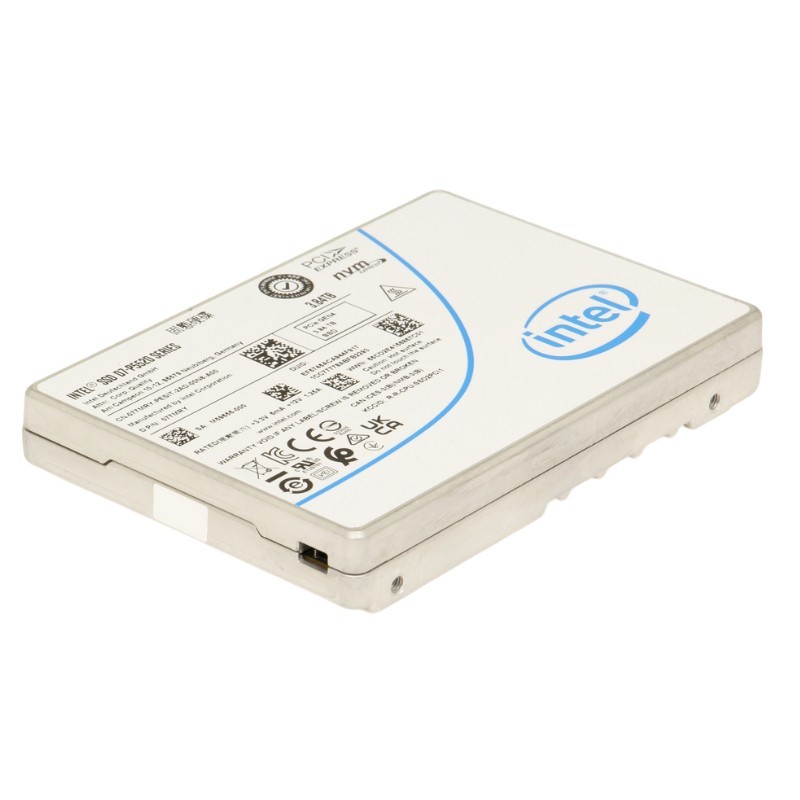


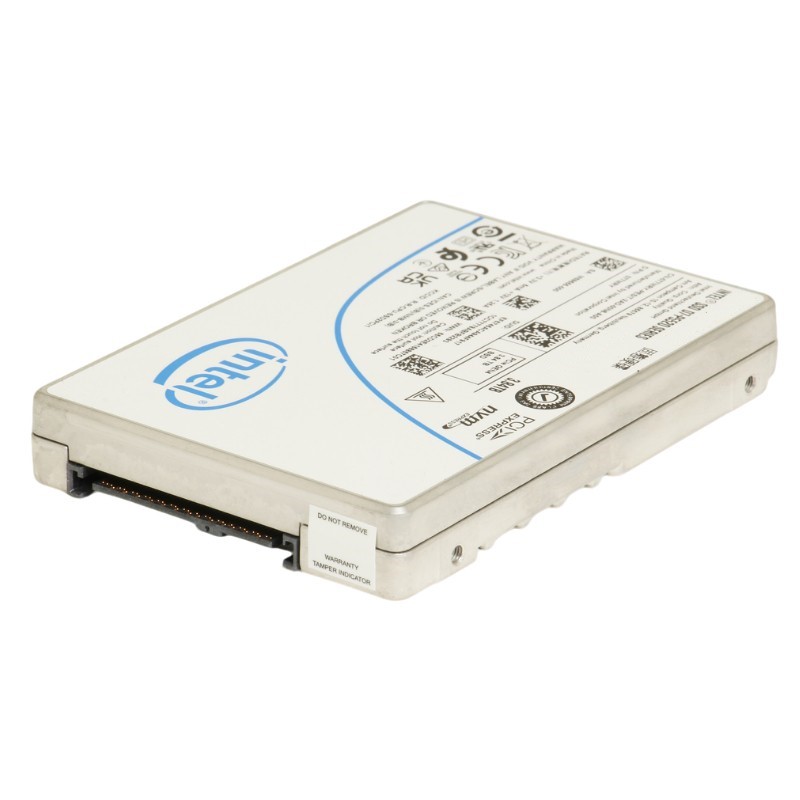
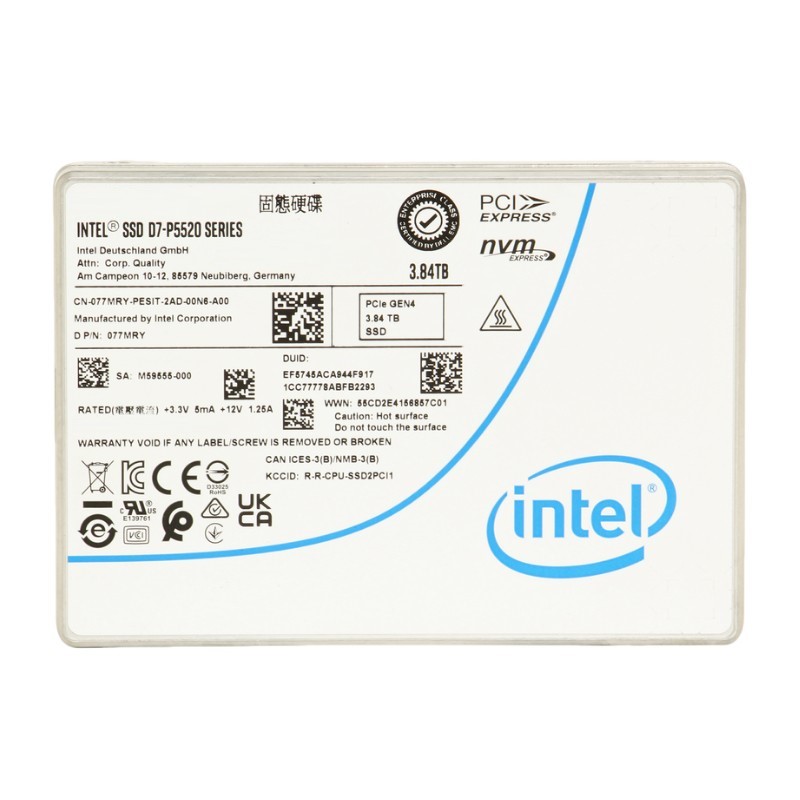
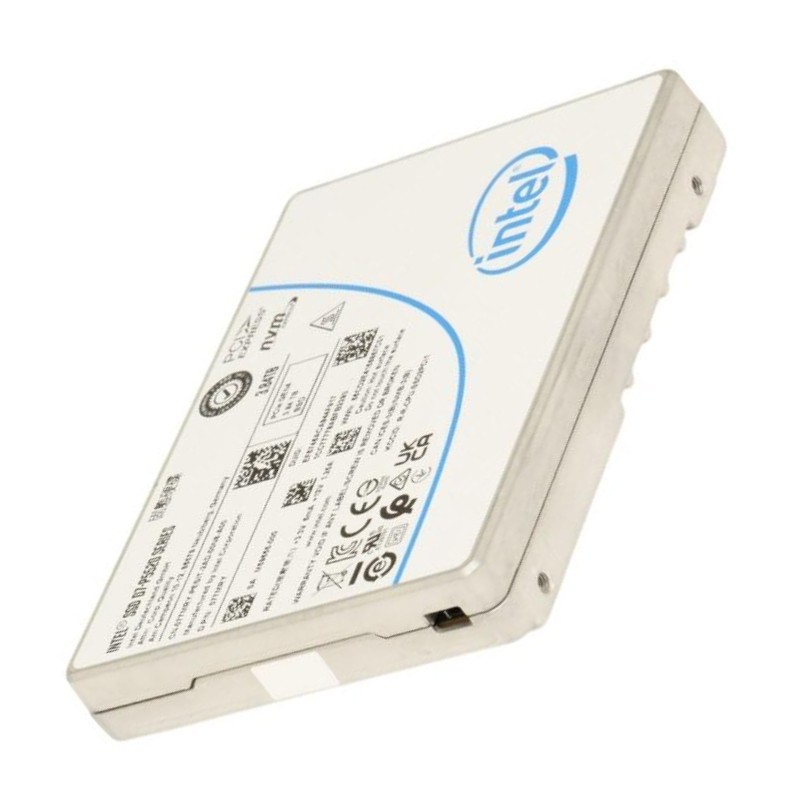
Intel SSDPF2KX038T1 D7-P5520 3.84TB PCI Express 4.0 x4 NVMe 3d Nand SFF Internal Solid State Drive. Excellent Refurbished with 1 year replacement warranty
| SKU/MPN | Warranty | Price | Condition | You save |
|---|---|---|---|---|
| SSDPF2KX038T1 | 1 Year Warranty | Contact us for a price | New Sealed in Box (NIB) | |
| SSDPF2KX038T1 | 1 Year Warranty | $1,198.00 | Excellent Refurbished | You save: $419.30 (26%) |
This high-performance internal solid-state drive represents a significant leap in data storage technology, engineered for enterprise-grade applications requiring immense throughput and exceptional reliability.
The Intel D7-P5520 family represents a line of high-performance NVMe solid state drives engineered for demanding enterprise and data center workloads. The model SSDPF2KX038T1 — a 3.84TB PCIe 4.0 x4 NVMe SFF internal drive built on 3D NAND technology — is positioned to deliver a balanced mix of throughput, low latency, endurance, and power efficiency. This category description explores the technical strengths, deployment scenarios, integration considerations, and value propositions that make the D7-P5520 a compelling choice for storage architects, system integrators, and procurement teams searching for mainstream enterprise NVMe storage.
At the heart of the SSDPF2KX038T1 D7-P5520’s performance envelope is the PCI Express 4.0 x4 interface, paired with the NVMe command set. This combination enables the drive to push much higher I/O per second and greater sequential bandwidth compared with PCIe 3.0 parts, while still maintaining compatibility across modern server platforms that support PCIe 4.0. NVMe reduces protocol overhead by leveraging parallelism and a lightweight command path designed specifically for NAND flash, which results in significantly lower latency compared to legacy SAS or SATA interfaces. For enterprises deploying latency-sensitive services — databases, virtual machine boot volumes, analytics, and caching layers — these architectural advantages translate directly into faster response times and improved application density.
The SSDPF2KX038T1 D7-P5520 series is architected around an enterprise-grade controller that coordinates advanced flash management, wear-leveling, and error correction. Coupled with high-density 3D NAND, the drive is designed to sustain steady performance under heavy mixed read/write workloads common in data center environments. Features such as power-loss protection mechanisms, robust ECC, and firmware-implemented background tasks help preserve data integrity and minimize the risk of transient failures. Although exact silicon implementations and firmware features vary by SKU and release, Intel’s enterprise line traditionally focuses on deterministic behavior — ensuring consistent latency percentiles and predictable throughput under queue depth and concurrency.
The SFF (small form factor) designation makes the SSDPF2KX038T1 D7-P5520 3.84TB appropriate for dense server configurations and blade enclosures where rack density and efficient airflow are priorities. Whether deployed in 1U or 2U servers, hyper-converged nodes, or storage-optimized platforms, these drives are engineered to integrate cleanly with server drive bays and NVMe backplanes. System designers should verify physical sizing and connector compatibility for their particular chassis: SFF NVMe drives commonly appear as U.2, M.2, or E1.S variants across product lines, and selecting the correct mechanical interface ensures plug-and-play behavior and reliable thermal dissipation.
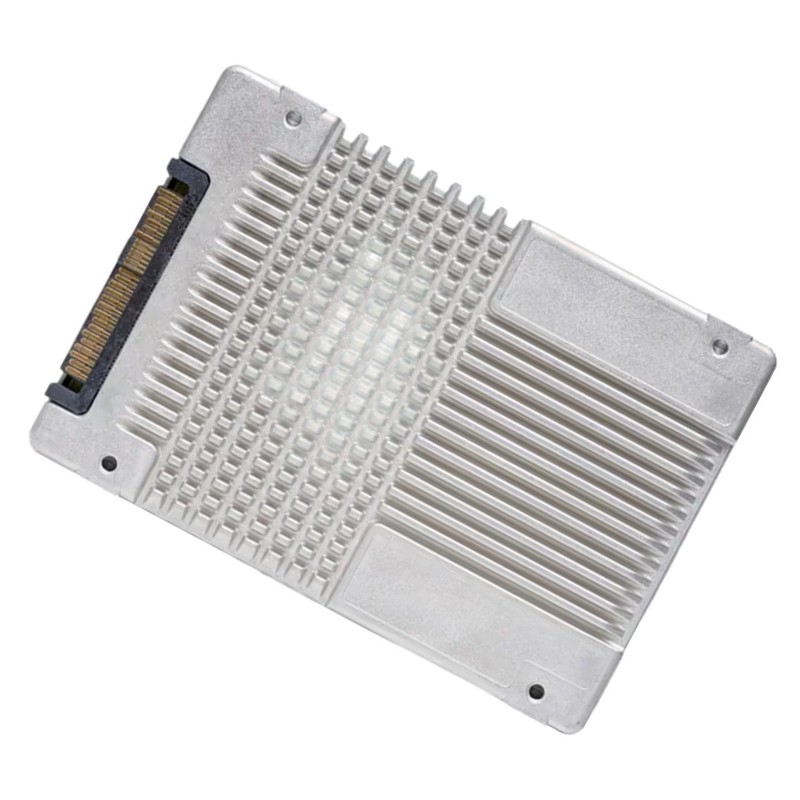
Sustained performance depends heavily on thermal management. High-throughput NVMe drives can generate notable heat during prolonged sequential operations or mixed enterprise workloads. The SSDPF2KX038T1 D7-P5520’s performance profile benefits from properly engineered server airflow, drive heatsinks, and monitoring. System integrators should account for placement near CPU sockets and high-power components; keeping the drive within manufacturer-recommended operating temperatures will avoid thermal throttling and help maintain consistent IOPS and throughput over long-duration jobs. Effective thermal design is also important for maximizing the useful life of NAND and preserving firmware stability.
The SSDPF2KX038T1 D7-P5520 is tuned to deliver low-latency NVMe I/O and high IOPS at enterprise queue depths. Its PCIe 4.0 x4 interface unlocks increased sequential read and write bandwidth compared with PCIe 3.0 drives, making it well suited for workloads that require rapid data ingestion or streaming. In random I/O scenarios common to OLTP databases, virtualization, and containerized microservices, the drive’s ability to sustain high IOPS under concurrent access yields tangible application-level gains: reduced query times, faster VM boot storms, and smoother multi-tenant performance.
Beyond raw peak numbers, enterprise storage buyers often prioritize consistent percentiles — how the drive performs at the 99th or 99.9th percentile under load. The D7-P5520’s flash management and internal caching strategies are designed to minimize latency spikes and maintain steady performance as load increases. This consistency reduces tail latency in multi-tiered applications and improves quality of service when supporting SLAs in cloud or hosted environments.
Enterprise SSDs are evaluated not only by performance but by endurance metrics and reliability technologies. Drives in this class typically provide detailed endurance ratings, expressed in drive writes per day (DWPD) or total terabytes written (TBW), paired with mean time between failures (MTBF) estimates and comprehensive SMART reporting. The D7-P5520 series includes the types of internal safeguards expected in enterprise drives: advanced ECC algorithms, background media management, and mechanisms for gracefully handling degraded conditions. These features help prevent silent data corruption and provide administrators with the telemetry needed to plan maintenance and replacements proactively.
Data security is a core consideration for enterprise storage. Many drives in this segment support industry-standard encryption and administration protocols, enabling organizations to protect data-at-rest without compromising performance. Hardware-based encryption offloads cryptographic operations from the main CPU and can be combined with key management systems to meet compliance requirements. Additionally, enterprise drives typically support secure erase and cryptographic sanitization for end-of-life disposal, providing a defensible approach to data destruction.
The SSDPF2KX038T1 D7-P5520 3.84TB is deliberately versatile and fits a wide range of enterprise roles. Typical deployments include primary storage for high-performance databases, boot volumes for virtualized compute clusters, cache layers for hybrid storage arrays, and fast scratch storage for analytics and AI pipelines. Its capacity and performance balance also make it a pragmatic option for software-defined storage nodes, where predictable behavior under mixed workloads is essential to maintain cluster health and reduce noisy-neighbor effects.
Transactional database systems benefit from the D7-P5520’s low latency and high IOPS. Faster storage reduces transaction commit times and accelerates index lookups, leading to improved throughput and lower latency for customer-facing services. For database architects optimizing for response-time SLAs, deploying NVMe drives for primary data files and logs can reduce the need for aggressive caching strategies and simplify tiering architectures.
Virtualized environments, especially those supporting Virtual Desktop Infrastructure (VDI) or dense multi-tenant workloads, demand predictable I/O behavior. The D7-P5520’s emphasis on consistent latency and sustained mixed workload performance helps administrators maximize VM density per host while reducing storage bottlenecks. When used as VM root volumes or ephemeral storage for container workloads, NVMe performance improves provisioning times and accelerates scale-out operations.
For data analytics and machine learning pipelines that require rapid dataset staging and preprocessing, the drive’s sequential bandwidth and capacity make it ideal for scratch spaces and intermediate result stores. Large-scale data ingest and model training workflows that shuttle terabytes of data benefit from both the throughput and the reduced latency when driven by NVMe storage, shortening iteration cycles for data scientists and increasing cluster utilization.
Confirm the target server chassis supports the physical SFF variant you intend to purchase. Verify that the host platform has PCIe 4.0 lanes available and that BIOS or firmware revisions support NVMe boot if you plan to use the drive as a system volume. Check power budgets for densely populated servers; NVMe drives can have higher instantaneous power draw during peak operations.
Synthetic benchmarks provide repeatable metrics such as peak IOPS and sequential bandwidth, but real-world validation under representative workloads is crucial. Run application-level tests — database transactions per second, VM boot storms, or analytics ingestion pipelines — to observe how latency percentiles and throughput behave under concurrency. Validate consistency across sustained runs and different queue depths, and include thermal and endurance testing in procurement proof-of-concept evaluations.
To extract reliable service from NVMe drives in production, follow best practices that focus on stability, monitoring, and predictable maintenance windows. Implement a proactive telemetry strategy, integrate drive health into capacity planning cycles, and design backup and replication strategies that account for SSD-specific failure modes. In virtualized clusters, distribute I/O-heavy VMs across multiple drives and hosts to avoid localized wear and to reduce the chance of correlated performance degradation.
High-performance storage should be part of a comprehensive data protection plan. Use synchronous or asynchronous replication as appropriate for recovery objectives, and ensure that snapshots and backups are tested regularly to validate recovery time and point objectives. Because SSDs can fail without the same mechanical warning signs as spinning media, automated monitoring and replacement workflows are essential to reduce operational risk.
Modern enterprises increasingly evaluate the environmental impact of their infrastructure. NVMe drives, when used to increase consolidation and improve compute efficiency, can contribute to lower energy consumption per workload. However, they are still electronic components requiring responsible end-of-life handling. Establish disposal and recycling policies, and leverage secure sanitize features to ensure data is unrecoverable before drives leave the data center.
Plan for end-of-life replacement triggered by endurance thresholds or operational aging. Use cryptographic erase or vendor-provided secure sanitize procedures to render data unrecoverable, and coordinate with certified e-waste recyclers to responsibly retire drives in compliance with regulatory and corporate sustainability goals.
Choosing the right enterprise SSDPF2KX038T1 NVMe drive comes down to matching technical needs to business objectives. The Intel D7-P5520 3.84TB SKU offers a strong balance: modern PCIe 4.0 performance, NVMe latency advantages, enterprise-grade endurance and integrity features, and the capacity to support a broad range of production workloads. For IT teams migrating legacy arrays, scaling virtualization platforms, or constructing high-performance analytics clusters, these drives offer an attractive blend of performance, manageability, and capacity density. When combined with sound systems engineering practices — correct thermal design, firmware lifecycle management, and monitoring integration — the drives become dependable building blocks for modern infrastructure.


 Contact Us
 Information
 Catalog
 Solid State Drives (SSD)
 Network Switches
 Hard Disk Drives
 HBA & Controllers
 PC & Servers
 PC & Server Memory
 CPU & Processors
 Network Routers
 Power Supplies
 Tape Drives & Libraries
 Network Devices
 Computer & Network Cables