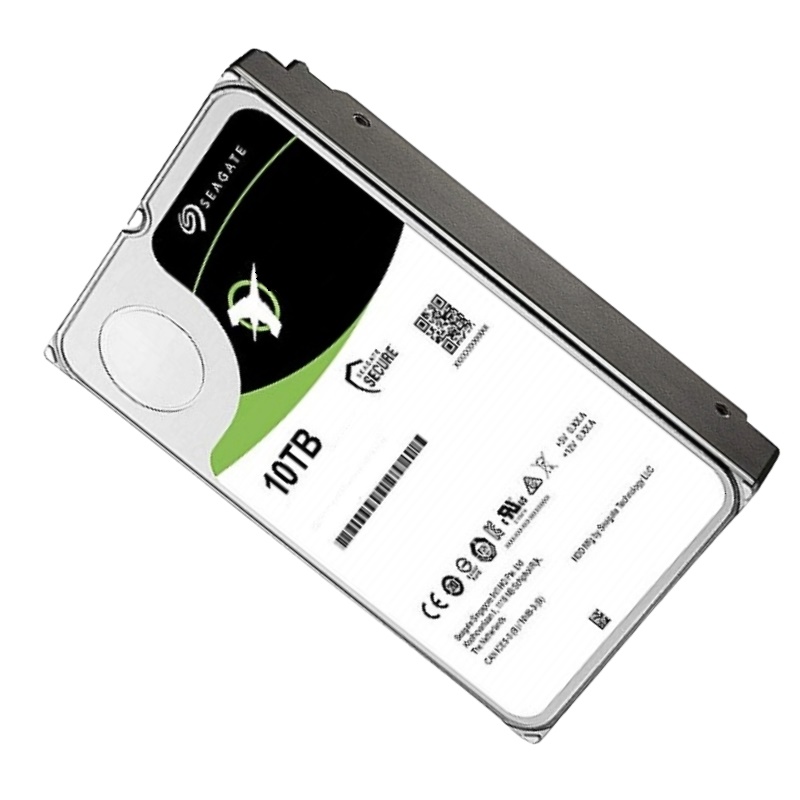
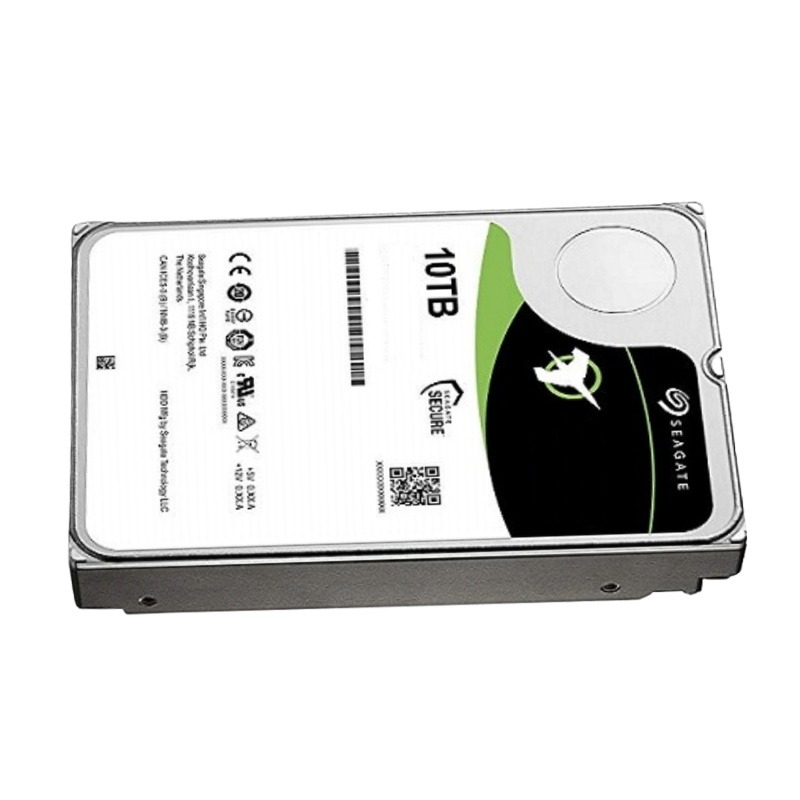
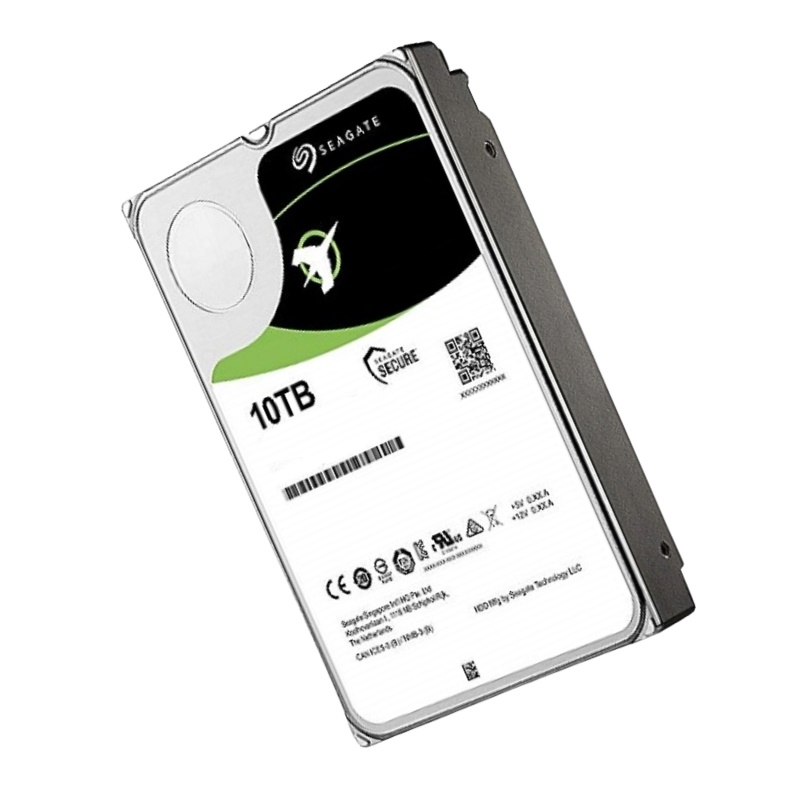
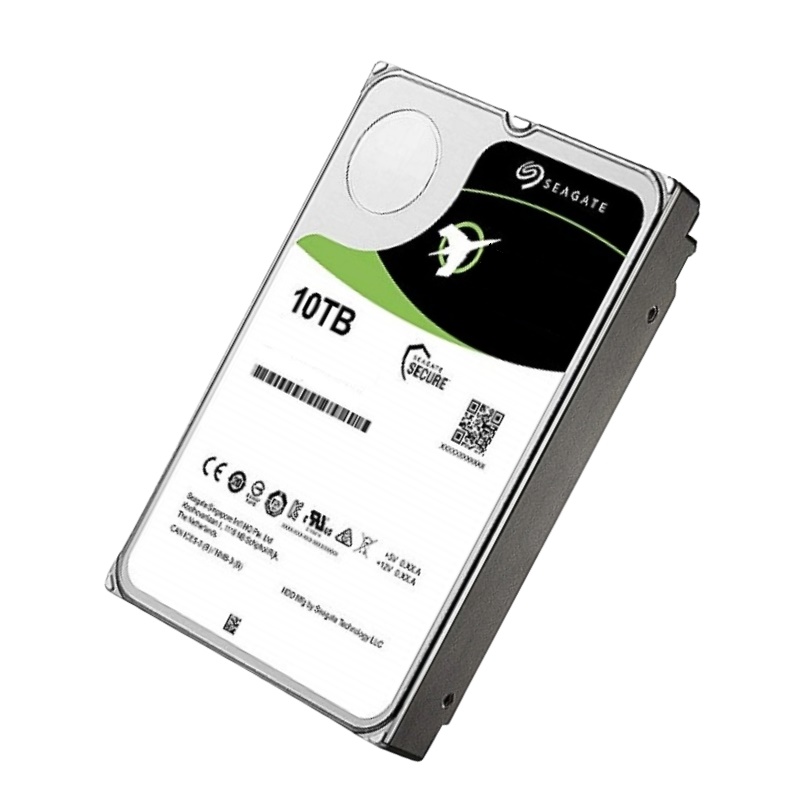
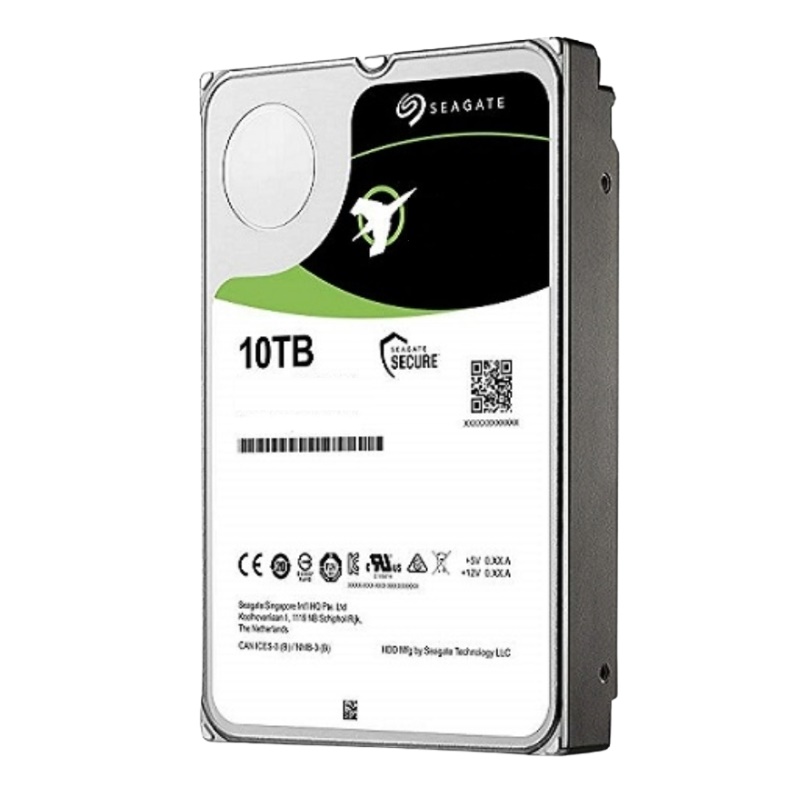
Product Overview of Seagate 10TB 7.2K RPM SAS 12GBPS HDD
Designed for the most demanding enterprise environments, this high-capacity 10TB internal drive offers optimized performance, exceptional durability, and industry-standard SAS 12Gb/s connectivity. A smart choice for scalable infrastructures requiring high-density storage.
General Information
- Manufacturer: Seagate
- Model: ST10000NM0528
- Form Factor: 3.5-inch internal hard disk drive
- Interface: SAS 12Gb/s for enterprise compatibility
- Cache Size: 256MB for smooth multitasking
- Spindle Speed: 7200 RPM ensures consistent throughput
- Installation: Requires assembly, compatible with standard server racks
Advanced Features for Modern Data Centers
- Utilizes helium-sealed construction to reduce drag and enhance long-term efficiency
- PowerBalance technology ensures optimal energy usage with consistent workload handling
- Enterprise-class architecture engineered for consistent 24/7 operation
- Hot-swappable and rack-friendly 3.5-inch form factor maximizes storage density
- Robust SAS interface ensures streamlined integration in multi-drive setups
Built for Hyperscale and Cloud Infrastructure
This storage solution aligns perfectly with hyperscale deployments, cloud service environments, and distributed systems requiring resilient, high-throughput hardware. It delivers the performance and durability enterprises demand when managing petabyte-scale data.
Key Use Cases
- Cloud-based storage farms and archival systems
- Data-intensive analytics and large dataset processing
- Virtualized environments and hyper-converged infrastructure
- Multi-bay RAID configurations and storage expansion enclosures
- Big Data clusters demanding fault-tolerant, scalable drives
Performance That Powers the Future
- Massive 10TB storage capacity for large-scale data warehousing
- 7200 rotations per minute for optimized read/write consistency
- 256MB cache memory to support high-speed operations and minimal latency
- 12Gb/s SAS throughput for rapid data access across enterprise-grade hardware
- Built-in write caching improves response times under heavy I/O loads
Security, Compliance & Longevity
Secure data lifecycle management is integral to this drive. With compliance to NIST 800-88 and TCG standards, it provides safe and reliable data sanitization features.
- Instant Secure Erase enables fast, secure decommissioning of drives
- MTBF rating of 2.5 million hours assures long-term dependability
- Meets eco-friendly manufacturing and operational standards
Optimize Storage Performance with Enterprise-Tier Drives
Designed for data centers that demand performance without compromise, this Seagate 10TB SAS HDD offers a future-ready solution for scalable storage needs. With high reliability metrics, eco-conscious design, and cutting-edge transfer speeds, it’s built to elevate enterprise storage architectures.
Performance Metrics & Reliability Features
Throughput, Latency, MTBF
- Sustained Data Transfer Rate: Up to ~249 MiB/s in continuous sequential workload scenarios. :contentReference[oaicite:5]{index=5}
- Average Latency: Approximately 4.16 milliseconds, typical for 7200 RPM enterprise drives. :contentReference[oaicite:6]{index=6}
- MTBF (Mean Time Between Failures): Rated for about 2.5 million hours; built for sustained 24×7 operation. :contentReference[oaicite:7]{index=7}
Power, Environment, & Durability
- Power Consumption: ~10.2 W during read operations; ~6.2 W during write; and idle power around 5 W. :contentReference[oaicite:8]{index=8}
- Temperature Range: Designed to operate reliably between about 5 °C to 60 °C. :contentReference[oaicite:9]{index=9}
- Shock & Vibration Resistance: Tolerates operating vibration (~2.27 G), operating shock (≈ 70 G), non‑operating shock up to ~250 G; built for rugged enterprise duty. :contentReference[oaicite:10]{index=10}
- Physical Dimensions & Weight: Approximately 101.85 mm wide × 147 mm deep × 26.11 mm tall; weighing ~690 grams. :contentReference[oaicite:11]{index=11}
- Advanced Format Support: 512e and 4Kn sectoring formats for compatibility and efficiency in modern server filesystems. :contentReference[oaicite:12]{index=12}
Key Features That Differentiate This Drive
Helium-Sealed Design & PowerBalance Technology
The ST10000NM0528 is sealed with helium, reducing internal friction, improving thermal behavior and lowering power usage. Combined with Seagate’s PowerBalance management features, this drive is built to deliver better energy efficiency over continuous workloads. :contentReference[oaicite:13]{index=13}
Dual‑Port SAS and Hot‑Swappability
- Dual SAS ports allow multipathed connections for redundancy or high‑availability configurations. :contentReference[oaicite:14]{index=14}
- Hot‑plug support enables safe insertion/removal without shutting down the system—a vital trait for enterprise storage arrays. :contentReference[oaicite:15]{index=15}
Hyperscale Data Centers & Cloud Storage Pools
Massive‑scale storage operations—cloud providers, web services, and hyperscale environments—will benefit from this drive’s density, reliability, and power efficiency. When many drives are assembled in dense racks, its performance per watt and MTBF make it cost‑effective over time.
RAID Arrays, Storage Area Networks & Virtualization Hosts
- Excellent for RAID 5/6, RAID‑10 configurations where capacity, redundancy, and performance all matter.
- Well‑suited to virtualization servers, where multiple VMs conduct random reads/writes and sustained I/O loads.
- Storage area networks (SANs) and Network Attached Storage (NAS) configurations that require consistent throughput under mixed workloads. Although SAS is more often used in enterprise SAN appliances, NAS enclosures with SAS backplanes also leverage these benefits.
Big Data, Analytics & Backup Solutions
- Big Data clusters (Hadoop, Ceph, distributed file systems) where large blocks of data are ingested and processed. :contentReference[oaicite:19]{index=19}
- Tiered backup and archiving workflows: works well as near‑line storage where capacity and durability outweigh ultra‑low access latency.
- High‑resolution surveillance video storage where long writes and sequential writes dominate and consistency over time is more important than peak random I/O.
Compatibility, Integration & Deployment Considerations
Controller & Backplane Requirements
To harness full performance, you’ll need a SAS controller capable of 12Gb/s and ideally dual presence for failover. Backplanes, connectors, and cables should be rated accordingly. Incompatible or older 6Gb/s SAS‑or‑SATA controllers will reduce throughput or disable advanced features. Hot‑swap compatible bays and shock‑absorbing mounting help preserve lifespan.
File Systems, Sector Sizes & Formatting
- Supports both 512e (512‑emulation) and native 4Kn sector formats—important for aligning with modern operating systems and storage efficiency. :contentReference[oaicite:20]{index=20}
- Firmware and partition alignment should be optimized for workload type: large sequential writes (for backup or video) vs small random I/O (for database or VM hosts).
Power & Cooling Infrastructure
- Sufficient airflow and enclosure cooling are necessary: helium design helps, but rack density raises thermal stress. Dealers and system architects should ensure adequate ventilation.
- Power supply rails must support stable ±5 V and ±12 V loads, especially under spin‑up and read/write load surges. In enterprise use, PSU headroom is crucial. :contentReference[oaicite:21]{index=21}
Power Usage in High Density Setups
Though more efficient than older models, a fleet of these drives still draws non‑trivial power. Under heavy read/write or mixed workloads, cumulative energy and cooling cost must be assessed against the gains in capacity and durability. Features like PowerBalance help, but total cost of ownership (TCO) planning is essential.
Comparing RPM, Cache & Interface Speeds
Higher RPM (7200 in this drive) tends to increase spindle wear and power, but gains in data access speeds are often noticeable in mixed workloads. Cache size (256 MB here) helps buffer data and smooth random I/O bursts. The 12 Gb/s SAS interface sets a high bar, but real‑world gains depend on the rest of the I/O chain—controller, backplane, RAID card etc.
Reliability Measures: MTBF, Duty Cycles & Error Rates
- MTBF figures like 2.5 million hours indicate expected longevity under specifications, but real usage (temperature, vibration, load) influences actual lifespan.
- Check drive specifications such as non‑recoverable read error rate (often in enterprise specs, e.g. 10^‑15 errors) for mission critical data.
- Review manufacturer reliability programs—return policies, RMA, firmware support, etc., when selecting drives in large deployments.





 Contact Us
 Information
 Catalog
 Solid State Drives (SSD)
 Network Switches
 Hard Disk Drives
 HBA & Controllers
 PC & Servers
 PC & Server Memory
 CPU & Processors
 Network Routers
 Power Supplies
 Tape Drives & Libraries
 Network Devices
 Computer & Network Cables