(7% discount is applied at checkout)
Cart is empty
Your go-to destination for cutting-edge server products
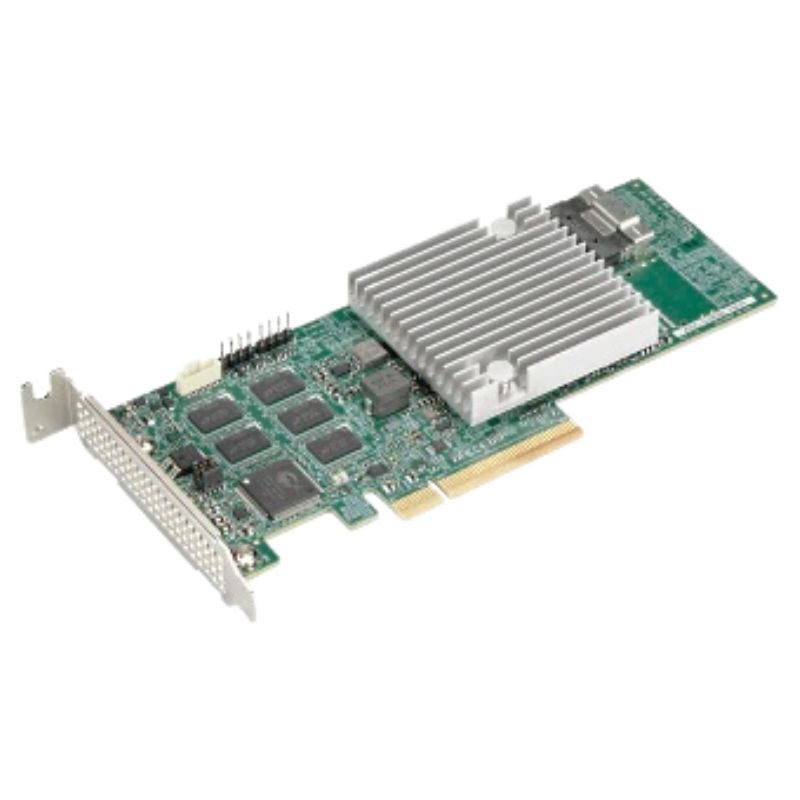


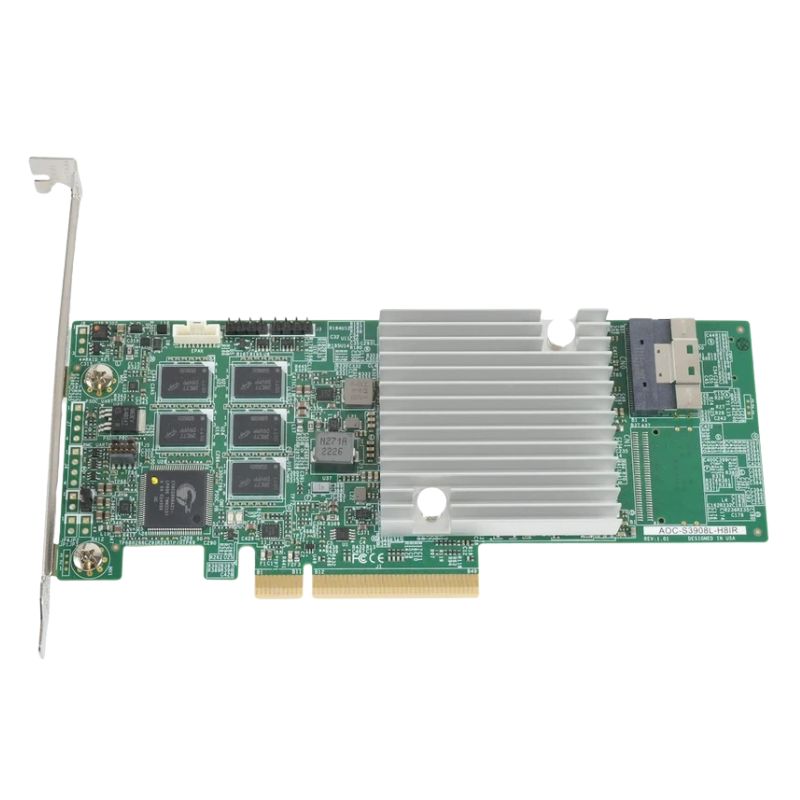
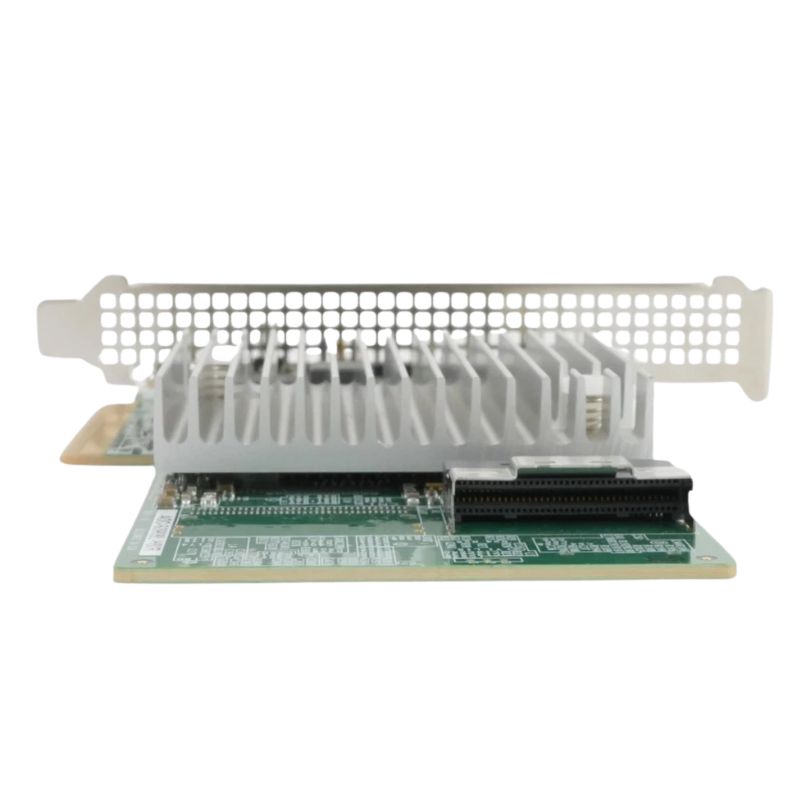
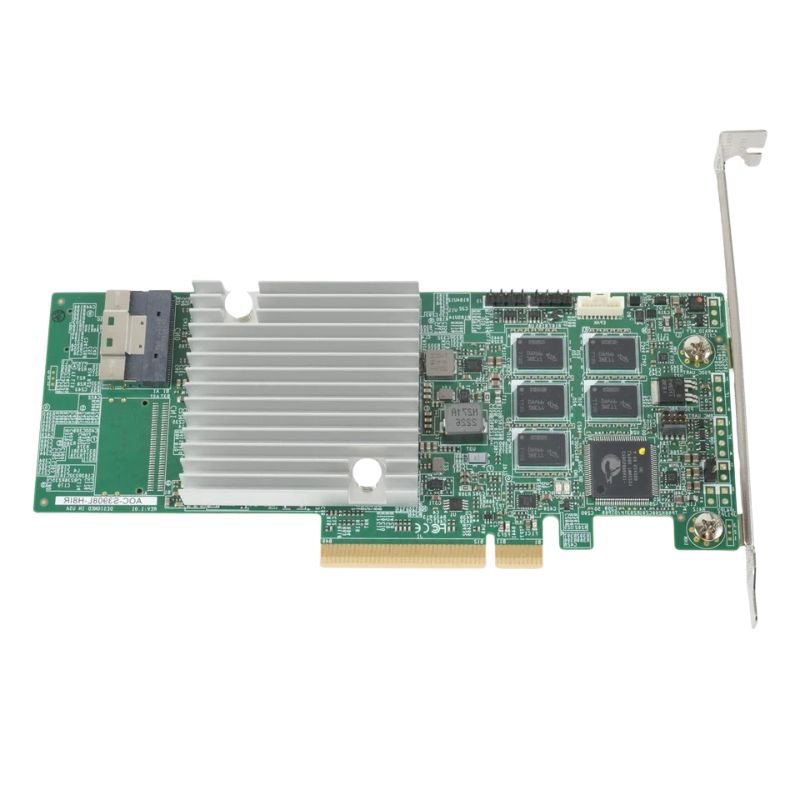
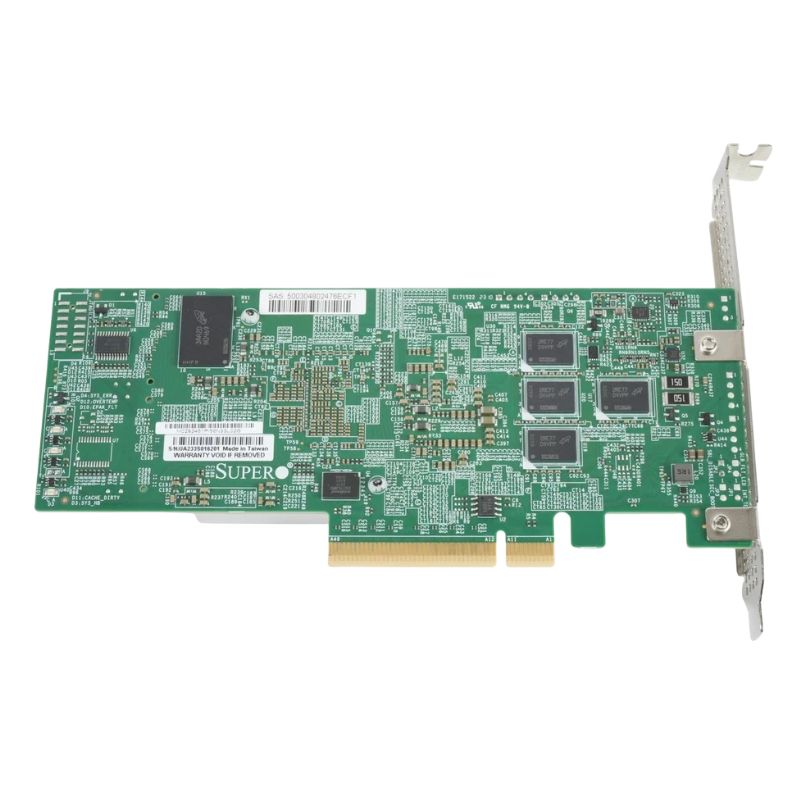
Supermicro AOC-S3908L-H8IR-16DD SAS 12GBPS Eight Ports Internal Raid Adapter. New (System) Pull with 1 year Replacement Warranty
Optimize enterprise storage performance with the Supermicro AOC-S3908L-H8IR-16DD, a high-throughput SAS RAID/HBA solution engineered for data centers and workstation-class servers. This low-profile, x8 PCIe Gen4 adapter delivers reliable multi-drive connectivity, advanced cache protection and broad RAID support — ideal for demanding I/O workloads, virtualization and large-scale storage arrays.
The Supermicro AOC-S3908L-H8IR-16DD SAS 12Gbps Eight Ports Internal RAID Adapter represents a class of high-performance internal storage controllers engineered for enterprise servers, data center nodes, and high-density storage enclosures. This category centers on internal SAS RAID adapters that deliver a balance of throughput, reliability, and manageability for mission-critical storage workloads. The defining characteristics of the category include support for SAS 12Gbps device connectivity, multi-lane host interface capability, multiple internal ports (commonly eight in this product family), hardware-assisted RAID functionality, and robust firmware and management toolsets designed to help administrators deploy, monitor, and maintain disk arrays at scale. When customers search for "Supermicro AOC-S3908L-H8IR-16DD" or more generically for "8-port SAS 12Gbps internal RAID adapter," they are often looking for a dependable storage controller that integrates seamlessly into enterprise server ecosystems, supports modern hard drives and SSDs, and provides advanced options for redundancy and performance tuning.
At the heart of this category is the SAS 12Gbps interface, which effectively doubles the transfer rate of older 6Gbps SAS generations and provides the bandwidth headroom required by today's high-performance SSDs and multi-drive arrays. Eight internal ports allow system architects to design compact server configurations with multibay storage or connect to backplanes in 2U, 3U, and larger chassis without relying on external expansion cabling. RAID capability is often provided on-board or via software/hybrid modes, enabling administrators to choose data protection strategies that map to their performance and resiliency goals. In practical terms, purchasing within this category means prioritizing a storage controller that supports scalable RAID levels, reliable drive management, low CPU overhead, and enterprise-grade diagnostics. These adapters are tailored for environments where consistent I/O latency, large I/O queues, and predictable performance under mixed read/write loads are critical considerations.
Performance in the Supermicro AOC-S3908L-H8IR-16DD category is measured by sustained throughput, IOPS capability with mixed workloads, and latency characteristics under concurrent access patterns. The SAS 12Gbps physical layer provides a theoretical per-lane speed that supports high-throughput operations, but real-world performance depends on the number and type of attached drives, RAID configuration, and system architecture. For workloads that demand low latency—such as database servers, virtualization hosts, and real-time analytics—these adapters, when paired with low-latency SAS or enterprise NVMe-over-fabric solutions, can reduce bottlenecks at the storage controller level. Many customers will tune stripe size, cache policies, and queue depths to align storage behavior with application access patterns, yielding the most effective use of the adapter's bandwidth and on-board resources.
Reliability is a core selling point for this adapter category. Modern SAS RAID controllers provide mechanisms for error detection, drive health monitoring, predictive failure analysis, and battery- or capacitor-backed cache protection to guard against data loss during power events. Redundancy is achieved through RAID levels designed to tolerate single and multiple drive failures, depending on the chosen configuration. Administrators benefit from integrated SMART monitoring and event logging that feed into server management frameworks, enabling proactive maintenance. The category also emphasizes robust firmware update processes and compatibility lists so that administrators can verify certified drive models and firmware versions, minimizing the risk of interoperability issues in production environments.
One of the category's strengths is its broad compatibility with server hardware and operating systems commonly used in enterprise settings. Supermicro-branded RAID adapters are typically designed to integrate tightly with Supermicro motherboards and chassis, but this category also includes controllers that work across many OEM platforms. Compatibility matrices usually list supported server models, backplane types, drive form factors, and operating system drivers. From a systems design perspective, the internal eight-port layout simplifies cabling when connecting to direct-attach backplanes, allowing for tidy, high-density storage configurations within standard server racks. Software stacks such as hypervisors, storage area network management consoles, and host-based backup utilities rely on the controller's driver support and management APIs to perform advanced tasks including online expansion, rebuild prioritization, and scheduled scrubbing.
Buyers in this product category expect wide-ranging support for enterprise operating systems and virtualization platforms. Drivers are provided for Linux distributions popular in data centers, for various Windows Server editions, and for hypervisor ecosystems such as VMware ESXi and Microsoft Hyper-V. The availability of command-line utilities and graphical management tools makes it straightforward to script and automate routine operations, provision arrays, and monitor health across fleets. Thorough driver and firmware documentation is a practical necessity; organizations should verify that the adapter they choose provides certified driver builds and compatibility notes for the exact OS and kernel versions used in their environments to avoid unexpected behavior after updates.
Physically, the Supermicro AOC-S3908L-H8IR-16DD category includes low-profile and standard-height PCIe add-in cards engineered to fit in a wide variety of server chassis. Internal port orientation is designed for direct connection to backplanes and drive cages; that orientation minimizes additional cabling and contributes to better airflow and ease of maintenance. Thermal design and power consumption are important considerations because these controllers sit in high-density server environments where heat dissipation impacts overall system reliability. Buyers should evaluate the adapter's power draw under load, its recommended ambient operating temperatures, and the server's capacity to provide adequate cooling when many drives are installed and actively stressed.
Effective manageability is a hallmark of the enterprise RAID adapter category. Management tools commonly include firmware upgrade utilities, RAID configuration wizards, monitoring dashboards, and alerting integrations with logging frameworks. For larger installations, centralized management that exposes APIs for orchestration systems can greatly reduce operational overhead. Many controllers also provide an out-of-band management interface via the server vendor's baseboard management controller (BMC) or integrate with popular monitoring suites to enable long-term trend analysis and predictive maintenance. For teams focused on automation, the ability to script array creation, expansion, and monitoring events through a well-documented command-line interface is especially valuable, enabling reproducible deployments and automated remediation workflows.
Keeping firmware and drivers current is essential to maintaining security, performance, and compatibility in enterprise storage. This category stresses the importance of a well-managed lifecycle for firmware updates and driver patches. Administrators should plan maintenance windows for non-disruptive updates, validate updates in staging environments, and consult vendor release notes to understand changes to behavior or features. Many organizations maintain a curated repository of validated firmware and drivers to streamline rollouts and minimize the risk of regressions that could impact I/O operations.
Adapters in this category are used across a spectrum of deployment scenarios. They are ideal for dense storage servers that need multiple direct-attach drives, for virtualization hosts that require predictable shared-disk performance, and for database servers where IOPS and latency are critical. They are also used in backup appliances and object storage nodes that require a large number of simultaneous disk connections. Cloud service providers, on-premises enterprise IT teams, and HPC clusters often choose controllers like the Supermicro AOC-S3908L-H8IR-16DD when a balance of throughput and redundancy is needed without moving to more complex SAN fabric architectures.
In virtualized infrastructures, the controller's ability to handle concurrent streams and to provide predictable latency is paramount. When configuring arrays for virtualization workloads, administrators commonly select RAID levels that provide a compromise between performance and resiliency, and they tune caching policies and stripe sizes to fit the workload profile. Integration with hypervisor features such as snapshots and thin provisioning should be carefully considered because they can affect underlying array performance. This category of adapters often pairs well with software-defined storage layers and caching appliances that augment raw disk performance with flash tiers or in-memory caching strategies.
The durability and manageability of multi-port internal RAID adapters make them suitable for backup appliances and archival nodes. In environments where large-capacity spinning media is used for cost-effective retention, the adapter's ability to manage multiple drives simultaneously and to handle background activities like scrubbing and rebuilds without significant performance penalty is valuable. Administrators should architect backup windows and throttling policies to balance backup throughput against the operational needs of primary workloads.
Scalability in the Supermicro AOC-S3908L-H8IR-16DD category involves both vertical and horizontal dimensions. Vertically, administrators can scale by attaching higher-capacity drives or by moving to faster SSDs as budgets and workloads permit. Horizontally, multiple adapters or external expanders can be added to a server to increase the number of attachable drives. Future-proofing also includes choosing adapters with robust firmware update paths, vendor commitment to driver maintenance, and support for emerging features such as NVMe-over-Fabrics gateways or heterogeneous tiering when integrating with flash and cloud tiers. Selecting a controller with proven interoperability and a strong vendor support ecosystem reduces the operational risk as storage infrastructures evolve.
Many deployments rely on backplanes, drive cages, and expanders to increase storage capacity without additional PCIe slots. The internal eight-port configuration common to this category makes it straightforward to expand through compatible SAS expanders, thereby connecting dozens of drives behind a single host controller. When planning expansion, it is important to consult compatibility lists and to consider cable lengths, signal integrity, and power distribution to ensure the expanded system continues to meet performance and reliability objectives.


 Contact Us
 Information
 Catalog
 Solid State Drives (SSD)
 Network Switches
 Hard Disk Drives
 HBA & Controllers
 PC & Servers
 PC & Server Memory
 CPU & Processors
 Network Routers
 Power Supplies
 Tape Drives & Libraries
 Network Devices
 Computer & Network Cables