(7% discount is applied at checkout)
Cart is empty
Your go-to destination for cutting-edge server products
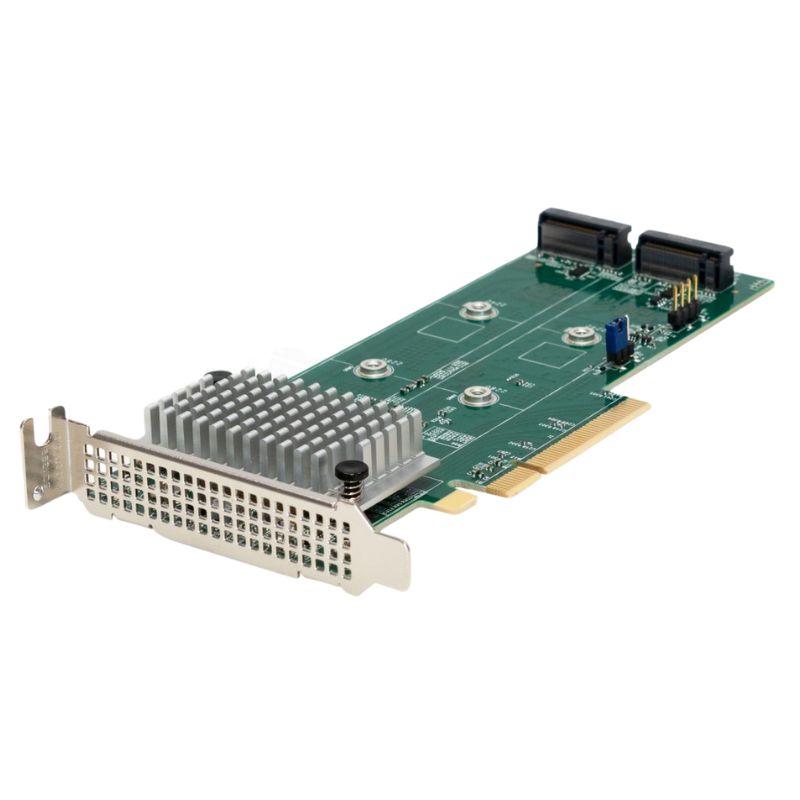


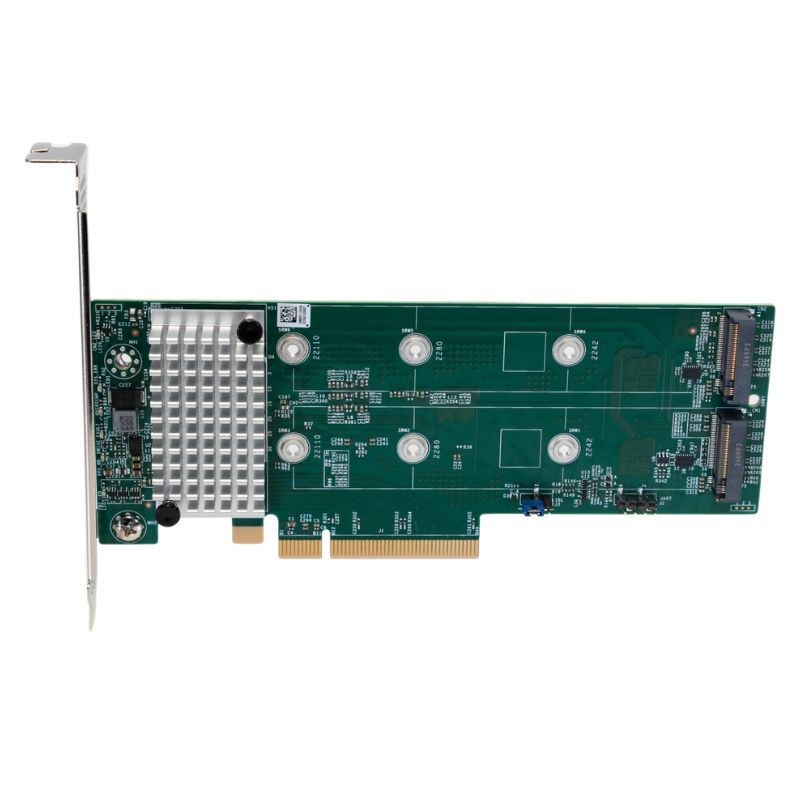
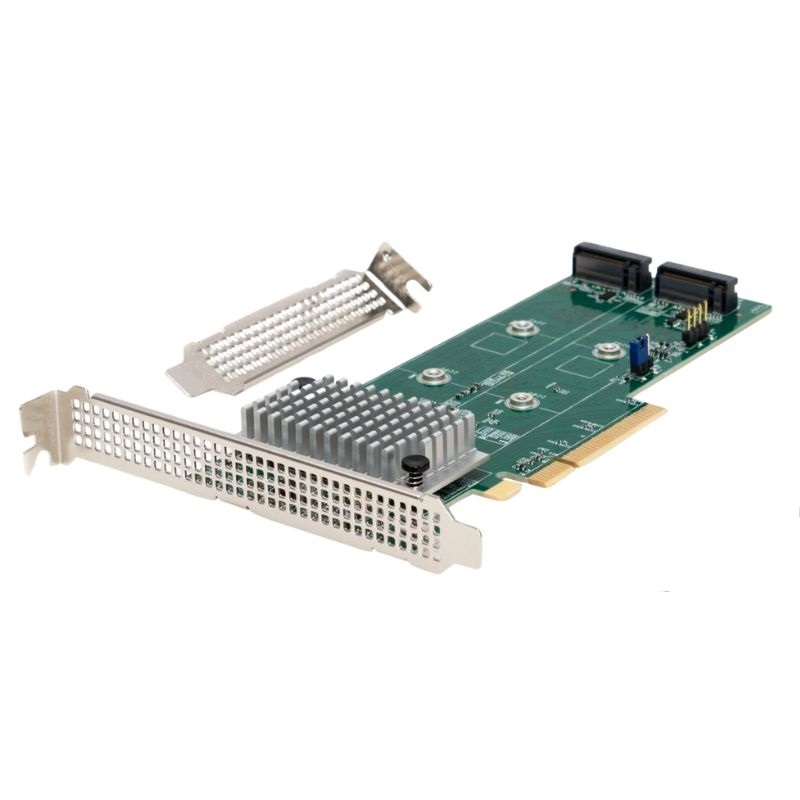
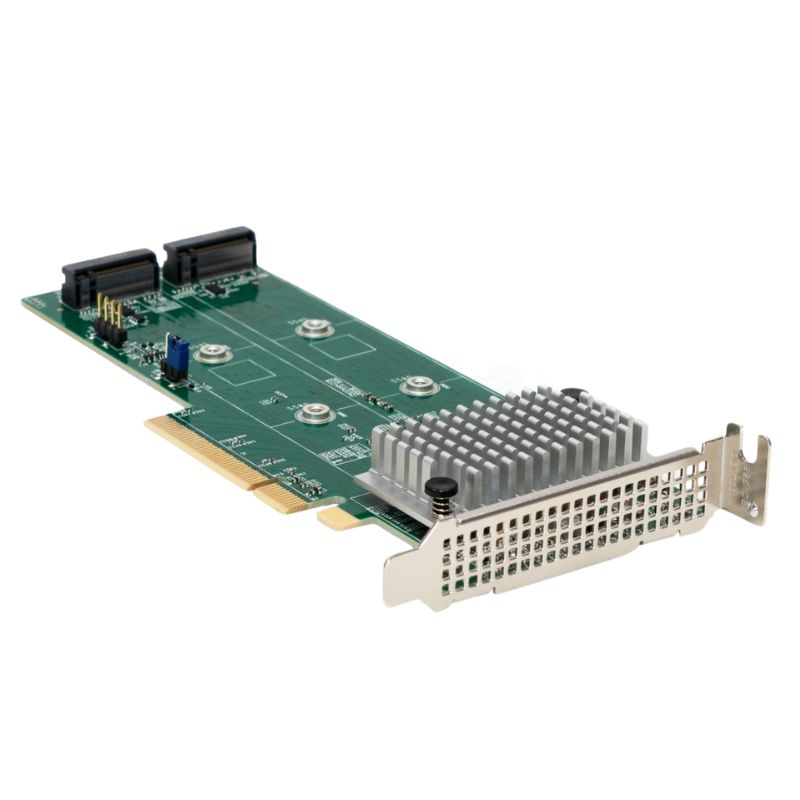
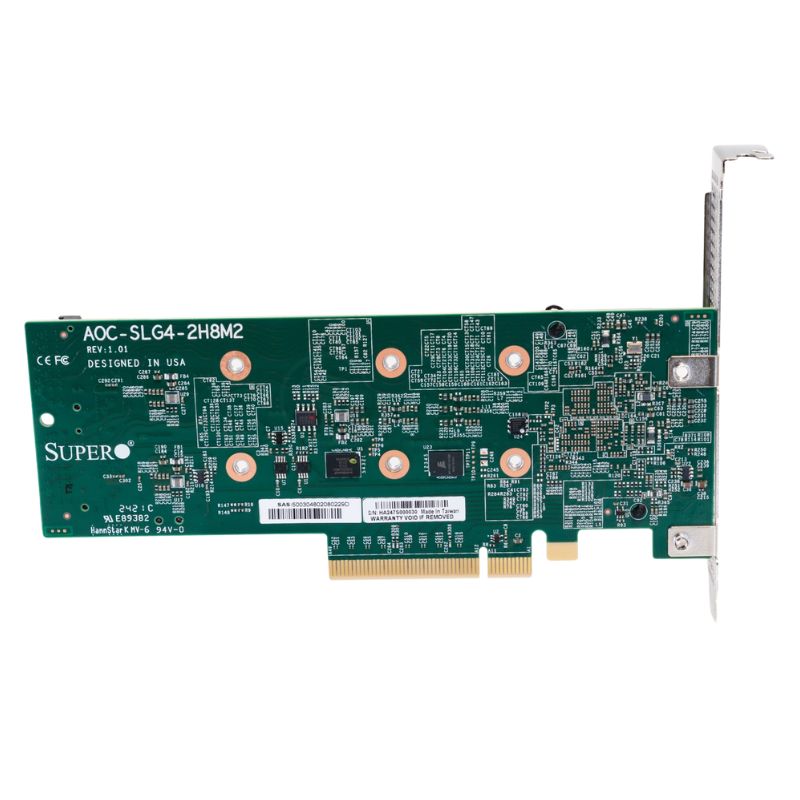
Supermicro AOC-SLG4-2H8M2 2x PCI-E Gen 4 Hybrid NVMe/SATA M.2 RAID Boot Storage Adapter. New Sealed in Box (NIB) with 3 Years Warranty
Optimize server boot and storage performance with the Supermicro AOC-SLG4-2H8M2. This hybrid NVMe/SATA M.2 RAID boot adapter is engineered for Supermicro platforms and combines low-latency PCI-Express Gen4 throughput with robust hardware RAID functionality. Ideal for data-center and enterprise deployments seeking fast, reliable, and compact M.2 storage solutions.
The adapter offers enterprise-grade connectivity and management capabilities to integrate smoothly into server ecosystems.
The Supermicro AOC-SLG4-2H8M2 family sits at the intersection of high-performance server storage, flexible boot options, and enterprise-grade reliability. This category focuses on PCI-Express Gen4 hybrid M.2 RAID adapters designed for modern data center servers, edge compute nodes, and high-density virtualization platforms that require both NVMe speed and SATA compatibility in a single, consolidated solution. Products in this continuous category are engineered to enable rapid boot performance, scalable capacity, and simplified storage management while preserving compatibility with legacy SATA M.2 devices. The emphasis on hybrid NVMe/SATA M.2 RAID functionality addresses a broad set of use cases—from OS boot drives and hypervisor installations to caching, tiered storage, and small-block random I/O workloads common in database and virtualization environments.
This category is specialized: adapters that combine multiple M.2 slots with RAID firmware or controller logic that supports both NVMe and SATA protocols, optimized for bootable RAID arrays. The Supermicro AOC-SLG4-2H8M2 exemplifies this focus by offering a PCI-E Gen4 interface that maximizes throughput and reduces latency, while also providing hardware and firmware features tailored for enterprise boot reliability. The category targets system builders, datacenter architects, and IT administrators who need robust, high-availability boot solutions that integrate seamlessly with server management tools and require minimal runtime maintenance.
At the core of this category is a thoughtful blend of high-speed PCI-E connectivity, multi-protocol M.2 slot design, and RAID logic that can be implemented in hardware, firmware, or a hybrid model. The adapter family typically leverages a PCI-E Gen4 x16 or x8 host interface to ensure that multiple NVMe SSDs can saturate available lanes without throttling. M.2 slots are wired to support both NVMe (PCI-E) and SATA signals where applicable, which may be selectively enabled depending on OS and platform support. RAID implementations range from RAID 0 and RAID 1 to more complex configurations like RAID 10 or proprietary boot-optimized RAID modes; what unites adapters in this category is their explicit support for creating bootable RAID volumes for operating systems and hypervisors.
One of the defining characteristics of Gen4-capable adapters is the uplift in sequential and random throughput. With higher PCI-E lane bandwidth, an adapter can sustain multiple NVMe SSDs operating at high queue depths without creating a host-interface bottleneck. This is particularly important for server boot volumes that need to initialize many services quickly, for virtual machine boot storms, and for parallel read/write patterns during automated orchestration or recovery operations. Reduced host latency also translates to faster OS loading and quicker reaction times for system management operations that rely on storage access during early boot stages.
Hybrid adapters in this category enable a smooth transition from SATA-based M.2 devices to NVMe SSDs. Organizations can start with cost-effective SATA M.2 drives for non-critical boot partitions or for large but infrequently accessed images, then migrate to NVMe when performance demands increase. Hybrid support also aids compatibility for mixed-vendor environments where some M.2 modules may be SATA-only. From a procurement standpoint, this reduces risk and allows infrastructure teams to adopt the newest NVMe technology incrementally while continuing to use existing inventory.
Bootable RAID arrays are central to the value proposition of this category. RAID 1 mirroring provides immediate redundancy for operating systems, ensuring that a single drive failure does not render servers unbootable. RAID 0 or RAID 10 configurations can be used where boot performance and read/write throughput are prioritized, such as in hyperconverged or hypervisor-heavy workloads. The firmware and management capabilities that come with enterprise adapters also support notifications, drive replacement procedures, and rebuilding strategies that minimize manual intervention during drive fault events.
When selecting a product from this category, compatibility with server motherboards, system BIOS/UEFI implementations, and operating systems is paramount. Hybrid M.2 RAID adapters typically require firmware-level compatibility for booting; some server platforms expose NVMe boot support natively through UEFI, while others rely on Option ROM or vendor-supplied boot loaders. Adapters in this category are often validated against a broad range of Supermicro server models as well as industry-standard platforms to ensure predictable boot behavior. Integration notes include verifying that the server BIOS supports NVMe boot, checking lane allocation on the PCI-E slot, and confirming that the chosen RAID mode is supported by the target hypervisor or OS installer.
UEFI-based systems generally provide the most robust NVMe boot experience, enabling direct enumeration of NVMe namespaces and straightforward boot configuration. For servers that still operate in legacy BIOS mode, some adapters provide Option ROM solutions that emulate bootable devices or present a virtualized block device to the system. Understanding the target platform’s boot environment is essential: UEFI simplifies configuration and reduces dependency on proprietary Option ROMs, while legacy environments may require additional vendor tools or firmware updates to achieve bootable RAID behavior with mixed NVMe and SATA M.2 devices.
Driver support is a practical concern in this product category. Modern Linux kernels and recent Windows Server releases include native NVMe drivers, but hybrid RAID adapters may expose RAID metadata in a way that requires vendor-supplied drivers for full management and health reporting. The best adapters in this category minimize driver dependencies for basic boot functionality while providing advanced driver packages for enterprise monitoring, firmware updates, and RAID management. For automated deployments and infrastructure-as-code workflows, adapter compatibility with standard tooling like IPMI, Redfish, and vendor management agents is a significant advantage.
Performance testing and real-world usage expose how these adapters support diverse workloads. In read-intensive workloads, mirrored NVMe boot arrays reduce read latency during mass-boot events and speed up application service launches. In write-sensitive configurations, controllers that efficiently handle concurrent queues and manage NVMe namespaces deliver predictable latency under load. For small-block random I/O, which is common for database metadata and hypervisor control planes, NVMe-backed boot arrays dramatically outperform SATA-based solutions. On the other hand, SATA M.2 devices can be used in larger capacity roles where high sequential throughput is less critical but cost-efficiency matters.
Common workloads for this category include virtualization hosts where many VMs are hosted on a single server and require fast boot and low-latency disk access for OS operations. Database servers benefit from the small-block IOPS improvements when using NVMe boot arrays for system catalogs and logs. Container hosts and CI/CD build servers enjoy faster container startup and artifact access. Edge compute nodes that need rugged, reliable boot storage in constrained form factors also derive value from M.2 RAID boot adapters that provide both speed and redundancy in a compact expansion slot.
Adapters like those in the Supermicro AOC-SLG4-2H8M2 category contribute to high-density server deployments by enabling multiple M.2 drives to share a single PCI-E slot, avoiding the need for additional drive bays and reducing cable complexity. This density advantage is relevant in hyperscale and cloud environments where floor space and power efficiency are important. When scaling across a fleet, administrators should standardize firmware versions and RAID policies to ensure consistent rebuild times, consistent performance baselines, and predictable maintenance windows.


 Contact Us
 Information
 Catalog
 Solid State Drives (SSD)
 Network Switches
 Hard Disk Drives
 HBA & Controllers
 PC & Servers
 PC & Server Memory
 CPU & Processors
 Network Routers
 Power Supplies
 Tape Drives & Libraries
 Network Devices
 Computer & Network Cables