
(7% discount is applied at checkout)
Cart is empty
Your go-to destination for cutting-edge server products
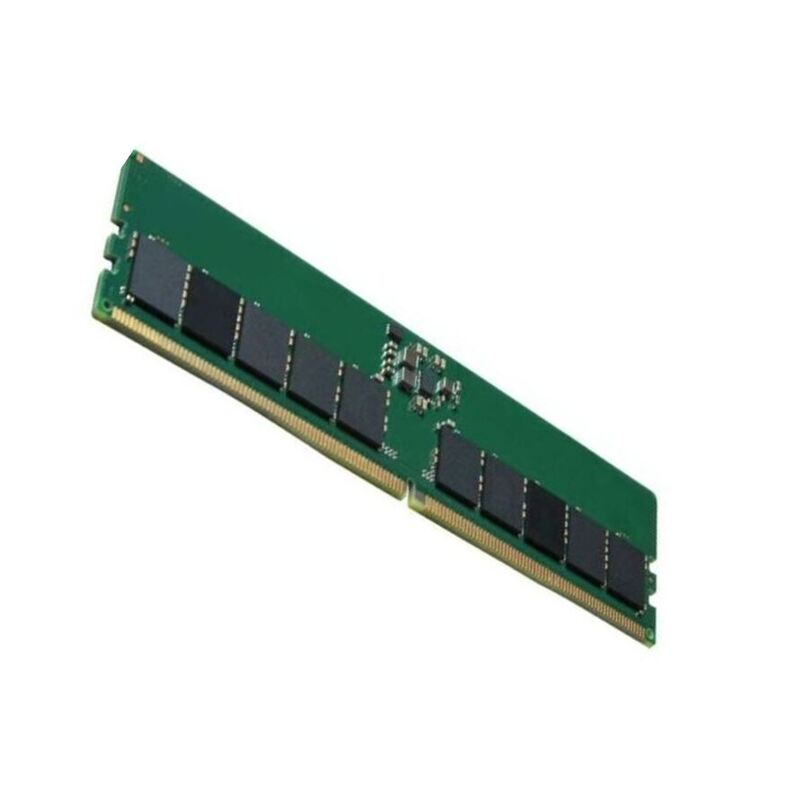
Supermicro MEM-DR416L-CL03-ER32 16GB 3200MHz Pc4-25600 Cas-22 Ecc Registered Single Rank X4 DDR4 SDRAM 288-Pin Rdimm Memory Module for Server. New (System) Pull with 1 year replacement warranty - Micron Version
The Supermicro MEM-DR416L-CL03-ER32 is a high-performance DDR4 SDRAM memory module designed for enterprise-grade servers. With advanced ECC registered technology, this module ensures reliability, speed, and efficiency for demanding workloads.
The Supermicro MEM-DR416L-CL03-ER32 16GB 3200MHz PC4-25600 CAS-22 ECC Registered Single Rank X4 DDR4 SDRAM 288-Pin RDIMM memory module for servers represents a critical component in the broader category of high-performance server memory solutions. Designed to meet the rigorous demands of enterprise workloads, virtualization environments, cloud infrastructure, and mission-critical applications, this category of memory modules emphasizes reliability, scalability, and efficiency above all else. Within this segment, DDR4 RDIMM memory stands as a cornerstone technology that enables servers to maintain consistent performance while handling complex, data-intensive operations.
DDR4 Registered DIMM memory modules are engineered specifically for servers and workstations that require higher stability and capacity than consumer-grade memory can provide. The inclusion of a register between the memory controller and DRAM modules reduces electrical load, allowing systems to support more memory modules per channel. This design ensures improved signal integrity, making RDIMMs particularly suitable for multi-socket server configurations where large memory capacities are essential.
The 3200MHz speed rating, categorized under PC4-25600, delivers high bandwidth necessary for modern computing demands. This speed allows servers to process data faster, reducing latency in applications such as database management systems, virtualization platforms, and high-performance computing clusters. The CAS latency of 22 strikes a balance between performance and stability, ensuring that the module operates efficiently under sustained workloads.
ECC, or Error-Correcting Code, is a defining feature of this category. ECC memory detects and corrects single-bit memory errors in real time, preventing data corruption and system crashes. In enterprise environments where uptime and data accuracy are paramount, ECC functionality is indispensable. This capability ensures that even in scenarios involving heavy computational loads or extended operational periods, the system maintains data integrity and operational reliability.
Enterprise applications such as financial systems, healthcare databases, and cloud services rely on precise and uninterrupted data processing. A single memory error in these contexts could lead to significant operational disruptions or data inconsistencies. ECC memory mitigates these risks by continuously monitoring and correcting errors, making it a foundational requirement in professional server deployments.
The 16GB capacity of this module positions it as a versatile building block within scalable memory architectures. In large server environments, multiple RDIMM modules can be combined to achieve substantial total memory capacities, often reaching hundreds of gigabytes or even terabytes. This scalability is essential for applications such as virtualization, where multiple virtual machines share system resources, or big data analytics, which requires extensive memory pools for efficient data processing.
The single rank X4 configuration refers to the internal organization of memory chips within the module. Single rank modules typically offer improved compatibility and reduced latency compared to dual-rank or quad-rank configurations. The X4 designation indicates that each memory chip handles four bits of data, contributing to enhanced error correction capabilities and reliability. This configuration is particularly beneficial in environments where consistent performance and stability are critical.
When deploying RDIMM modules in servers, memory population strategies play a significant role in achieving optimal performance. Administrators must consider factors such as channel balancing, rank distribution, and total capacity requirements. Properly configured memory layouts ensure that systems can fully leverage the bandwidth and performance potential of DDR4 technology.
The 3200MHz frequency represents one of the higher performance tiers within the DDR4 standard. This increased speed translates to higher data transfer rates, enabling servers to handle more operations per second. For applications such as real-time analytics, artificial intelligence, and machine learning, faster memory speeds can significantly impact overall system performance.
Memory bandwidth is a critical factor in server performance, particularly in data-intensive workloads. Higher bandwidth allows for faster data movement between the CPU and memory, reducing bottlenecks and improving application responsiveness. The PC4-25600 classification indicates a theoretical maximum bandwidth of 25.6 GB/s per module, providing ample capacity for demanding workloads.
While higher frequencies generally improve performance, latency also plays a crucial role. The CAS latency of 22 ensures that the module maintains a balance between speed and responsiveness. This balance is essential in enterprise environments where consistent performance is more valuable than peak theoretical speeds.
Server memory modules are designed with durability and longevity in mind. Unlike consumer-grade memory, which may prioritize cost or overclocking potential, enterprise memory focuses on sustained performance over extended periods. This includes rigorous testing, adherence to strict quality standards, and compatibility with a wide range of server platforms.
Compatibility is a crucial consideration when selecting server memory. The 288-pin RDIMM form factor ensures compatibility with a wide range of enterprise server motherboards. However, it is important to verify support for DDR4 RDIMM modules and the specific speed rating to ensure optimal performance.
Virtualization platforms rely heavily on memory resources to run multiple virtual machines simultaneously. Each virtual machine requires its own allocation of memory, making high-capacity and reliable memory modules essential. DDR4 RDIMM modules enable efficient resource allocation and improved performance in virtualized environments.
Database applications benefit from large memory capacities that allow for faster data retrieval and reduced reliance on disk storage. High-speed DDR4 memory improves query performance and enhances the overall efficiency of database operations.
In high-performance computing and artificial intelligence applications, memory speed and capacity directly impact processing capabilities. DDR4 RDIMM modules provide the necessary performance to handle complex computations and large datasets, enabling faster results and improved efficiency.
Registered memory offers several advantages over unbuffered memory, particularly in server environments. The inclusion of a register reduces the electrical load on the memory controller, allowing for greater scalability and improved stability.


 Contact Us
 Information
 Catalog
 Solid State Drives (SSD)
 Network Switches
 Hard Disk Drives
 HBA & Controllers
 PC & Servers
 PC & Server Memory
 CPU & Processors
 Network Routers
 Power Supplies
 Tape Drives & Libraries
 Network Devices
 Computer & Network Cables