
(7% discount is applied at checkout)
Cart is empty
Your go-to destination for cutting-edge server products
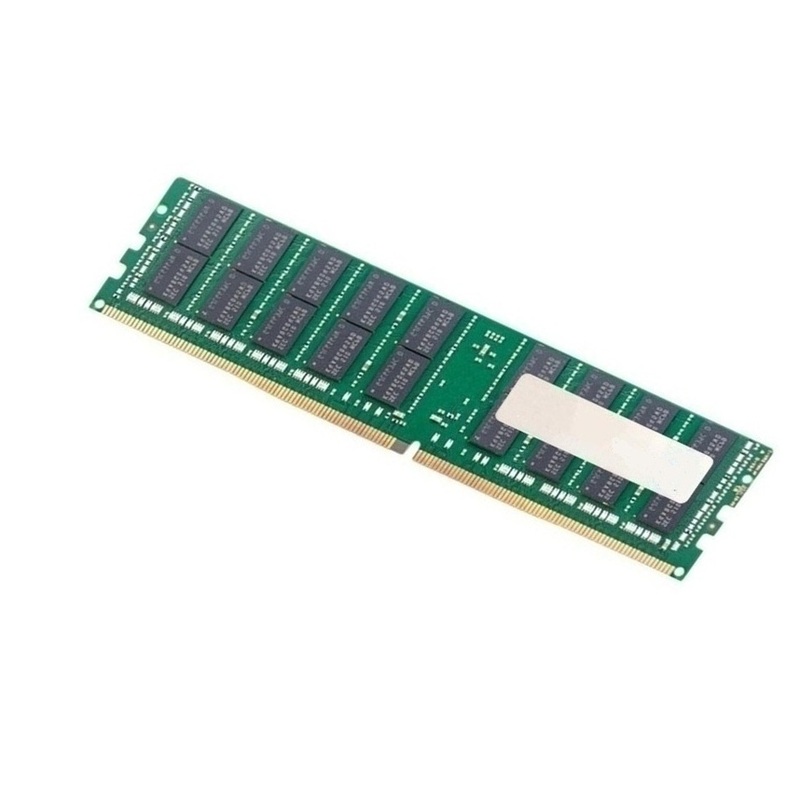
Supermicro MEM-DR432L-HL01-ER26 32GB 2666MHz PC4-21300 Cl19 Ecc Registered Dual Rank X4 1.2v DDR4 SDRAM 288-Pin Rdimm Memory. New (System) Pull with 1 year replacement warranty - Hynix Version
| SKU/MPN | Warranty | Price | Condition | You save |
|---|---|---|---|---|
| MEM-DR432L-HL01-ER26 | 1 Year Warranty | $412.00 | New (System) Pull | You save: $144.20 (26%) |
| MEM-DR432L-HL01-ER26 | 1 Year Warranty | $552.00 | New Sealed in Box (NIB) | You save: $193.20 (26%) |
The Supermicro MEM-DR432L-HL01-ER26 32GB DDR4 RDIMM memory module represents a robust solution for enterprise environments that demand reliability, scalability, and consistent high-speed performance. Built to meet the rigorous requirements of modern data centers, virtualization platforms, and mission-critical applications, this 32GB module operates at 2666MHz with a PC4-21300 rating, ensuring efficient data throughput and minimized latency across server workloads. Its ECC Registered design enhances system stability by detecting and correcting errors in real time, making it ideal for environments where uptime and data integrity are non-negotiable.
Advanced Performance Capabilities of DDR4 ECC Memory
The Supermicro MEM-DR432L-HL01-ER26 32GB DDR4 memory module represents a high-performance solution designed specifically for enterprise-grade computing environments, where stability, scalability, and sustained throughput are essential. With a memory capacity of 32GB, this RDIMM module enables servers and workstations to efficiently handle data-intensive applications, virtualization workloads, and mission-critical processes. Its 2666MHz operating frequency ensures optimal data transfer rates, making it suitable for modern infrastructures that require rapid processing and minimal latency.
The 2666MHz speed rating, also referred to as PC4-21300, indicates the module’s ability to deliver substantial bandwidth for demanding server operations. This high-frequency capability ensures smooth multitasking and efficient handling of concurrent processes, which is especially beneficial in cloud computing, database management, and real-time analytics. By maintaining consistent performance under heavy workloads, the memory module helps reduce bottlenecks and enhances overall system responsiveness.
Error-Correcting Code (ECC) technology plays a critical role in maintaining data integrity. This memory module includes advanced ECC functionality that detects and corrects single-bit memory errors in real time. In enterprise environments, where data accuracy is paramount, ECC ensures system reliability by minimizing the risk of data corruption and unexpected crashes. This feature is particularly valuable for applications such as financial systems, scientific computations, and large-scale databases.
ECC memory continuously monitors data as it moves in and out of the module, automatically correcting errors without interrupting system operations. This capability significantly enhances uptime and reliability, making it an essential component for servers that must operate continuously without failure.
By reducing the likelihood of memory-related errors, ECC technology contributes to system stability. This is crucial in environments where even minor disruptions can lead to significant operational or financial consequences.
The Registered DIMM (RDIMM) architecture is a defining feature of this memory module, providing improved signal integrity and scalability compared to unbuffered memory. RDIMM modules include a register that buffers control signals, reducing electrical load on the memory controller and allowing systems to support more memory modules simultaneously.
The inclusion of a register between the memory controller and the DRAM chips ensures cleaner signal transmission. This results in enhanced reliability, especially in systems with multiple memory modules installed.
RDIMM technology enables servers to scale memory capacity efficiently. This makes the module suitable for large-scale deployments where high memory density is required, such as virtualization platforms and enterprise data centers
The buffering mechanism reduces the electrical load on the memory controller, enabling stable operation even with numerous installed modules.
The dual rank configuration of this 32GB DDR4 module contributes to improved performance by allowing the memory controller to access multiple ranks alternately. This design increases efficiency and optimizes data flow within the system.
Dual rank memory modules contain two sets of DRAM chips that can be accessed independently. This enables better utilization of memory bandwidth and enhances overall system performance.
The X4 chip configuration provides additional data integrity features, including advanced error correction capabilities. This makes the module particularly suitable for enterprise applications where reliability is critical.
The combination of dual rank architecture and X4 chip organization ensures a balance between performance and data protection, making it ideal for server environments.
By enabling parallel access to multiple ranks, the module improves data throughput and reduces latency.
Operating at 1.2 volts, this DDR4 memory module offers improved energy efficiency compared to previous generations. Lower voltage operation reduces power consumption and heat generation, contributing to more sustainable and cost-effective server operations.
The 1.2V operating voltage minimizes energy usage without compromising performance. This is particularly beneficial in large data centers where power efficiency is a key consideration.
Reduced voltage also leads to lower heat generation, which helps maintain optimal operating temperatures and extends the lifespan of system components.
Efficient heat dissipation ensures stable performance and reduces the need for extensive cooling solutions.
Lower power consumption translates to reduced operational costs, making this memory module a cost-effective choice for large-scale deployments.
The 288-pin form factor is standard for DDR4 RDIMM modules, ensuring compatibility with a wide range of modern server motherboards. This design allows for easy installation and integration into existing systems.
The module’s standardized pin configuration ensures seamless compatibility with servers that support DDR4 RDIMM memory. This makes it a versatile option for system upgrades and new builds.
The pin configuration ensures a secure and stable connection between the memory module and the motherboard.
Compatibility with various server platforms ensures consistent performance regardless of the system configuration.
The CL19 latency rating indicates the number of clock cycles required for the memory to respond to a command. While higher frequency improves bandwidth, latency plays a crucial role in determining overall performance.
CAS latency, or CL, measures the delay between a memory request and the availability of data. A CL19 rating provides a balance between speed and responsiveness.
Latency affects how quickly data can be accessed, influencing application performance and system efficiency.
The combination of 2666MHz speed and CL19 latency ensures optimal performance for a wide range of applications.
The timing specifications are well-suited for enterprise environments that require consistent and reliable performance.
This 32GB DDR4 ECC Registered memory module is designed for use in enterprise servers, data centers, and high-performance workstations. Its features make it suitable for a variety of applications, including virtualization, cloud computing, and big data analytics.
High memory capacity and reliable performance are essential for virtualization environments. This module enables efficient resource allocation and supports multiple virtual machines simultaneously.
Large databases require substantial memory resources for optimal performance. The module’s high capacity and speed ensure efficient data processing and retrieval.
Fast data processing capabilities make the module suitable for real-time analytics applications, where timely insights are critical.
Advanced error correction and high performance make the module ideal for scientific simulations and technical computations.
Designed for 24/7 operation, this memory module offers exceptional reliability and durability. Its robust construction ensures consistent performance even under demanding conditions.
The module is engineered to maintain performance over extended periods, making it suitable for continuous operation in enterprise environments.
Rigorous testing ensures that the module meets high standards of quality and reliability.
The module is capable of handling heavy workloads without performance degradation.
Advanced design and manufacturing processes minimize the risk of hardware failure.
The memory module is designed to integrate seamlessly with modern server architectures, providing compatibility with the latest processors and chipsets.
The module is suitable for use in multi-processor systems, where high memory bandwidth is essential.
Its high capacity and performance make it ideal for data-intensive applications that require rapid access to large datasets.
Efficient memory management improves overall system efficiency and performance.
The module’s specifications ensure compatibility with future server technologies.
The 32GB capacity provides a solid foundation for system scalability, allowing organizations to expand their memory resources as needed.
The module can be combined with additional memory modules to increase total system capacity.
RDIMM technology enables support for high-capacity configurations, making it suitable for growing workloads.
Scalability ensures efficient allocation of memory resources based on workload requirements.
The module’s flexibility allows systems to adapt to evolving business needs.
Efficient thermal and power management are essential for maintaining optimal system performance. This memory module is designed to operate efficiently within standard server cooling systems.
The module’s design ensures effective heat dissipation, preventing overheating and maintaining stable performance.
Low voltage operation contributes to overall energy efficiency, reducing the environmental impact of data center operations.
Efficient thermal management extends the lifespan of system components.
Lower heat output reduces the need for extensive cooling solutions, lowering operational costs.


 Contact Us
 Information
 Catalog
 Solid State Drives (SSD)
 Network Switches
 Hard Disk Drives
 HBA & Controllers
 PC & Servers
 PC & Server Memory
 CPU & Processors
 Network Routers
 Power Supplies
 Tape Drives & Libraries
 Network Devices
 Computer & Network Cables