
(7% discount is applied at checkout)
Cart is empty
Your go-to destination for cutting-edge server products
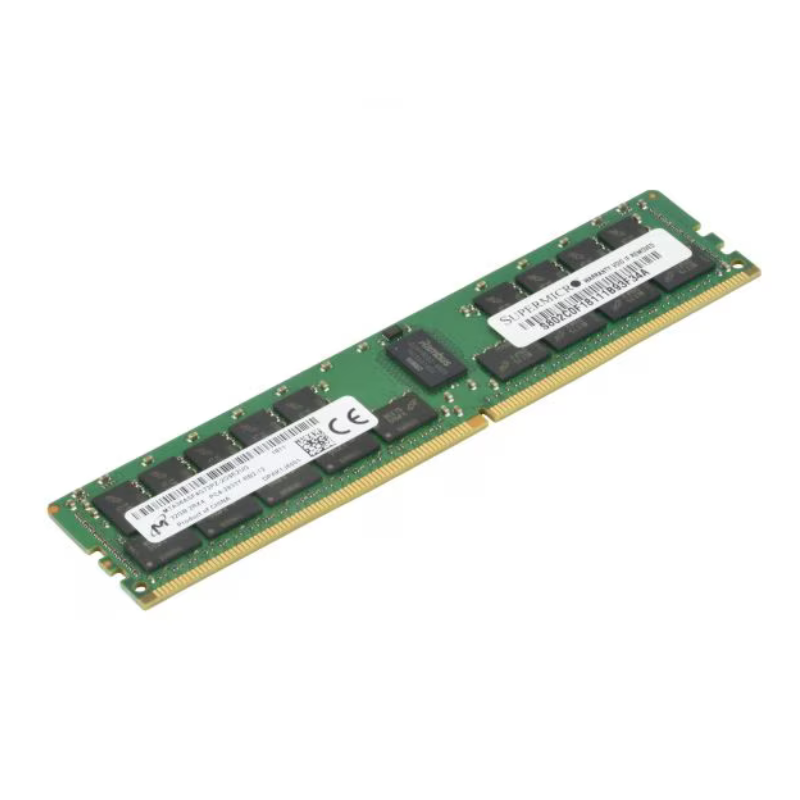
Supermicro MEM-DR532L-CL01-ER64 32GB DDR5 6400MT/s PC5-51200 ECC SDRAM 288-Pin RDIMM Memory Module For Server. New Sealed in Box (NIB) with 3 Years Warranty - Micron Version
The Supermicro MEM-DR532L-CL01-ER64 is a high-speed DDR5 RDIMM memory module engineered for enterprise servers that require superior bandwidth, consistent reliability, and advanced error correction. Designed to meet modern data center demands, this memory module enhances system responsiveness and workload efficiency.
The Supermicro MEM-DR532L-CL01-ER64 32GB DDR5 6400MT/s RDIMM memory module belongs to an advanced category of high-speed DDR5 ECC server memory engineered for enterprise servers, data centers, and performance-critical computing environments. This category represents the upper tier of DDR5 registered DIMM technology, emphasizing maximum memory bandwidth, signal integrity, and data reliability for next-generation server platforms. DDR5 6400MT/s memory modules are designed to complement modern CPUs with high core densities, expanded memory channels, and demanding parallel workloads.
DDR5 SDRAM introduces a substantial leap in memory architecture, and the 6400MT/s speed grade represents a significant milestone in server memory performance. This category of DDR5 RDIMM memory delivers dramatically higher data transfer rates compared to earlier DDR5 speeds and all previous DDR4 generations. At 6400MT/s, memory bandwidth becomes a powerful asset for CPUs that process massive datasets concurrently across dozens or even hundreds of threads. The PC5-51200 classification reflects a theoretical peak bandwidth of 51.2 gigabytes per second per module. In multi-channel server configurations, aggregate bandwidth scales rapidly, enabling processors to remain fully utilized without waiting on memory access.
High-bandwidth memory is essential for reducing bottlenecks in modern server workloads. Applications such as in-memory databases, machine learning pipelines, and large-scale virtualization platforms benefit from the ability to move data quickly between memory and CPU caches. This category of DDR5 memory ensures that memory access keeps pace with processor execution, supporting higher transaction rates and faster workload completion. Bandwidth-intensive workloads often exhibit diminishing returns when memory throughput is insufficient. By adopting DDR5 6400MT/s RDIMM memory, organizations can unlock the full potential of modern server CPUs, ensuring balanced system performance across compute, memory, and I/O subsystems.
Error Correcting Code SDRAM is a foundational requirement in this server memory category, providing essential protection against data corruption. ECC memory continuously monitors stored data and automatically corrects single-bit errors, preventing silent data corruption that could compromise application accuracy or system stability. In enterprise environments, data integrity is paramount, particularly for workloads involving financial transactions, scientific calculations, or mission-critical business operations. This category of DDR5 ECC memory is engineered to operate reliably under sustained load conditions, where memory cells are accessed continuously over long periods.
Servers are expected to operate continuously, often for years without interruption. During this time, even rare memory errors can accumulate and cause unpredictable behavior if left uncorrected. ECC memory mitigates this risk by detecting and correcting errors in real time, maintaining system stability and application correctness. This category of ECC DDR5 memory is particularly valuable in environments where uptime and data accuracy are critical performance metrics. By incorporating ECC at the memory level, organizations can reduce the likelihood of costly downtime and data recovery efforts.
The registered DIMM architecture is a defining characteristic of this DDR5 server memory category. RDIMM modules incorporate a register that buffers command and address signals between the memory controller and the DRAM chips. This buffering reduces electrical load on the memory controller, enabling support for higher memory capacities and more populated DIMM slots per channel. In large server systems, especially those with multiple CPU sockets and numerous memory slots, signal integrity becomes increasingly challenging. RDIMM memory addresses this challenge by stabilizing signal timing and reducing noise, ensuring reliable operation at high speeds such as 6400MT/s. This category is therefore optimized for enterprise servers that require both performance and scalability.
Multi-socket server architectures rely heavily on RDIMM memory to maintain balanced performance across processors. Each CPU socket may support multiple memory channels, and fully populating these channels is essential for achieving maximum bandwidth. Registered DIMMs enable such configurations without overloading the memory controller. This category of DDR5 RDIMM memory supports complex memory topologies, making it suitable for high-end servers used in data centers, research institutions, and enterprise IT environments.
The 32GB capacity of the Supermicro MEM-DR532L-CL01-ER64 module represents a versatile and widely adopted capacity point within this category. It allows system architects to scale memory incrementally while maintaining high-speed operation. Using 32GB modules, servers can achieve substantial total memory capacity without relying on fewer, higher-capacity DIMMs that may limit population flexibility. This capacity point is particularly effective in balancing cost, performance, and scalability. It supports a wide range of workloads, from moderately sized virtual machine clusters to memory-intensive analytics platforms, while preserving the ability to expand memory as demands grow.
Effective memory population strategies are critical for optimizing server performance. This category of memory supports balanced channel population, which maximizes bandwidth and minimizes latency disparities. Using identical 32GB RDIMM modules across channels ensures consistent performance characteristics and simplifies capacity planning. Memory density considerations also influence thermal behavior and power consumption. The 32GB form factor strikes a balance between density and manageability, making it a practical choice for high-performance servers.
Operating at 6400MT/s places this memory module within the highest performance tier of DDR5 server memory. Achieving stable operation at this frequency requires precise signal integrity, advanced PCB design, and rigorous validation. This category is engineered to meet these requirements, ensuring reliable performance under demanding conditions. High-frequency memory operation reduces latency in data transfer and improves responsiveness in applications that rely on rapid memory access. While raw latency figures may vary, the overall system-level performance benefits of higher transfer rates are substantial, particularly in bandwidth-bound workloads.
Maintaining signal integrity at 6400MT/s requires careful control of timing parameters and electrical characteristics. DDR5 RDIMM modules incorporate design features that minimize crosstalk, reflection, and noise, ensuring stable data transmission. This category reflects the culmination of advances in memory engineering and manufacturing. Timing control is managed in coordination with server BIOS and memory controllers, which are tuned to support high-speed DDR5 operation. Validated memory modules ensure that these interactions function as intended.
The 288-pin RDIMM form factor is the standardized physical interface for DDR5 server memory. This category adheres strictly to this standard, ensuring compatibility with DDR5-enabled server motherboards. The pin configuration supports the increased power and signaling requirements of high-speed DDR5 operation. Mechanical precision and electrical reliability are essential for server memory that may be installed, removed, and reinstalled during maintenance cycles. This category emphasizes robust construction and consistent tolerances to support enterprise deployment scenarios.
Despite its high operating speed, DDR5 memory in this category is designed with power efficiency in mind. Advanced power management features, including on-DIMM voltage regulation, help optimize power delivery and reduce overall consumption. Efficient power usage contributes to lower heat output and improved thermal stability. Thermal management is a critical consideration in dense server environments. This category of memory supports high-density configurations without exceeding thermal limits, enabling reliable operation in rack-mounted and blade servers.
High-density server deployments place significant thermal stress on components. DDR5 RDIMM memory modules are designed to operate within defined temperature ranges while maintaining performance. Efficient heat dissipation and stable electrical characteristics help ensure long-term reliability. This category supports data center designs that prioritize both performance and energy efficiency, aligning with modern sustainability goals.
Supermicro memory modules are validated through extensive testing to ensure compatibility with supported server platforms. This validation process includes testing across CPUs, chipsets, and BIOS versions to verify stable operation at rated speeds. The MEM-DR532L-CL01-ER64 module exemplifies this commitment to quality and reliability. Within this category, validated memory reduces the risk of compatibility issues and simplifies system integration. Organizations deploying Supermicro servers benefit from using memory modules that are designed and tested for seamless operation.
DDR5 memory behavior is closely tied to firmware and BIOS configurations that manage timing, voltage, and error correction. Validated memory modules ensure proper initialization and stable performance across firmware updates. This category emphasizes long-term compatibility and supportability. Reliable firmware integration contributes to predictable system behavior, reducing operational risk in enterprise environments.
This category of DDR5 6400MT/s ECC RDIMM memory is aligned with workloads that demand exceptional memory performance. High-performance computing applications benefit from increased bandwidth for simulations and modeling. Artificial intelligence and machine learning workloads leverage fast memory to accelerate data preprocessing and inference tasks. Enterprise databases and real-time analytics platforms require consistent low-latency access to large datasets. This category supports such requirements by delivering sustained high-speed memory access under continuous load.
Virtualization platforms rely on fast, reliable memory to support multiple concurrent virtual machines. DDR5 6400MT/s memory enables higher VM density and improved performance isolation. This category is well-suited for private and hybrid cloud deployments. Cloud infrastructure benefits from standardized memory configurations that simplify scaling and maintenance. Using 32GB RDIMM modules provides flexibility and consistency across nodes.
Adopting DDR5 6400MT/s memory positions organizations for future growth as server workloads continue to evolve. This category supports increasing core counts, higher memory channel densities, and more demanding applications. Scalability is a core attribute, enabling incremental upgrades without architectural changes. Future-oriented server design emphasizes balanced performance across all subsystems. High-speed DDR5 memory ensures that memory bandwidth does not become a limiting factor as processors and accelerators advance.
Infrastructure planning requires components that remain relevant over extended lifecycles. This category of DDR5 memory supports long-term deployment strategies by offering headroom for future performance demands. Organizations can invest with confidence, knowing that their memory infrastructure is aligned with upcoming technology trends. By standardizing on high-speed DDR5 RDIMM memory, enterprises can reduce the frequency of disruptive upgrades and maintain competitive performance.
Reliability is a defining characteristic of this DDR5 server memory category. Modules are manufactured using high-quality components and subjected to rigorous testing to ensure consistent performance. ECC functionality, registered architecture, and conservative operating parameters contribute to long-term stability. Enterprise standards emphasize predictable behavior and minimal failure rates. This category aligns with those standards, providing memory solutions that support mission-critical operations without compromise.
Server memory must deliver consistent performance under sustained load conditions. This category of DDR5 6400MT/s RDIMM memory is engineered to maintain throughput and stability even during prolonged periods of high utilization. Consistent performance is essential for maintaining service quality and meeting performance expectations. By combining high bandwidth, robust error correction, and efficient thermal behavior, this category supports continuous operation in demanding enterprise environments.
Modern servers often feature multiple CPU sockets and high core counts, placing increased demands on the memory subsystem. DDR5 RDIMM memory supports these architectures by providing sufficient bandwidth and capacity per socket. This category enables balanced memory configurations that scale with processor capabilities. Support for multi-socket systems ensures that memory performance remains consistent across all processors, avoiding bottlenecks and performance asymmetries.


 Contact Us
 Information
 Catalog
 Solid State Drives (SSD)
 Network Switches
 Hard Disk Drives
 HBA & Controllers
 PC & Servers
 PC & Server Memory
 CPU & Processors
 Network Routers
 Power Supplies
 Tape Drives & Libraries
 Network Devices
 Computer & Network Cables