(7% discount is applied at checkout)
Cart is empty
Your go-to destination for cutting-edge server products
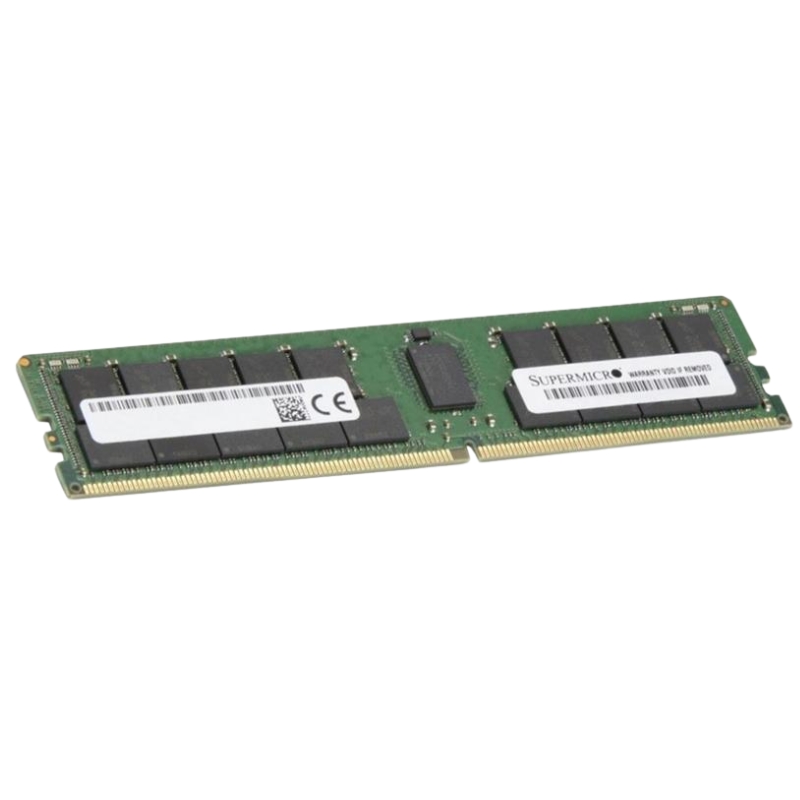


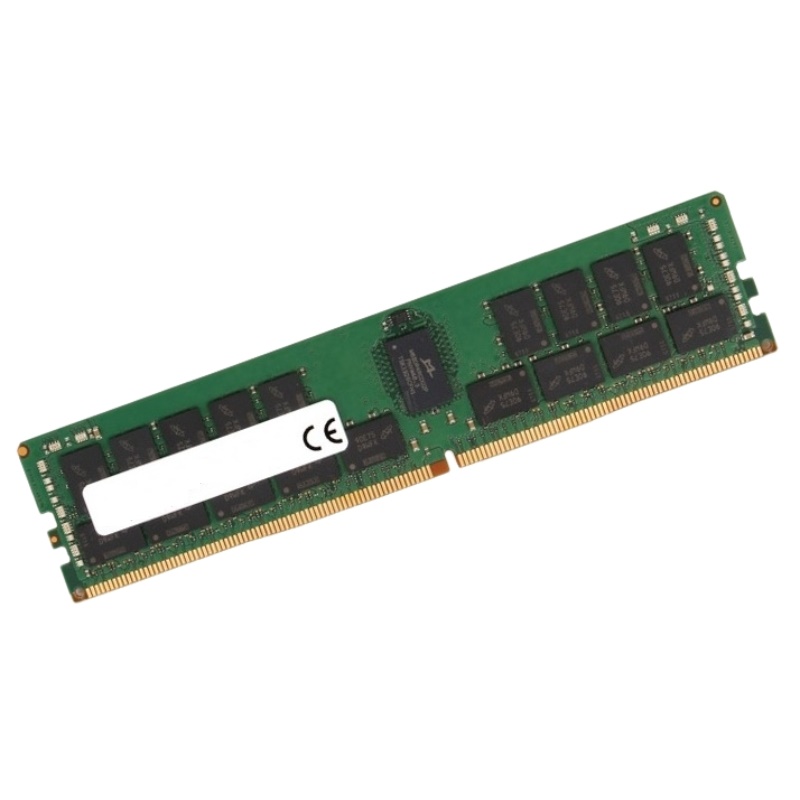
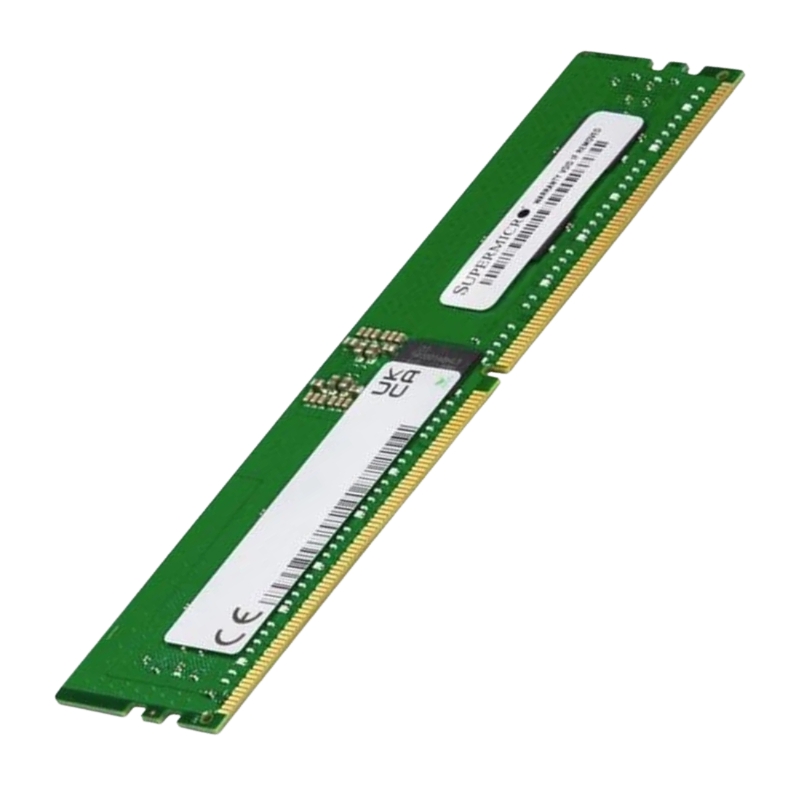
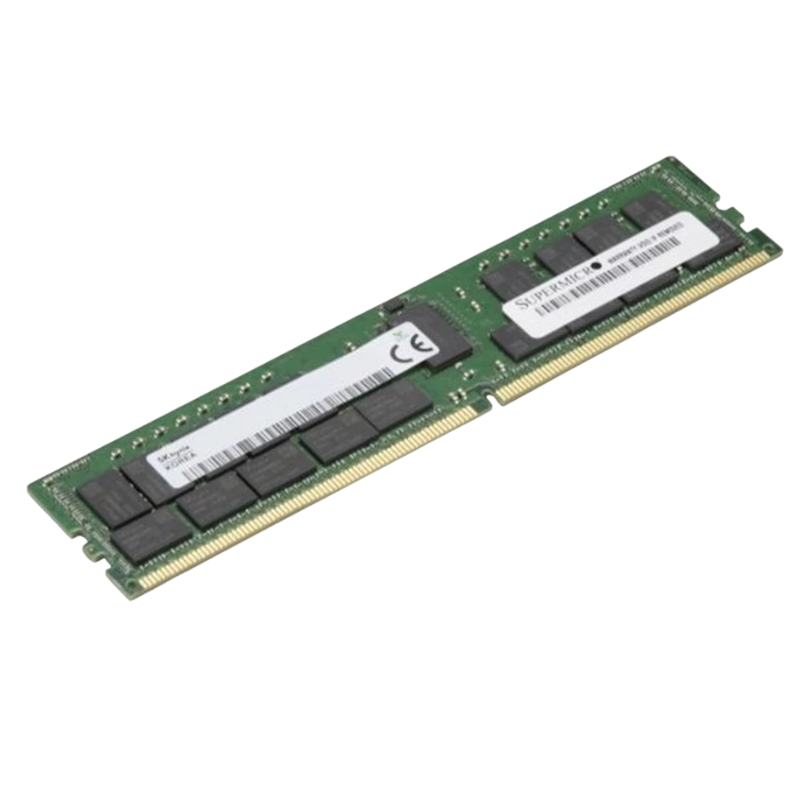
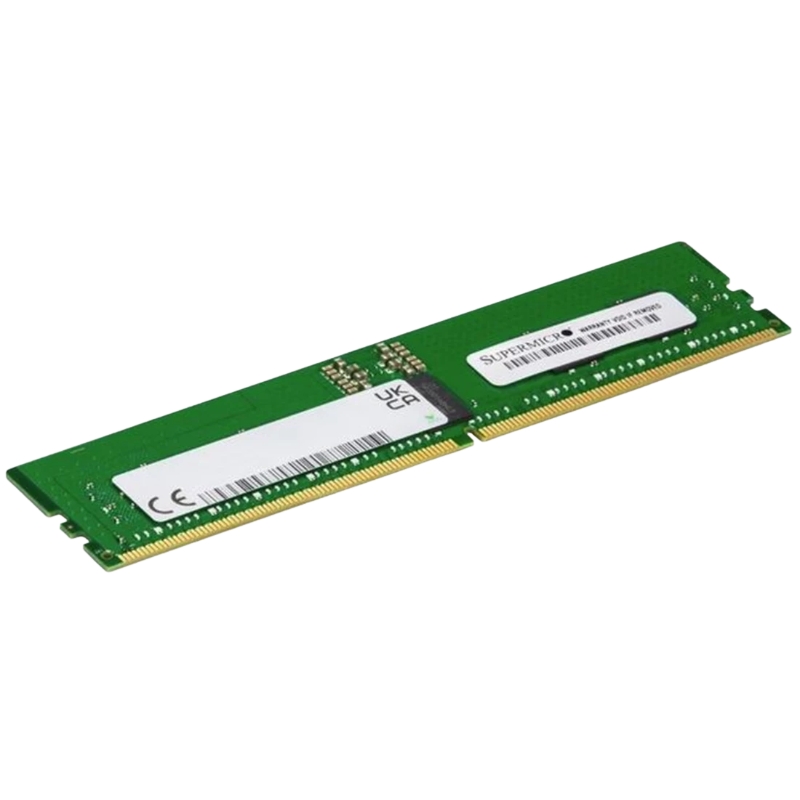
Supermicro MEM-DR596L-HL01-ER48 96GB PC5-38400 DDR5 4800 MHz ECC Registered CL40 288-Pin RDIMM 1.2V Dual Rank Memory Kit. New (System) Pull with 1 Year Replacement Warranty - Hynix Version
The Supermicro MEM-DR596L-HL01-ER48 represents a significant leap in server memory technology, delivering high-density, high-bandwidth performance for modern data centers and enterprise server platforms. This 96GB kit, configured as a pair of 48GB modules, is engineered for systems demanding robust computational power, massive data throughput, and unwavering reliability.
The SuperMicro MEM-DR596L-HL01-ER48 represents a pinnacle of server memory engineering, designed for data centers, enterprise servers, and high-performance computing environments demanding unparalleled reliability and throughput. This 96GB kit, comprised of advanced DDR5 technology, is not merely an upgrade but a foundational component for next-generation server architectures. Engineered to meet the rigorous demands of 24/7 operation, this memory module integrates ECC (Error-Correcting Code) and Registered buffering to ensure data integrity and system stability under the most intensive workloads. Its specifications—PC5-38400, 4800 MHz, CL40 latency, 288-pin RDIMM form factor at 1.2V—define a new standard for efficiency and performance in modern server memory solutions.
The transition to DDR5 memory marks a seismic shift in server capabilities. The SuperMicro MEM-DR596L-HL01-ER48 is at the forefront of this revolution, delivering significant advancements over previous DDR4 generations. The core improvement lies in the architecture: DDR5 effectively doubles the prefetch length and burst length to 16, compared to DDR4's 8. This fundamental change allows for dramatically higher data rates while maintaining system stability. The module's 4800 MHz speed is a starting point for the DDR5 ecosystem, offering a substantial bandwidth increase that directly translates to faster data processing, reduced latency for memory-intensive applications, and improved overall server responsiveness. This makes the kit ideal for virtualization, large-scale databases, AI inference, and scientific simulations where data throughput is critical.
Beyond raw speed, the DDR5 standard introduces a paradigm shift with its on-DIMM voltage regulation. Unlike older architectures that relied on the motherboard's voltage regulator module (VRM), DDR5 modules like the MEM-DR596L-HL01-ER48 feature a Power Management IC (PMIC) on the module itself. This innovation leads to cleaner power delivery, improved signal integrity, and enhanced power efficiency—a crucial factor for dense server deployments where power consumption and thermal output are key concerns. The 1.2V operating voltage, while similar to DDR4, is managed with far greater precision, contributing to the module's reliability and allowing for more stable overclocking headroom in qualified systems.
A major innovation of DDR5 is improved power efficiency. This module operates at a standard voltage of 1.2V, a reduction from DDR4's typical 1.2V for servers (though DDR4 also used 1.2V, DDR5's PMIC enables greater efficiency). The key difference is the relocation of the Power Management Integrated Circuit (PMIC) from the motherboard to the memory module itself. This on-DIMM PMIC provides more stable power delivery, reduces noise, and allows for better granularity in power management and monitoring, which is crucial for large-scale deployments where power consumption is a critical operational cost factor.
Perhaps the most significant architectural change in DDR5 is the move to a dual sub-channel design within each DIMM. While a DDR4 module operated as a single 64-bit data channel, a DDR5 RDIMM splits its 72-bit width (64 data + 8 ECC) into two independent 32-bit sub-channels, each with its own addressing and command capabilities. This effectively doubles the bank groups and allows two concurrent 32-bit access operations per module. For the system memory controller, this increases concurrency and reduces contention, leading to higher overall bandwidth utilization and lower effective latency for multi-threaded workloads common in servers.
To fully appreciate the capabilities of the SuperMicro MEM-DR596L-HL01-ER48, a detailed examination of its technical specifications is essential. Each parameter is meticulously engineered to work in harmony, providing a balanced and robust memory solution.
This kit provides a total capacity of 96GB, which is typically achieved through a multi-module configuration (e.g., 2x48GB or 4x24GB, though the exact module count per kit should be verified). This high-density capacity is paramount for modern servers that consolidate multiple virtual machines, manage massive in-memory databases, or process enormous datasets. The module is a Registered Dual Rank RDIMM. The "Registered" component refers to the presence of a register (or buffer) on the module that sits between the memory controller and the DRAM chips. This buffer reduces the electrical load on the controller, enabling the system to support a greater number of memory modules—a necessity for scalable server platforms aiming for terabytes of total RAM.
The "Dual Rank" designation indicates that the DRAM chips are organized into two independent sets that the memory controller can address alternately. This interleaving allows for improved memory access parallelism compared to a single-rank module. While not as performant in concurrency as a quad-rank module, dual-rank RDIMMs like this SuperMicro offering provide an excellent balance of high capacity, strong performance, and compatibility across a wide range of server platforms. They often represent the optimal choice for general enterprise workloads.
The module's speed is denoted by two key metrics: the transfer rate (4800 Megatransfers per second, or MT/s) and the industry-standard PC5 code. PC5-38400 refers to the module's theoretical peak bandwidth. Calculated as 4800 MT/s * 8 bytes (per channel) = 38,400 MB/s or approximately 38.4 GB/s per module. In a multi-channel server platform (like an 8-channel Intel Xeon or AMD EPYC system), this bandwidth aggregates linearly, resulting in staggering total system memory bandwidth that can exceed 300 GB/s, eliminating I/O bottlenecks.
CAS Latency (CL40) is the number of clock cycles between the memory controller issuing a read command and the first piece of data being available. While a higher CL number might seem like a disadvantage, it must be evaluated in the context of the clock speed. The absolute latency in nanoseconds (ns) is a more meaningful metric. Calculated as (CL / Speed in MHz) * 2000, the latency for this module is (40 / 4800) * 2000 = approximately 16.67 nanoseconds. This is competitive with or better than many high-density DDR4 modules when both speed and latency are factored, demonstrating that DDR5 provides higher bandwidth without a punitive increase in true access time.
A hallmark of DDR5 technology is the inclusion of On-Die ECC. This is distinct from the traditional module-level ECC that this RDIMM also possesses. On-Die ECC corrects bit errors within the individual DRAM chip itself before data is sent to the module's buffer. This internal error correction increases chip reliability and data retention, reducing the burden on the system-level ECC and providing an unprecedented layer of data integrity from the silicon level upward.
The SuperMicro MEM-DR596L-HL01-ER48 is designed for specific server platforms that support DDR5 Registered memory. Its primary ecosystem includes next-generation servers powered by Intel Xeon Scalable Processors (Sapphire Rapids and later) and AMD EPYC 9004 Series (Genoa) and beyond. These platforms leverage the full potential of DDR5's increased bandwidth, channel architecture, and improved power management.
As a SuperMicro-branded module, this memory is rigorously validated and tested across SuperMicro's extensive server portfolio, including their X13 and H13 generation motherboards and systems. This ensures seamless compatibility, optimal performance tuning, and reliable operation within SuperMicro's BIOS environment. Using this certified memory in SuperMicro servers guarantees full support and simplifies the procurement and maintenance process for IT departments.
The combination of high density, robust bandwidth, and superior reliability makes this memory kit suited for mission-critical enterprise applications. Key use cases include: In-Memory Databases (SAP HANA, Oracle Database In-Memory), where large capacities and high speed drastically reduce query times. High-Performance Computing (HPC) clusters, where aggregated memory bandwidth accelerates complex scientific and engineering simulations. Artificial Intelligence and Machine Learning, where fast data feeding to GPUs or AI accelerators is essential for training and inference. Dense Virtualization and Cloud Infrastructure, where high memory capacity and integrity are required to host numerous virtual machines or containerized applications securely and efficiently.
The SuperMicro MEM-DR596L-HL01-ER48 is not just a component for today's servers but is architected to be a part of the evolving data center landscape. Its DDR5 foundation ensures compatibility with emerging technologies and workloads.
The decision tree structure of DDR5's command/address bus and the use of Decision Feedback Equalization (DFE) within the memory controller interface allow the MEM-DR596L-HL01-ER48 to maintain excellent signal integrity at high speeds. This technical advancement is critical for the scalability of memory subsystems, allowing future CPU generations to potentially support higher data rates using the same module design, protecting infrastructure investments.
While this module operates within the traditional memory bus paradigm, the efficiency of DDR5 paves the way for heterogeneous system architectures. The high bandwidth it provides ensures the central memory pool can effectively communicate with emerging technologies like Computational Storage Devices and, critically, Compute Express Link (CXL) attached memory expanders. In such configurations, low-latency, high-bandwidth primary memory like this SuperMicro kit becomes even more vital as a tier-0 cache for the expanded memory space, making it a future-ready component for advanced, memory-disaggregated server designs.


 Contact Us
 Information
 Catalog
 Solid State Drives (SSD)
 Network Switches
 Hard Disk Drives
 HBA & Controllers
 PC & Servers
 PC & Server Memory
 CPU & Processors
 Network Routers
 Power Supplies
 Tape Drives & Libraries
 Network Devices
 Computer & Network Cables