(7% discount is applied at checkout)
Cart is empty
Your go-to destination for cutting-edge server products
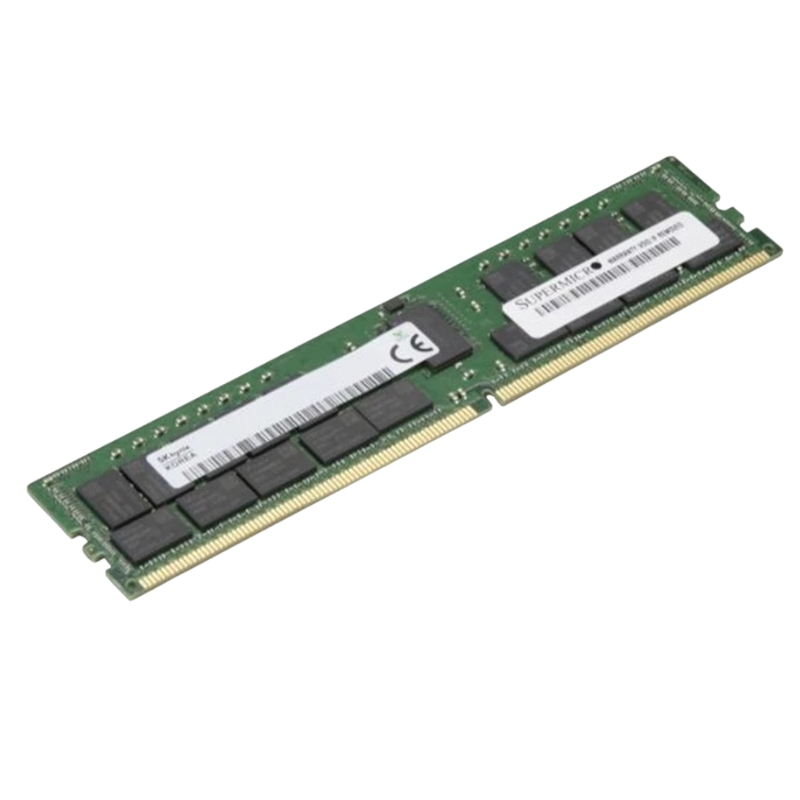


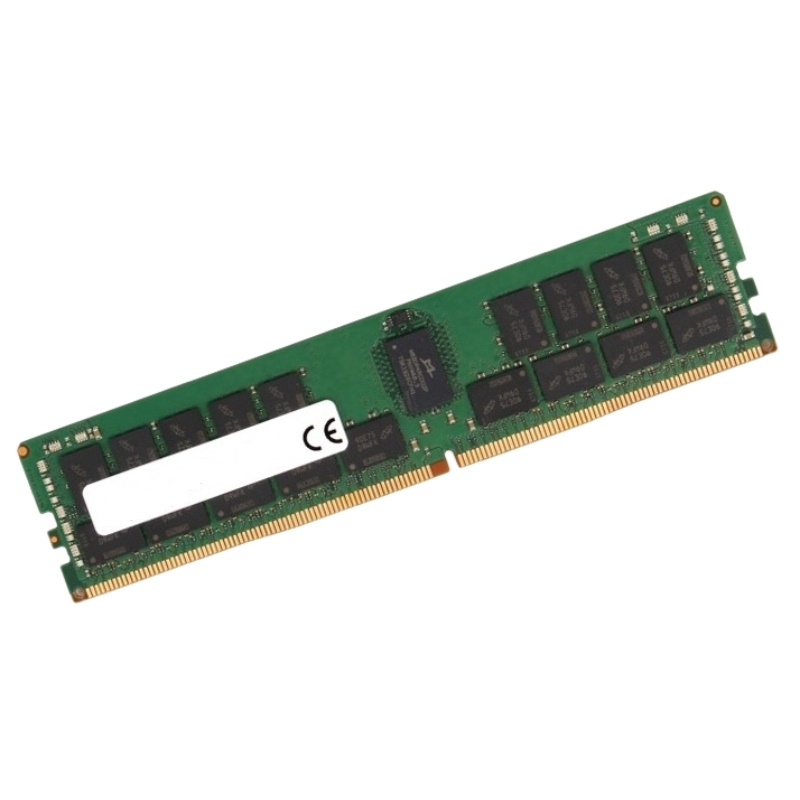
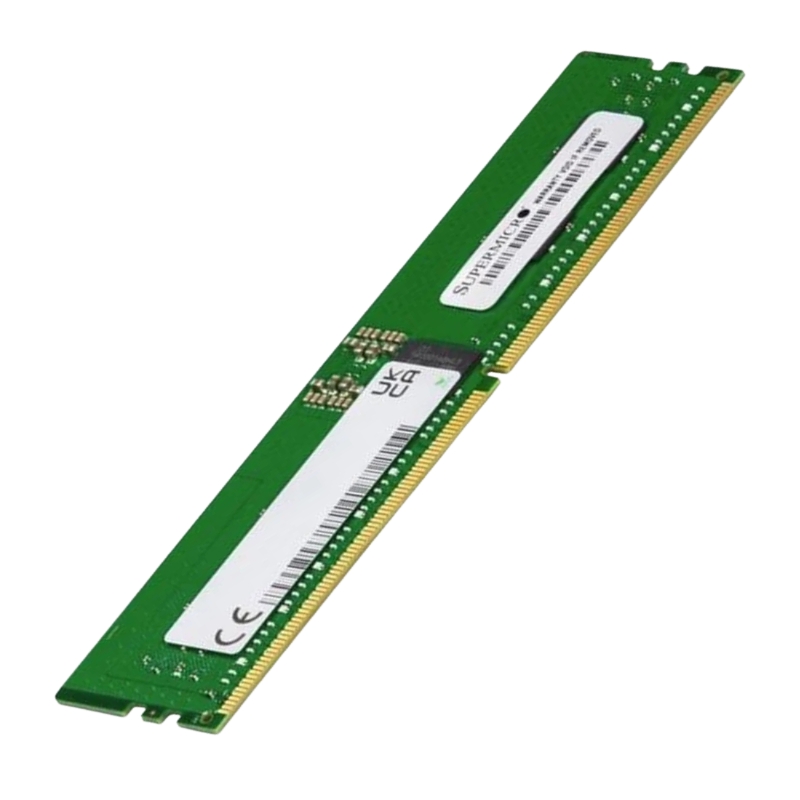
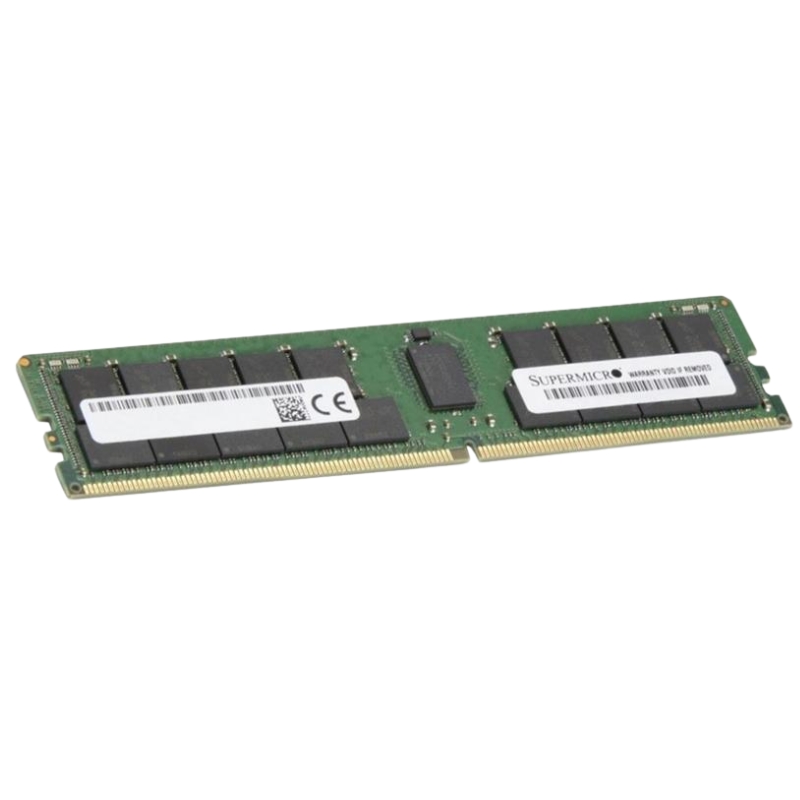
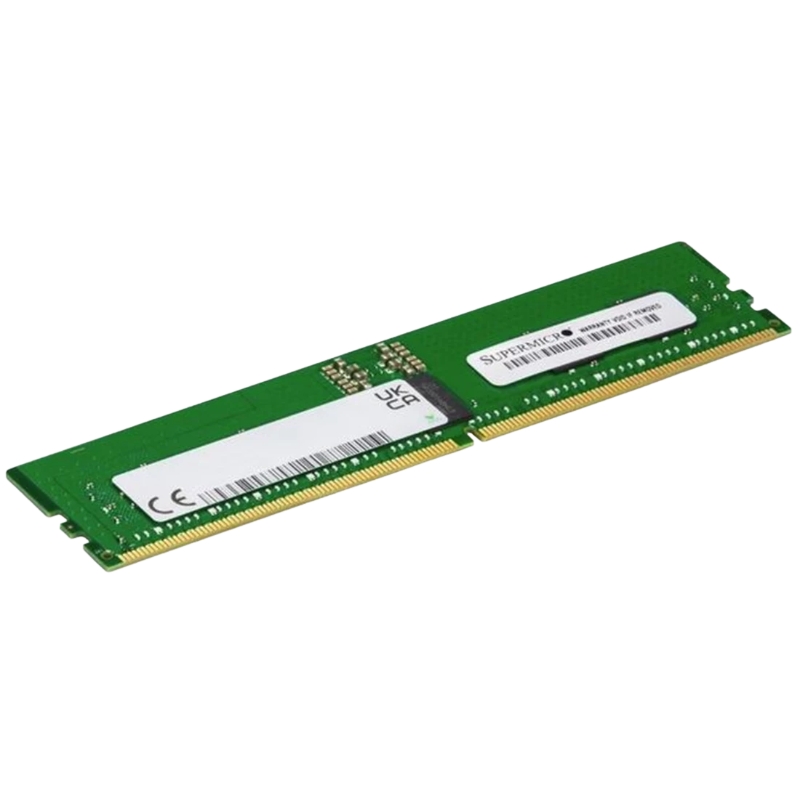
Supermicro MEM-DR596L-HL01-ER64 96GB DDR5 6400MHz PC5-51200 ECC Registered CL46 288-Pin DIMM 1.1V Dual Rank Memory Kit. New Sealed in Box (NIB) with 3 Years Warranty - Hynix Version
| SKU/MPN | Warranty | Price | Condition | You save |
|---|---|---|---|---|
| MEM-DR596L-HL01-ER64 | 1 Year Warranty | $4,656.00 | New (System) Pull | You save: $1,629.60 (26%) |
| MEM-DR596L-HL01-ER64 | 1 Year Warranty | $8,399.00 | New Sealed in Box (NIB) | You save: $2,939.65 (26%) |
The Supermicro MEM-DR596L-HL01-ER64 represents the pinnacle of server-grade memory technology, engineered for data centers, high-performance computing (HPC), and enterprise servers that demand uncompromising reliability, massive bandwidth, and rigorous error correction. This 96GB DDR5 kit is not merely an upgrade but a foundational component for building robust, scalable, and efficient computing infrastructures.
In the realm of high-performance computing, data centers, and mission-critical workstations, system memory is far more than just a component—it is the central nervous system that dictates throughput, reliability, and scalability. The transition to DDR5 technology marks a quantum leap, delivering unprecedented bandwidth, improved power efficiency, and enhanced error management capabilities. At the forefront of this evolution is Registered ECC DDR5 memory, specifically engineered for platforms that demand unwavering data integrity and massive capacity under continuous load. The Supermicro MEM-DR596L-HL01-ER64 96GB DDR5 6400MHz kit exemplifies this category, representing a pinnacle of performance and reliability for enterprise and high-end compute environments. This detailed exploration delves into the specifications, technologies, and applications that define this crucial category of server memory.
Understanding the Supermicro MEM-DR596L-HL01-ER64 requires a deep dive into the architectural advancements of DDR5, particularly in its server-grade Registered ECC (RDIMM) form factor.
The technical specifications of this memory module tell a story of targeted engineering. Each figure is a key to unlocking a specific aspect of system performance and compatibility.
The 96GB capacity per module is a significant data point. This high-density design allows system builders to achieve enormous total memory capacities (e.g., 768GB in an 8-slot system, 1.5TB in a 16-slot dual-processor server) without physically overcrowding the motherboard. The "Dual Rank" designation indicates the module's internal organization. A dual-rank module effectively gives the memory controller two separate sets of memory chips to access on the same physical stick. While not as performant in latency as a single-rank module of the same speed, dual-rank offers an excellent balance of capacity, bandwidth, and loading on the memory controller, which is crucial when populating many channels in a server.
The "6400 MHz" refers to the module's data rate, meaning it can perform 6.4 billion data transfers per second. The "PC5-51200" is the module's theoretical peak bandwidth specification in megabytes per second (MB/s). Calculated as (6400 * 8 bytes per transfer), it yields 51,200 MB/s or approximately 51.2 GB/s of bandwidth per module. When installed in a quad-channel or octa-channel server platform, this bandwidth aggregates, resulting in system-level memory bandwidth exceeding 400 GB/s, which is essential for CPU-intensive tasks like in-memory databases, scientific simulation, and high-resolution video rendering.
CAS Latency (CL) is the number of clock cycles between the memory controller requesting data and the data being available. A timing of CL46 at 6400 MHz might seem higher compared to consumer DDR5 kits with lower CL numbers at lower speeds. It is critical to evaluate latency in nanoseconds (ns), not just clock cycles. The formula is (CAS Latency / Clock Speed in MHz) * 2000. For CL46 at 3200 MHz clock (6400 MT/s data rate), the real-world latency is approximately (46 / 3200) * 2000 = 28.75 nanoseconds. This is competitive and optimized for the stability and signaling requirements of a high-density, error-correcting server module, where reliability is paramount over shaving a nanosecond off latency.
This is the defining characteristic that separates server memory from desktop memory. These two technologies work in tandem to ensure system stability at scale.
ECC memory includes extra memory chips to store error-correcting code. As data is written to memory, the ECC algorithm creates a checksum. When data is read, the algorithm recalculates the checksum and compares it to the stored value. It can automatically detect and correct single-bit errors (the most common type of memory error caused by cosmic rays, electrical noise, etc.) and detect (but not correct) multi-bit errors. This "silent correction" prevents undetected data corruption, which could lead to application crashes, corrupted calculations, or database integrity issues—catastrophic in financial, medical, or scientific computing.
A Registered DIMM incorporates a memory register (or buffer) on the module itself. This register sits between the system's memory controller and the DRAM chips. Its primary function is to buffer the command, address, and clock signals, reducing the electrical load on the memory controller. This allows a single memory channel to support more memory modules (i.e., higher total capacity) without signal degradation. While this buffering adds a minimal one-clock-cycle latency, it is non-negotiable for populating all slots in a multi-channel server motherboard with high-capacity DIMMs while maintaining signal integrity and stable operation.
The operational profile of server memory is designed for integration into tightly managed system environments.
DDR5 memory operates at a lower voltage than previous generations, with a standard voltage of 1.1V. This reduction directly translates to lower power consumption and reduced heat output per module—a critical factor when deploying dozens or hundreds of modules in a data center rack. Lower power consumption improves Power Usage Effectiveness (PUE) and reduces operational costs. The Supermicro module adheres to this JEDEC standard voltage, ensuring broad compatibility and energy efficiency.
While this specific module may feature a standard server-grade aluminum heat spreader rather than a tall, finned heatsink common in gaming RAM, its thermal design is purposeful. Server chassis are designed for high-velocity, front-to-back laminar airflow. A low-profile heat spreader ensures compatibility with dense CPU cooler configurations and allows unimpeded airflow across all system components. The spreader's job is to dissipate heat evenly from the DRAM chips into this directed airflow, preventing thermal throttling during sustained operations. Proper system cooling is essential to maintain the rated 6400 MHz speed under full load.
The Supermicro MEM-DR596L-HL01-ER64 utilizes the standard 288-pin DDR5 DIMM layout. However, the key notch position on the connector is different from DDR4, preventing accidental insertion into an incompatible motherboard slot. It is physically identical to other DDR5 RDIMMs, ensuring perfect fitment in server motherboards designed for DDR5 RDIMMs, such as those based on the Intel Xeon Scalable (Sapphire Rapids, Emerald Rapids, and beyond) or AMD EPYC 9004 (Genoa) and 8004 (Siena) series platforms.
This memory category is not designed for consumer PCs. Its deployment is targeted at specific, demanding computing environments that leverage compatible server and workstation platforms.
The Supermicro MEM-DR596L-HL01-ER64 is engineered for compatibility with Supermicro's own extensive lineup of server and workstation motherboards, but its adherence to JEDEC standards makes it compatible with a wide range of enterprise platforms.
This memory is an ideal match for Supermicro's X13 (Intel Xeon SP) and H13 (AMD EPYC) generation systems. This includes rackmount servers (1U, 2U, 4U), tower servers, and high-density multi-node platforms like Supermicro's BigTwin® or Hyper® series. The modules are validated to work seamlessly with Supermicro's BIOS and memory training routines, ensuring optimal performance and stability out of the box.
For Intel-based platforms, this memory is designed for use with 4th and 5th Gen Intel Xeon Scalable processors. These CPUs support 8 memory channels per socket, and using 6400 MHz RDIMMs like this kit maximizes the available memory bandwidth, feeding the CPU's cores with data at an exceptional rate. It is crucial to consult the specific motherboard's Qualified Vendors List (QVL) or memory support list to confirm compatibility for the desired speed and capacity when all slots are populated.
AMD's latest EPYC processors feature 12 memory channels per socket. Populating these channels with high-speed, high-capacity DDR5 RDIMMs is key to unleashing the full potential of these core-dense CPUs, especially in memory-bandwidth-sensitive applications. The lower voltage and high efficiency of these modules align perfectly with EPYC's focus on performance-per-watt.
The combination of high density, high bandwidth, and ECC protection makes this memory category suited for transformative workloads.
Platforms like SAP HANA, Oracle Exadata, and various NoSQL in-memory databases store active datasets entirely in RAM to eliminate storage latency. The 96GB capacity per module allows for massive in-memory data pools, while the 6400 MHz speed accelerates query processing and transaction times, enabling real-time business intelligence and financial trading systems.
Computational fluid dynamics, genomic sequencing, climate modeling, and finite element analysis involve calculations on enormous datasets. These workloads are often parallelized across many CPU cores that require rapid access to shared memory. The high aggregate bandwidth from multiple DDR5-6400 RDIMMs prevents the memory subsystem from becoming a bottleneck, keeping costly CPUs fully utilized.
While GPUs handle the core tensor operations, the CPU and system memory manage the data pipeline—preprocessing training data, feeding batches to accelerators, and hosting the model parameters not stored in GPU memory. Fast, abundant, and reliable RAM ensures the GPUs are never starved for data, maximizing overall training throughput and efficiency.
In hyper-converged infrastructure and dense virtualization hosts, large memory capacity allows for a higher virtual machine (VM) density. ECC protection is critical here, as a single memory error in a host could destabilize dozens of VMs running disparate workloads. The reliability of these modules underpins the stability of private and public cloud environments.
Beyond the module label, the underlying DDR5 standard provides fundamental benefits that this Supermicro kit leverages.
DDR5 introduces On-Die ECC, an additional layer of error correction that happens within the DRAM chip itself before data is sent to the system-level ECC. This handles internal chip errors transparently. Combined with the traditional side-band ECC (which protects data on the bus), DDR5 RDIMMs offer a robust, two-tiered defense against soft errors, significantly improving chip yield and long-term data integrity.
A major architectural shift in DDR5 is the relocation of the power management from the motherboard to the memory module itself. Each DDR5 DIMM has its own PMIC. This allows for more precise voltage regulation and noise isolation, improving signal integrity—a necessity for achieving high data rates like 6400 MT/s. It also enables better power delivery efficiency and lays the groundwork for advanced power-saving states.


 Contact Us
 Information
 Catalog
 Solid State Drives (SSD)
 Network Switches
 Hard Disk Drives
 HBA & Controllers
 PC & Servers
 PC & Server Memory
 CPU & Processors
 Network Routers
 Power Supplies
 Tape Drives & Libraries
 Network Devices
 Computer & Network Cables