(7% discount is applied at checkout)
Cart is empty
Your go-to destination for cutting-edge server products
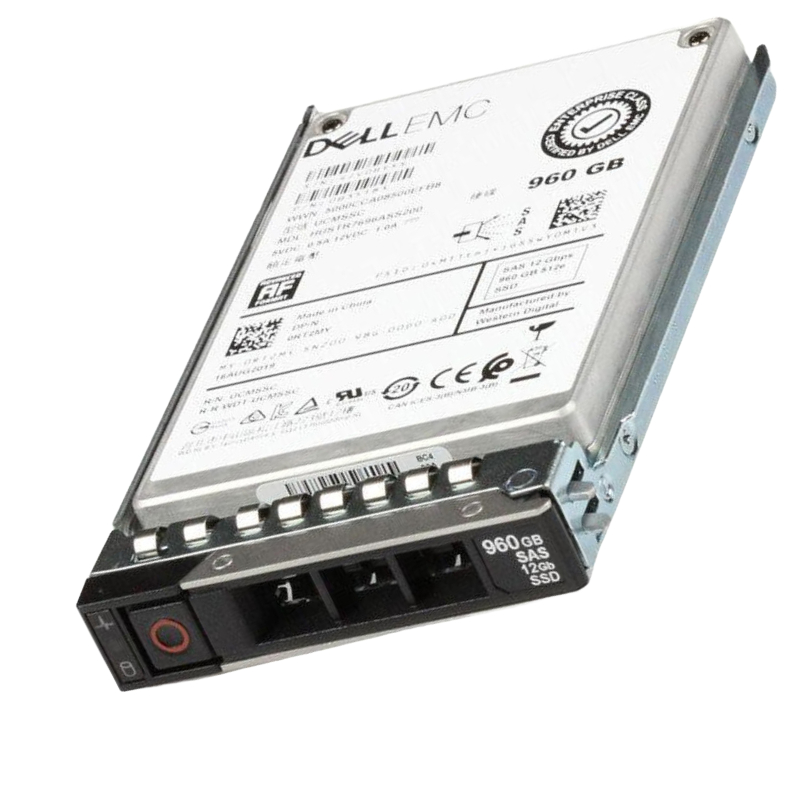


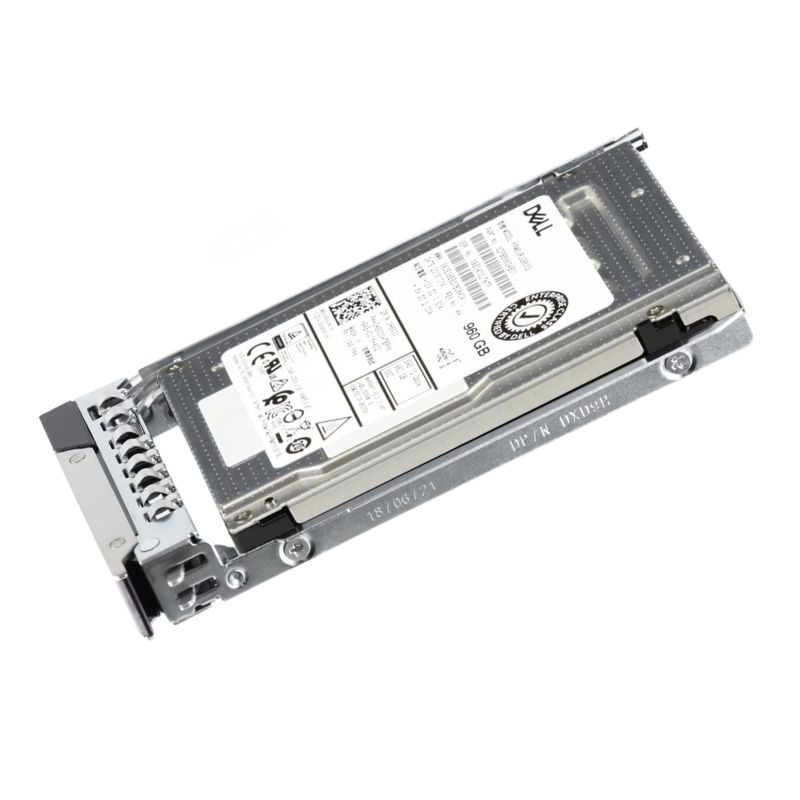
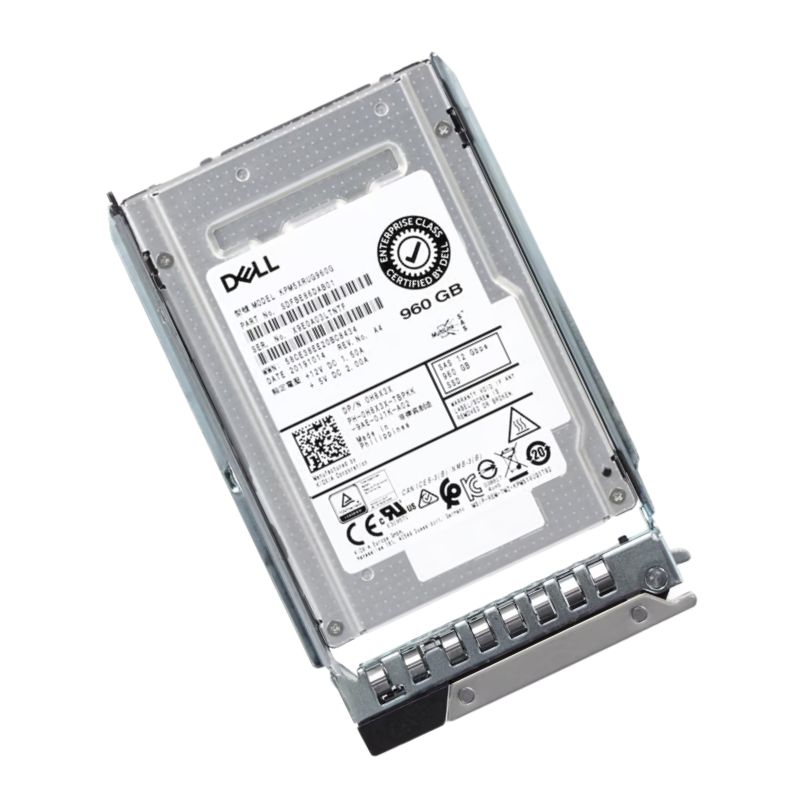
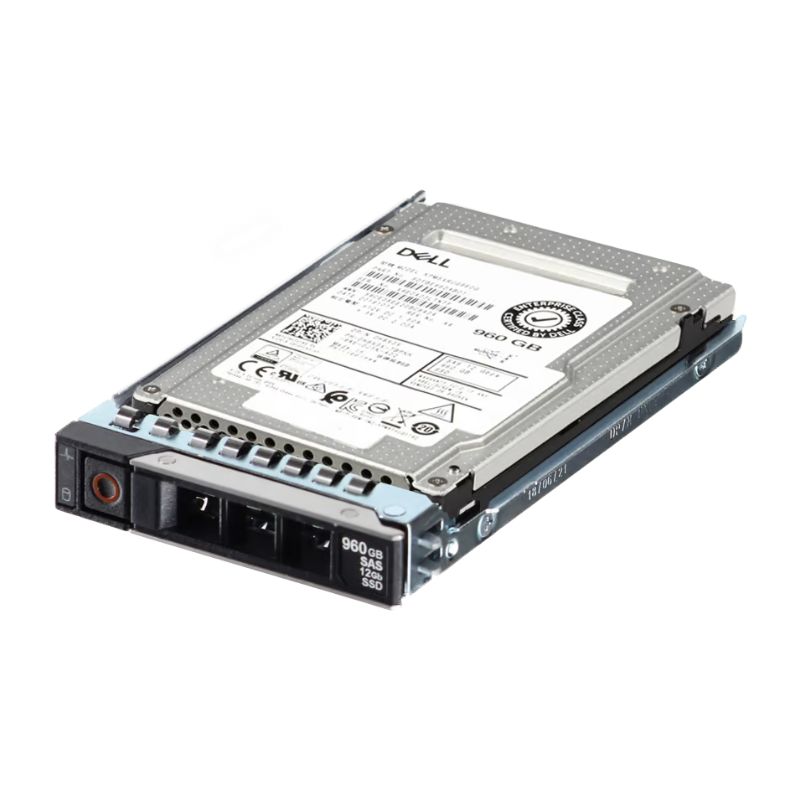
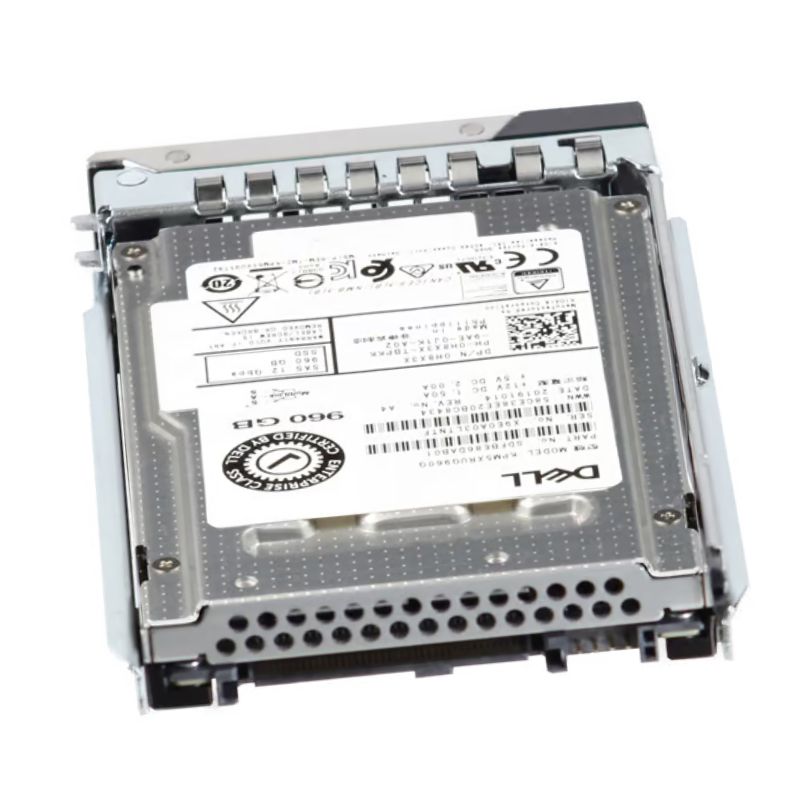
Dell TM62W 960GB Read-Intensive 1dwpd 3d TLC SAS-12GBPS SFF Hot-Plug Solid State Drive with tray for Poweredge Servers. New Sealed in Box (NIB) with 1 Year Warranty
| SKU/MPN | Warranty | Price | Condition | You save |
|---|---|---|---|---|
| TM62W | 1 Year Warranty | $332.00 | Excellent Refurbished | You save: $116.20 (26%) |
| TM62W | 1 Year Warranty | $855.00 | New Sealed in Box (NIB) | You save: $299.25 (26%) |
This 960GB Read-Intensive SAS SSD from Dell offers cutting-edge storage performance, ensuring seamless operations for your data-intensive applications. It is designed with advanced NAND flash technology to deliver high-speed data transfer and reliable storage solutions for your PowerEdge servers.
The Dell TM62W 960GB Read-Intensive 1dwpd 3D TLC SAS-12Gbps SFF hot-plug solid state drive with tray for PowerEdge servers is positioned as a high-efficiency storage solution tailored for enterprise workloads that demand exceptional read performance, predictable latency and enterprise-grade reliability. Engineered to fit into standard short form factor (SFF) drive bays used in Dell PowerEdge platforms, this drive combines 3D triple-level cell (TLC) NAND technology with a SAS-12Gbps interface to deliver high throughput and consistent access patterns for read-centric applications. This category focuses on drives that balance capacity, endurance and cost, making them suitable for read-heavy databases, virtualization hosts, content delivery appliances and cold-to-warm tier storage in SAN/NAS environments. Emphasis on the 1 drive write per day (1dwpd) endurance rating signals that these SSDs are optimized for workloads where read operations dominate and occasional writes are expected, preserving longevity while keeping acquisition costs attractive for large-scale deployments.
The physical design of the Dell TM62W SSD adheres to the SFF (2.5-inch) form factor that fits seamlessly into PowerEdge server drive trays and enclosures. The hot-plug capability ensures that drives can be replaced or added without powering down the server, reducing maintenance windows and enabling rapid hardware swaps during upgrades or failures. The tray included with the drive mirrors Dell’s mechanical and electrical interface standards, guaranteeing correct insertion, retention and backplane connectivity in compatible PowerEdge models. Mechanically robust construction, coupled with enterprise-class connectors, minimizes vibration sensitivity and ensures stable electrical contact. The SFF profile allows denser storage arrays within the same chassis footprint compared to larger form factors, making it particularly advantageous in rack-mounted servers where space and airflow design are optimized for smaller drives.
Equipped with a SAS (Serial Attached SCSI) 12Gbps interface, this drive leverages a high-bandwidth, enterprise-focused protocol that supports advanced features like dual-porting in some implementations, error recovery behaviors tailored to data center needs, and robust command handling. SAS remains the preferred interface for many mission-critical applications because it offers stronger signal integrity and enterprise management features compared to commodity SATA alternatives. The 12Gbps link allows the SSD to exploit higher internal NAND parallelism and controller performance, translating into improved sequential and random read throughput. For deployments where low-latency response to a multitude of small I/O requests is critical, such as metadata-heavy services or index servers, the SAS-12Gbps pathway provides a dependable conduit that avoids throughput bottlenecks common in lower-speed interfaces.
The drive uses 3D TLC (triple-level cell) NAND flash memory, a modern generation of flash that stacks memory cells vertically to increase density while keeping manufacturing cost per gigabyte lower than older planar architectures. 3D TLC offers a compelling compromise between cost and performance: it stores three bits per cell to improve capacity and maintains acceptable endurance characteristics for read-intensive workloads. Paired with an enterprise-grade SSD controller, the TM62W implements sophisticated wear-leveling, error correction code (ECC), bad block management and over-provisioning strategies that extend usable life and sustain predictable performance during long-running operations. Advanced controller firmware handles complex tasks such as garbage collection, background data placement, and read disturb management to preserve data integrity and reduce I/O jitter, which is particularly important for enterprise applications sensitive to latency spikes.
Performance for the Dell TM62W is delivered in the form of high sequential read throughput and strong random read IOPS, with write figures optimized to match read-centric use cases. Enterprise deployments benefit from consistent I/O latency and throughput stability under mixed access patterns. Real-world scenarios such as boot storms, database index scans and content lookup operations are where these drives show their value—serving frequent random reads with low latency keeps application response times predictable. In storage arrays or as cache devices in hybrid solutions, the TM62W can dramatically reduce read miss penalties by supplying hot data rapidly to application layers. When used as part of RAID arrays, the drives’ consistent read behavior helps maintain array performance under rebuilds and during scrub operations where read-heavy recovery tasks are common.
Compatibility with Dell PowerEdge servers is a cornerstone of this category. These drives are validated to work with Dell’s storage backplanes, firmware management frameworks and RAID controllers, which simplifies procurement and deployment for enterprises already standardized on PowerEdge hardware. Support for hot-plug insertion and coordinated rebuild behavior with PowerEdge RAID controllers reduces administrative complexity during maintenance operations and allows for non-disruptive scalability of storage capacity. System integrators often place these drives within tiered storage architectures—pairing them with higher endurance drives for write-heavy tiers and with large-capacity HDDs for archival tiers to strike an optimal balance between cost and performance.
Ordered by commonality and value, the principal use cases for the Dell TM62W include read cache layers for hybrid storage arrays, primary storage for read-dominant databases, VDI (virtual desktop infrastructure) read heavy pools, content delivery engines, metadata servers and search indexes. In a hybrid array, the TM62W serves hot datasets that require fast retrieval while less frequently accessed data remains on high-density HDD tiers. For virtualization hosts, these SSDs can be used to accelerate virtual machine boot times and read-heavy application workloads. Content delivery systems that handle streaming or static asset serving rely on strong sequential read bandwidth and predictable latency to deliver a consistent user experience across many concurrent consumers. Search and indexing nodes gain considerably from the drive’s read performance, which reduces query latency and speeds full-text scan operations.
Compared with consumer SATA SSDs, the Dell TM62W’s SAS-12Gbps interface and enterprise firmware provide better performance predictability, improved error handling and more robust telemetry. Against higher-end enterprise SSDs rated for heavy mixed or write-intensive workloads, the TM62W offers cost savings at the expense of lower write endurance, aligning it with environments where reads predominate. When comparing with NVMe solutions, SAS SSDs like the TM62W still present a compelling option in ecosystems where existing SAS infrastructure, cabling and host bus adapters are already deployed and validated; for workloads explicitly needing the lowest possible latency and highest parallelism, NVMe may be preferable, but SAS-based solutions maintain strong value and simpler integration for many legacy and mixed environments. The choice often depends on workload characteristics, existing infrastructure investments and total cost of ownership calculations that include acquisition, power, cooling and administrative overhead.


 Contact Us
 Information
 Catalog
 Solid State Drives (SSD)
 Network Switches
 Hard Disk Drives
 HBA & Controllers
 PC & Servers
 PC & Server Memory
 CPU & Processors
 Network Routers
 Power Supplies
 Tape Drives & Libraries
 Network Devices
 Computer & Network Cables