Your go-to destination for cutting-edge server products
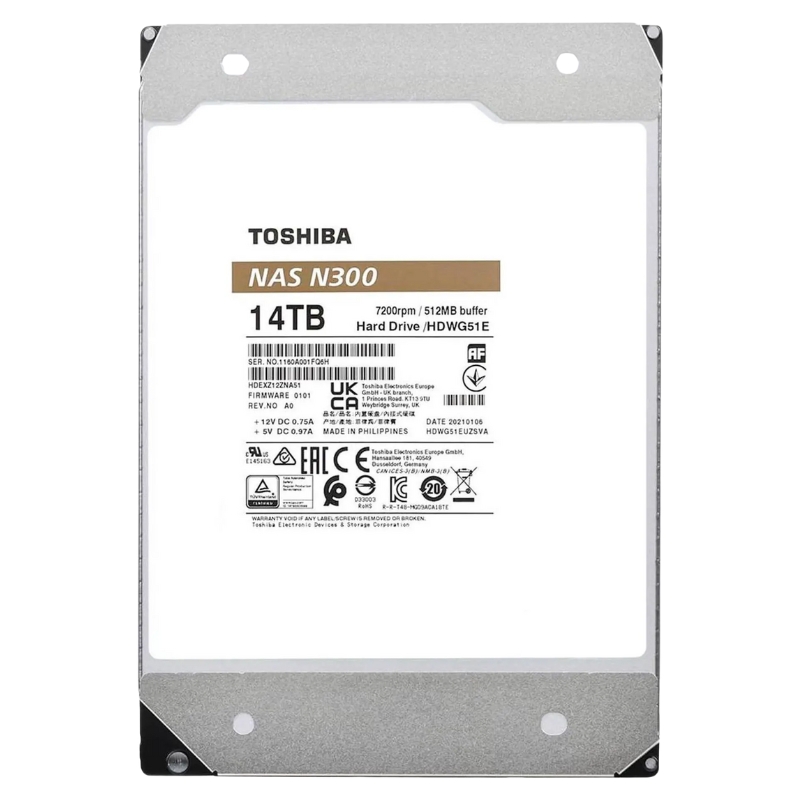
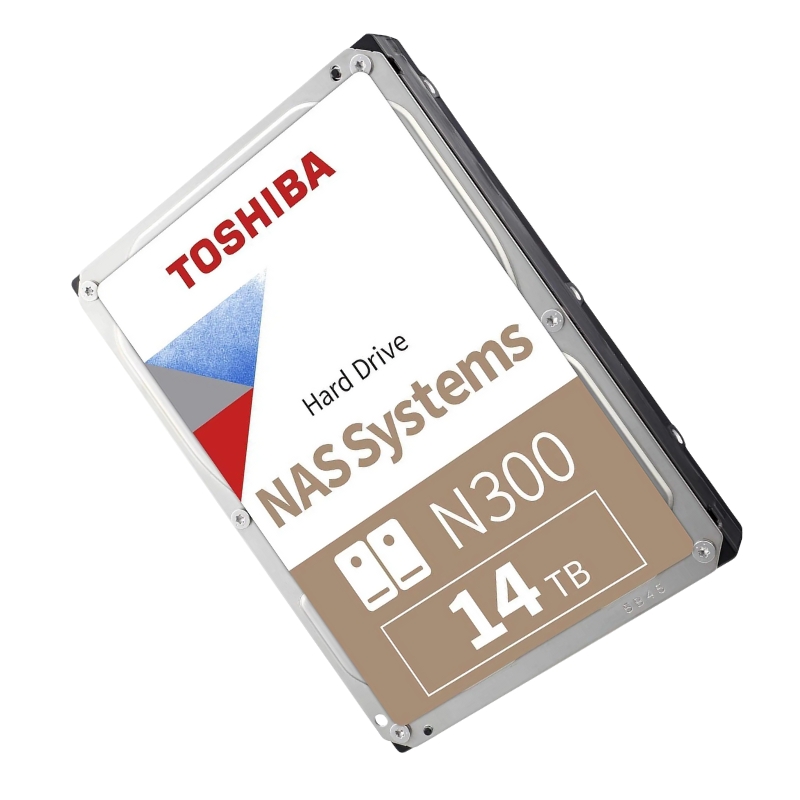
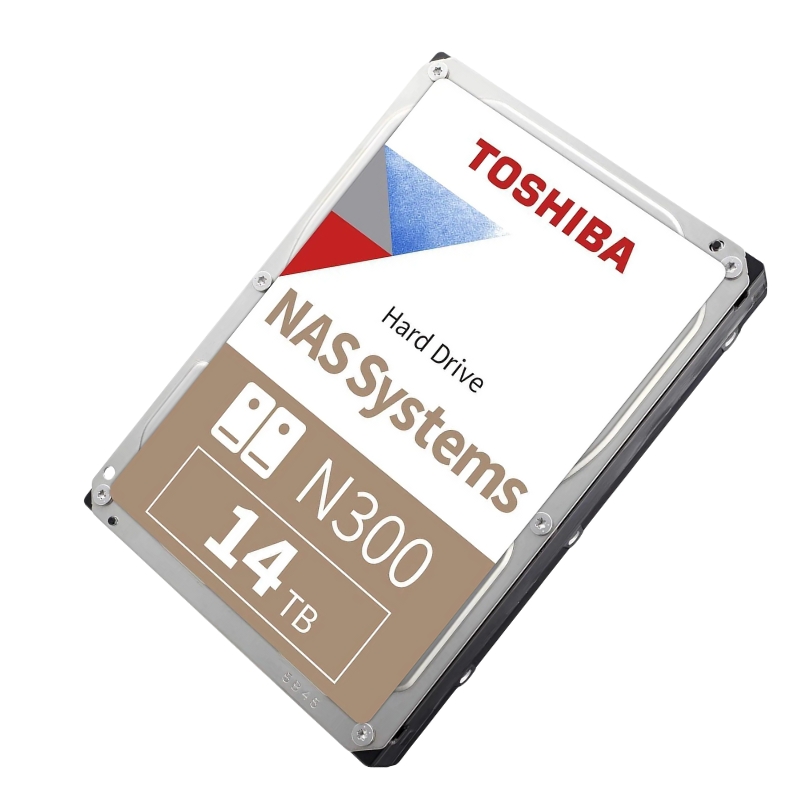
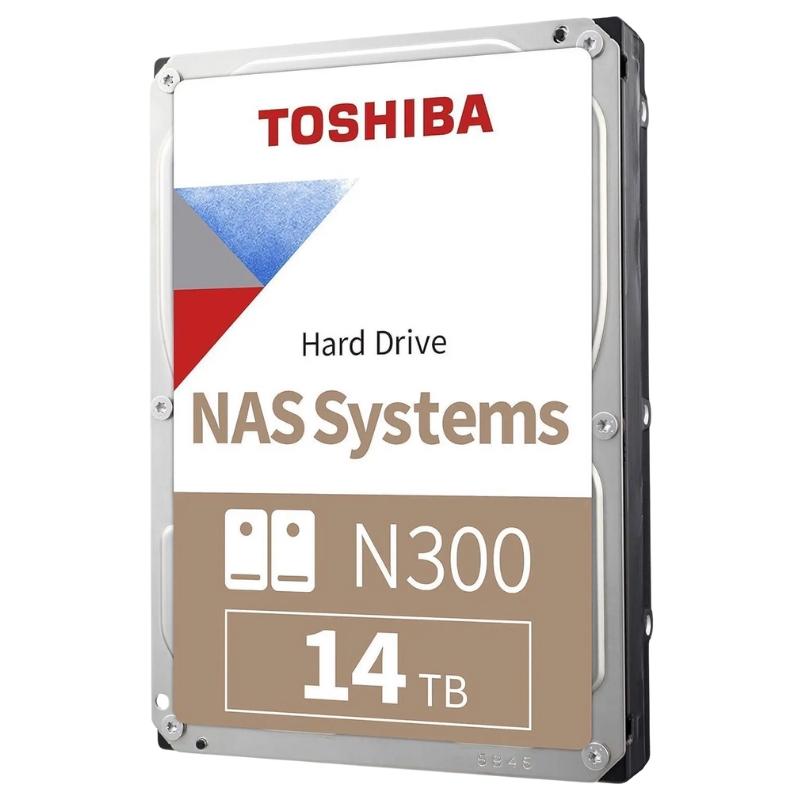
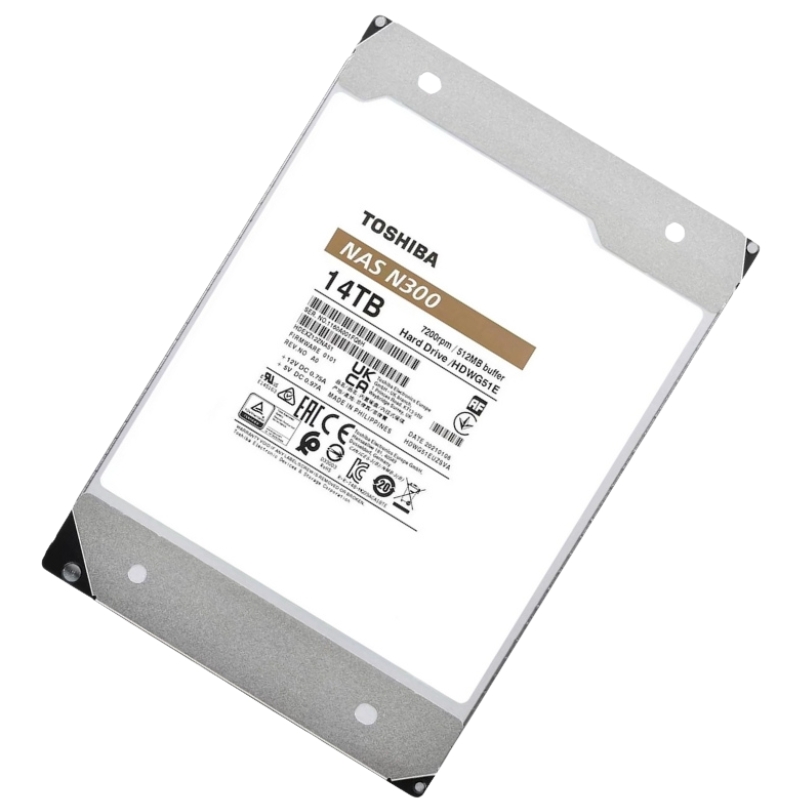
Toshiba HDWG51EXZSTA N300 14TB 7.2K RPM SATA 6GBPS 3.5inch NAS Hard Disk Drive

HDWG51EXZSTA
* Product may have slight variations vs. image
Hover on image to enlarge

Brief Overview of HDWG51EXZSTA

Toshiba HDWG51EXZSTA N300 14TB 7.2K RPM SATA 6GBPS 512MB Buffer 512e 3.5inch NAS Internal Hard Disk Drive. New Sealed in Box (NIB) with 3 Year Warranty

$627.75
$465.00
You save: $162.75 (26%)
Ask a question
Price in points: 465 points
+
Quote

Additional 7% discount at checkout

SKU/MPNHDWG51EXZSTAAvailability✅ In StockProcessing TimeUsually ships same day ManufacturerToshiba Manufacturer Warranty3 Years Warranty from Original Brand Product/Item ConditionNew Sealed in Box (NIB) ServerOrbit Replacement Warranty1 Year Warranty
Google Top Quality Store Customer Reviews
Our Advantages
Payment Options
  • — Visa, MasterCard, Discover, and Amex
  • — JCB, Diners Club, UnionPay
  • — PayPal, ACH/Bank Transfer (11% Off)
  • — Apple Pay, Amazon Pay, Google Pay
  • — Buy Now, Pay Later - Affirm, Afterpay
  • — GOV/EDU/Institutions PO's Accepted 
  • — Invoices
Delivery
  • — Deliver Anywhere
  • — Express Delivery in the USA and Worldwide
  • — Ship to -APO -FPO
  • For USA - Free Ground Shipping
  • — Worldwide - from $30
Description

Toshiba HDWG51EXZSTA N300 14TB 7.2K RPM SATA 6Gb/s 512MB Buffer 512e 3.5" NAS Internal Hard Disk Drive Overview

The Toshiba N300 14TB 7200RPM SATA 6Gb/s Internal Hard Disk Drive is designed for network-attached storage systems and high-performance computing. With its large storage capacity, advanced cache, and optimized durability, this drive delivers seamless reliability for demanding workloads.

General Specifications

  • Brand: Toshiba
  • Part Number: HDWG51EXZSTA
  • Product Series: N300 NAS HDD
  • Drive Type: Internal 3.5-inch Hard Disk

Key Technical Features

Equipped with advanced SATA 6Gb/s interface, the Toshiba N300 14TB offers outstanding speed and stability. It is fine-tuned for continuous operation, making it suitable for large data storage and shared environments.

Core Performance Details

  • Storage Capacity: 14 Terabytes
  • Interface: SATA III, 6 Gb/s bandwidth
  • Spindle Speed: 7200 Revolutions per Minute
  • Cache Memory: 512MB buffer for smooth data handling
  • Form Factor: 3.5-inch standard drive size
  • Reliability: MTBF of 1.2 million hours (AFR rated)

Efficiency & Power Management

Designed for energy-conscious environments, the drive balances high performance with low power usage.

  • Average Operating Power: 3.77W consumption
  • Optimized to reduce energy waste during active use
  • Stable thermal design for multi-drive systems

Physical Dimensions

With compact design yet robust build, the Toshiba N300 integrates easily into NAS enclosures and server racks.

  • Width: 101.85mm
  • Height: 26.1mm
  • Depth: 147.0mm
  • Weight: 705g

Advantages of Toshiba N300 14TB HDD

High-Capacity Storage

Ideal for data-heavy applications such as video editing, business archives, and large-scale databases, the 14TB capacity provides ample space for continuous growth.

Reliable Performance for NAS Systems

Built for multi-drive environments, this hard disk is engineered to withstand 24/7 workloads and reduce downtime.

Additional Highlights
  • Supports heavy workloads with consistent reliability
  • Enhanced cache architecture ensures faster read/write cycles
  • Excellent for RAID configurations and data redundancy
  • Stable operation in multi-bay NAS enclosures

Key Value Highlights for NAS Builders and Upgraders

  • Capacity headroom: 14TB per drive reduces the number of bays required for large datasets, lowers power per terabyte, and simplifies expansion planning.
  • NAS-ready: Tuned for 24/7 multi-user access patterns common in SMB and prosumer NAS environments.
  • Performance balance: 7,200 RPM spindle speed and a 512MB cache provide responsive throughput for sequential and mixed workloads over a standard SATA 6Gb/s link.
  • Reliability features: Vibration-tolerant design for multi-bay chassis, error recovery optimizations, and firmware behavior aligned with RAID rebuilds and long-duration tasks.
  • Flexible deployment: Works in popular 4-bay to 16-bay NAS enclosures, DIY NAS builds, and small rackmount storage nodes that demand predictable performance and low-maintenance operation.

Why Choose NAS-Specific Drives Over Desktop HDDs

  • Workload expectations: NAS drives target heavier daily workloads and continuous operation, where desktop drives are optimized for lighter, sporadic access.
  • Array resilience: NAS firmware emphasizes swift error recovery and compatibility with RAID controllers to minimize array downtime and reduce the risk of multiple disk drop-outs during rebuilds.
  • Vibration safeguards: Multi-axis vibration tolerance and rotational vibration (RV) protection help maintain stable performance in enclosures with many spinning drives.
  • Thermal management: NAS environments are thermally dense; NAS-grade HDDs are designed to operate safely across a range of temperatures while maintaining reliability.

Model-Specific Details: HDWG51EXZSTA N300 14TB

This 14TB N300 model integrates capacity, performance, and NAS-friendly behavior into a single drive SKU suitable for multi-terabyte file sets. With a 512MB buffer, the drive can absorb bursts of write activity common to cloud syncs, backup jobs, and media ingest while smoothing out command queues during simultaneous client access. The SATA 6Gb/s interface ensures broad support in consumer and SMB NAS platforms, and the 512e (Advanced Format 4K with 512-byte emulation) sector layout maintains compatibility with legacy software and mixed-storage arrays that expect 512-byte logical sectors.

Core Specifications at a Glance

  • Capacity: 14TB
  • Interface: SATA 6Gb/s
  • Rotation Speed: 7,200 RPM
  • Cache Buffer: 512MB
  • Sector Format: 512e (Advanced Format)
  • Form Factor: 3.5 inch
  • Intended Use: NAS, multi-bay storage, 24/7 operation

Use Cases That Benefit from 14TB NAS Capacity

Large-capacity individual drives simplify array design and leave room for future growth. A single 14TB disk can house multiple high-bitrate video projects, comprehensive photo archives, extensive VM libraries, or long-term backups without saturating a modest number of bays. For a four-bay NAS, deploying four HDWG51EXZSTA drives offers raw capacity of 56TB; even after RAID overhead, the net usable capacity remains substantial for small organizations and creative teams.

  • Media production and post: Shared project folders, proxies, mezzanine files, and completed masters accessible by editors and colorists.
  • Surveillance archives: Retain longer video retention windows for multiple IP cameras, with resilience against drive failure via RAID.
  • Small business file servers: Centralized document management, accounting data, CAD drawings, and team shares with routine snapshots.
  • Home labs and homelife clouds: Personal cloud storage, Plex or Jellyfin media libraries, photo backup, and archival of game libraries.
  • Edge backup targets: On-site backup repository for laptops, servers, and cloud sync mirrors to reduce restore times.

Performance Characteristics in Real NAS Workflows

In NAS scenarios, workloads are often mixed. Large sequential transfers occur during media playback, imaging, or backup, while small, random reads and writes happen when multiple users access shared folders or when databases and metadata indexes are active. The 7,200 RPM spindle speed boosts sustained transfer rates compared to lower-RPM models, and the 512MB cache helps maintain responsiveness when simultaneous requests compete for disk time. With multiple HDWG51EXZSTA drives in a RAID array, throughput scales and latency drops, providing a smoother experience during peak usage.

Sequential and Mixed Access Behavior

  • Sequential reads/writes: High platter density combined with 7.2K RPM supports fast streaming performance for large files such as 4K video or VM images.
  • Small I/O mitigation: The large buffer absorbs bursts and reduces rotational penalties, maintaining consistent service for SMB/NFS file shares.
  • Queue-depth scaling: NAS clients often generate concurrent requests; firmware and caching strategies are tuned for these multi-user queues.

Impact in Common Protocols

  • SMB/AFP file services: Snappy directory browsing and consistent read speeds for large media files benefit creative workstations on gigabit and multi-gig networks.
  • NFS shares: Reliable access for Linux-based appliances, render nodes, and light virtualization storage.
  • iSCSI targets: Stable block storage for lab VMs and test environments where predictable throughput is valued.

Reliability and NAS-Centric Firmware Design

NAS drives prioritize predictable behavior under stress. The HDWG51EXZSTA is engineered for vibration-rich, thermally dense enclosures and for the long, steady workloads that typify RAID scrubs, rebuilds, and snapshot rotations. Firmware emphasizes effective error recovery to avoid unnecessarily dropping out of arrays, supports sustained duty cycles, and aligns with the needs of continuous availability. Mechanical design elements and RV tolerance help keep performance stable even when several adjacent drives are simultaneously seeking.

Operational Stability in Multi-Bay Enclosures

  • Rotational vibration mitigation: Improved head tracking and control algorithms help the drive stay locked on track amidst neighboring drive vibrations.
  • Thermal resilience: Components and firmware behavior are chosen for NAS environments that may experience elevated ambient temperatures compared to desktops.
  • Error handling for RAID: Time-limited error recovery helps the drive cooperate with NAS controllers, reducing the risk of extended timeouts that can jeopardize array integrity.

Compatibility and Integration Notes

The 512e format of the HDWG51EXZSTA promotes wide compatibility, presenting 512-byte logical sectors that legacy software and certain controllers expect, while physically using 4K sectors for modern efficiency. This model slots into standard 3.5-inch bays and connects via SATA, making it a drop-in upgrade for many NAS brands and DIY builds. When mixing new disks with older units, matching sector formats and verifying controller support is recommended to streamline array expansion and minimize rebuild complexity.

Typical Platforms and Ecosystems

  • Turnkey NAS: Works with widely used NAS appliances for home and business, supporting SMB/NFS shares, snapshotting, cloud sync, and dockerized services.
  • DIY NAS: Compatible with standard PC hardware and popular open-source NAS operating systems that manage ZFS, Btrfs, or mdadm arrays.
  • Hybrid arrays: Can be combined with SSD caching or tiering solutions to balance performance and cost.

Best Practices for Deployment

  1. Update NAS firmware: Keep your NAS OS and controller firmware current for optimal drive compatibility and SMART reporting.
  2. Use recommended bays: Mount the drive in vibration-damped trays; check screws and sled fit to prevent resonance.
  3. Enable SMART monitoring: Review health metrics and set alerts for temperature, reallocated sectors, and error counts.
  4. Plan RAID levels: Choose redundancy matching your risk tolerance; consider RAID 6 or RAID-Z2 for larger pools.
  5. Stage array growth: Expand methodically and allow full rebuilds and scrubs to complete before the next change.
  6. Maintain backup policy: Even redundant arrays require external or off-site backups for true data protection.

Capacity Planning with 14TB Drives

When architecting a NAS, the raw capacity headline is only a starting point. RAID level, filesystem overhead, snapshot retention, and spare drive strategy all influence usable space. With the Toshiba HDWG51EXZSTA, a small number of disks can achieve substantial volumes, reducing complexity and energy use versus larger-count arrays of smaller disks.

Illustrative Capacity Scenarios (Approximate)

  • Two-bay mirror (RAID 1): 14TB raw x 2 = 28TB raw; ~14TB usable before filesystem and metadata overhead, suitable for compact, resilient home stores.
  • Four-bay parity (RAID 5): 14TB x 4 = 56TB raw; ~42TB usable; efficient for media libraries with regular backups.
  • Four-bay dual parity (RAID 6): 14TB x 4 = 56TB raw; ~28TB usable; increased resilience against dual-disk failure.
  • Six-bay dual parity: 14TB x 6 = 84TB raw; ~56TB usable; balances capacity, performance, and protection for SMB workloads.

These examples are simplified to illustrate the trade-offs. Filesystem choice (Btrfs, ZFS, EXT4, XFS), compression, and snapshot policies can shift effective capacity and performance characteristics. Always provision a margin to accommodate growth, rebuild windows, and maintenance activities.

Performance Tuning Tips for the HDWG51EXZSTA

Although the drive is plug-and-play, a few tuning steps can extract consistent performance in a busy NAS:

  • Network uplift: Upgrading from 1GbE to 2.5GbE or 10GbE magnifies perceived performance when multiple users stream or back up simultaneously.
  • SSD cache/tier: Add a read or read/write cache for hot metadata and small random I/O; keep the HDWG51EXZSTA for large sequential and warm data.
  • Filesystem alignment: Ensure partitions and filesystems align with the drive’s physical sectors (handled automatically by most modern NAS OS).
  • Scheduled tasks: Run scrubs, snapshots, and replication off-hours to reduce contention during peak user activity.

Noise and Power Considerations

14TB 7.2K drives are designed for efficiency, yet they remain mechanical devices with acoustic output during seeks and rotational noise in quiet rooms. In a centralized network closet or office rack, this is rarely a concern. Using quality enclosures with sound-dampened trays and ensuring good airflow maintains acoustic comfort while protecting drive health. Power characteristics are competitive on a per-terabyte basis; fewer high-capacity drives typically consume less power than many low-capacity drives providing equivalent space.

Data Integrity and Protection Strategies

Protection of data relies on layering several strategies rather than a single feature or component. The HDWG51EXZSTA fits into a comprehensive approach where the drive’s reliability characteristics complement filesystem safeguards and backup policies.

Layered Protection

  • Redundant arrays: RAID levels with parity or mirroring handle single or multiple disk failures depending on configuration.
  • Checksummed filesystems: Options like ZFS and Btrfs detect and correct silent corruption when combined with redundancy.
  • Snapshots and versioning: Point-in-time copies accelerate recovery from accidental deletes or ransomware events.
  • Off-site or cloud backup: An immutable second copy protects against disasters or site-wide incidents.
  • Regular scrubs: Periodic verification exercises the array and discovers issues early.

Workload Examples for the Toshiba N300 14TB

To help visualize fit, here are practical examples of how this drive performs in common roles:

Creative Studio NAS

A four-to-eight-bay NAS equipped with multiple HDWG51EXZSTA drives stores active video projects, shared assets, proxies, and renders. Editors pull streams over 2.5GbE/10GbE while background tasks perform incremental backups to an off-site target. The 7.2K rotational speed and cache buffer keep sustained read rates high, reducing wait times during preview and conform. The capacity headroom means fewer archival migrations and simpler project housekeeping.

Home Media and Backup Hub

In a compact NAS, two or four 14TB N300 units hold the family’s photos, 4K HEVC rips, and PC backups. Snapshot schedules protect against mistaken deletions; the NAS also handles streaming to TVs and mobiles. The drive’s NAS-tuned behavior keeps the array stable even during long parity checks and scrubs that run overnight.

Small Business File Server

Accountants, designers, and managers access shared folders all day, generating mixed IO. The HDWG51EXZSTA maintains consistent throughput with multiple users connected and keeps performance steady during daytime syncs with a cloud bucket. After hours, the NAS replicates incremental changes to a secondary appliance, with the N300’s 24/7 design handling these extended write cycles gracefully.

Understanding 512e Advanced Format

The “512e” designation indicates that the drive presents 512-byte logical sectors to the host while writing physical 4096-byte sectors on the platters. Most modern operating systems and NAS platforms understand 512e natively. The benefit is broad software compatibility coupled with the efficiency of larger physical sectors. When migrating from older 512n disks, check array documentation; mixed environments usually work, but new arrays often perform best when all members share the same sector format.

Migration Tips from Older Arrays

  • Stage replacements: Replace and rebuild one disk at a time to maintain redundancy.
  • Consistent formatting: Where possible, standardize on 512e to minimize quirks across controllers and filesystems.
  • Validate backups: Before any major array change, confirm backup integrity and a tested restore path.

SMART Monitoring and Preventative Maintenance

Self-monitoring attributes offer early warning signs of drive health changes. Configure your NAS to email or push notifications for SMART events such as reallocated sectors, pending sectors, or temperature excursions. Schedule periodic short and long tests during off-hours. Combine these with array scrubs and surface scans that methodically read data blocks and prompt the system to remap weak sectors before they escalate.

Recommended Maintenance Rhythm

  • Weekly: Short SMART self-test and log review.
  • Monthly: RAID scrub or filesystem scrub depending on your platform.
  • Quarterly: Long SMART self-test and validation of off-site backups.
  • Annually: Dust the chassis, verify fan performance, and reassess capacity needs.

Balancing HDDs and SSDs in NAS Designs

While SSDs deliver exceptional latency, HDDs like the HDWG51EXZSTA remain the most cost-effective way to store terabytes and petabytes. A popular approach is hybrid storage: keep bulk data and media on HDD volumes and use SSDs for caching, metadata, or VM boot volumes. This strategy leverages the strengths of each device type and can dramatically improve user experience without sacrificing capacity economics.

Hybrid Architecture Patterns

  • Read cache (e.g., NVMe): Accelerates frequently accessed small files and directory operations.
  • Write cache: Smooths bursty ingest; ensure power-loss protection and follow NAS vendor recommendations.
  • Tiering: Automatically migrates hot data to SSD and colder data to the HDWG51EXZSTA pool.

Energy, Acoustics, and Sustainability Considerations

Consolidating more data per spindle with 14TB platters improves energy efficiency on a per-terabyte basis. Fewer drives result in fewer trays, backplanes, and fans required for the same capacity target, which lowers embodied and operational energy. For offices and studios, this translates to quieter racks and reduced cooling overhead. Selecting high-capacity NAS drives like the Toshiba N300 therefore contributes to sustainable infrastructure planning while delivering practical benefits.

Noise Management Tips

  • Mount the NAS in a ventilated cabinet or separate equipment area when possible.
  • Use rubber-grommeted trays or quality sleds to minimize resonance.
  • Keep firmware updated to benefit from any acoustic improvements in drive behavior.

Security and Data Governance in NAS Environments

Hardware selection is only one piece of the storage security picture. The HDWG51EXZSTA hosts data that should be safeguarded through layered controls:

  • Access control: Use per-user accounts and group-based permissions for shares.
  • Encryption: Employ at-rest and in-transit encryption supported by your NAS OS to protect sensitive files.
  • Audit trails: Enable logging for access and changes; integrate with centralized syslog or SIEM if available.
  • Ransomware preparedness: Maintain immutable snapshots and off-site backups that cannot be altered by compromised credentials.

Procurement and Lifecycle Planning

When standardizing on the Toshiba HDWG51EXZSTA across a fleet, plan for spare drives, consistent firmware, and predictable refresh windows. Keeping an on-hand cold spare reduces downtime when failures occur. Track drive ages and usage; proactively replacing oldest units in heavily utilized arrays can prevent service-impacting incidents. Finally, securely wipe and recycle or repurpose retired drives to maintain data privacy and environmental responsibility.

Spare Strategy

  • Cold spares per chassis: Maintain at least one matching spare for small arrays; larger arrays may warrant multiple spares.
  • Serial and firmware tracking: Document drive batches to simplify support and firmware coordination.

Vibration-Related Performance Variability

  • Redistribute drives to balance enclosure airflow and physical spacing when possible.
  • Ensure the NAS is placed on a sturdy, level surface to minimize chassis resonance.
  • Use recommended screws/trays and confirm all mounting points are secured.

Disaster Readiness and Recovery Drills

For mission-critical shares, periodically test recovery procedures. Simulate a failed disk replacement with a spare, verify RAID rebuild behavior, and validate restoring from snapshots and off-site backups. Clear documentation reduces stress and speeds recovery when real incidents occur. The HDWG51EXZSTA’s NAS-focused design supports predictable rebuild performance, which is essential when returning to normal operations quickly.

Sustaining Long-Term Reliability

Storage systems, like any infrastructure, benefit from regular review. Track utilization trends, deduplication ratios (if applicable), and growth rate. Consider refreshing older drives before error rates climb. Keep firmware and NAS OS versions aligned with vendor recommendations. With consistent attention, arrays built on high-capacity NAS drives can run reliably for years while delivering excellent cost-per-terabyte economics.

Technical Feature Deep Dive

Buffer and Command Optimization

The 512MB buffer in the HDWG51EXZSTA supports advanced caching strategies that improve queue handling during bursty writes and multi-client reads. This is particularly helpful when the NAS concurrently processes background tasks—replication, media indexing, or containerized services—alongside user requests.

Firmware Tuned for Arrays

Time-limited error recovery adheres to NAS expectations, ensuring that extended recovery attempts don’t monopolize the drive for excessive durations. In a RAID environment, the controller orchestrates data correction; the drive’s cooperative behavior reduces the chance of array members being marked as failed due to prolonged unresponsiveness.

Mechanical Stability

High-capacity platters require precise head positioning. RV mitigation and refined servo controls help maintain track fidelity in enclosures where several spindles operate inches apart. This translates into fewer retries and more consistent throughput under mixed load.

Operational Tips for Maximizing Uptime

  • Proactive monitoring: Alerts for SMART, temperature, and filesystem errors prevent small issues from escalating.
  • Firmware uniformity: Keep similar firmware revisions across array members where feasible.
  • Graceful maintenance windows: Coordinate firmware updates, scrubs, and expansion during low-usage periods.
  • Documented runbooks: A clear step-by-step for drive replacement and restore procedures reduces human error.

Future-Proofing Your NAS with 14TB Drives

Data growth is a given. Choosing 14TB NAS drives like the HDWG51EXZSTA equips your storage with room to breathe, deferring the need for disruptive migrations. When it is time to expand, high-density spindles allow incremental, predictable upgrades—swap in larger members, rebuild, and extend the pool without rearchitecting the entire environment.


Features
Manufacturer Warranty:
3 Years Warranty from Original Brand
Product/Item Condition:
New Sealed in Box (NIB)
ServerOrbit Replacement Warranty:
1 Year Warranty