(7% discount is applied at checkout)
Cart is empty
Your go-to destination for cutting-edge server products
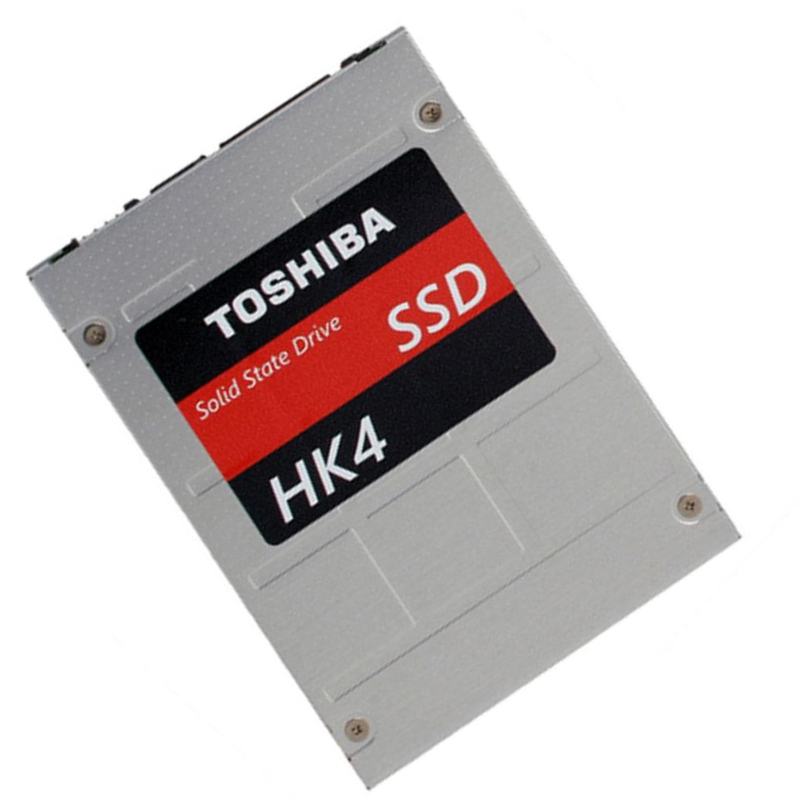


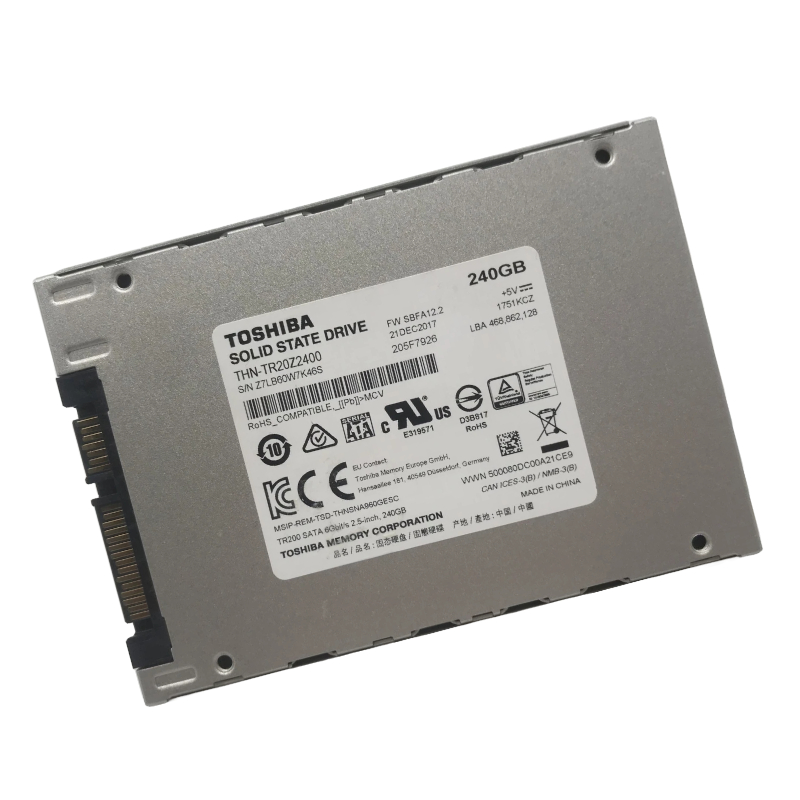
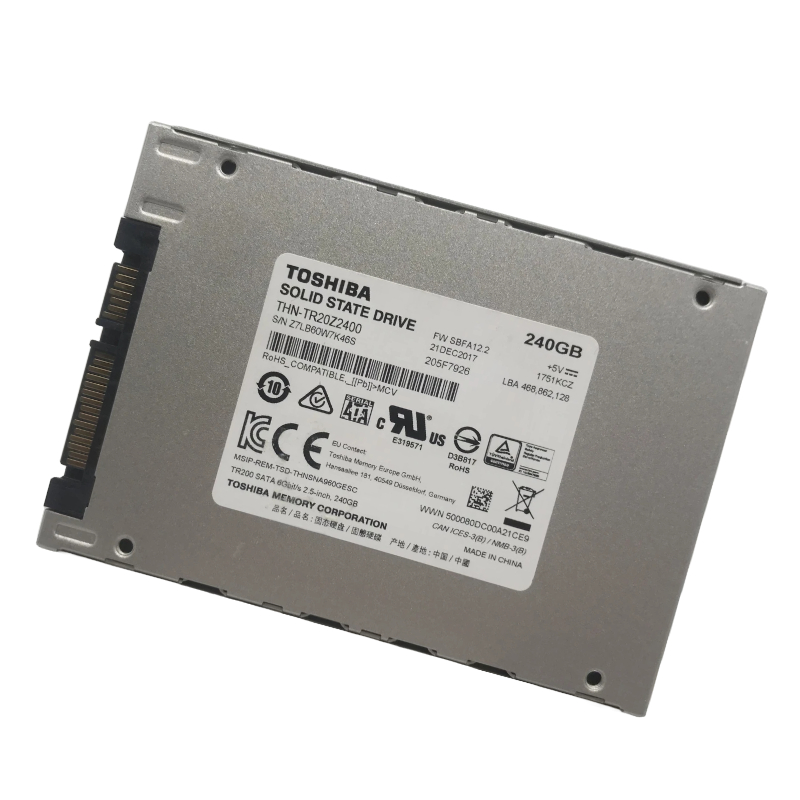
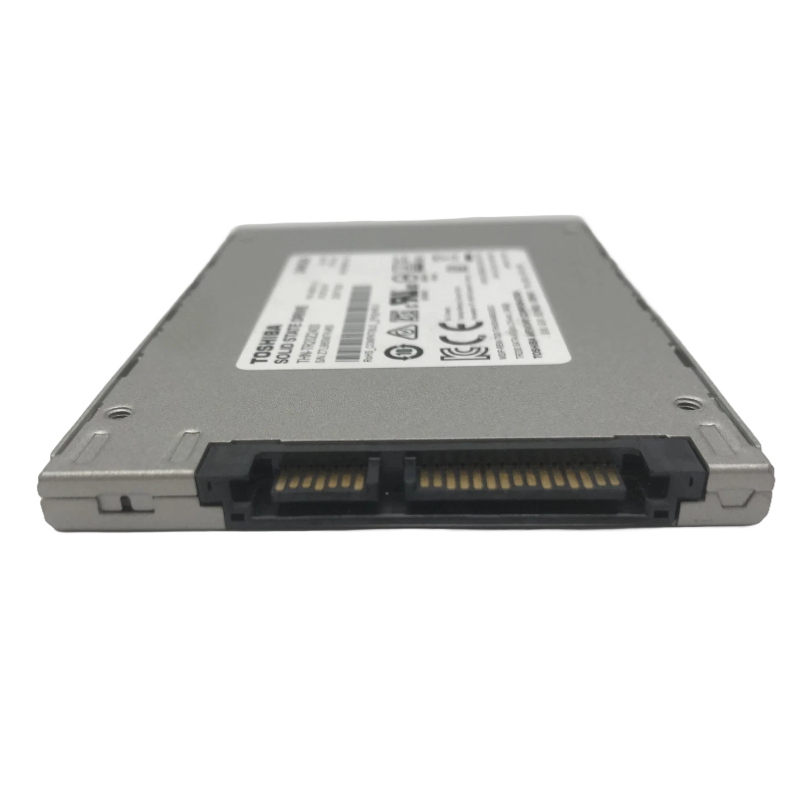
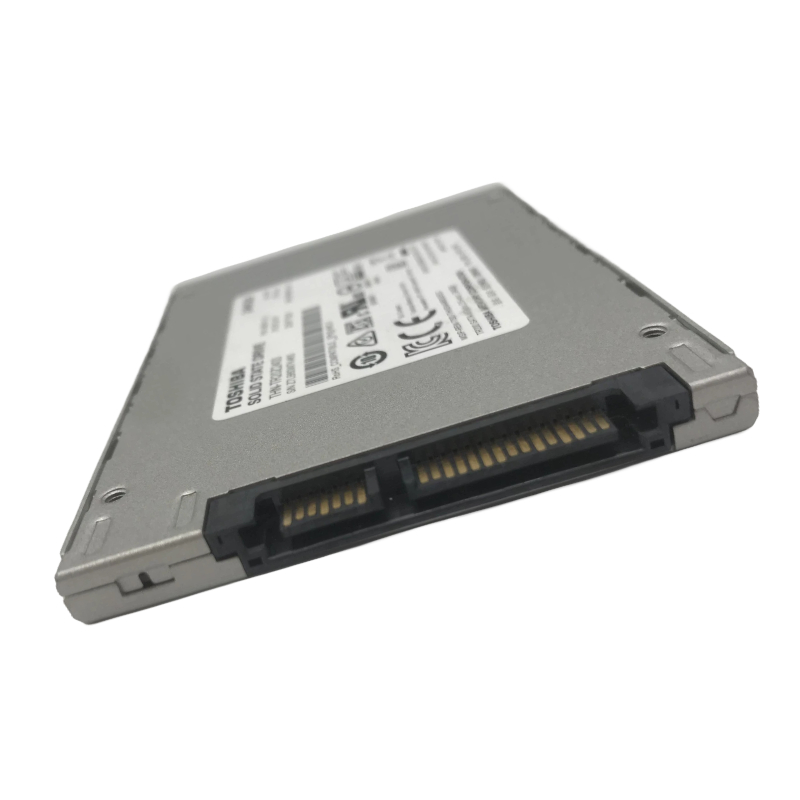
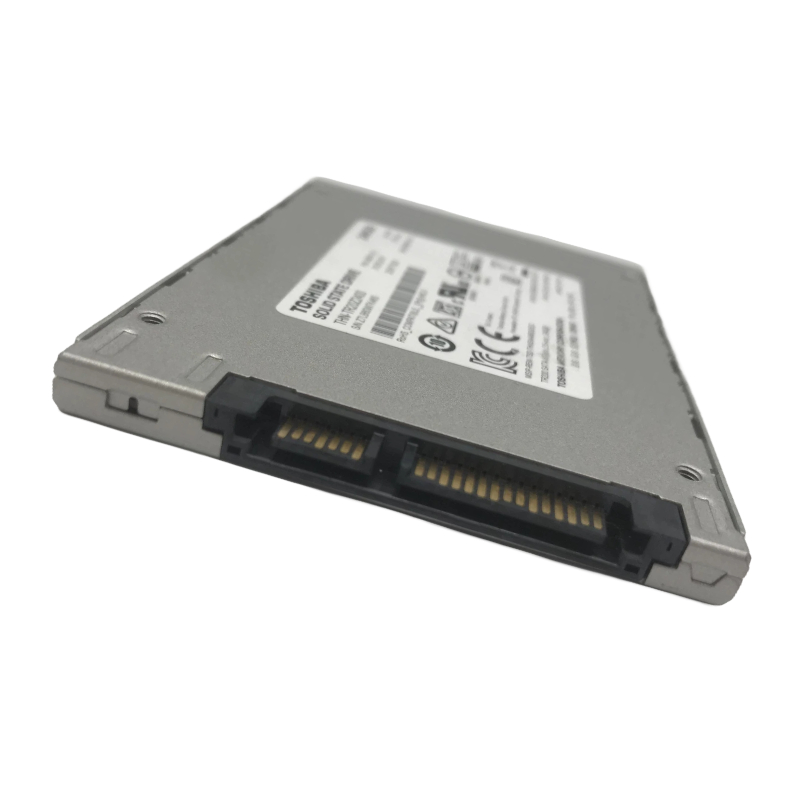
Toshiba THNSF8200CCSE 200GB Mixed-Use MLC SATA-6GBPS 512n SFF Hot Plug Swap Solid State Drive. Excellent Refurbished with 1 year replacement warranty - Dell Version
Toshiba THNSF8200CCSE 200GB Mixed-Use MLC SATA-6Gbps 512n Small Form Factor solid-state drive occupies a focused niche where enterprise reliability, consistent performance and space efficiency intersect. Engineered as part of Toshiba’s HK4E series, this 2.5-inch hot plug SFF device is designed to satisfy mixed-use workloads that combine read-intensive and write-moderate demands typical of virtualized environments, database front ends, cache tiers and general purpose server storage pools. Rather than optimising exclusively for write-heavy logging or consumer bursty desktop scenarios, the drive is built to deliver balanced throughput and steady random I/O characteristics with enterprise grade controls, making it suitable for blade servers, rackmount arrays and storage expansions that require predictable latency and serviceability without the higher cost of pure data-centre endurance drives.
At the heart of the THNSF8200CCSE is MLC NAND flash paired with a SATA III 6.0 Gbit/s interface; the drive supports legacy 3.0 and 1.5 Gbit/s speeds for broad compatibility with older platforms while offering the SATA3 bandwidth most systems expect today. The nominal formatted capacity is 200 gigabytes, a size chosen for tiered storage where density per bay is balanced against cost per GB and endurance considerations. Sequential transfer rates are specified at up to 524 megabytes per second for reads and up to 283 megabytes per second for writes, delivering fast large-file movement and efficient handling of sequential workloads. For small block and transactional loads, the drive’s random IOPS figures—commonly reported as roughly 75,000 4KiB random reads and about 20,000 4KiB random writes—set expectations for mixed-use responsiveness under multi-user concurrency. These numbers anchor capacity planning and influence how many drives are required in a cluster or RAID group to meet service level objectives.
The THNSF8200CCSE uses a 2.5-inch small form factor enclosure with enterprise-friendly dimensions—roughly 100 mm in length, 69.85 mm in width and a low profile height of around 7 mm—allowing dense drive populations in server trays and storage drawers where 2.5-inch slots are standard. Its lightweight construction (approximately 60 grams maximum) simplifies mechanical integration and reduces added weight in large arrays. Crucially, the drive is manufactured to support hot plug and hot swap operations which is a critical attribute for datacentre operations: drives can be removed and replaced without powering down host systems, enabling faster field service, lower planned downtime and more flexible maintenance windows. This capability aligns the Toshiba drive with enterprise operational expectations and greatly reduces the logistical friction of drive failures or planned upgrades.
Mixed-use classification means the drive is engineered to tolerate a blend of read and write activity across a typical enterprise duty cycle. Performance is not just peak sequential throughput; it is the ability to maintain quality of service across many small random operations, which directly affects database query response, virtual machine boot storms and middleware cache throughput. The drive’s reported 4KiB random read and write IOPS numbers form a pragmatic baseline for architects: when provisioning VMs or container images that will rely on small block I/O, each drive contributes a predictable quantum of IOPS. In a practical deployment, administrators will dimension storage arrays by summing per-drive IOPS and applying overhead for parity calculations, queue depth effects and peak concurrency. Because the THNSF8200CCSE was validated in enterprise SKU chains, it behaves in-line with expectations for RAID rebuilds, read/write amplification tradeoffs and sustained throughput when compared to consumer SSDs which frequently optimise for burst bench scores instead of long-term steadiness.
The drive’s SATA interface and 2.5-inch form factor make it broadly compatible across servers, storage appliances and many workstation platforms. For OEM fleet deployments, compatibility testing with specific controller cards and backplanes is advised because some older RAID controllers present edge cases around power-loss signalling, hot-plug detection and TRIM passthrough. In storage arrays that use backplane cables, choosing a controller that supports NCQ and proper SATA power sequencing increases overall system robustness. When integrating the THNSF8200CCSE into mixed HDD/SSD arrays, administrators should reserve appropriate bay types and ensure that tray latches and sleds match the device height—7 mm models require sleds or trays designed for low-profile drives. In blade and hyperconverged setups, confirm that the host BIOS and firmware support booting from SATA SSDs if the drive will host operating system images.
The THNSF8200CCSE fits several deployment archetypes where mixed reads and writes are the norm. In virtualized server farms, the drive provides rapid boot and snapshot responsiveness for guests that perform many small reads and occasional writes. In database front ends and application caches, its balance of random read performance and moderate random write capability keeps query latency low while still permitting routine updates and index maintenance tasks.
When evaluated against other enterprise SSD classes, the THNSF8200CCSE’s mixed-use orientation provides a compromise: it exceeds consumer SATA SSDs in endurance, firmware robustness and service features while remaining more cost effective than write-centric or NVMe drives tuned for maximum endurance and ultra-low latency. Compared to NVMe-based flash, a SATA drive like this one will deliver lower peak IOPS and higher CPU overhead in parallelism-sensitive tasks, but it benefits from compatibility with mature SATA infrastructures and simpler deployment in systems lacking NVMe lanes. For workloads dominated by sequential transfers or modest random I/O, the drive’s sequential read and write figures keep it competitive. For pure high-transaction OLTP databases or write-heavy logging at large scale, architects may prefer higher DWPD NVMe or enterprise SAS offerings instead. The THNSF8200CCSE finds its strongest case where balanced cost, serviceability and steady mixed-use performance are the priority.


 Contact Us
 Information
 Catalog
 Solid State Drives (SSD)
 Network Switches
 Hard Disk Drives
 HBA & Controllers
 PC & Servers
 PC & Server Memory
 CPU & Processors
 Network Routers
 Power Supplies
 Tape Drives & Libraries
 Network Devices
 Computer & Network Cables