
(7% discount is applied at checkout)
Cart is empty
Your go-to destination for cutting-edge server products
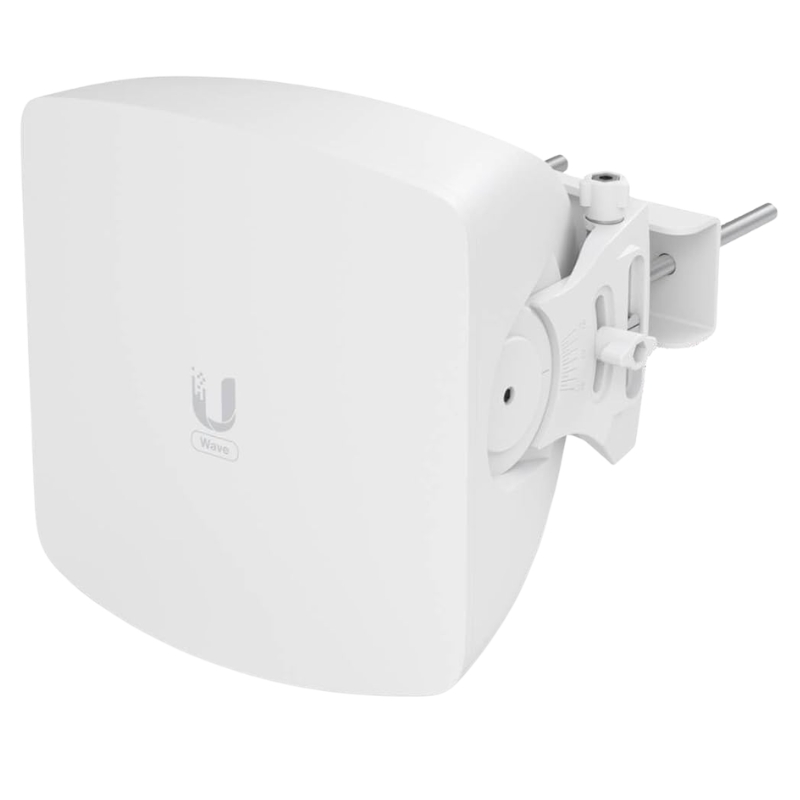


Ubiquiti WAVE-AP-US UISP Wave Single Band 2.4-5GHz 2.5 Gigabit Ethernet 10GbE SFP+ Outdoor Pole Mountable Wireless Access Point. New Sealed in Box (NIB) with 3 Years Warranty
The Ubiquiti WAVE-AP-US belongs to the innovative UISP Wave product family, designed for Internet Service Providers (ISPs) and enterprise outdoor networks. The WAVE-AP-US integrates both 2.5 Gigabit Ethernet (2.5GbE) and a 10GbE SFP+ cage, enabling fiber backhaul capacity for high-throughput wireless links. This category page elaborates on every technical facet, from RF design to physical mounting, ensuring a comprehensive understanding for network architects.
The Ubiquiti WAVE-AP-US UISP Wave Single Band 2.4–5GHz 2.5 Gigabit Ethernet 10GbE SFP+ Outdoor Pole Mountable Wireless Access Point represents a high-capacity carrier-grade wireless infrastructure device engineered for long-range point-to-multipoint connectivity. Designed for deployment in professional wireless ISP networks, municipal connectivity grids, industrial campuses, and outdoor enterprise environments, this access point integrates advanced RF engineering, high-throughput wired interfaces, and ruggedized enclosure construction to deliver stable broadband distribution in demanding outdoor conditions. The hardware platform combines efficient spectrum utilization, low latency processing, and high-speed backhaul support, making it suitable for high-density subscriber distribution and long-distance wireless transport.
The enclosure of the WAVE-AP-US is built using UV-resistant, weather-sealed materials that ensure continuous operation in harsh environmental conditions including intense sunlight, heavy rainfall, dust exposure, and wide temperature fluctuations. The structural design supports pole mounting for elevated installations, enabling optimal line-of-sight alignment and improved RF propagation. Weatherproof sealing protects internal circuitry from moisture intrusion, while thermal management channels dissipate heat efficiently to maintain consistent performance. The chassis design also minimizes wind resistance, ensuring stable mounting even in high-wind installations commonly encountered on towers or rooftop deployments.
The integrated antenna architecture is optimized for directional transmission and reception, allowing the access point to maintain stable connectivity across extended distances. Internal calibration ensures beam consistency, while mechanical mounting supports precise tilt and azimuth adjustments. These features are essential for point-to-multipoint sector coverage where accurate alignment determines signal integrity and throughput stability. The antenna system is engineered to minimize side-lobe interference, improving spectral efficiency and reducing noise in congested radio environments.
Component sealing, corrosion-resistant hardware, and reinforced connector interfaces extend operational longevity. The device is engineered to withstand humidity, salt exposure in coastal deployments, and particulate intrusion in industrial zones. The thermal tolerance range ensures reliable operation across both hot climates and cold outdoor installations, maintaining consistent RF output and system stability.
The WAVE-AP-US incorporates a sophisticated radio system capable of operating across the 2.4GHz and 5GHz spectrum ranges, enabling flexible deployment strategies based on interference levels, coverage requirements, and regulatory conditions. The radio chipset uses advanced modulation techniques and adaptive power control to maximize throughput while minimizing interference. Dynamic frequency selection allows the device to automatically select optimal channels, maintaining stable links even in crowded wireless environments.
Adaptive modulation algorithms dynamically adjust transmission rates based on signal quality and environmental conditions. This ensures that connected client devices receive the highest possible throughput while maintaining link reliability. The radio subsystem continuously monitors signal-to-noise ratio and error rates, automatically modifying modulation schemes to sustain consistent data delivery. This capability is particularly valuable in outdoor networks where atmospheric changes and physical obstructions can affect signal stability.
Built-in interference filtering and noise rejection mechanisms reduce the impact of competing wireless transmissions. The access point employs advanced filtering circuits that isolate desired signals and suppress external interference sources such as nearby radios or industrial equipment. Channel scanning and automatic reassignment features allow the device to avoid congested frequencies and maintain consistent performance.
Spectrum utilization efficiency is enhanced through intelligent bandwidth allocation and dynamic channel width adjustment. The system can operate with varying channel widths depending on available spectrum and network demand, ensuring optimal use of available frequencies without sacrificing link stability or data integrity.
The Ubiquiti WAVE-AP-US is equipped with advanced wired networking interfaces designed to support high-capacity backhaul and seamless integration into enterprise or service provider infrastructures. Its combination of 2.5 Gigabit Ethernet and 10GbE SFP+ connectivity enables flexible deployment across different network architectures, from moderate-capacity distribution points to high-bandwidth aggregation nodes.
The integrated 2.5GbE interface provides a high-speed copper connection suitable for modern network switches and routers that support multi-gigabit Ethernet standards. This port supports increased throughput beyond traditional Gigabit Ethernet, allowing the wireless access point to handle higher aggregate traffic loads from multiple connected clients. Auto-negotiation ensures compatibility with existing network infrastructure while still delivering optimal performance when connected to multi-gigabit capable equipment.
The 10GbE SFP+ slot enables fiber-optic or direct-attach copper connectivity for long-distance backhaul or high-capacity uplinks. This interface supports low-latency data transmission and high bandwidth, making it ideal for network aggregation points or backbone connections. The SFP+ design allows administrators to select appropriate transceiver modules based on distance requirements and cable infrastructure, ensuring deployment flexibility across metropolitan, campus, or rural environments.
Internal switching logic and packet processing engines distribute traffic efficiently between wireless and wired interfaces. This ensures that high-volume wireless traffic does not create bottlenecks at the uplink stage. Hardware acceleration optimizes packet forwarding and reduces CPU overhead, allowing the device to maintain consistent performance even under heavy network load.
The access point is engineered to serve multiple client devices simultaneously while maintaining consistent throughput and minimal latency. Its architecture supports high-density subscriber deployments commonly found in wireless ISP environments. Intelligent scheduling algorithms manage transmission timing for each connected device, ensuring fair bandwidth allocation and preventing performance degradation caused by congested client traffic.
The WAVE-AP-US is optimized for sector-based deployments where a single access point communicates with numerous subscriber units. This configuration is commonly used for broadband distribution across residential or commercial regions. The device’s processing hardware coordinates simultaneous connections, ensuring each client receives stable connectivity without signal collisions or excessive retransmissions.
Low latency operation is achieved through dedicated packet processing components that handle data transmission tasks independently from management functions. This architecture reduces processing delays and ensures time-sensitive applications such as voice communication, video streaming, and real-time monitoring operate smoothly. The system prioritizes latency-sensitive packets, delivering consistent performance even when network traffic is high.
The device is designed to scale with network demand, allowing operators to connect additional client devices without requiring immediate hardware replacement. The scalable architecture supports gradual expansion of wireless coverage areas while maintaining reliable service quality.
The outdoor wireless access point incorporates a power design optimized for reliability and safety. It supports efficient energy usage while providing sufficient power for high-performance radio operation. The installation system is engineered to streamline deployment on poles or towers, minimizing setup time and ensuring secure mounting.
The internal circuitry is optimized for energy efficiency, reducing operational costs and thermal output. Voltage regulation components ensure stable power distribution across all subsystems, preventing fluctuations that could affect performance. Protection circuits safeguard against electrical surges, over-voltage conditions, and power irregularities.
The mounting assembly is designed for rapid installation and secure attachment. Reinforced brackets and adjustable clamps allow technicians to position the device precisely for optimal signal direction. The mounting hardware is constructed from corrosion-resistant materials, ensuring durability during long-term outdoor exposure.
The access point can be installed on towers, utility poles, building exteriors, or dedicated masts. Its compact yet robust design allows integration into a wide range of outdoor infrastructure layouts, supporting both urban and rural network builds.
Security is an integral aspect of the WAVE-AP-US design, ensuring safe operation in public or enterprise network environments. The device incorporates authentication protocols, encryption support, and access control mechanisms to protect transmitted data and prevent unauthorized network access.
Wireless transmissions are safeguarded using encryption standards that protect data from interception. Authentication protocols verify client identity before granting network access, preventing unauthorized devices from connecting. These security measures ensure confidentiality and integrity of transmitted information.
Network segmentation features allow administrators to isolate traffic between different client groups, enhancing security and performance. Access policies can restrict bandwidth usage or limit connectivity based on predefined rules, ensuring fair resource distribution and protection against misuse.
The access point includes safeguards against common network threats such as unauthorized intrusion attempts or malicious traffic patterns. Built-in detection systems monitor activity and alert administrators to suspicious behavior, enabling rapid response to potential security issues.
The hardware architecture of the Ubiquiti WAVE-AP-US is engineered to maintain consistent throughput under heavy traffic conditions. High-performance processors, efficient memory management, and optimized firmware collectively ensure stable operation even when numerous clients are connected simultaneously.
Dedicated processing components handle wireless scheduling, packet forwarding, and management tasks concurrently. Hardware acceleration reduces latency and increases throughput, ensuring reliable performance during peak usage periods. This design allows the device to support bandwidth-intensive applications without performance degradation.
The internal memory system is optimized for rapid data buffering and transmission. Efficient caching mechanisms reduce packet loss and maintain steady data flow. The memory architecture supports high packet rates, ensuring that the device can manage large volumes of network traffic without congestion.
Performance consistency is maintained through intelligent load balancing and resource allocation. The system monitors traffic patterns and dynamically adjusts processing priorities to maintain optimal throughput levels. This ensures reliable connectivity for all users regardless of network demand.
The WAVE-AP-US is designed to support diverse deployment scenarios ranging from rural broadband distribution to dense urban wireless infrastructure. Its combination of long-range transmission capability and high-capacity wired interfaces allows it to function as both a distribution node and a network aggregation point.
In remote areas where wired infrastructure is limited, the device can provide reliable wireless connectivity across long distances. Its directional antenna system and high-gain transmission enable stable links between base stations and subscriber units, facilitating broadband access in underserved regions.
Within metropolitan environments, the access point can be deployed on rooftops or towers to distribute connectivity to multiple buildings or sectors. Its interference mitigation features help maintain performance despite dense RF activity typical in urban settings.
Industrial facilities and large campuses benefit from the device’s ability to cover wide areas while maintaining high throughput. The rugged enclosure and stable mounting system ensure reliable operation in environments where vibration, temperature changes, or environmental contaminants are present.


 Contact Us
 Information
 Catalog
 Solid State Drives (SSD)
 Network Switches
 Hard Disk Drives
 HBA & Controllers
 PC & Servers
 PC & Server Memory
 CPU & Processors
 Network Routers
 Power Supplies
 Tape Drives & Libraries
 Network Devices
 Computer & Network Cables


