
(7% discount is applied at checkout)
Cart is empty
Your go-to destination for cutting-edge server products
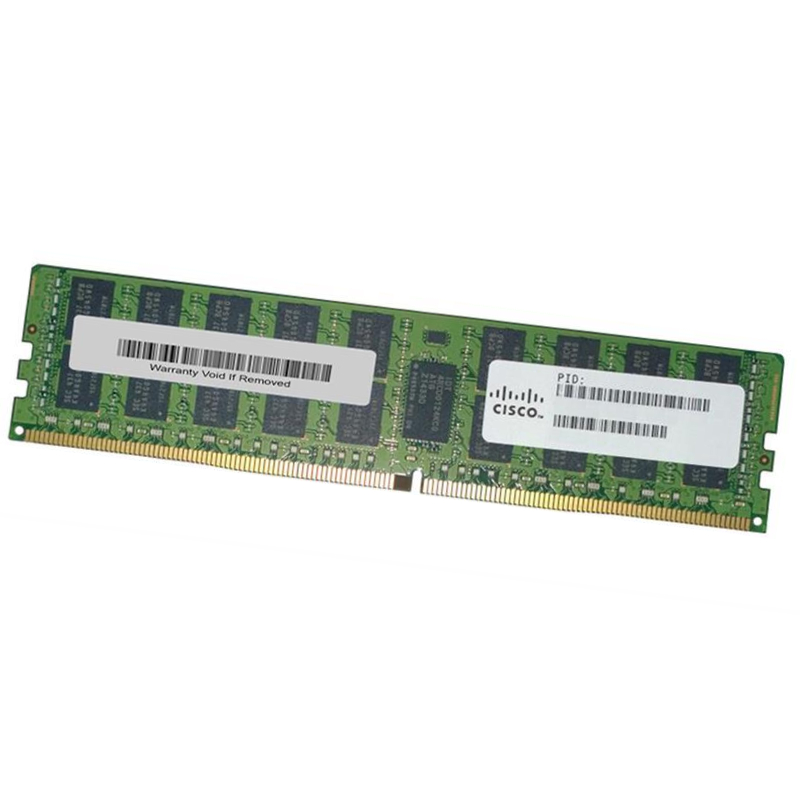
Cisco UCS-ML-X64G4RSH 64GB PC4-21300 DDR4-2666MHz Registered ECC CL19 288-Pin Load Reduced DIMM 1.2V Quad Rank Memory Module. New (System) Pull with 1 year replacement warranty
The Cisco UCS-ML-X64G4RSH is a premium 64GB DDR4 ECC LRDIMM memory module engineered for enterprise-grade computing. Offering high-speed performance, energy efficiency, and robust error correction, this module is ideal for mission-critical workloads and advanced server environments.
The Cisco UCS-ML-X64G4RSH 64GB PC4-21300 DDR4-2666MHz Registered ECC CL19 288-Pin Load Reduced DIMM memory module represents an advanced enterprise-grade memory solution designed for demanding data center workloads and modern server architectures. Built for high-performance computing environments, this memory module delivers exceptional reliability, speed, and scalability, making it ideal for Cisco Unified Computing System servers and other compatible enterprise platforms. With its large 64GB capacity and advanced Load Reduced DIMM architecture, the module significantly enhances system memory bandwidth while reducing electrical load on the memory controller.
As enterprise applications continue to grow in complexity and scale, organizations require dependable memory modules that can support virtualization, database operations, artificial intelligence workloads, and high-volume data processing. The Cisco UCS-ML-X64G4RSH memory module addresses these requirements by combining DDR4 technology, registered buffering, and ECC error correction features into a single powerful memory component. This ensures not only higher performance but also improved data integrity and system stability in mission-critical environments.
DDR4 memory technology represents a significant advancement over previous generations of server memory, offering higher bandwidth, improved power efficiency, and greater density. The Cisco UCS-ML-X64G4RSH 64GB DDR4 module operates at a speed of 2666MHz, providing fast data transfer rates that help enterprise servers handle intensive workloads with ease. The PC4-21300 specification ensures that the module can deliver high throughput performance while maintaining efficient power usage.
Compared to DDR3 memory modules, DDR4 provides increased performance through higher clock speeds and improved signal integrity. These improvements enable servers to process larger datasets and support more virtual machines simultaneously. For businesses running complex applications such as enterprise resource planning systems, cloud platforms, or big data analytics engines, the enhanced bandwidth of DDR4 memory plays a crucial role in maintaining responsive system performance.
The architectural design of DDR4 memory introduces several technological improvements that make it well suited for enterprise computing environments. Higher transfer rates allow servers to move data more quickly between memory and processors, which reduces latency during heavy workloads. Lower voltage operation improves energy efficiency and reduces heat generation, helping data centers maintain optimal thermal conditions while lowering overall power consumption.
Another important advantage of DDR4 memory is increased module density. With higher capacity modules like the Cisco UCS-ML-X64G4RSH 64GB DIMM, organizations can expand system memory significantly without occupying additional DIMM slots. This allows servers to scale efficiently as application demands grow.
The 64GB capacity of the Cisco UCS-ML-X64G4RSH memory module is specifically designed to support modern enterprise workloads that require large memory pools. Applications such as virtualization platforms, in-memory databases, machine learning systems, and high-performance computing clusters depend heavily on large RAM capacities to deliver consistent performance.
By installing multiple 64GB modules in compatible servers, organizations can create high-capacity memory environments capable of handling complex workloads and large datasets. This makes the module particularly valuable in data centers where memory resources directly influence application performance and user experience.
Virtualization technologies rely heavily on system memory to allocate resources across multiple virtual machines. With the Cisco UCS-ML-X64G4RSH 64GB memory module, servers can support a greater number of virtual machines without compromising performance. Each virtual environment requires a dedicated portion of memory, and high-capacity modules allow administrators to allocate sufficient RAM while maintaining system responsiveness.
In large virtualization environments, memory capacity often becomes the primary limitation before CPU or storage resources. Installing higher capacity modules helps overcome this limitation, enabling servers to host more virtual workloads efficiently.
Database management systems benefit significantly from increased memory capacity because larger datasets can be stored in RAM rather than accessed from slower storage devices. With 64GB DDR4 modules installed in enterprise servers, databases can maintain extensive caching mechanisms that accelerate query processing and improve transaction speeds.
Organizations operating high-traffic applications, financial systems, or large-scale e-commerce platforms rely on fast database performance to maintain smooth operations. The Cisco UCS-ML-X64G4RSH memory module supports these environments by providing the capacity and speed necessary for optimal database performance.
The Cisco UCS-ML-X64G4RSH memory module features Load Reduced DIMM (LRDIMM) architecture, which significantly improves memory scalability in high-density server environments. LRDIMM technology reduces the electrical load on the memory controller by buffering data signals, allowing servers to support larger memory capacities without compromising stability.
In traditional memory configurations, increasing the number of DIMMs installed in a server can create signal integrity challenges due to the electrical load placed on the memory controller. Load Reduced DIMMs address this issue by using an isolation memory buffer that minimizes direct electrical connections between DRAM chips and the memory controller.
Load Reduced DIMMs provide several advantages that make them particularly suitable for enterprise data centers. One of the most significant benefits is the ability to install more memory modules per server without encountering performance degradation. This makes LRDIMM modules ideal for servers that require extremely large memory capacities.
Another advantage is improved signal integrity and system stability. By isolating the DRAM chips from the memory controller, LRDIMM modules reduce electrical noise and maintain consistent communication between components. This results in reliable performance even in high-density configurations where multiple DIMMs are installed.
Data integrity is a critical requirement in enterprise computing environments. The Cisco UCS-ML-X64G4RSH memory module incorporates Registered ECC technology to ensure reliable data processing and minimize the risk of system errors. ECC, or Error Correcting Code memory, automatically detects and corrects single-bit memory errors while identifying multi-bit errors that could compromise system stability.
Registered memory includes an additional register between the memory controller and DRAM modules. This register buffers command and address signals, reducing electrical load and improving signal stability. The combination of ECC protection and registered buffering ensures that enterprise servers can operate continuously without experiencing data corruption or system crashes.
In large-scale computing environments, even minor memory errors can lead to significant operational disruptions. ECC memory helps prevent these issues by actively monitoring data integrity during read and write operations. When a single-bit error occurs, the ECC algorithm corrects it automatically before the data is processed by the CPU.
This capability is especially important for mission-critical applications such as financial systems, scientific research platforms, healthcare databases, and cloud infrastructure services. The Cisco UCS-ML-X64G4RSH memory module provides the reliability necessary for these demanding environments.
The quad rank configuration of the Cisco UCS-ML-X64G4RSH memory module enables the use of multiple memory ranks within a single DIMM. Each rank functions as a separate group of memory chips that can be accessed independently by the memory controller. This design allows higher memory densities while maintaining efficient performance.
Quad rank modules are particularly beneficial in servers that require extremely large memory capacities. By integrating multiple ranks into a single DIMM, manufacturers can achieve higher capacities without increasing the number of memory slots required.
Memory bandwidth plays a vital role in determining overall system performance. The quad rank design helps optimize bandwidth by allowing the memory controller to interleave operations across multiple ranks. This enables faster data access and improves throughput during heavy workloads.
For applications that require continuous data processing, such as real-time analytics or high-performance computing, this optimized bandwidth can significantly enhance overall system responsiveness.
The Cisco UCS-ML-X64G4RSH memory module uses the standard 288-pin DIMM form factor associated with DDR4 server memory. This design ensures compatibility with modern enterprise servers that support DDR4 LRDIMM modules. The 288-pin layout allows efficient communication between the memory module and the server motherboard while maintaining reliable signal integrity.
Server administrators must ensure that their systems support LRDIMM memory before installing the module. Many Cisco Unified Computing System servers and compatible enterprise platforms are designed to work with high-capacity DDR4 LRDIMM modules like the UCS-ML-X64G4RSH.
Cisco Unified Computing System servers are engineered to deliver exceptional performance, scalability, and efficiency in data center environments. The Cisco UCS-ML-X64G4RSH memory module is specifically designed to integrate seamlessly with these servers, enabling organizations to maximize their computing infrastructure capabilities.
By installing certified Cisco memory modules, organizations can maintain optimal system compatibility and ensure that server hardware operates according to manufacturer specifications. This helps reduce compatibility issues and ensures long-term reliability.
Energy efficiency is a major consideration for modern data centers, where large numbers of servers operate continuously. The Cisco UCS-ML-X64G4RSH memory module operates at a voltage of 1.2V, which is significantly lower than earlier memory generations. Lower operating voltage reduces power consumption and heat generation, contributing to more efficient server operation.
Reducing energy consumption is not only beneficial for lowering operational costs but also helps organizations meet sustainability goals and environmental standards. Efficient memory modules play a key role in achieving these objectives by minimizing the energy required for high-performance computing tasks.
Lower power consumption results in reduced heat output, which simplifies thermal management within server racks. Maintaining optimal temperatures is essential for ensuring hardware longevity and preventing performance throttling. By operating at 1.2V, the Cisco UCS-ML-X64G4RSH memory module contributes to a stable and efficient data center environment.
Enterprise applications often involve complex computational tasks that require fast memory access and large data processing capabilities. The Cisco UCS-ML-X64G4RSH memory module is designed to meet these demands by delivering high-speed data transfer, large capacity, and dependable reliability.
Applications such as enterprise resource planning systems, virtualization platforms, artificial intelligence frameworks, and high-performance databases rely on consistent memory performance to operate effectively. By integrating high-capacity DDR4 memory modules, organizations can ensure that their computing infrastructure remains capable of supporting evolving workloads.
Big data analytics platforms process massive volumes of structured and unstructured data. These platforms require large memory capacities to store and analyze datasets efficiently. The 64GB capacity of the Cisco UCS-ML-X64G4RSH module enables servers to maintain extensive in-memory datasets, which accelerates analytics processes and reduces reliance on slower disk storage.
Artificial intelligence and machine learning workloads require substantial memory resources for model training and inference operations. High-capacity DDR4 memory modules provide the memory bandwidth and capacity necessary to support these workloads effectively. Servers equipped with Cisco UCS-ML-X64G4RSH modules can process large neural network datasets and maintain efficient training cycles.
Modern data centers must be capable of scaling rapidly to accommodate new applications, increased workloads, and expanding datasets. The Cisco UCS-ML-X64G4RSH 64GB DDR4 memory module provides a scalable solution that enables organizations to expand memory capacity without replacing existing infrastructure.
By adding additional high-capacity modules, administrators can increase system memory to meet evolving requirements while maintaining efficient server utilization. This flexibility helps organizations maximize the value of their computing investments.
As enterprise workloads continue to evolve, servers must be prepared to support increasingly complex applications. Memory plays a central role in enabling this adaptability. The Cisco UCS-ML-X64G4RSH memory module provides the capacity, performance, and reliability required for future-ready server architectures.
Organizations that invest in high-capacity DDR4 memory modules today can ensure that their infrastructure remains capable of supporting emerging technologies such as advanced analytics, artificial intelligence, and cloud-native applications.


 Contact Us
 Information
 Catalog
 Solid State Drives (SSD)
 Network Switches
 Hard Disk Drives
 HBA & Controllers
 PC & Servers
 PC & Server Memory
 CPU & Processors
 Network Routers
 Power Supplies
 Tape Drives & Libraries
 Network Devices
 Computer & Network Cables