(7% discount is applied at checkout)
Cart is empty
Your go-to destination for cutting-edge server products
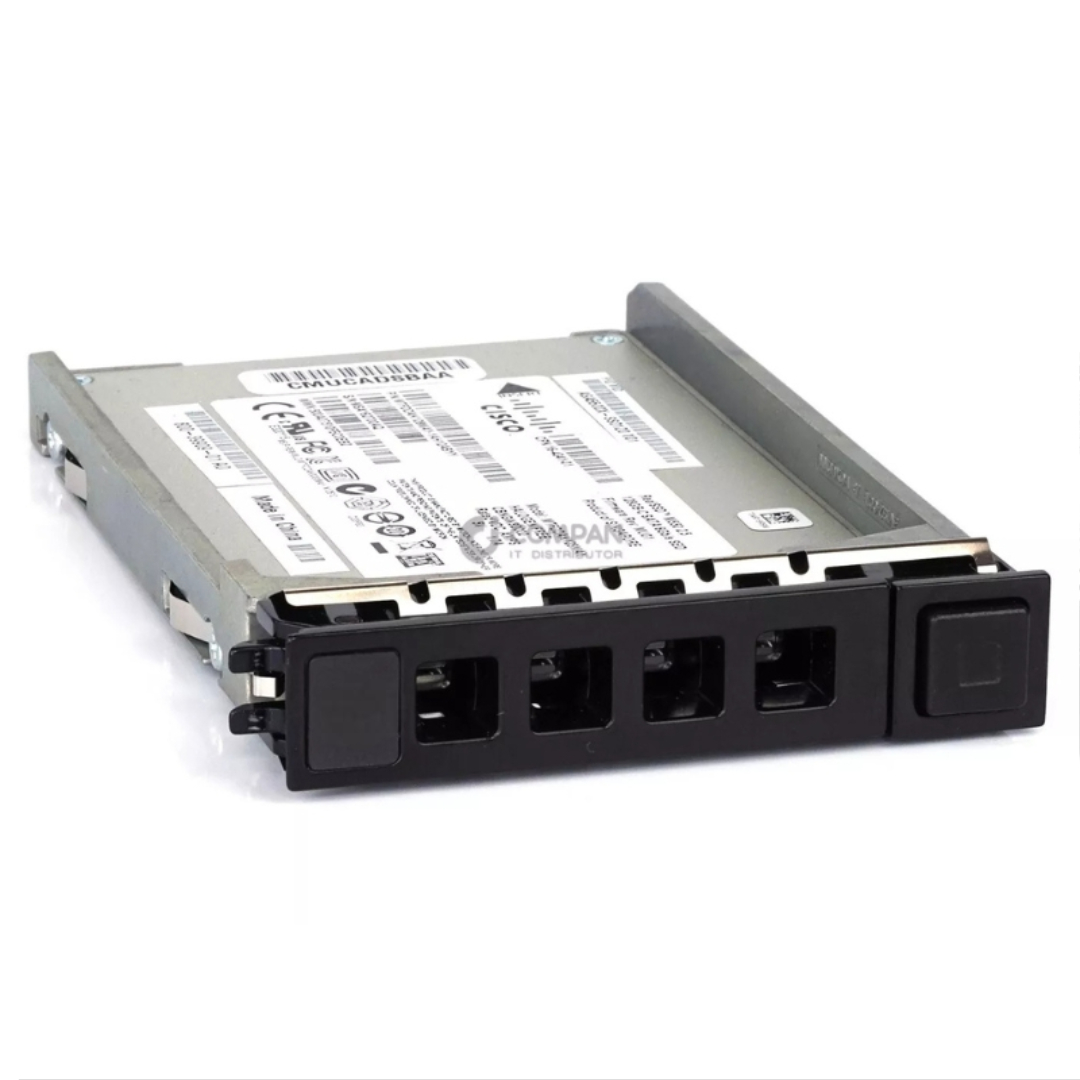


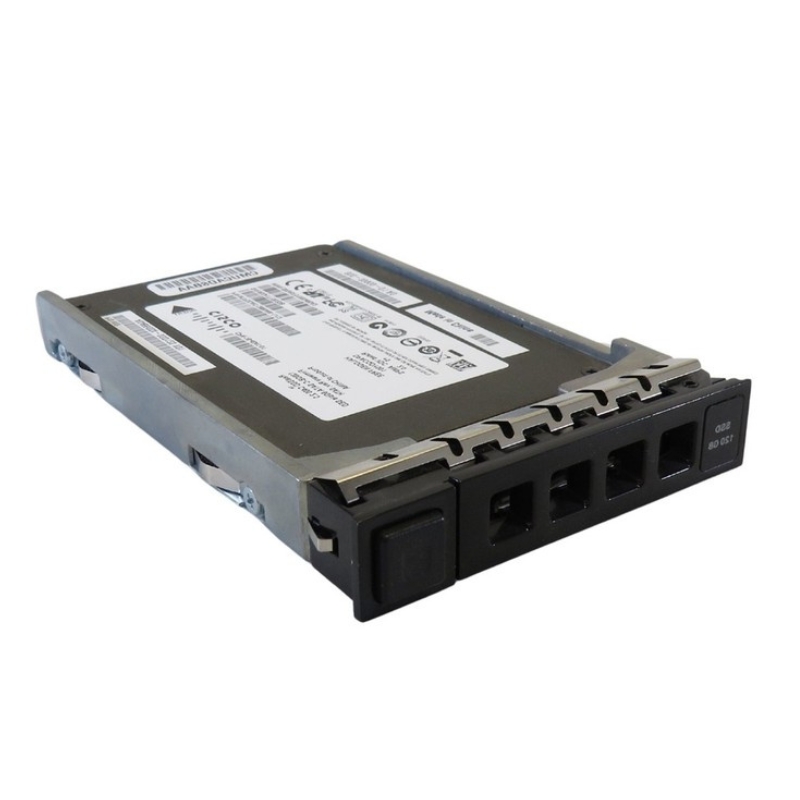
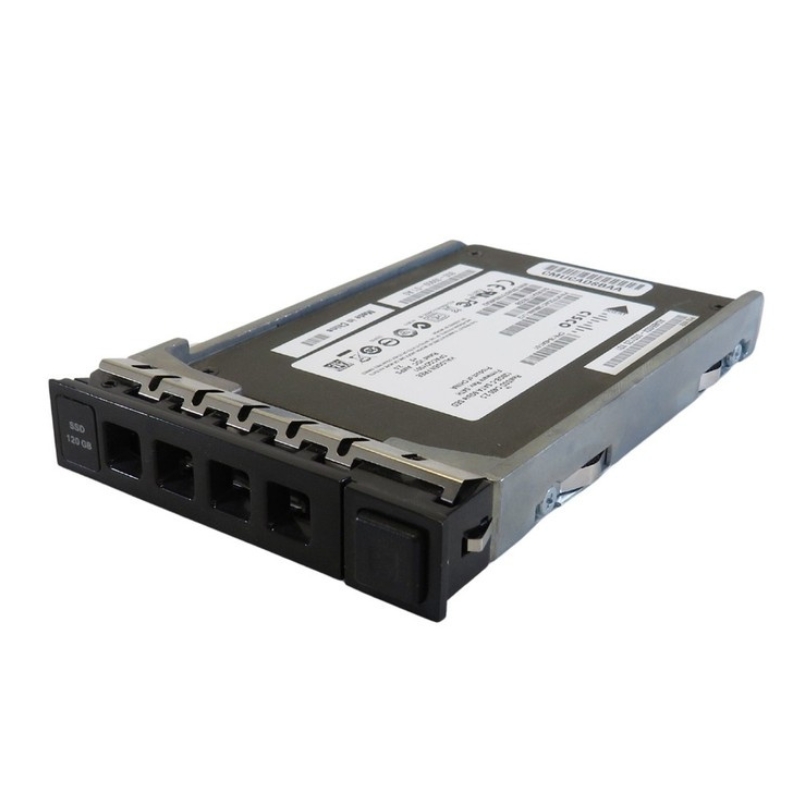
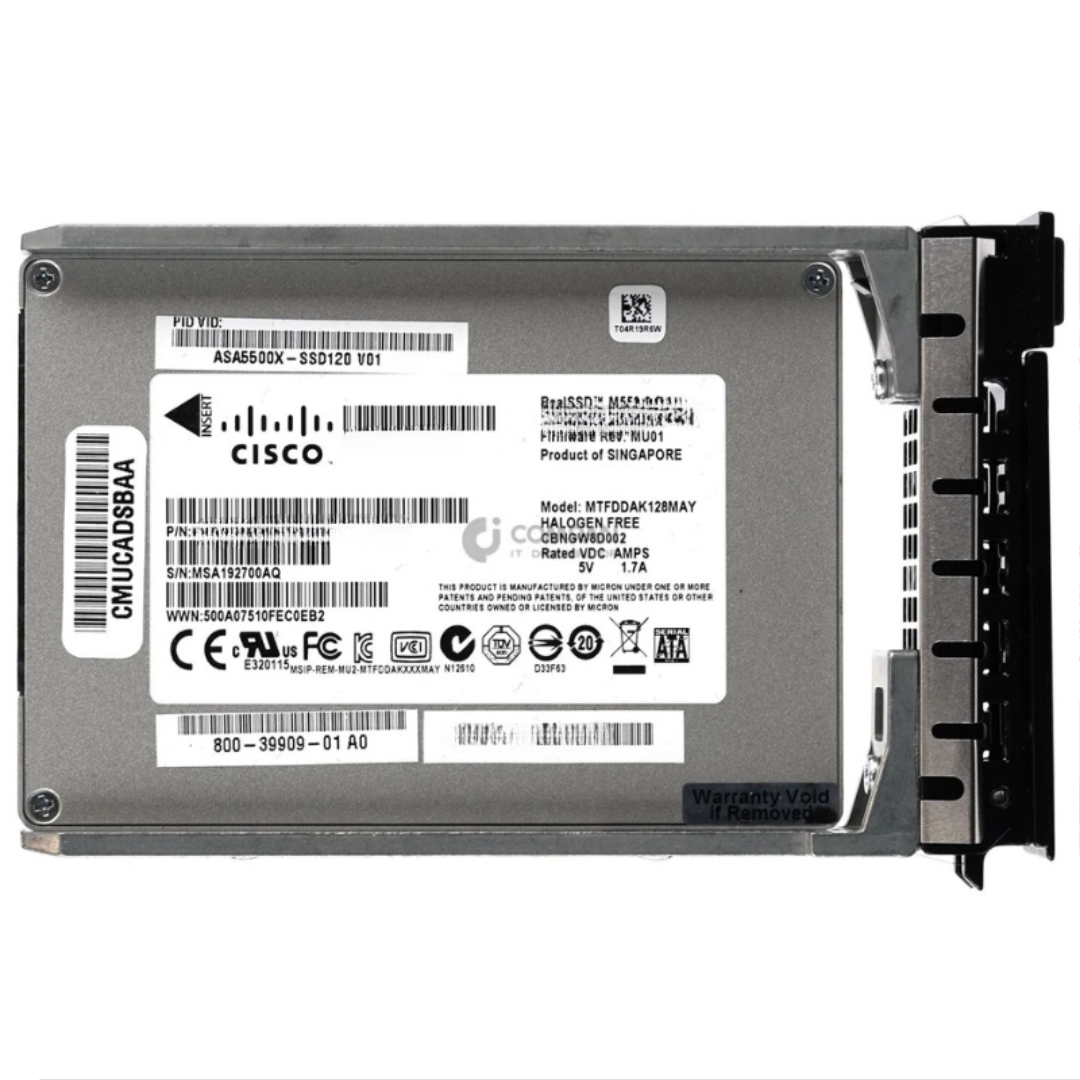
Cisco UCSSD480G12S3EP 480GB MLC SATA 6Gbps Enterprise 2.5-inch Internal Solid State Drive (SSD). Excellent Refurbished with 1 year replacement warranty
Discover the Cisco UCSSD480G12S3EP, a high-performance 480GB MLC solid-state drive engineered for enterprise-class workloads. This 2.5-inch internal SATA drive delivers reliable, low-latency storage with SATA 6Gb/s throughput for data centers and mission-critical systems.
Official label: 480GB 2.5" Enterprise Performance 6G SATA SSD — Manufacturer part number: UCSSD480G12S3EP.
This drive uses MLC (multi-level cell) flash and provides 480 gigabytes of storage capacity — ideal for database caches, virtualization, and read-intensive enterprise applications.
Designed for sustained enterprise use, the SSD has an endurance rating of 3 DWPD, giving predictable lifespan under heavy write cycles.
Engineered for low-latency access and stable throughput, the drive supports typical SATA performance characteristics suitable for mixed-read workloads in server environments.
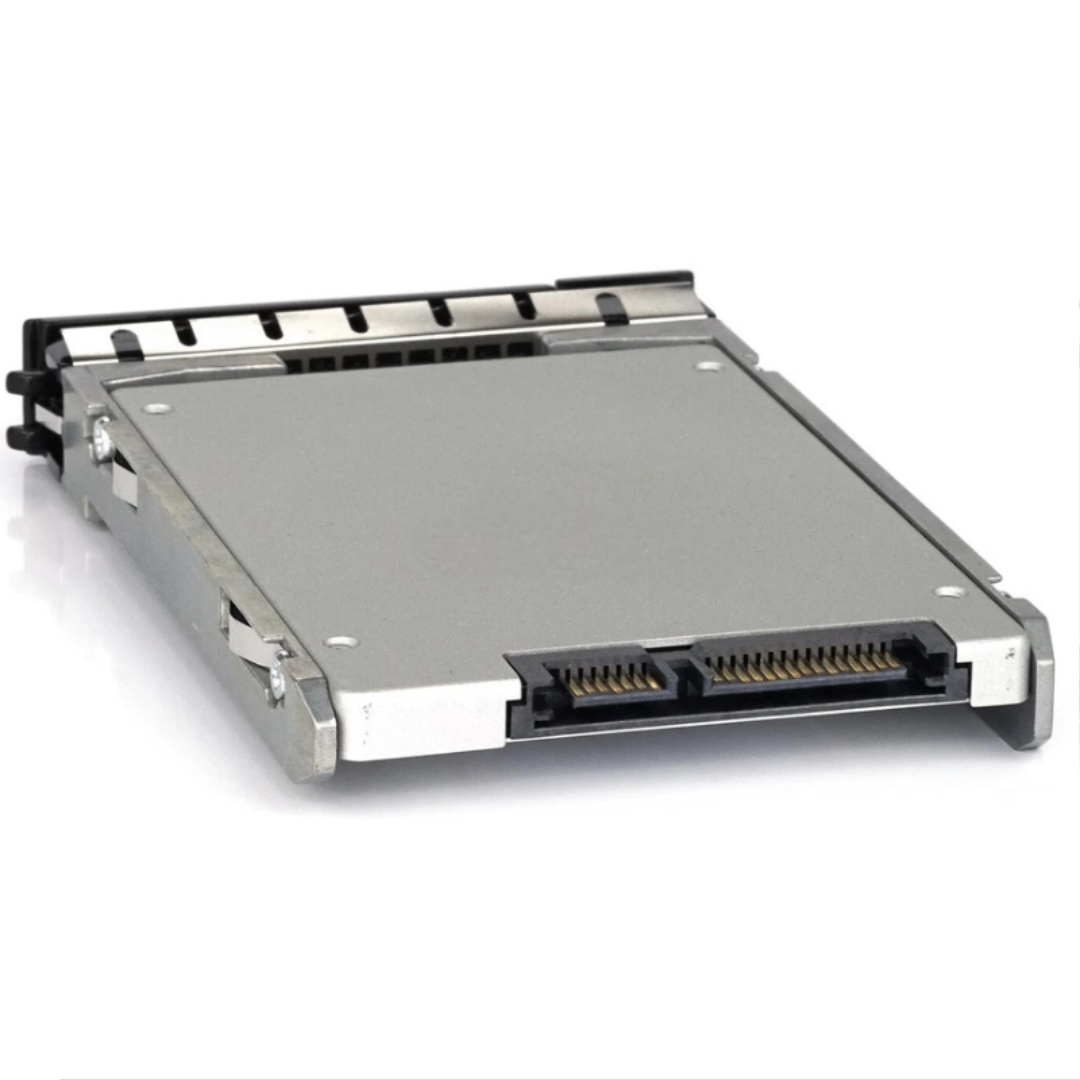
A compact 2.5-inch form factor makes this drive compatible with a broad range of rack and blade servers, storage arrays, and appliance enclosures.
The unit is hot-pluggable, enabling replacement or upgrades with minimal downtime — a crucial feature for high-availability infrastructures.
The Cisco UCSSD480G12S3EP represents a specialized class of storage solutions engineered specifically for enterprise environments where reliability, performance consistency, and data integrity are non-negotiable. This 480GB MLC SATA 6Gbps solid state drive embodies Cisco's commitment to delivering storage components that meet the rigorous demands of business-critical applications, database systems, and virtualized infrastructure.
Unlike consumer-grade SSDs that may exhibit significant performance degradation during sustained write operations, the Cisco UCSSD480G12S3EP maintains consistent input/output operations per second (IOPS) and throughput thanks to its enterprise-optimized MLC NAND flash and advanced wear-leveling algorithms. This consistency ensures predictable application performance even during peak workload periods.
Enterprise SSDs are characterized by their substantially higher endurance ratings compared to consumer models. The UCSSD480G12S3EP utilizes multi-level cell (MLC) NAND flash specifically graded for enterprise use, offering significantly higher program/erase (P/E) cycles. This translates to a longer operational lifespan under continuous write-intensive workloads typical of server environments.
The drive incorporates sophisticated error correction code (ECC) mechanisms that far exceed those found in consumer SSDs. These advanced ECC capabilities ensure data integrity by detecting and correcting a greater number of bit errors, providing an additional layer of protection against data corruption in mission-critical applications.
The 480GB capacity of the UCSSD480G12S3EP represents an optimal balance between storage density and performance for many enterprise applications. This capacity provides sufficient space for operating systems, application binaries, and frequently accessed data while maintaining high performance levels. The standard 2.5-inch form factor ensures compatibility with most server and storage system drive bays.
Multi-level cell NAND flash stores multiple bits per cell, offering an excellent balance of cost, capacity, and performance for enterprise applications. The enterprise-grade MLC (eMLC) used in this Cisco drive is specifically screened and tested for enhanced endurance and reliability compared to standard MLC flash, making it suitable for mixed read/write workloads.
The drive's MLC NAND is rated for thousands of program/erase cycles, significantly higher than consumer MLC flash. This enhanced endurance is achieved through advanced cell design, rigorous testing, and specialized firmware that optimizes write distribution across the memory array.
The SATA 6Gbps interface provides a maximum theoretical bandwidth of 600MB/s, which this drive can leverage for both sequential read and write operations. While newer NVMe interfaces offer higher performance, SATA remains a cost-effective and widely compatible solution for many enterprise storage applications.
The SATA 6Gbps interface maintains backward compatibility with previous SATA revisions (3Gbps and 1.5Gbps), ensuring the drive can be deployed in existing infrastructure. However, to achieve maximum performance, connection to a SATA 6Gbps controller is essential.
The UCSSD480G12S3EP delivers exceptional sequential read and write speeds that significantly outperform traditional hard disk drives. Sequential performance is particularly important for applications involving large file transfers, data backup operations, and content streaming where large contiguous blocks of data are accessed.
With high random read IOPS (Input/Output Operations Per Second), this drive excels in scenarios involving multiple concurrent read operations, such as database query processing, web server applications, and virtual desktop infrastructure. The absence of mechanical seek times enables instantaneous data access across the entire storage medium.
Random write performance is crucial for transactional databases, logging operations, and metadata updates. The drive's advanced controller and firmware optimize write patterns to maintain high random write IOPS while ensuring even wear distribution across the NAND flash memory.
Enterprise SSDs prioritize consistent low latency over peak performance. The UCSSD480G12S3EP maintains predictable response times across varying workload conditions, ensuring service level agreements (SLAs) can be met for latency-sensitive applications.
Advanced garbage collection algorithms and background maintenance operations are designed to minimize performance impact on foreground applications. This attention to tail latency (the highest latency percentiles) ensures smooth application performance even during drive maintenance activities.
The Cisco UCSSD480G12S3EP features an exceptionally high MTBF rating, typically measured in millions of hours, reflecting the drive's robust construction and component quality. This reliability metric is crucial for calculating overall system availability and planning maintenance schedules in enterprise environments.
With an uncorrectable bit error rate that meets or exceeds enterprise standards, this drive provides exceptional protection against data corruption. The UBER specification indicates the probability of encountering an error that cannot be corrected by the drive's ECC mechanisms, with enterprise drives typically offering significantly better rates than consumer models.
The drive implements end-to-end data path protection, ensuring data integrity from the host interface through the controller to the NAND flash memory and back. This comprehensive protection scheme guards against data corruption that might occur during internal data transfers within the drive.
The Terabytes Written specification indicates the total amount of data that can be written to the drive over its lifetime while maintaining data integrity. The UCSSD480G12S3EP offers a TBW rating appropriate for write-intensive enterprise applications, with the 480GB capacity model providing sufficient endurance for years of continuous operation.
Advanced wear-leveling algorithms distribute write operations evenly across all available memory cells, preventing specific blocks from wearing out prematurely. This dynamic wear-leveling extends the drive's usable life and maintains consistent performance throughout its lifespan.
As a boot device in servers, the UCSSD480G12S3EP dramatically reduces operating system boot times and improves overall system responsiveness. The 480GB capacity provides ample space for the operating system, hypervisor, and essential applications while delivering the performance needed for efficient server operation.
The drive's excellent write performance and data integrity features make it ideal for storing database transaction logs, where write latency directly impacts overall database performance and transaction commit times.
Storing database indexes on SSDs significantly improves query performance, while TempDB operations benefit from the low latency and high IOPS provided by the UCSSD480G12S3EP in database environments.
In virtualized environments, the drive can host hypervisor installations and virtual machine configuration files, reducing deployment times and improving virtual machine management operations.
The random I/O performance of the UCSSD480G12S3EP is particularly beneficial for VDI deployments, where multiple virtual desktops generate numerous simultaneous storage requests during boot storms and user activity peaks.
In automated storage tiering systems, this drive serves as an excellent capacity tier for frequently accessed data, providing faster access than traditional hard drives while being more cost-effective than higher-performance SSDs for certain workloads.
The drive's endurance characteristics make it suitable for write caching applications, where it can absorb write operations and destage them to slower storage media, improving overall system write performance.
The standard 2.5-inch form factor and SATA 6Gbps interface ensure broad compatibility with server and storage systems from multiple vendors. However, specific compatibility should be verified with system documentation to ensure optimal performance and support.
The drive is compatible with major server operating systems including various Windows Server editions, Linux distributions, and VMware ESXi. Standard AHCI drivers typically provide full functionality, though vendor-specific drivers may offer enhanced performance or features.
In virtualized environments, the drive functions transparently to guest operating systems, with performance characteristics maintained through the hypervisor layer. Compatibility with major virtualization platforms ensures flexible deployment options.
When deploying multiple drives in RAID configurations, compatibility with specific RAID controllers should be verified. Some advanced enterprise features may require specific controller support or configuration.
TRIM command support in RAID environments varies by controller and configuration. Understanding TRIM support limitations in specific RAID implementations is important for maintaining long-term performance.


 Contact Us
 Information
 Catalog
 Solid State Drives (SSD)
 Network Switches
 Hard Disk Drives
 HBA & Controllers
 PC & Servers
 PC & Server Memory
 CPU & Processors
 Network Routers
 Power Supplies
 Tape Drives & Libraries
 Network Devices
 Computer & Network Cables