(7% discount is applied at checkout)
Cart is empty
Your go-to destination for cutting-edge server products
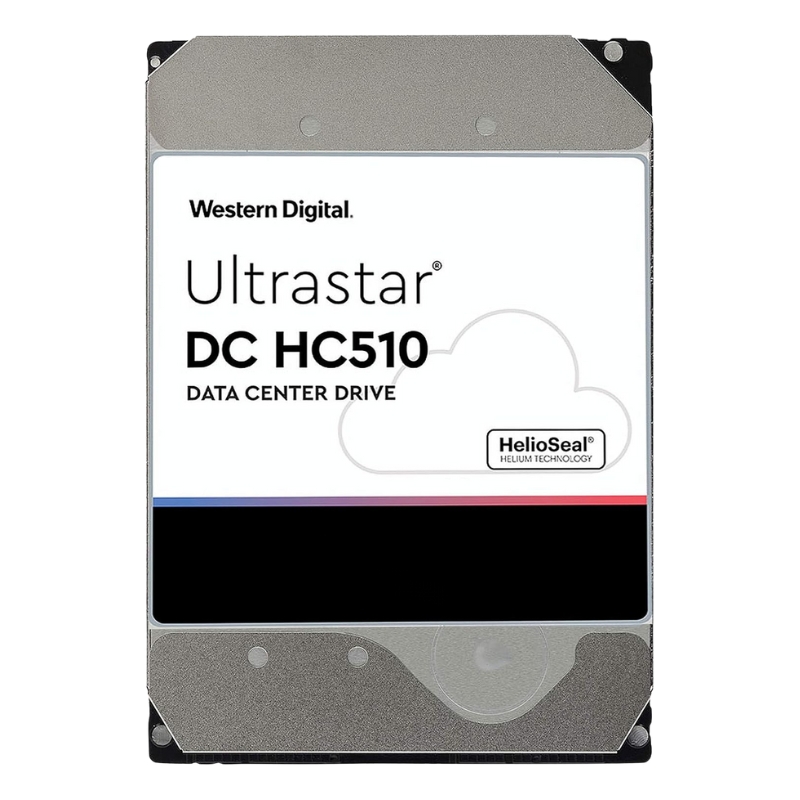


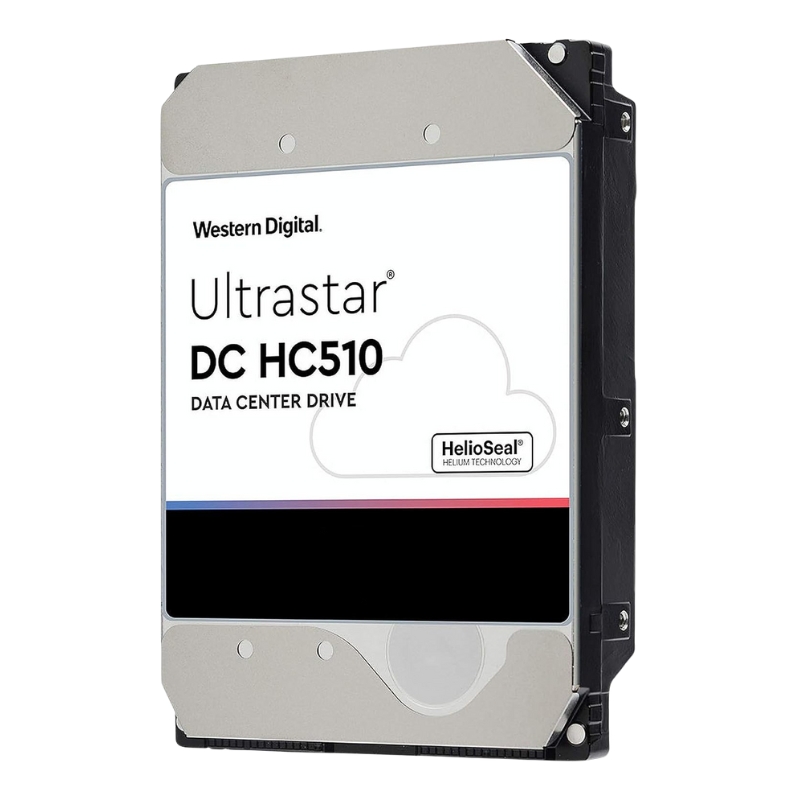
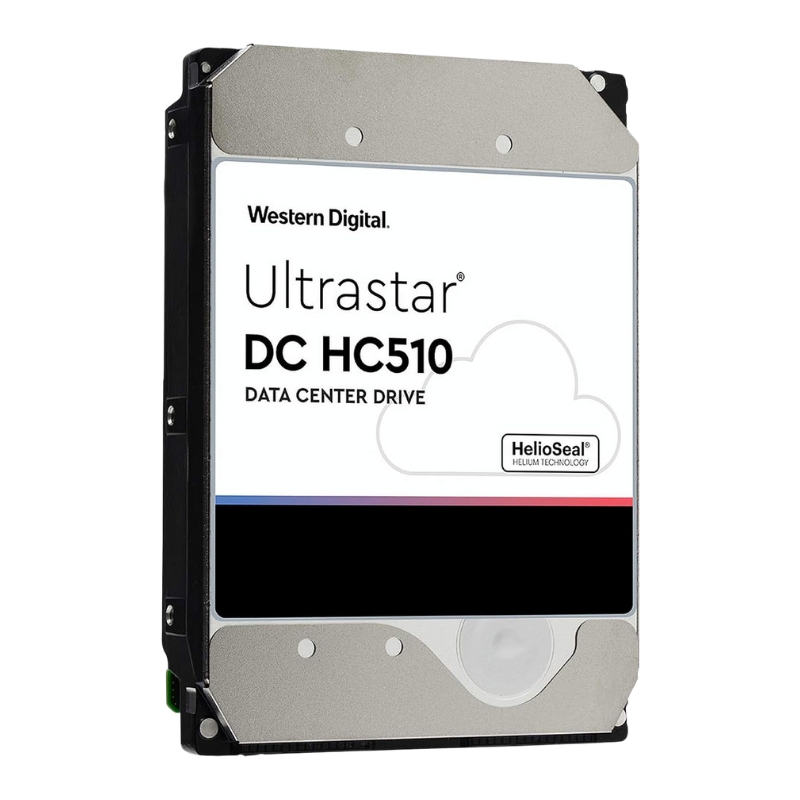
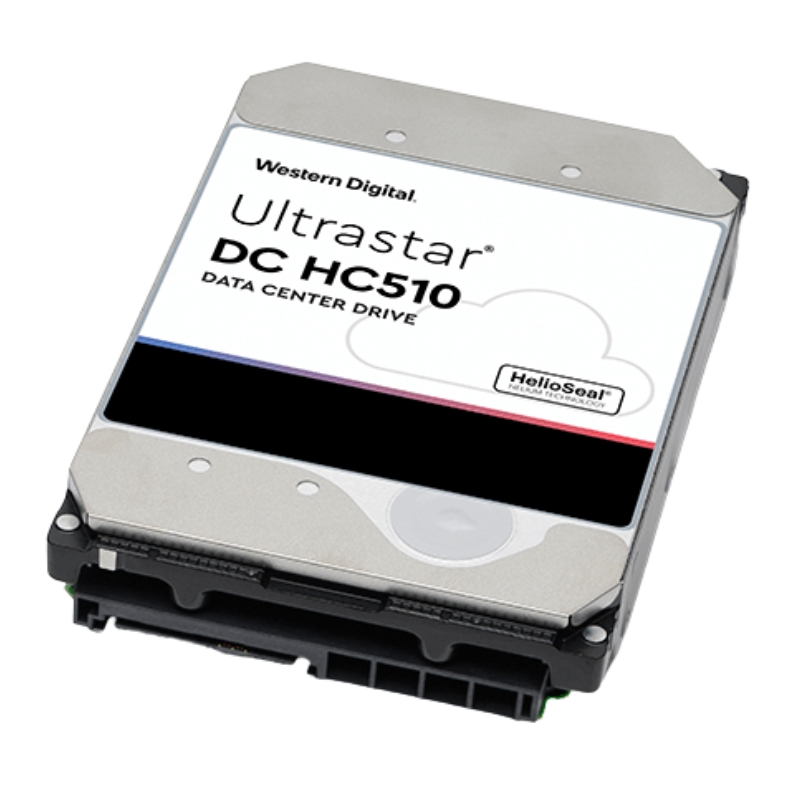
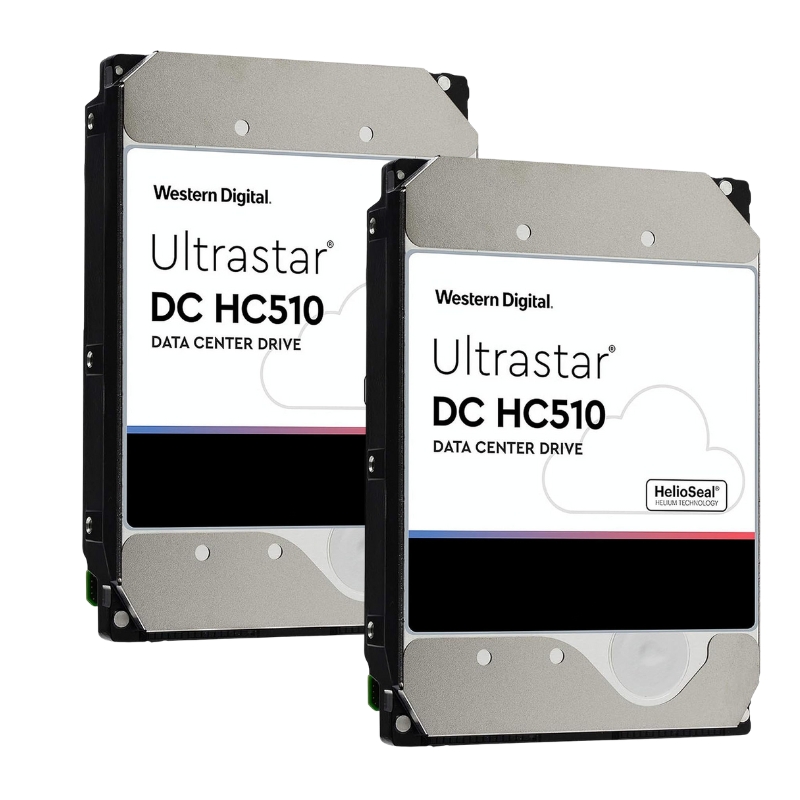
Western Digital 0F27399 Ultrastar HE10 8TB 7.2K RPM SAS 12gbps 3.5 Inch Hard Disk Drive. Excellent Refurbished with 1 year Replacement Warranty - Dell Version
The Western Digital Ultrastar HE10 8TB enterprise hard drive is designed for data centers and professional server environments that demand high capacity, reliability, and consistent performance. Built on the trusted Ultrastar platform, this internal SAS hard disk delivers efficient storage for mission-critical workloads.
At the heart of the 0F27399 Ultrastar HE10's design is Western Digital's proprietary HelioSeal® technology. This process hermetically seals the drive with helium, a gas that is less dense than air, resulting in significantly lower drag on the spinning disk platters.
The implementation of helium provides a cascade of performance and efficiency benefits crucial for large-scale deployment.
With lower mechanical drag, the drive motor requires less energy to maintain the 7,200 RPM operational speed. This directly translates to lower operating expenses (OPEX) in a data center, where power and cooling are major cost factors.
The thinner atmosphere inside the drive allows for closer placement of disk platters. This enables more platters and heads to be fitted into the standard 3.5-inch form factor, achieving high capacities like 8TB, 10TB, 12TB, and beyond within the same physical space.
Helium conducts heat more efficiently than air, leading to cooler operating temperatures. Cooler drives have longer component lifespans and enhanced reliability. Additionally, the reduced turbulence results in quieter operation, a meaningful factor in densely packed server racks.
To reliably write data onto extremely high-density platters, the Ultrastar HE10 utilizes Energy-Assisted Magnetic Recording (EAMR). This technology uses a precise laser to momentarily heat a tiny spot on the disk media, making it more receptive to magnetic flux changes from the write head. This allows for smaller, more stable data bits to be written, pushing the boundaries of capacity without sacrificing data integrity or requiring a revolutionary media change.
The "SAS 12gbps" interface is a critical differentiator for the 0F27399 model, placing it squarely in the professional and enterprise domain.
Serial Attached SCSI (SAS) is the enterprise successor to the parallel SCSI interface. Compared to the more common SATA interface found in consumer and some entry-level NAS drives, SAS offers several advantages:
SAS supports simultaneous data read and write operations across dual ports, unlike SATA's half-duplex design. This dramatically improves throughput in mixed-workload environments.
A key feature for high-availability systems, dual ports allow a single drive to be connected to two different host controllers simultaneously. This enables advanced failover configurations in RAID arrays and storage servers, ensuring data remains accessible even if a controller fails.
SAS includes a more robust command set for detailed drive diagnostics, error recovery, and management, which is essential for proactive maintenance in large storage pools.
SAS handles a much larger queue of commands, which, combined with the 12Gb/s bandwidth, delivers superior random I/O performance (IOPS) – a vital metric for server applications.
With a sustained data transfer rate and a 7,200 RPM spindle speed, the Ultrastar HE10 8TB is optimized for sequential read/write performance. This makes it an ideal candidate for:
Sequential Data Workloads: Writing and reading large, contiguous files such as video archives, scientific datasets, backup images, and log files.
High-Throughput Arrays: When configured in RAID groups (like RAID 5, 6, or 10), multiple HE10 drives can aggregate their bandwidth to saturate network connections in storage appliances.
Capacity-Tier Storage: Serving as the high-capacity layer in tiered storage architectures, often behind faster SSD caches.
The Western Digital 0F27399 Ultrastar HE10 8TB SAS drive is not a general-purpose desktop drive. Its design and cost are justified by specific, demanding enterprise and professional scenarios.
This is the primary environment for the HE10. It is designed to be installed in high-bay storage servers, Just a Bunch Of Disks (JBOD) enclosures, and scale-out storage systems from vendors like Dell EMC, HPE, Supermicro, and others. Its reliability features ensure it can operate 24/7 under constant load.
For cloud service providers building vast storage pools, the combination of high capacity, power efficiency (in watts per terabyte), and reliability is paramount. The HE10's HelioSeal® technology directly addresses the OPEX concerns of hyperscale data centers.
With regulations requiring long-term data retention, organizations need a durable, cost-effective medium. The 8TB capacity provides excellent density for backup targets (like VTLs - Virtual Tape Libraries) and active archives for media, healthcare, or financial records.
Modern IP surveillance systems with multiple high-resolution cameras generate massive amounts of sequential write data. Surveillance-optimized storage servers utilize drives like the HE10 for their high sustained write performance and ability to handle constant streaming workloads.
In HPC clusters and big data analytics platforms (e.g., Hadoop Distributed File System), storage capacity and throughput are critical. The HE10 drives provide a high-density, performant building block for the capacity-oriented nodes within these clusters.
Enterprise drives are characterized by their robust design and support commitments, which far exceed those of consumer-grade products.
The Ultrastar HE10 boasts a Mean Time Between Failures (MTBF) rating of 2.5 million hours. This statistical measure indicates a high level of design robustness. More concretely, it typically corresponds to a low Annualized Failure Rate (AFR), giving data center managers confidence in large-scale deployments.
A critical specification is the workload rating, often measured in Terabytes Written (TBW) per year. The HE10 is rated for demanding enterprise workloads, meaning it can handle the constant read/write activity of a server environment, year after year, without degradation. This is a key differentiator from desktop drives which are rated for much lighter use.
In a multi-drive chassis, vibrations from neighboring disks can impact performance. The HE10 incorporates advanced vibration protection and compensation technologies to maintain high performance and accuracy even in fully populated storage shelves.
Deploying the 0F27399 Ultrastar HE10 8TB SAS drive requires attention to several technical details to ensure a successful integration.
Ensure your host bus adapter (HBA), RAID controller, or storage server backplane supports SAS 12Gb/s (also backward compatible with 6Gb/s and 3Gb/s). SAS uses SFF-8643 or SFF-8482 connectors. The correct cables (e.g., Mini SAS HD to Mini SAS HD) are required to connect the drive to the controller or expander.
The drive conforms to the standard 3.5-inch form factor with a SAS interface. It uses standard mounting holes and will fit into any enterprise server or storage tray designed for 3.5-inch SAS or SATA drives. Always use all recommended mounting screws to ensure proper grounding and vibration damping.
All major server operating systems (Windows Server, Linux distributions, VMware ESXi, etc.) include built-in drivers for SAS HBA controllers. When configuring drives in a RAID array, consult your controller's documentation for best practices. The drive's 512e (512-byte emulation) sector format ensures broad compatibility with modern systems and RAID controllers.
While the HelioSeal® design runs cooler, adequate airflow across the drive bay is still essential for longevity. Enterprise chassis are designed for front-to-back cooling. Verify your power supply unit (PSU) can provide sufficient stable power for the number of drives being installed, noting the drive's typical operating power specifications.
Understanding where this drive fits relative to other technologies helps in making informed architectural decisions.
SATA enterprise drives (like the WD Gold series) offer high capacity and reliability but lack the dual-port capability, full-duplex performance, and high queue depth of SAS. SATA is often used for bulk storage, nearline, and secondary tiers, while SAS is preferred for primary storage, performance-sensitive arrays, and high-availability configurations.
SSDs offer vastly superior speed, latency, and IOPS. However, on a cost-per-terabyte basis, HDDs like the HE10 remain orders of magnitude cheaper for bulk storage. The most efficient modern storage systems often employ a hybrid or tiered approach, using SSDs for cache/hot data and high-capacity SAS/SATA HDDs like the HE10 for the bulk capacity tier.
The 8TB capacity point represents a specific moment in the ongoing evolution of HDD technology. It utilizes the mature combination of HelioSeal® and Energy-Assisted Recording. Later iterations in the Ultrastar line (like the HC550 series) employ Microwave-Assisted Magnetic Recording (MAMR) to achieve even higher capacities (18TB, 20TB+), demonstrating the evolutionary path of this technology.


 Contact Us
 Information
 Catalog
 Solid State Drives (SSD)
 Network Switches
 Hard Disk Drives
 HBA & Controllers
 PC & Servers
 PC & Server Memory
 CPU & Processors
 Network Routers
 Power Supplies
 Tape Drives & Libraries
 Network Devices
 Computer & Network Cables