(7% discount is applied at checkout)
Cart is empty
Your go-to destination for cutting-edge server products


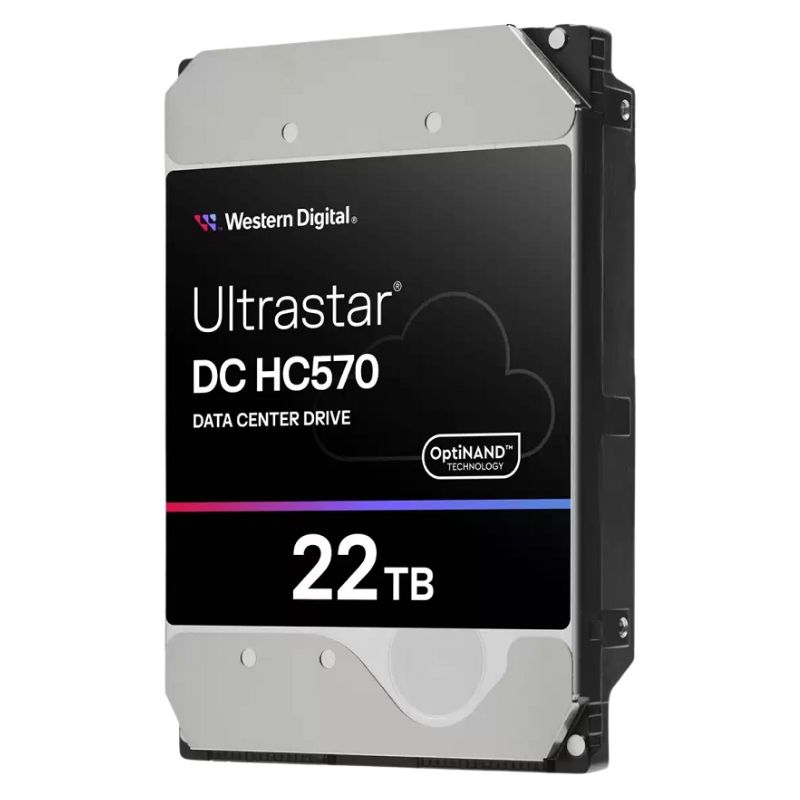
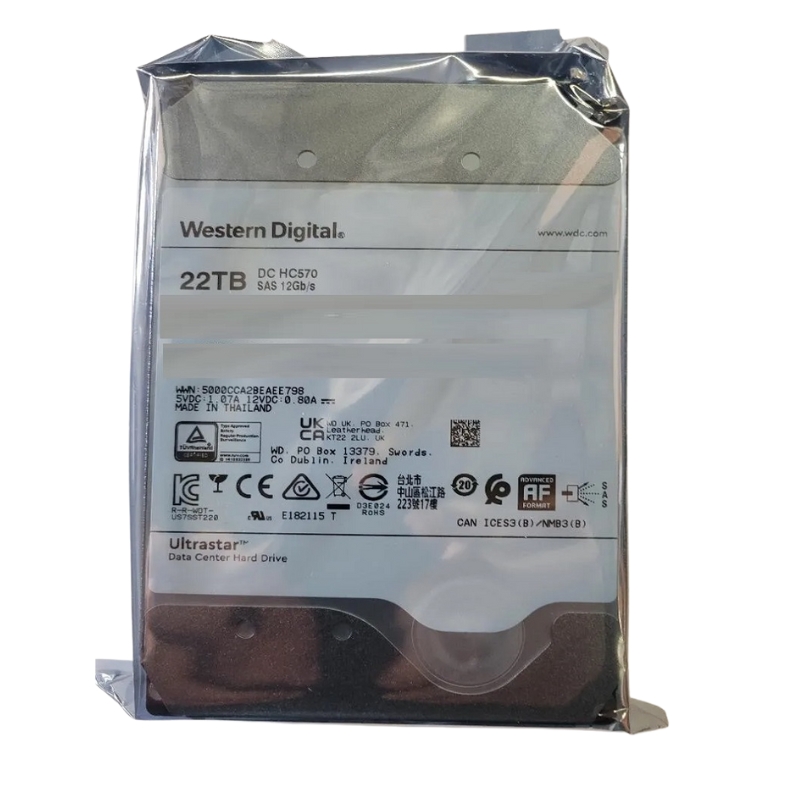
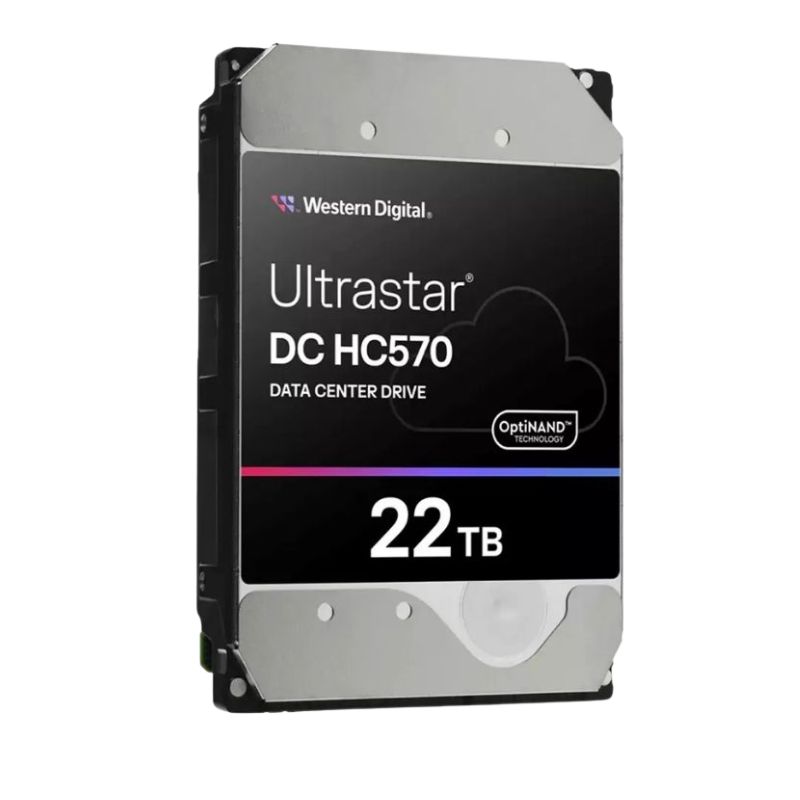
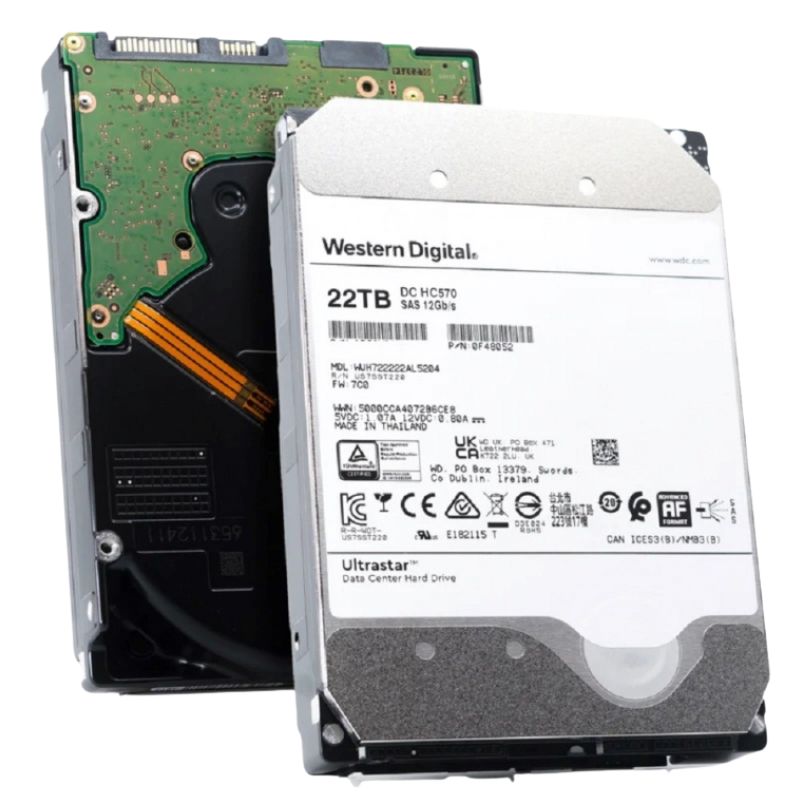
Western Digital 0F48052 Ultrastar Dc Hc570 22TB 7.2K RPM SAS 12GBPS 512MB Buffer 512e Se 3.5 Inch Optinand Technology Data Center Hard Disk Drive. New Sealed in Box (NIB) with 3-Years Warranty
Western Digital Ultrastar DC HC570: Enterprise-Grade 22TB Storage
Engineered for demanding data center operations, this 3.5-inch internal hard drive delivers unparalleled capacity and robust performance for modern enterprise applications.
This high-density storage solution is produced by Western Digital Corporation, a global leader in data infrastructure. It belongs to the renowned Ultrastar product line, specifically the Ultrastar DC HC570 series, and is identified by the part number 0F48052.
The Ultrastar DC HC570 22TB drive is purpose-built for the most rigorous storage scenarios:
This drive integrates cutting-edge technology to achieve its remarkable specifications.
A pivotal feature of this drive is the integration of OptiNAND technology. This architecture combines traditional magnetic recording with an embedded flash memory layer (iNAND). This synergy enhances capacity, performance, and reliability by storing metadata on the flash, reducing overhead on the DRAM buffer and enabling more efficient write operations .
The Ultrastar DC HC570 is designed for high-throughput, low-latency operations critical in data-intensive environments.
The drive is constructed to standard physical specifications for easy integration into existing server infrastructure.
This drive utilizes the 512e (512-byte emulation) sector format, ensuring broad compatibility with existing enterprise systems and applications while leveraging the benefits of larger physical sectors for improved error correction and storage efficiency .
The Western Digital Ultrastar DC HC570 22TB (model 0F48052) is a purpose-built data center hard disk drive that combines very high areal density and advanced flash-enhanced firmware to deliver exceptional rack-level capacity, strong sequential throughput, and enterprise-class reliability for demanding cloud, hyperscale, and on-premise storage infrastructures. This family-level description focuses on the 22TB SAS 12Gb/s variant, highlighting the OptiNAND architecture, enterprise-grade mechanical design, firmware enhancements such as ArmorCache™, and real-world deployment considerations for tiered storage, object stores, archive systems, and large-scale capacity pools.
The Ultrastar DC HC570 22TB is a 3.5-inch, 26.1 mm form-factor enterprise HDD with a 12Gb/s SAS host interface, 7,200 RPM spindle speed, a 512 MB DRAM buffer, and 512e sector emulation. These characteristics make the drive compatible with modern SAS backplanes and enterprise controllers while providing a balance of high-capacity storage and predictable performance for large sequential workloads and mixed-use scenarios. Specifications differ slightly by SKU and firmware, so always confirm the exact part number when ordering.
OptiNAND™ is Western Digital’s flash-enhanced HDD architecture that pairs embedded flash (an iNAND® UFS Embedded Flash Drive) with a traditional magnetic recording disk stack and an updated drive SoC and firmware. For the Ultrastar DC HC570, OptiNAND enables new data management features, improved write efficiency, and enhanced metadata protection by offloading critical metadata and cache state to the embedded flash during power transitions — improving resilience and enabling higher areal density on a multi-disk platform. This architectural hybridization is a key differentiator for the HC570 line.
ArmorCache™ is a feature enabled by OptiNAND that allows the drive to present the performance benefits of a write-cache-enabled mode while maintaining the data protection characteristics associated with write-cache-disabled operation. This effectively reduces the tradeoff between throughput and data integrity in power-loss scenarios and improves overall write performance for cache-sensitive workloads. For architects seeking higher safe write throughput out of HDDs in write-intensive pools, ArmorCache provides a meaningful operational advantage.
The HC570 22TB is optimized for sustained, high-throughput sequential read and write operations typical of cold/hot archival pools, object storage streaming, and backup/restore workflows. While peak throughput will vary by platform and queue depth, typical sustained sequential transfer numbers are competitive within the 7.2K enterprise HDD class and are designed to maximize bandwidth per rack U for capacity-oriented deployments. For throughput-sensitive use cases, pair these drives with controllers that can saturate SAS 12Gb/s lanes and use multi-pathing where supported.
Like other high-capacity 7,200 RPM HDDs, random I/O performance and average access latency remain bounded by mechanical seek and rotational latency. The HC570 targets mixed-use read-mostly and capacity-optimized workloads rather than low-latency transaction databases. When designing systems that require high random IOPS, use the HC570 as a dense-capacity layer while fronting time-sensitive workloads with NVMe flash or high-performance SSD tiers. Typical random IOPS at small block sizes should be profiled on your target controller to set realistic SLAs.
One of the most compelling selling points of the HC570 22TB is volumetric density. Western Digital quotes the rack-level raw capacity (for example, 22.44 PB of raw storage in a typical rack) as a planning metric for hyperscale and co-location environments. That translates directly into fewer drive bays used, lower per-PB chassis overhead, and reduced rack power and cooling overhead per unit of stored data. When capacity density is the priority, deploying 22TB drives reduces the number of enclosures required for a given raw capacity target.
In multi-tier storage architectures, the HC570’s 22TB capacity positions it as an economical cold- and warm-tier option. Placing bulk, infrequently accessed objects, large media archives, cold backups, and replicated datasets on the HC570 minimizes the cost-per-GB while preserving acceptable retrieval times for occasional restores. Combine HC570-based pools with erasure coding or object replication policies to balance availability and cost. The per-drive cost advantage becomes more pronounced as you scale to petabyte-level deployments.
Ultrastar drives are engineered for 24/7 operation in data center environments. Metrics such as workload rating (TB/year or DWPD equivalent for enterprise HDDs), MTBF, and non-recoverable read error rates (UNR) are primary selection criteria. The HC570 family includes firmware and mechanical features intended to maximize mean time between failures and ensure predictable behavior under sustained workloads. Confirm the drive’s specified workload rating and MTBF values in the official product datasheet relevant to your chosen SKU.
At scale, power draw per drive and thermal dissipation quickly become dominant operating costs. The HC570 platform delivers competitive power-per-TB numbers by enabling higher capacity per spindle. When designing enclosures, pay special attention to airflow and vibration mitigation: multi-drive enclosures must use backplanes and mounting solutions that minimize vibration-induced errors. Western Digital provides recommended operating temperature and vibration specifications in the product manual — these should guide rack fan provisioning, airflow design, and enclosure choice.
The HC570’s SAS 12Gb/s interface ensures broad compatibility with enterprise-class HBAs, RAID controllers, and storage arrays. When integrating into RAID or software-defined storage stacks, ensure firmware compatibility and that the HBA/RAID card supports 12Gb/s Native SAS speeds for optimal throughput. Verify that target arrays have the appropriate drive profiles to avoid unintended firmware mismatches or incorrect drive handling in mixed SKU environments.
The 3.5-inch, 26.1 mm height makes the HC570 compatible with most enterprise hot-swap carriers and sleds used in modern server and storage chassis. Verify the carrier backplane pinouts and SAS signal compatibility when retrofitting older enclosures. Proper carrier design also improves drive cooling and reduces vibration — both important for maintaining drive longevity.
The HC570 is ideal for large-scale object storage systems (S3-compatible object stores), where enormous amounts of infrequently accessed data must be retained cost-efficiently. Its capacity-per-spindle advantage reduces infrastructure overhead for cloud providers and enterprises running on-prem object storage solutions. Combine HC570-based pools with erasure coding or replication topologies to meet your availability and durability targets.
For backup targets and long-term retention tiers, the HC570’s capacity and reliable sequential throughput accelerate backup windows and reduce hardware needs. The drive’s robust metadata protection enabled by OptiNAND improves reliability during power events, which is beneficial for backup appliances operating in varied environments. Integration with deduplication and compression appliances further reduces the effective storage footprint.
Large media pools and video archives benefit from the HC570’s capacity and sustained streaming capabilities. High-resolution video archives, 4K/8K content repositories, and CDN caching layers that rely on high-capacity HDDs can use the HC570 as an economical, reliable storage tier for bulk media. Consider workload access patterns: long sequential reads and writes map well to the HC570’s strengths.
When designing RAID groups or erasure-coded object pools using HC570 drives, architect with rebuild times and background scrubbing in mind. Larger drives increase time-to-rebuild after a drive failure; therefore, use higher-parity or modern erasure codes (e.g., Reed-Solomon variants) to mitigate rebuild risk. Monitor rebuild I/O policies and throttle rebuild concurrency to avoid impacting foreground workloads. Many hyperscalers favor erasure coding across large groups to reduce rebuild exposure while optimizing capacity efficiency.
OptiNAND’s ability to persist critical metadata to embedded flash during power events reduces the risk of metadata loss and can accelerate recovery after unexpected outages. For mission-critical pools, complement the drive-level safeguards with UPS-backed controllers and orderly shutdown procedures to further reduce exposure to in-flight metadata inconsistency. Review ArmorCache and OptiNAND behaviors in the product manual to align system-level protections with the drive’s capabilities.
Confirm the exact Western Digital SKU (e.g., 0F48052 and related part numbers) prior to purchase, because capacity, sector format (512e vs 4Kn), TCG encryption variants, or other configuration options may vary across SKUs. Ensure you order the drive that matches your array’s expected sector emulation, encryption needs, and form-factor constraints. Serial numbers, firmware revisions, and country-of-origin documentation may be required for some procurement workflows.
Western Digital provides enterprise warranties and support for Ultrastar-class drives; check the warranty length and RMA terms with your reseller. Maintain firmware baseline records and coordinate any mass firmware upgrades with Western Digital support to avoid unplanned field behavior. For large deployments, negotiate escalation paths and spare pool strategies (e.g., hot spares per enclosure, cold spares at regional sites) to minimize downtime.
When migrating from older-generation 10–18TB drives to 22TB HC570 drives, plan for increased rebuild times per failed drive and validate that your backup and redundancy schemes tolerate the longer exposure window. The capacity-per-drive increase reduces the total number of spindles, but it also concentrates capacity and rebuild risk — architecture adjustments such as changing protection levels or adding more distributed parity can offset this. Test migration paths on non-production pools where possible.
For ultra-low-latency, high-random-IO workloads (transactional databases, high-frequency trading, real-time analytics), SSDs or NVMe tiers remain the right choice. The HC570 is intended for dense-capacity tiers, not as a primary tier for high-IOPS services. Consider mixed-tier caching — for example, NVMe front-end caches with HC570 capacity backends — to combine cost-effective capacity with responsive performance.
Maintain recommended ambient temperature ranges and ensure even airflow across all drive bays. Drives running consistently above the recommended thermal envelope will show higher error rates and reduced lifespans. Use hot-aisle/cold-aisle best practices and monitor inlet temperatures to prevent hotspots within chassis.
Schedule non-disruptive background tasks like scrubbing, surface scans, and firmware maintenance during low-activity windows. Stagger maintenance across racks to avoid correlated load spikes that could impact cluster health. Where possible, implement predictive failure analysis to preemptively replace drives showing anomalous telemetry.
If your environment requires drive-level encryption or secure erase capabilities, confirm whether the specific HC570 SKU supports TCG Opal or other encryption standards. Use vendor-recommended tools and documented procedures to perform secure erase and cryptographic key management to meet compliance requirements for regulated data.
For compliance-driven retention (e.g., financial records, regulated archives), combine HC570-based capacity pools with object-store immutability features or WORM-enabled appliances. The drive’s durability characteristics make it a fit for long-term retention when paired with appropriate software controls and replication strategies.
A: Not recommended as a primary tier for high-random-IO OLTP databases. Use SSDs/NVMe for database primary tiers and HC570 for capacity/backing-store tiers.
The integrates embedded flash to persist metadata and improve write efficiency, enhancing data protection during power events and enabling higher areal density across a multi-disk platform.
Rebuild times increase with drive capacity. Use higher-parity protection, erasure coding, or distributed redundancy to reduce exposure. Plan spare and rebuild policies accordingly.
Always refer to the Western Digital product datasheet and product manual for the most accurate, SKU-specific specifications, recommended operating conditions, and firmware release notes. Datasheets and technical briefs provide authoritative guidance on features, ArmorCache behaviors, and performance tuning recommendations. For large deployments, coordinate firmware updates and compatibility checks with Western Digital support.
When placing orders, supply chain teams should verify part numbers (e.g., 0F48052 and variant suffixes), sector format, TCG/encryption options, and warranty terms with the reseller. Keep a record of firmware baselines and any manufacturer advisories to maintain consistent, predictable behavior across the fleet.
For authoritative datasheets, product details, and the technical brief, consult Western Digital’s product pages and documentation library. These sources include the complete HC570 datasheet, product manual, and technology briefs that explain architecture-level tradeoffs and performance figures used for capacity planning.
Run representative workload benchmarks against a small-scale pilot: include sustained sequential transfers, worst-case rebuild simulations, and mixed-read/write patterns appropriate for your application. Measure metrics such as sustained throughput, average latency, rebuild time, and impact on foreground workloads during scrubbing and rebuild processes. Combine these results with cost-per-GB and rack-level capacity calculations to determine the HC570’s fit for your storage strategy.


 Contact Us
 Information
 Catalog
 Solid State Drives (SSD)
 Network Switches
 Hard Disk Drives
 HBA & Controllers
 PC & Servers
 PC & Server Memory
 CPU & Processors
 Network Routers
 Power Supplies
 Tape Drives & Libraries
 Network Devices
 Computer & Network Cables