(7% discount is applied at checkout)
Cart is empty
Your go-to destination for cutting-edge server products
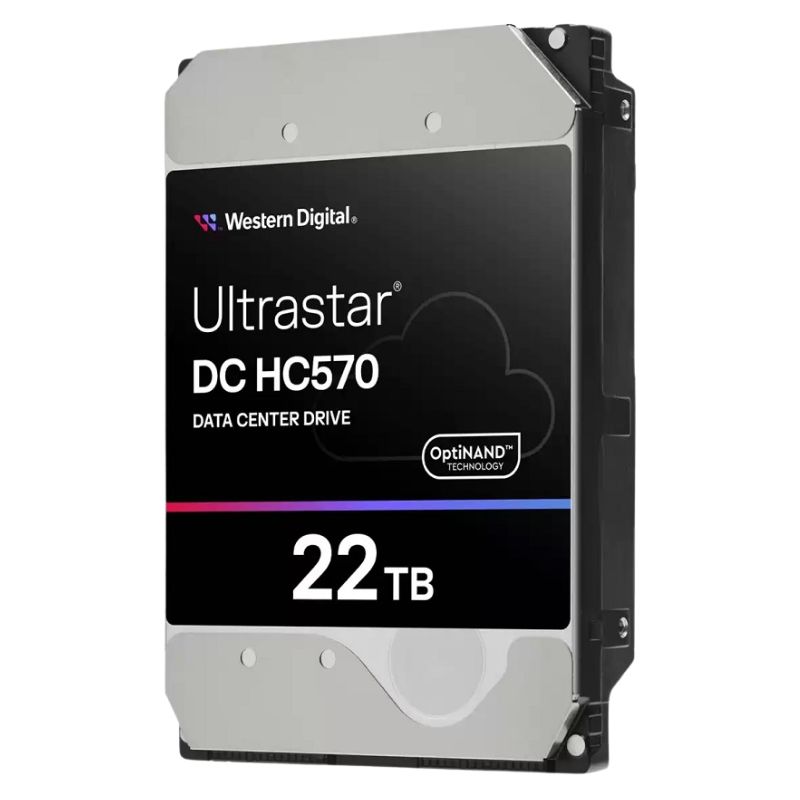


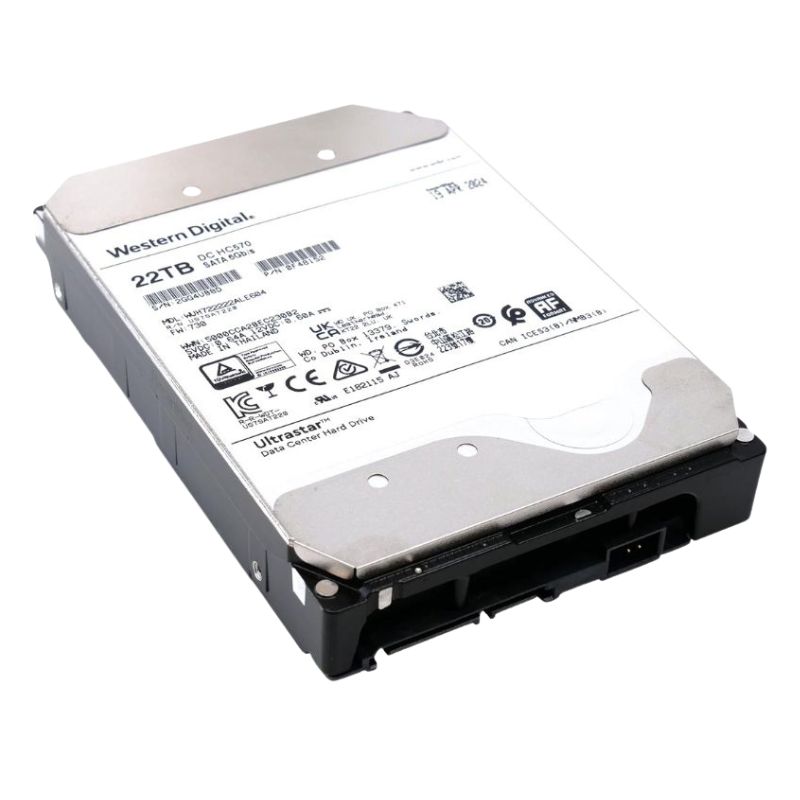
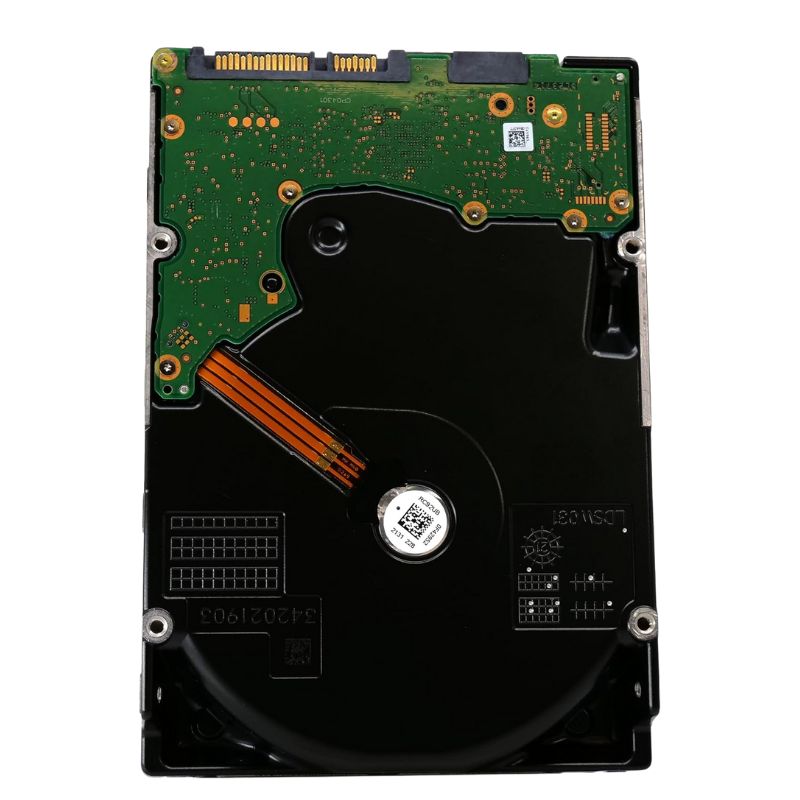
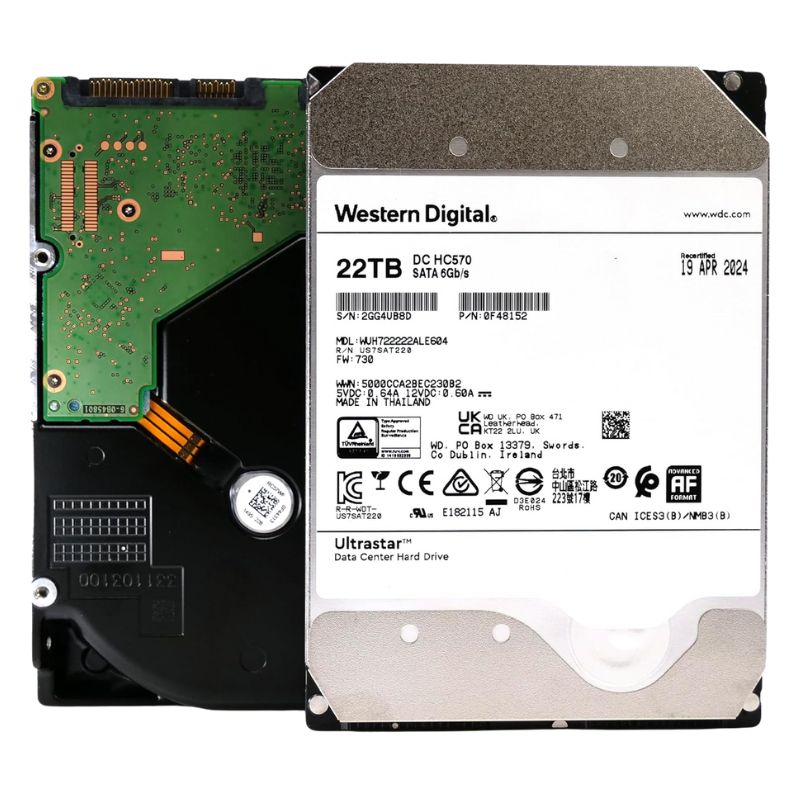
Western Digital 0F48152 Ultrastar Dc Hc570 22TB 7.2K RPM SATA 6GBPS 512MB Buffer 512e Power Disable 3.5 Inch Optinand Technology Data Center Hard Disk drive. Excellent Refurbished with 1 year replacement warranty
The Western Digital Ultrastar DC HC570 22TB 3.5-inch data center hard disk drive is designed for environments that demand massive capacity, dependable operation, and efficiency. Built with OptiNAND technology, this drive delivers advanced storage density, lower latency, and optimized performance, making it a preferred choice for hyperscale cloud storage, enterprise workloads, and large-scale infrastructure deployments.
Engineered for scalability and resilience, the Western Digital Ultrastar DC HC570 integrates seamlessly into enterprise-grade and hyperscale operations. Its high capacity combined with reliability supports a wide range of use cases:
This drive ensures efficient storage utilization for hyperscale cloud infrastructures, supporting large-scale virtualization, big data processing, and distributed applications.
Optimized for rack-mounted enclosures and dense deployments, the HC570 enables operators to maximize rack capacity, reducing floor space requirements while keeping power consumption efficient.
The WD Ultrastar HC570 leverages OptiNAND technology to improve areal density, optimize cache utilization, and provide faster response times. It enhances metadata handling, improving resilience and reducing risks of data loss in power-off scenarios.
With an MTBF rating of 2.5 million hours, this drive ensures long-lasting reliability for mission-critical applications. Error recovery mechanisms, vibration protection, and advanced caching contribute to stable operation in demanding multi-drive environments.
The drive fits seamlessly into scalable IT infrastructures, ensuring compatibility with storage arrays, JBOD configurations, and large-capacity NAS systems used in enterprise ecosystems.
Despite its high storage density, the HC570 is engineered to deliver reduced power per TB, making it an energy-conscious choice for organizations balancing performance with operational costs.
Available with optional secure erase features and designed with enterprise-class durability, it safeguards sensitive information in compliance with modern data protection requirements.
For enterprises, cloud service providers, and organizations managing large-scale datasets, the Ultrastar DC HC570 provides a blend of massive storage capacity, enterprise reliability, and superior efficiency. It is purpose-built for the future of storage where capacity and consistency drive business growth.
Western Digital's Ultrastar DC HC570 22TB hard disk drive blends high-capacity storage with proven enterprise-class engineering. Designed for dense data center environments, cloud storage, hyperscale deployments, and archival platforms, this 3.5-inch SATA 6Gb/s drive features OptiNAND™ technology, 7,200 RPM rotational speed, a 512MB cache buffer, Power Disable support, and 512e sector format. The HC570 family targets workloads that demand high capacity per rack unit, consistent performance, and robust reliability metrics suitable for modern data infrastructures.
One of the defining characteristics of the Ultrastar DC HC570 is OptiNAND, Western Digital's hybrid architecture that combines traditional magnetic storage with an embedded flash layer. OptiNAND improves drive operation by offloading metadata and drive-management information to a small, durable flash partition, reducing the number of drive head operations and enabling better resiliency in background tasks.
In hyperscale and cloud architectures, billions of small operations and constant background housekeeping tasks can create significant mechanical overhead. OptiNAND’s ability to store and quickly access metadata using flash reduces unnecessary head movement and latency spikes. When multiplied across thousands of drives in a data center, these savings translate to measurable improvements in rack-level density efficiency and operational cost.
The Ultrastar DC HC570 is tuned to deliver predictable sustained throughput and consistent tail latency — two critical attributes in enterprise storage. While raw IOPS are limited compared with SSDs, the HC570's 7,200 RPM spindle speed and 512MB buffer help smooth bursts of I/O and improve sequential transfer rates for large-scale reads and writes.
The drive excels at long, sequential transfers commonly found in backup, media streaming, and bulk data ingestion workflows. The 512MB cache absorbs write bursts and reduces write-stalling behavior. OptiNAND further assists by keeping frequently updated metadata readily available.
Ultrastar class drives are engineered for continuous operation and include enterprise-grade features to protect data integrity under heavy workloads. Typical reliability metrics include robust MTBF ratings, workload-rated TB/year values, and advanced error correction algorithms implemented in firmware.
The HC570 uses strong ECC (error-correcting code) to correct media errors and preserve data integrity. Coupled with OptiNAND, the drive can manage internal corrections and metadata more effectively, reducing the likelihood of drive-level failures during extended operations.
Standard SMART attributes are exposed for monitoring drive health and forecasting potential issues. Integrating HC570 drives into a centralized monitoring system enables predictive maintenance and automated replacement scheduling — critical for minimizing unplanned downtime in enterprise environments.
The helium-filled design used in Ultrastar high-capacity drives lowers aerodynamic drag on the platters, enabling reduced power consumption and cooler operating temperatures compared to air-filled designs at equivalent capacities. Helium sealing, combined with OptiNAND's reduction of mechanical metadata operations, yields a better overall power-per-TB metric — an important consideration in modern data centers aiming to optimize PUE (Power Usage Effectiveness).
While specific power figures vary by firmware and workload, operators should expect the HC570 to offer favorable idle and active power characteristics compared to legacy high-capacity drives. Lower power draw per TB translates directly into reduced cooling load and lower electricity spend across racks.
The Ultrastar DC HC570 is flexible enough for multiple tiers of enterprise storage. Below are several deployment scenarios where the HC570 can deliver strong ROI.
Hyperscalers and cloud providers prioritize cost-per-TB and rack density. HC570 drives help maximize usable capacity per enclosure while maintaining acceptable rebuild and metadata performance thanks to OptiNAND. When deployed in erasure-coded object stores, the drives become cost-effective vessels for exabyte-scale storage.
Organizations requiring long-term retention, compliance archives, or cold data repositories benefit from the HC570's high capacity and low idle power. The drive’s design reduces total cost of ownership (TCO) in tiers where access patterns are infrequent but storage density is paramount.
Backup target appliances that need to hold multiple generations of backups or large VM snapshots find the HC570’s sequential performance and large capacity attractive. The 512MB cache assists in absorbing incoming backup bursts while maintaining throughput for parallel streams.
To get the most from Ultrastar HC570 drives, observe a few practical deployment tips. These considerations help avoid performance pitfalls and optimize long-term reliability.
Align filesystems and RAID stripe sizes to the physical sector boundaries to minimize read-modify-write (RMW) cycles for 512e drives. Proper alignment reduces unnecessary I/O amplification and improves write efficiency.
Validate drive firmware compatibility with controllers and backplanes. Enterprise environments should test firmware and drivemanager interactions in a staging environment before massive rollouts to ensure stable operation under expected workload patterns.
Integrate SMART metrics, temperature readings, and drive-specific telemetry into data center monitoring stacks. Configure alerts for abnormal reallocated sectors, temperature excursions, or increasing error rates. Predictive replacement policies reduce the risk of correlated failures in dense enclosures.
When planning capacity, calculate usable TB after accounting for RAID overhead, erasure coding, and redundancy levels. The HC570's 22TB capacity shifts the economics of data center layouts — fewer drives are needed for the same logical capacity, allowing more efficient use of power- and space-constrained racks.
Replacing lower-capacity drives with 22TB HC570s reduces the number of drive slots consumed for a given capacity target. This reduction lowers backplane port usage, simplifies cabling, and reduces the number of drive-bearing chassis required, which can simplify maintenance cycles and reduce hardware footprint.
Enterprise deployments must consider data-at-rest security and secure erase capabilities. While drive-level encryption and TCG Opal support vary by model and firmware, HC570 drives typically offer features to support secure provisioning and controlled decommissioning within enterprise workflows.
Implement secure erase procedures in accordance with organizational policies and regulatory requirements. Use manufacturer-recommended tools and ensure that secure erase completes successfully before drives leave data-bearing environments.
While SSDs deliver superior IOPS and lower latency, they remain significantly more expensive per TB than high-capacity HDDs like the HC570. The HC570 occupies the sweet spot for workloads where cost-per-TB, energy efficiency, and sequential throughput matter more than random access performance.
When comparing procurement options, analyze TCO rather than upfront cost alone. Consider power consumption, cooling, rack space, rebuild times, service contracts, and average lifespan. The HC570 can materially reduce TCO in environments where density and power efficiency are prioritized.
When integrating HC570 drives into production, refer to vendor best-practice guides for RAID parameters, thermal design, and power budgeting. Establish runbooks for firmware updates, RMA procedures, and secure retirement to maximize long-term return on investment.
The HC570 employs a standard SATA 6Gb/s interface which ensures compatibility with a wide variety of servers, JBODs, storage arrays, and SATA backplanes. 512e sector emulation preserves compatibility with legacy systems or operating systems and applications that expect 512-byte sector sizes, while still delivering large-capacity physical sectors behind the scenes.
The 512e (512-byte emulation) format allows older software stacks to work without modification. This is particularly valuable for organizations with legacy infrastructures or third-party firmware that does not support native 4K sectors. However, when using 512e, certain write patterns can cause read-modify-write cycles; administrators should plan filesystem alignment and RAID stripe sizes carefully to maximize performance.
Power Disable support is a safety and manageability feature that allows remote or platform-level power control of individual drives during maintenance or emergency procedures. PWDIS simplifies drive-cycle management in large enclosures and streamlines hot-swap and power-isolation workflows across modular storage systems.


 Contact Us
 Information
 Catalog
 Solid State Drives (SSD)
 Network Switches
 Hard Disk Drives
 HBA & Controllers
 PC & Servers
 PC & Server Memory
 CPU & Processors
 Network Routers
 Power Supplies
 Tape Drives & Libraries
 Network Devices
 Computer & Network Cables