(7% discount is applied at checkout)
Cart is empty
Your go-to destination for cutting-edge server products
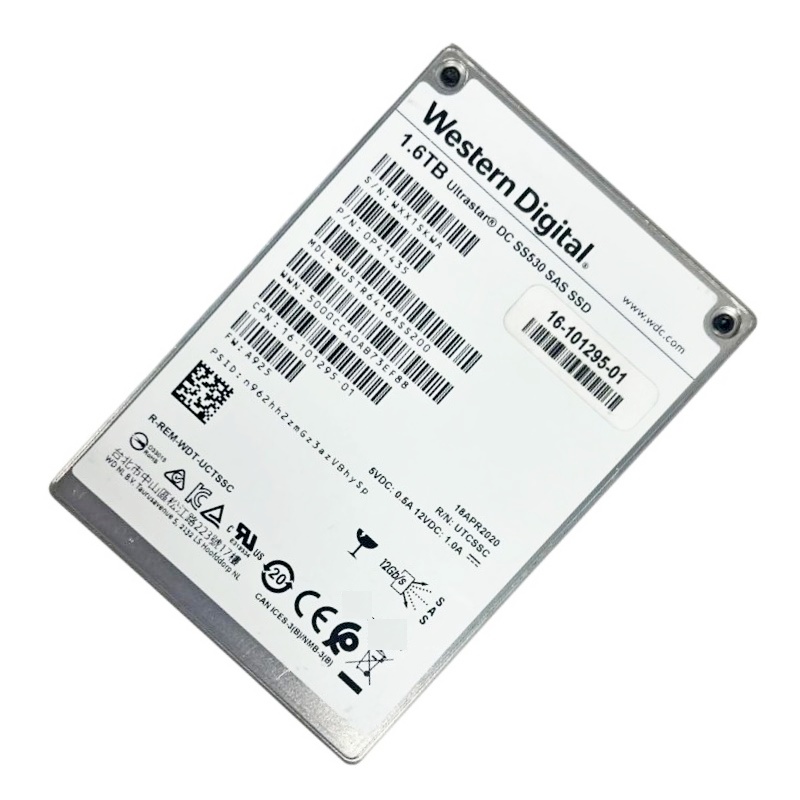


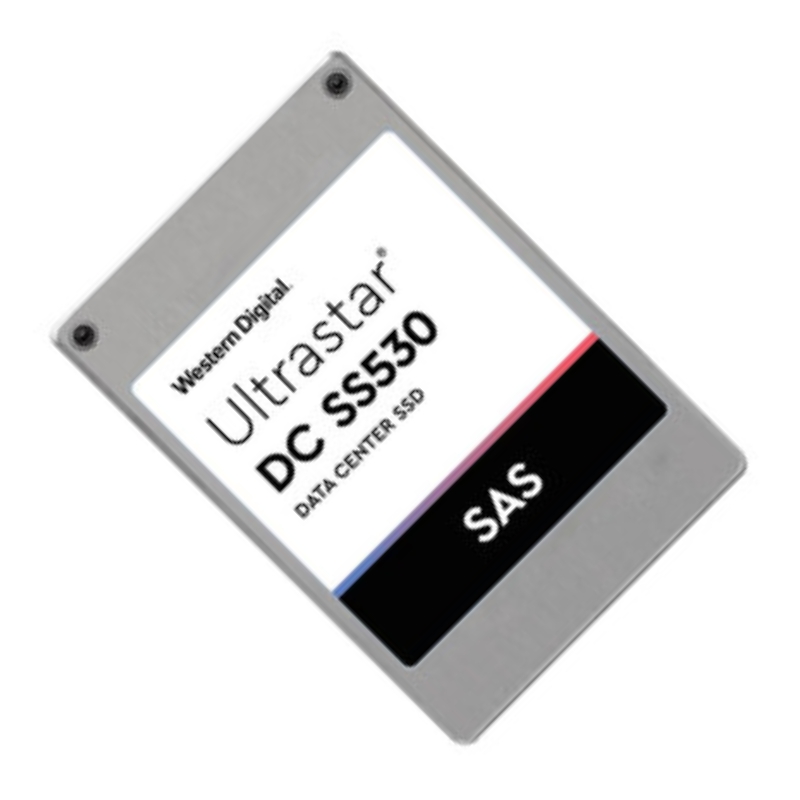
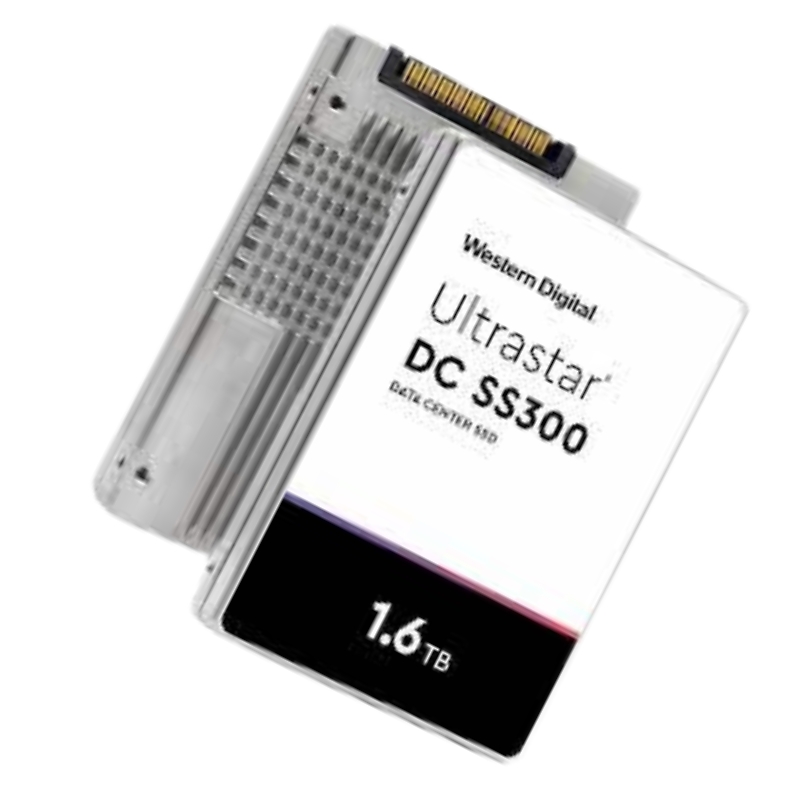
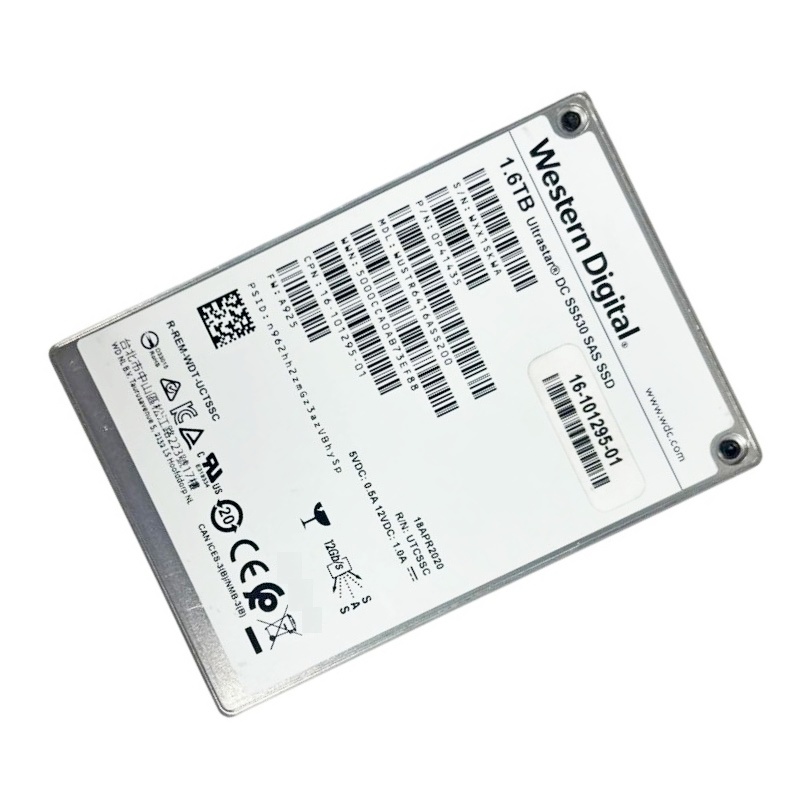
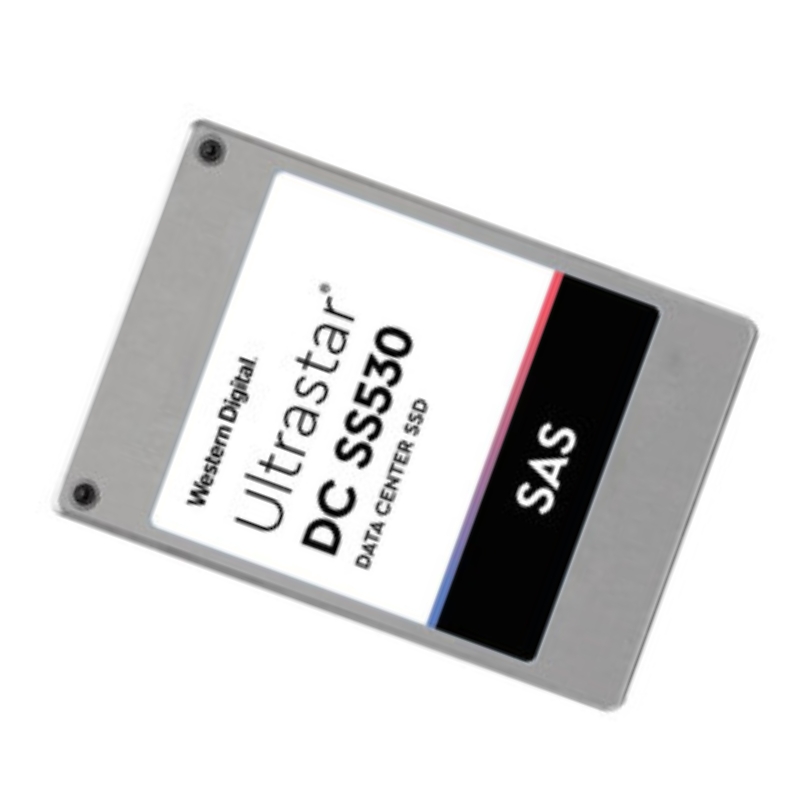
Western Digital HUSMR3216ASS200 1.6TB SAS 12GBPS Mixed Use 3 Dwpd TLC 2.5 Inch Enterprise Class Solid State Drive. Excellent Refurbished with 1 year replacement warranty - Dell Version
The HUSMR3216ASS200 belongs to Western Digital’s high‑performance, enterprise‑oriented SAS (Serial Attached SCSI) lineup designed for demanding mixed‑use workloads. This 1.6 TB drive complements other capacities in the same family, each engineered for consistent throughput, durability, and compatibility in data centers and mission‑critical systems.
The HUSMR3216ASS200 belongs to Western Digital’s high‑performance, enterprise‑oriented SAS (Serial Attached SCSI) lineup designed for demanding mixed‑use workloads. This 1.6 TB drive complements other capacities in the same family, each engineered for consistent throughput, durability, and compatibility in data centers and mission‑critical systems. As part of the SAS SSD category, it bridges the gap between high IOPS, low latency flash storage and robust, scalable enterprise infrastructure.
The HUSMR3216ASS200 ships with a usable capacity of 1.6 Terabytes. Underneath the hood lies advanced V‑NAND TLC (Triple‑Level Cell) flash. This V-NAND architecture enables high density while maintaining performance and endurance. TLC allows three bits per cell, striking a balance between cost-efficiency and operational longevity.
This SSD is engineered for mixed‑use workloads, meaning it handles both reads and writes with moderate intensity. It’s rated at 3 DWPD (Drive Writes Per Day), indicating that every day you can write up to three times the full drive capacity without exceeding design endurance. Over its service life, that corresponds to a total write endurance of 8,760 TBW (Terabytes Written). That level of endurance is ideal for applications such as database systems, virtualized environments, caching layers, and mixed traffic storage tiers.
The interface is 12 Gbps SAS, allowing for high aggregate throughput while maintaining compatibility with enterprise SAS controllers and architectures. The drive occupies a standard 2.5‑inch form factor, designed to fit seamlessly into existing server and storage racks, trays, sleds, and backplanes.
As with many enterprise SAS drives, the HUSMR3216ASS200 supports dual port connectivity—this enables redundant paths to controllers for failover, multipathing, and load balancing. In storage arrays and SAN architectures, dual porting helps ensure sustained uptime and resilience against single-point link failures.
While sequential metrics are essential, enterprise storage is often judged on its random I/O performance and low latency under concurrent workloads. The HUSMR3216ASS200 is tuned for steady latency response across a variety of random read/write patterns, making it well-suited for virtualization, database queries, caching, and transactional services.
Because it's classified as a “mixed-use” SSD, this model excels under environments where reads and writes occur together. Many client-class SSDs degrade in the face of mixed traffic, but the HUSMR family is engineered to preserve throughput stability, minimize latency spikes, and smooth out performance dips over long periods of continuous use.
In dense server environments, heat generation and power draw are critical metrics. This SSD incorporates efficient thermal design and firmware optimizations to manage power consumption. Lower power usage reduces cooling overhead and helps maintain data center energy efficiency without sacrificing performance or durability.
The HUSMR3216ASS200 includes internal over-provisioning to reserve a portion of flash for maintenance, wear leveling, and spare block replacement. This buffer helps the drive sustain consistent performance over long service periods, distributing writes evenly across the NAND cells and mitigating degradation.
Built-in error correction algorithms (e.g. advanced ECC) detect and correct bit errors on the fly. Additionally, the drive’s firmware provides SMART (Self-Monitoring, Analysis, and Reporting Technology) telemetry, wear indicator feedback, and failure prediction features, crucial for predictive maintenance and reliability in 24/7 systems.
To safeguard in-flight data during sudden power interruptions, capacitors or equivalent protection circuits are included. This ensures that critical metadata and pending writes can be safely committed to non-volatile storage, reducing the risk of corruption or incomplete transactions.
In virtualized server clusters, mixed read/write workloads are common. The HUSMR3216ASS200 is ideal for hosting virtual machine images, as it maintains consistent I/O under multi-tenant conditions. Its endurance budget helps ensure that the SSD can support high-transaction VM environments without early wear-out.
OLTP (Online Transaction Processing) systems demand low latency, sustained IOPS, and consistent reliability. The mixed-use SSD is optimized to balance write-heavy and read-heavy access patterns, making it especially suitable for indexing, logging, query workloads, and mixed transactional loads.
Many modern storage architectures use SSDs as caching or tiering layers in front of spinning-disk arrays. The HUSMR3216ASS200 can operate as a fast cache tier, accelerating reads and writes for “hot” data sets. Because of its durability, it can also serve as a write-back buffer in hybrid or flash-hybrid arrays.
For log ingestion, telemetry, IoT data collection, and time-series analytics, steady sequential write speed and latency consistency are essential. The 1.6 TB capacity allows for substantial buffer space, and the drive’s architecture supports high throughput during sustained bursts.
In edge computing environments where remote servers or micro data centers operate under constrained conditions, reliability, and endurance matter. The HUSMR3216ASS200 gives edge deployments a dependable storage component that can survive temperature fluctuations, power cycling, and network reboots while maintaining data integrity.
While NVMe drives deliver even higher throughput and lower latency in direct PCIe systems, SAS SSDs like the HUSMR3216ASS200 remain relevant in existing enterprise SANs and server architectures. Deployments that already use dense SAS backplanes or multi-path configurations benefit from SAS SSD compatibility without major controller overhauls.
The HUSMR series is available in multiple capacity points (e.g. lower or higher terabyte variants), each sharing the same architectural principles of V‑NAND, mixed utilization ratings, and SAS 12 Gbps connectivity. Choose a different capacity if your workload demands more headroom or aligns with power, cooling, or rack constraints.
Some deployments mix HUSMR-class SAS SSDs with NVMe flash tiers or high-capacity SATA SSDs. In such hybrid arrays, the HUSMR models can serve as performance-tier building blocks, while SATA or archival drives store colder, bulk data. A tiered architecture enables balancing cost, capacity, and performance.
Always verify the SSD’s firmware is up to date. Western Digital periodically issues stable firmware updates that improve performance, reliability, and compatibility. In many enterprise settings, firmware updates can resolve corner-case issues or improve wear-leveling algorithms.
Ensure sufficient airflow over SSD bays and maintain cooling in rack aisles. SSDs, while efficient, still generate heat during sustained I/O; inadequate cooling may reduce performance or accelerate wear.
Use multi-path I/O (MPIO) configurations if supported by your OS and controller. Dual-port SAS architecture allows multiple physical paths, increasing availability and enabling failover without disrupting traffic.
As SAS standards evolve beyond 12 Gbps (e.g. proposals for 24 Gbps or beyond), the HUSMR series remains relevant thanks to backward compatibility and mature firmware designs. Upgrading controllers may yield new throughput tiers while preserving compatibility with existing SSD units.
Future SAS SSDs may incorporate quad-level (QLC) or penta-level (PLC) NAND, tiered within mixed-use frameworks. However, enterprise-grade controllers and firmware optimization will remain essential to manage longevity and performance trade-offs.


 Contact Us
 Information
 Catalog
 Solid State Drives (SSD)
 Network Switches
 Hard Disk Drives
 HBA & Controllers
 PC & Servers
 PC & Server Memory
 CPU & Processors
 Network Routers
 Power Supplies
 Tape Drives & Libraries
 Network Devices
 Computer & Network Cables