(7% discount is applied at checkout)
Cart is empty
Your go-to destination for cutting-edge server products
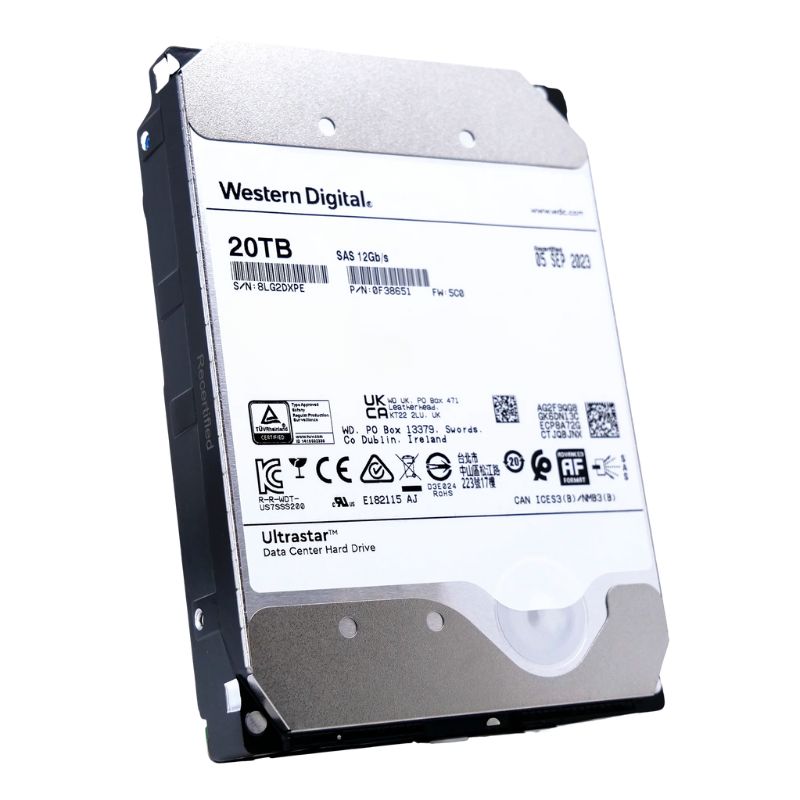


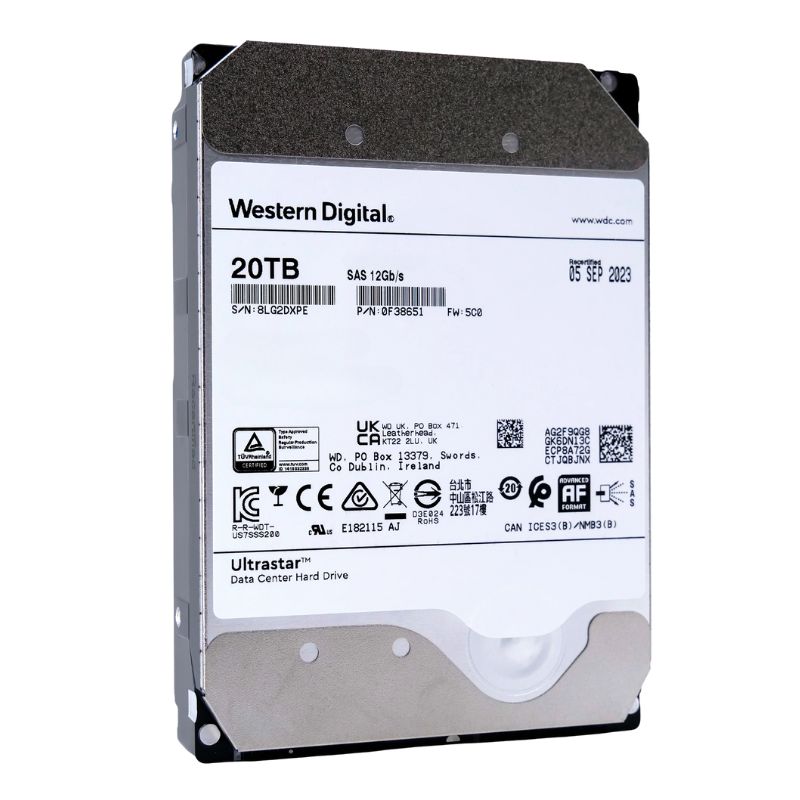
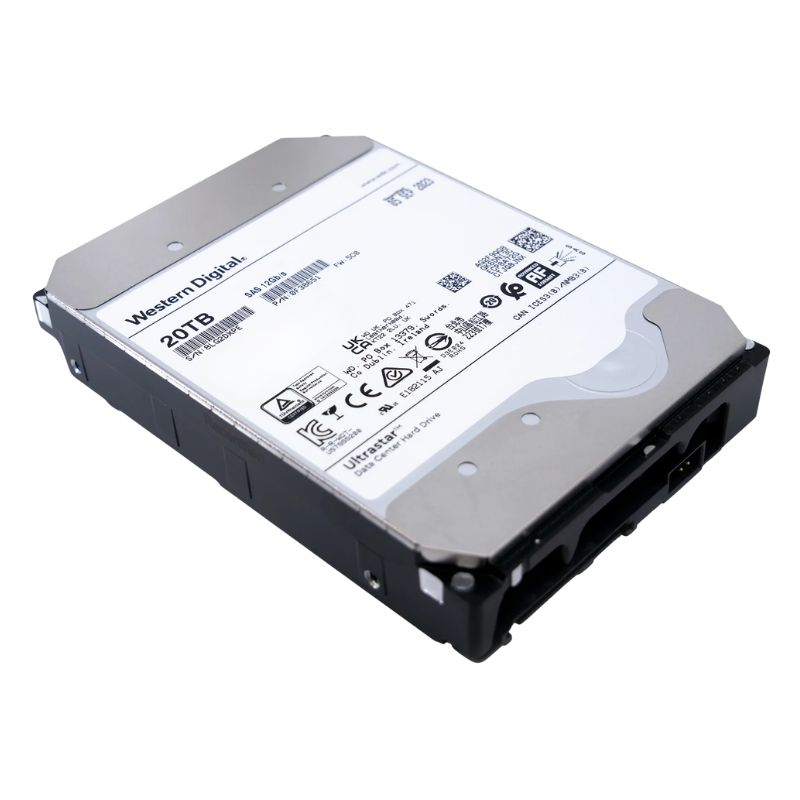
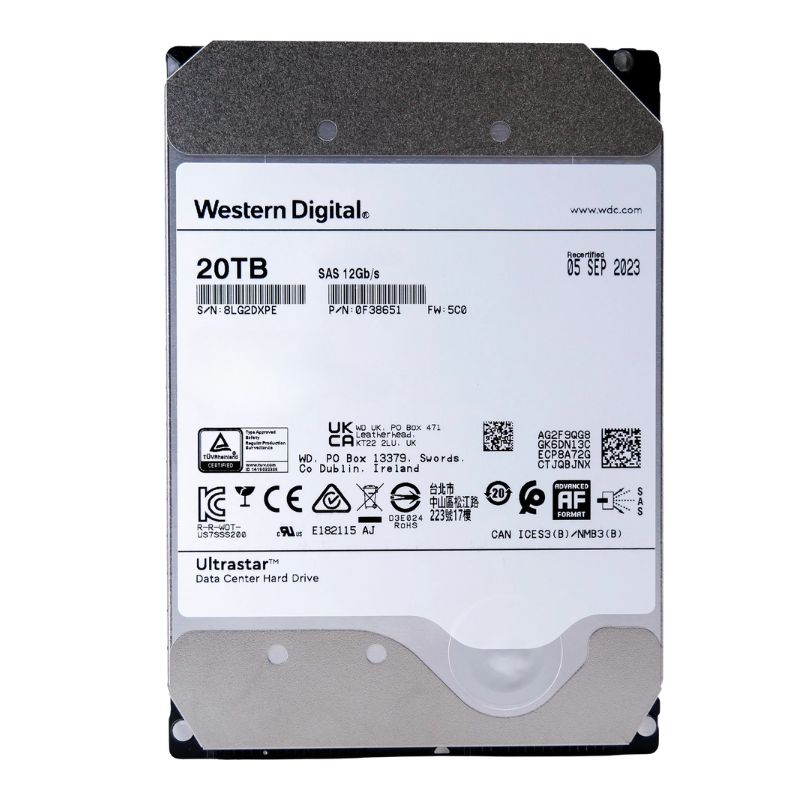
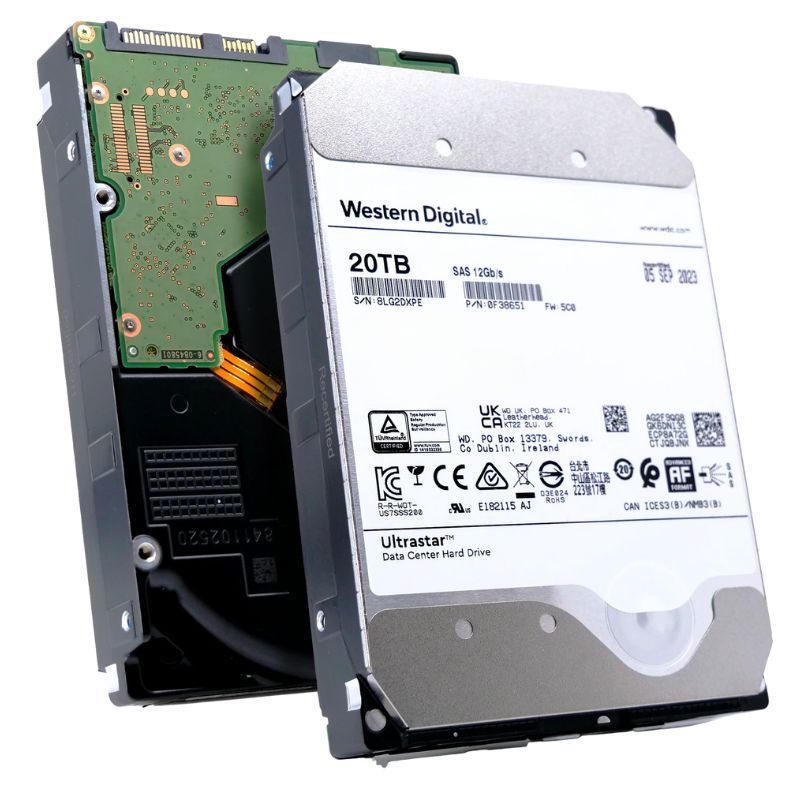
Western Digital WUH722420AL5200 20TB 7.2K RPM SAS 12GBPS Ise 512e 3.5 Inch Hard Disk Drive. Excellent Refurbished with 1 year replacement warranty. Dell Version
The Western Digital WUH722420AL5200 is a high-capacity enterprise-class hard disk drive designed for modern data centers. With 20TB of storage, a 3.5-inch form factor, and hot-plug capability, this drive delivers reliable and scalable storage performance for demanding applications.
The WUH722420AL5200 is built to meet the rigorous demands of high-performance storage systems. Its 7.2K RPM spindle speed and SAS interface ensure low latency and high throughput for critical applications.
Designed for hot-plug environments, this Western Digital HDD allows technicians to replace or upgrade drives without shutting down systems, ensuring continuous uptime for data-intensive operations.
The Western Digital WUH722420AL5200 is a 20 terabyte, 3.5-inch, 7,200 RPM, SAS hard disk drive designed for enterprise-class storage environments that demand high capacity, robust reliability, and predictable performance. Built on a Serial Attached SCSI (SAS) 12 Gb/s interface and employing 512e sector technology, this model targets mixed workload data centers, large consolidated storage arrays, and archival tiers where dense capacity and consistent throughput are critical. The drive’s hot-plug capability enables non-disruptive replacement and rapid serviceability in rack-mounted servers and storage arrays. For organizations seeking to scale storage while maintaining enterprise-grade endurance and manageability, the WUH722420AL5200 delivers a balanced combination of capacity and operational resilience.
The 12 Gb/s SAS interface of the WUH722420AL5200 offers several benefits for enterprise deployments. Compared to legacy 6 Gb/s SATA alternatives, 12 Gb/s SAS provides enhanced bandwidth headroom for multi-drive arrays, improved command queuing, and stronger error reporting mechanisms that aid in maintaining data integrity across heavy I/O patterns. The 3.5-inch form factor maximizes areal density and enables vendors and system integrators to design high-capacity shelves and enclosures without sacrificing cooling efficiency or drive replacement ergonomics. Because the drive supports hot-plug functionality, it can be removed or inserted without powering down the host system, which simplifies maintenance windows and reduces planned downtime for mission-critical services.
Mechanically, a 7,200 RPM spindle speed strikes a compromise between raw rotational latency and power efficiency. This rotational speed, combined with Western Digital’s internal firmware and drive mechanics, yields consistent seek characteristics and throughput for mixed sequential and random workloads. The drive’s 3.5-inch chassis and standardized SATA/SAS mounting points make it broadly compatible with enterprise rack servers, JBODs, and SAN enclosures. Thermal design considerations are embedded in the drive’s chassis to channel airflow effectively when deployed in dense arrays; proper rack cooling and airflow management are recommended to preserve long-term reliability and to meet vendor-specified operating temperature ranges.
The WUH722420AL5200 is optimized for environments where storage capacity and steady throughput are more important than ultra-low latency. It performs best in read-intensive, sequential, and mixed-use contexts. Database archival, cold tier object storage, backup repositories, and large media libraries are all practical use cases. While solid state drives (SSDs) excel at latency-sensitive transactional workloads, high-capacity SAS HDDs such as this Western Digital model shine when cost per terabyte and sustained throughput matter. When used in RAID configurations, the drive can deliver reliable rebuild performance while keeping rebuild times reasonable compared to higher-RPM alternatives, provided array design and caching strategies are properly implemented.
While absolute IOPS figures vary by testing methodology and workload, enterprise 7.2k SAS drives typically provide modest IOPS relative to SSDs but offer stable and predictable performance for bulk read/write operations. Administrators should configure storage tiers to direct small-block random I/O to flash tiers and reserve the WUH722420AL5200 for large-block sequential streams and capacity-driven tasks. Careful tuning of queue depths, RAID stripe sizes, and host-side caching can help extract optimal throughput from the drive across different application profiles. It’s critical to benchmark the drive in a representative environment before large-scale rollouts to understand real-world performance under the organization’s specific workload mix.
For enterprise deployments, RAID design plays a major role in balancing capacity, redundancy, and rebuild impact. The WUH722420AL5200 pairs well with RAID levels that provide both fault tolerance and efficient rebuilds, such as RAID 6 for double-disk failure protection in large arrays or RAID 10 where performance and redundancy are primary. When planning array configuration, consider the trade-offs between usable capacity and rebuild time; larger capacity drives increase the time required to reconstruct data following a drive failure. Implementing spare drive pools, proactive drive monitoring, and staggered rebuild policies for large arrays helps reduce the performance impact during rebuild windows and protects service-level objectives.
Enterprise-class reliability distinguishes SAS HDD models from consumer-grade options. The WUH722420AL5200 is engineered with features aimed at minimizing data loss and maximizing operational lifespan. Typical enterprise attributes include advanced error correction, stable ramp load/unload cycles, rotational vibration tolerance, and firmware optimized for continuous 24/7 operation. These mechanisms, together with Western Digital’s manufacturing standards, enable consistent performance under heavy duty cycles. Service-level agreements and warranty terms provided by the vendor should be reviewed prior to procurement to match organizational expectations for mean time between failures (MTBF) and drive replacement policies.
The drive’s 512e sector emulation means it physically uses 4K native sectors internally while exposing 512-byte logical sectors to the host. This mode increases compatibility with legacy operating systems and storage controllers that expect 512-byte sectors while benefiting from higher areal density internally. For administrators planning low-level formatting, partition alignment, or cloning tasks, attention must be paid to alignment boundaries to avoid write amplification and to maintain write efficiency. Modern OS installers and storage management tools handle 512e drives correctly, but when migrating legacy systems, it is prudent to validate alignment and test performance after migration to ensure no inadvertent penalties have been introduced.
When densely populating enclosures with multiple high-capacity drives, rotational vibration and elevated thermal loads can compromise drive health and performance. The WUH722420AL5200 includes firmware and mechanical dampening to mitigate vibration-induced errors; nonetheless, system integrators must design chassis airflow and cooling to within vendor-specified limits. Employing predictive failure analytics from arrays and monitoring SMART attributes enables proactive intervention when thermal or vibration trends begin to deviate from normal parameters. Well-executed thermal design and vibration mitigation increase the operational lifetime of the drives and preserve data integrity in large-scale deployments.
The WUH722420AL5200 is broadly compatible with a wide range of enterprise servers, storage arrays, and HBA (Host Bus Adapter) controllers that support SAS 12 Gb/s. Compatibility matrices provided by server and storage vendors should be consulted to ensure seamless plug-and-play behavior, firmware compatibility, and supportability. In mixed storage environments that include SATA and SAS drives, administrators should be mindful of controller capabilities, backplane limitations, and any firmware interoperability concerns. Proper labeling, firmware management, and using vendor-recommended drive models within the same array minimize the risk of unusual behavior and ease support interactions with hardware vendors.
Firmware plays a critical role in drive behavior and interoperability. System administrators should maintain an inventory of firmware versions across their deployed drives and coordinate updates during planned maintenance windows. Firmware updates can provide bug fixes, performance improvements, and security patches, but must be applied cautiously, following vendor guidance and using validated update images to avoid cross-vendor incompatibility issues. Many enterprises adopt a staged rollout approach for firmware updates, validating a small batch before broader deployment, to reduce the chance of system-wide disruption.
Typical deployment scenarios for a 20TB 7.2K SAS HDD include nearline storage tiers, cold and warm object stores, media asset repositories, backup and archive libraries, and as capacity shelves in hybrid flash/HDD arrays. In a hybrid architecture, these drives are frequently paired with a flash tier to accelerate metadata and small-random I/O while the high-capacity drives provide the bulk data store. For content delivery and archival use, such drives lower the total cost of ownership (TCO) and simplify capacity planning. For backup appliances, the combination of large capacity and SAS reliability makes them an economical choice for disk-based retention systems and deduplication appliances where large sequential throughput is beneficial.
Enterprises operating private clouds or colocated environments can leverage high-capacity SAS drives to satisfy capacity-hungry workloads while preserving performance SLAs. When architecting storage for multi-tenant clouds, drive selection influences billing models, redundancy policies, and recovery point objectives. Because these drives are hot-pluggable and standardized, they integrate well with multi-tenant management layers and infrastructure-as-a-service orchestration that require predictable hardware replacement and lifecycle management procedures.
Power, cooling, and space are core contributors to the total cost of ownership for storage deployments. A 7,200 RPM enterprise SATA/SAS HDD typically consumes less power than higher-RPM drives, which reduces ongoing operational costs when scaled to hundreds or thousands of drives. However, cost per terabyte and power-per-terabyte must both be considered when comparing solutions. The WUH722420AL5200’s large single-drive capacity reduces the number of devices required to meet capacity targets, thereby simplifying cable management and lowering per-terabyte power and cooling overheads relative to smaller-capacity drives. Organizations should model electrical and cooling impacts across projected deployment sizes to accurately forecast operational expenses.
Procurement strategies for high-capacity drives should consider not only unit price but also vendor support, warranty duration, firmware update cadence, and supply chain stability. Establishing predictable lifecycle replacement schedules—often tied to warranty periods or a set number of drive writes and operational years—helps maintain service levels and budget forecasts. Bulk purchasing contracts and negotiated maintenance agreements with OEMs or distributors can further reduce per-unit costs and provide priority replacement channels in failure scenarios. Additionally, factoring in the time and resources required for drive staging, firmware updates, and compatibility testing reduces surprises during mass deployments.
Migrating large volumes of data while minimizing downtime demands careful planning. When replacing aging drives with new high-capacity units like the WUH722420AL5200, consider rolling migrations where data is rebalanced gradually across the array. Using storage virtualization layers or data migration tools that abstract physical topology can simplify the process and reduce application-level disruption. For cross-site replication and disaster recovery, the capacity and throughput of these drives enable efficient seeding of remote repositories, though network bandwidth and transfer windows must be accounted for to meet recovery objectives.
Execute firmware rollouts in stages and perform drive replacements during low-peak usage windows when possible. Validate each firmware update in a test cluster that mirrors production hardware and monitor for regressions. Maintain a rollback plan and ensure backups are current before performing mass changes. When populating arrays with new drives, stagger the insertion process to avoid simultaneous rebuilds that can saturate controllers and network paths. Enforce configuration management to track serial numbers, firmware revisions, and deployment dates to streamline maintenance and warranty claims.


 Contact Us
 Information
 Catalog
 Solid State Drives (SSD)
 Network Switches
 Hard Disk Drives
 HBA & Controllers
 PC & Servers
 PC & Server Memory
 CPU & Processors
 Network Routers
 Power Supplies
 Tape Drives & Libraries
 Network Devices
 Computer & Network Cables