(7% discount is applied at checkout)
Cart is empty
Your go-to destination for cutting-edge server products
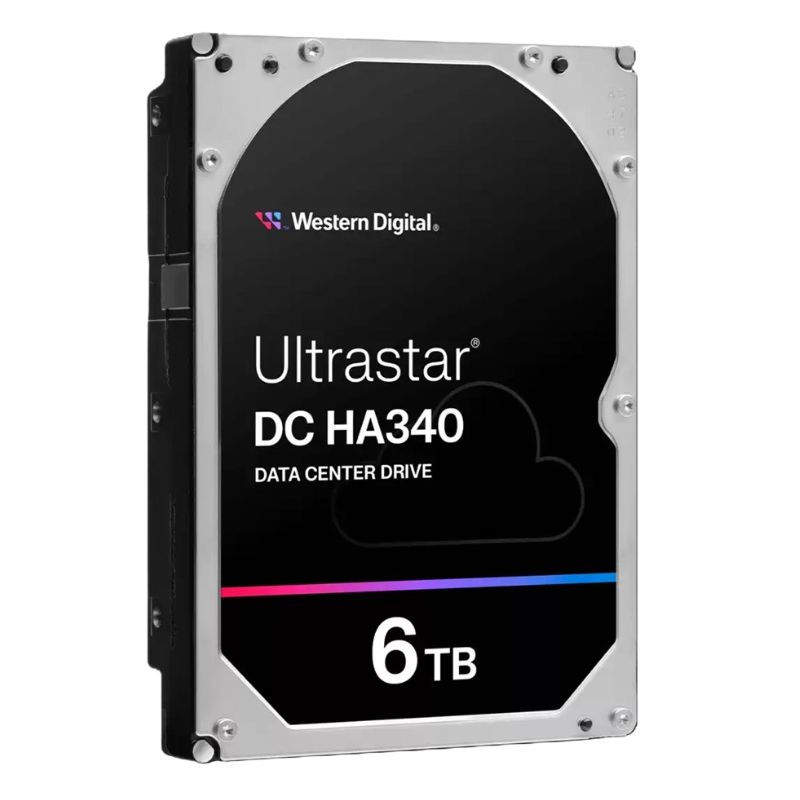


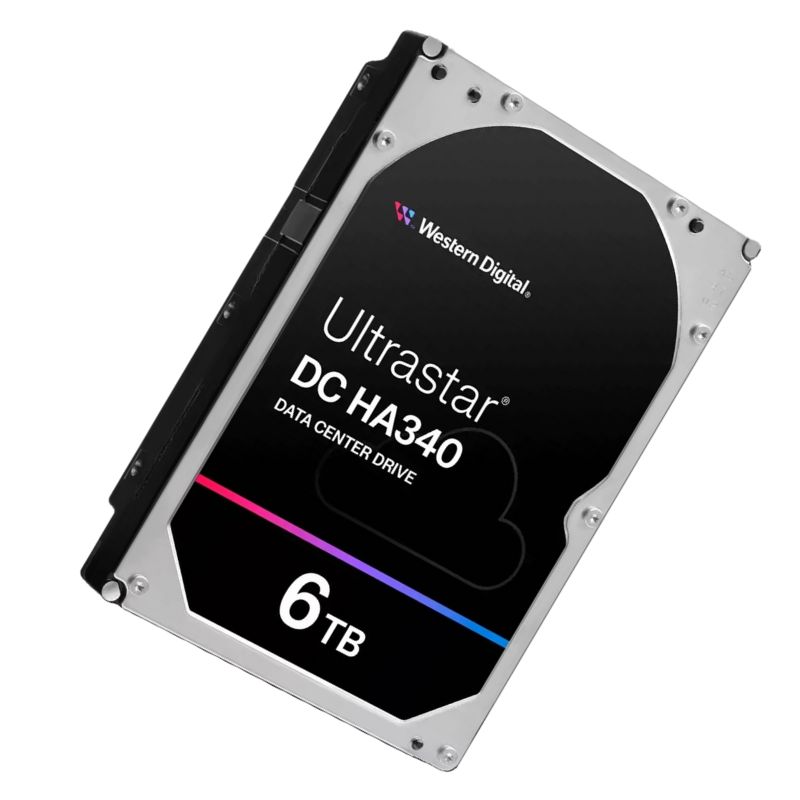
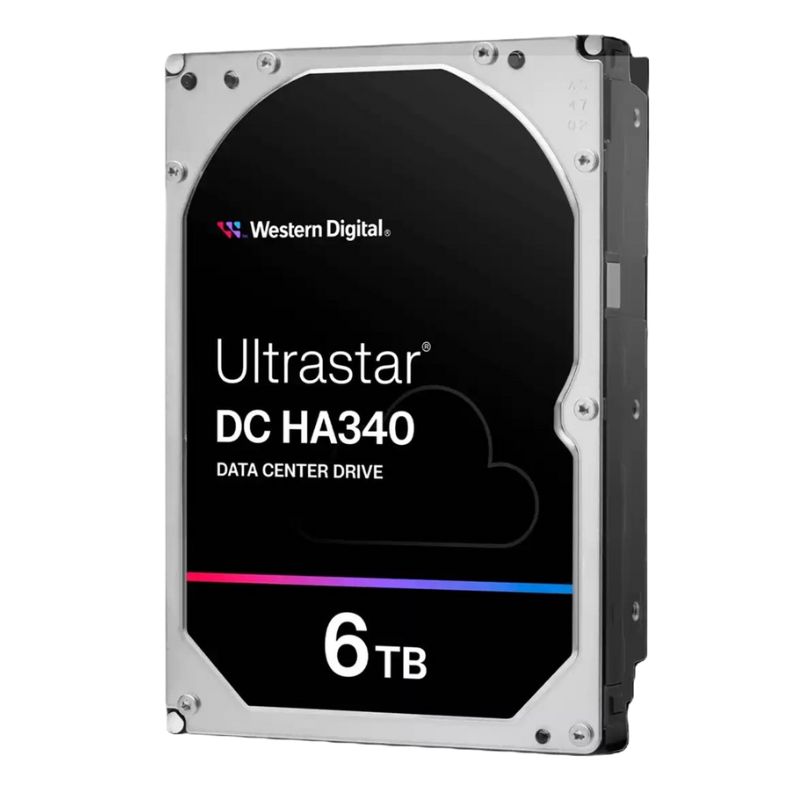
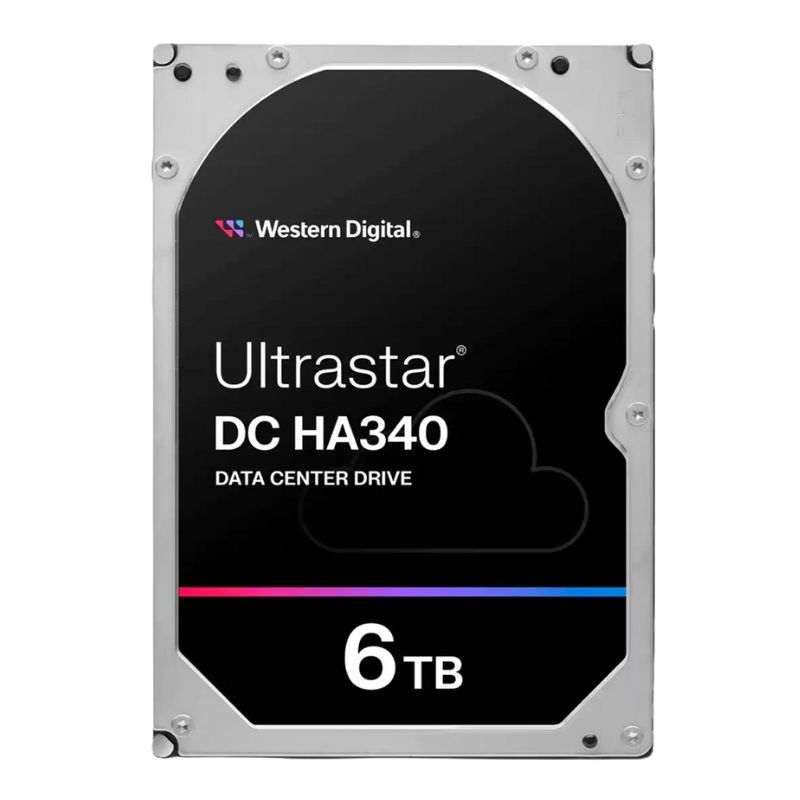
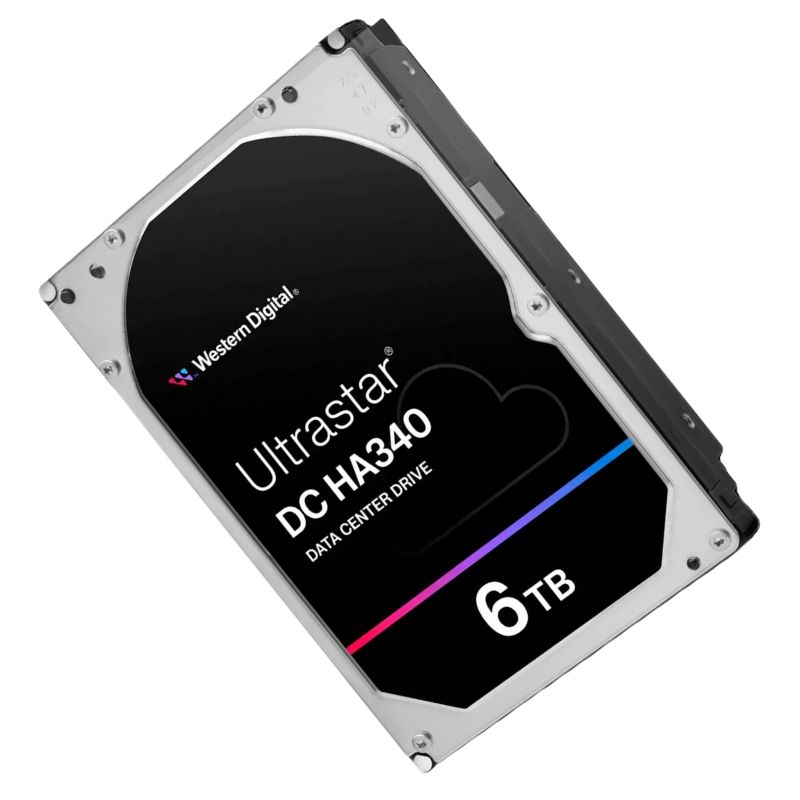
Western Digital WUS721206BLE6L4 Ultrastar DC Ha340 6TB 7.2K RPM SATA 6GBPS 256MB Buffer 512e 3.5 Inch Hard Disk Drive. New Sealed in Box (NIB) with 3 Year Warranty
The Western Digital WUS721206BLE6L4 is a 6 TB Ultrastar DC HA340 enterprise-class hard disk engineered for data-center workloads. It combines high sustained throughput, a large cache and a 7,200 RPM spindle to deliver dependable capacity and predictable performance for servers, storage arrays and dense rack deployments.
The Western Digital WUS721206BLE6L4 Ultrastar DC Ha340 6TB 7,200 RPM SATA 6Gbps 256MB buffer 512e 3.5-inch enterprise hard disk drive represents a focused choice for organizations that require dependable, cost-effective spinning-disk capacity in server and storage environments. The model designation and core technical attributes — 6 terabytes of formatted capacity, 7,200 revolutions per minute rotational speed, SATA 6 gigabits per second interface, a 256 megabyte buffer, 512e sector emulation and a standard 3.5-inch form factor — define its suitability for mainstream enterprise workloads where predictable performance and strong value-per-terabyte are essential. This section explains the headline specifications and why each matters when selecting drives for racks, arrays and networked storage appliances.
The 6TB capacity of the Ultrastar DC Ha340 places it in the sweet spot between high-density archival media and higher-cost, extremely high-capacity drives; it enables enterprises to balance storage density against cost and performance. As a 3.5-inch drive, it fits standard server sleds, JBOD expansion trays and desktop-class storage enclosures, making it easy to integrate into existing data center infrastructures. The SATA 6Gbps interface, commonly referred to as SATA III, ensures broad compatibility with modern controllers and motherboards while offering ample throughput for sustained sequential transfers typical in backup, cold storage and streaming archives. The 256MB cache buffer improves transient read/write responsiveness and helps smooth bursty workloads, reducing latency for smaller I/O patterns and accelerating certain parity operations in RAID arrays.
With a rotational speed of 7,200 RPM, this Ultrastar model balances seek latency and power consumption better than slower 5,400 RPM options while remaining more energy-efficient than 10,000 or 15,000 RPM enterprise-class spindle drives. The 7.2K spindle speed is widely adopted across mixed-workload data centers because it offers a strong combination of sequential throughput for large file transfers and adequate random IOPS for moderately demanding transactional tasks. This makes the drive an appropriate choice for bulk primary storage, cold-to-warm tier storage, video surveillance repositories, large-scale backups and archival systems where read throughput and predictable latency matter more than absolute high-IOPS demand.
Enterprise-grade hard disk drives like the Ultrastar DC Ha340 are engineered to survive continuous operation and harsher mechanical and thermal conditions than consumer drives. Design considerations typically include improved spindle bearings, robust head and actuator assemblies, broader operating temperature tolerances, and enhanced vibration tolerance for multi-drive enclosures. These drives are also validated to integrate into RAID-enabled arrays and scale-out storage nodes, where vibration and mechanical interference from neighboring drives can materially impact reliability. The Ultrastar series is recognized for meeting the endurance expectations of data centers, providing a foundation for storage strategies that require long-term availability and predictable maintenance windows.
Although specific workload ratings and mean time between failures (MTBF) vary by model and manufacturer documentation, enterprise-class drives are typically rated for higher annualized workload cycles compared with consumer drives. The Ultrastar DC Ha340 is intended to handle a broad range of mixed read/write workloads over sustained periods, which means it is suitable for hosts running databases with moderate write intensity, virtualized environments with consolidated VMs, and object or file stores that see continuous ingest and retrieval. When designing storage tiers, administrators generally reserve the fastest, lowest-latency devices for hot transactional data and deploy 7.2K drives like the Ha340 for capacity-oriented tiers where throughput and cost-efficiency are prioritized.
Enterprise HDDs include firmware and mechanical features that reduce the risk of data loss in demanding environments. These commonly adopted mechanisms include advanced error recovery algorithms, read/write head parking strategies, and dynamic fly-height control to protect media during power events. Many enterprise drives also implement rotational vibration sensors and adaptive servo systems to maintain stable read/write alignment when multiple drives are mounted closely in the same chassis. While specific firmware behaviors and microcode updates are vendor-defined, the Ultrastar family historically supports firmware features and monitoring capabilities that enable proactive error detection and easier integration with predictive analytics platforms used in modern storage management.
Performance for the Ultrastar DC Ha340 is driven by its spindle speed, cache size and interface bandwidth. The SATA 6Gbps interface prevents the drive from being bottlenecked by the host link for typical sequential workloads, delivering consistent megabytes-per-second throughput ideal for streaming, backup and large-scale reads. The 256MB buffer reduces the impact of read-ahead and write-buffer bursts; it can serve previously read sectors without requiring immediate disk head repositioning, which slightly improves apparent response times for certain workloads. However, it is important to remember that absolute random I/O performance remains bound by mechanical seek times and rotational latency; as a result, this drive is best in systems where sequential throughput or sustained transfer rates are the dominant metric.
When deployed in RAID arrays, the Ultrastar DC Ha340 benefits from well-thought-out caching and write policies at the array controller level. Many modern RAID controllers and software-defined storage stacks offer write-back, write-through and hybrid caching policies that can buffer writes and merge small random I/Os into larger sequential operations, thereby leveraging the drive’s mechanical strengths. Selecting an appropriate RAID level is critical: RAID 6 and RAID 10 offer differing trade-offs between capacity efficiency and resilience. For large-capacity 6TB drives, RAID rebuild times can be long, so array designers often combine redundancy strategies with hot spare pools, background scrubbing, and prioritized rebuild scheduling to mitigate the reconstruction overhead and reduce exposure to additional failures during a rebuild.
Latency for this class of drive is higher than that for SSDs, particularly NVMe devices, and so workloads that demand single-digit millisecond latency or extremely high IOPS are better served by flash. Nonetheless, for workloads that prioritize storage capacity and sustained throughput—such as object storage backends, archive repositories, log retention systems, and bulk media libraries—this drive offers a compelling balance of cost, capacity and acceptable latency. System architects often place the Ultrastar DC Ha340 in tiers dedicated to cold or warm data while accelerating read-paths with a flash cache layer to provide the best of both worlds: low-latency access via SSDs and economical, high-capacity persistence via HDDs.
Compatibility is a vital consideration for enterprise procurement. The Ultrastar DC Ha340’s adherence to the SATA 6Gbps standard ensures the drive can be used with many server platforms, RAID cards, HBA (host bus adapter) controllers and storage enclosures. Administrators should confirm firmware compatibility and vendor interoperability when integrating these drives into proprietary storage arrays, especially in platforms that leverage manufacturer-specific monitoring or encryption features. Additionally, hot-swap drive bays and sleds designed for 3.5-inch drives facilitate physical servicing with minimal downtime. In high-density installations, plan for adequate airflow and chassis cooling because thermal consistency directly affects long-term drive reliability.
Enterprise deployment practices typically include a firmware management policy to ensure drives operate with the latest stable microcode that addresses known issues, improves compatibility and sometimes unlocks enhanced features. Firmware updates should be tested in non-production environments first and scheduled during maintenance windows to avoid unintended disruptions. Because firmware updates can change drive behavior, coordinate closely with controller vendors and refer to release notes when planning updates for multiple devices. In many storage ecosystems, the management plane can orchestrate firmware rollouts across racks, making large-scale updates safer and more predictable.
Self-Monitoring, Analysis and Reporting Technology (SMART) is the standard telemetry suite present in most modern HDDs, including enterprise drives. SMART attributes provide early-warning indicators of drive degradation, such as increased reallocated sectors, pending sector counts, or temperature trends. Integrating SMART monitoring with a centralized telemetry system enables predictive replacement workflows and reduces unscheduled outages. Enterprises commonly combine SMART data with ambient environmental monitoring and vibration analytics to create holistic health profiles for every drive, enabling replacement of at-risk disks before they cause array failures.
Power consumption and thermal output directly impact data center TCO. A 7.2K RPM drive consumes more power than a 5.4K model during active operation but typically less than higher-RPM enterprise spindles. Energy-conscious architects weigh the drive’s per-terabyte power draw against storage density to model electricity, cooling and capacity costs over the device lifecycle. The Ultrastar DC Ha340’s design aims to deliver an acceptable balance, but actual power and thermal figures depend on workload, queue depth and ambient temperature. Always consult hardware specifications and real-world benchmarks to accurately design cooling and power capacity for racks populated with multiple 3.5-inch enterprise drives.
Hard disk drives produce acoustic noise due to spindle rotation and head movements. While not typically an issue for enclosed data center racks where acoustic isolation is present, deployments that place servers in office-adjacent rooms or research labs should consider acoustic profiles. Enterprise chassis often include dampening features and well-designed airflow to mitigate noise. Where acoustic performance is important, test sample drives in the planned environment to understand behavioral noise under steady-state and rebuild conditions, which is when drive activity and associated sound levels can increase.
The Ultrastar DC Ha340 is well-suited to a range of practical data center and enterprise scenarios. In large-scale backup solutions, its capacity and throughput allow faster completion of nightly snapshots and full-image transfers. Content delivery networks and media repositories benefit from the drive’s ability to stream large media files consistently. Video surveillance systems that record continuous footage at high resolutions can use these drives for retention tiers where high reliability and steady write rates are more important than ultra-low latency. Additionally, hybrid cloud storage architectures commonly use drives like the Ha340 for on-premises cold storage complemented by flash caches or cloud-based hot tiers.
Comparing the Ultrastar DC Ha340 to SSDs and higher-RPM HDDs highlights trade-offs. Solid-state drives deliver superior random IOPS and significantly lower latency, making them ideal for active databases, caching layers and latency-sensitive services. Higher-RPM spindle drives can excel at IOPS but at increased cost and power consumption. The Ha340’s competitive advantage is broad capacity at a lower cost per terabyte, making it a cost-effective component of tiered storage strategies where access patterns are sequential or where cost per TB dominates design considerations.
When procuring drives for enterprise deployments, consider warranty terms, vendor support, and SKU-specific features. It is prudent to order drives from authorized distributors and to verify model numbers and firmware versions to ensure consistency across all units. Buying in matched batches minimizes firmware heterogeneity and eases lifecycle management. For large orders, request burn-in or vendor validation testing reports where available, and incorporate sample drives into staging racks to validate performance and thermal characteristics before mass deployment.


 Contact Us
 Information
 Catalog
 Solid State Drives (SSD)
 Network Switches
 Hard Disk Drives
 HBA & Controllers
 PC & Servers
 PC & Server Memory
 CPU & Processors
 Network Routers
 Power Supplies
 Tape Drives & Libraries
 Network Devices
 Computer & Network Cables