
(7% discount is applied at checkout)
Cart is empty
Your go-to destination for cutting-edge server products
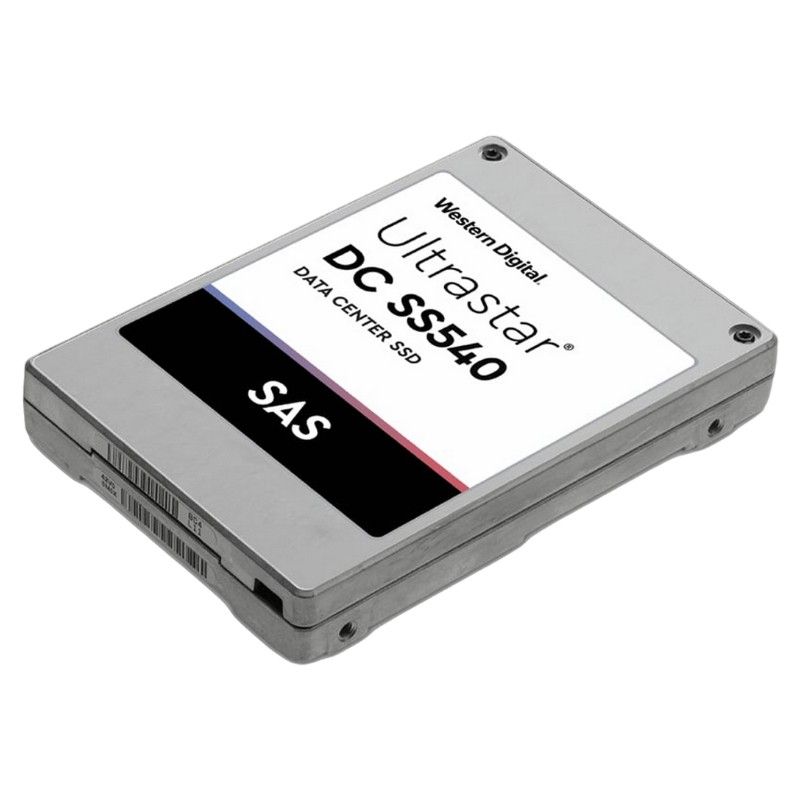
Western Digital WUSTR6464BSS204 Ultrastar DC SS540 6.4TB SAS 12GBPS Read Intensive 3D NAND TLC SFF Solid State Drive. New (Box Not Sealed) MOQ-5
The Western Digital WUSTR6464BSS204 is a high-performance 6.4 terabyte SSD engineered to deliver exceptional speed, endurance, and reliability for demanding enterprise environments. Designed for consistent data throughput and optimal latency control, this enterprise-grade storage solution is ideal for applications requiring rapid access to critical information.
The WUSTR6464BSS204 Western Digital Ultrastar DC SS540 6.4TB SAS 12Gb/s Read-Intensive 3D NAND TLC SFF SSD represents a class of high-density, enterprise-grade solid state drives purpose-built for read-heavy workloads. This category encompasses the Ultrastar DC SS540 family and closely related models designed for data center use where predictable performance, endurance appropriate for read-dominant applications, and robust data protection are essential. The category page below elaborates on the drive’s technical characteristics, deployment scenarios, performance behaviour, integration considerations, lifecycle management, procurement guidance, and frequently asked questions — all written to help IT buyers, system architects, and procurement teams make informed decisions.
Drives in this category share several defining attributes:
While exact firmware-level performance varies by model and capacity point, the DC SS540 family typically provides predictable latency and throughput for sustained read activity. Important technical considerations include:
SAS 12Gb/s provides enterprise-grade link resilience, dual-port redundancy (when configured on compatible backplanes), and interoperability with a wide range of enterprise storage controllers. SAS is preferred in many data center environments for robust error recovery and multipath configurations.
3D NAND TLC stacks memory cells vertically to increase density while keeping costs lower than higher endurance media. In read-intensive drives, firmware and overprovisioning are tuned to:
Typical performance characteristics for read-optimized enterprise SSDs include:
The Ultrastar DC SS540 6.4TB read-intensive SFF SSD is well suited to a range of enterprise and cloud applications where high read throughput and storage density matter most. Common deployment scenarios include:
CDNs and video streaming platforms often require large datasets to be read repeatedly by many clients. The DC SS540 is a practical choice when the access pattern is primarily read, allowing operators to place large catalogues on fast media without incurring the cost of higher-end write-optimized drives.
Search engines and web cache nodes benefit from drives that deliver low latency for random reads across many small objects. The drive’s focus on read performance helps accelerate query response times and improves the user experience on high-traffic sites.
Data warehouses and interactive analytics workloads that execute frequent read queries over large blocks of data will see improved query throughput. These drives can be used in tiered architectures — hot data on SSDs and colder data on HDDs.
When virtual desktop environments rely heavily on shared read operations (boot storms, application launch), using read-intensive SSDs for caching can smooth performance and reduce boot times across hundreds or thousands of sessions.
Proper integration of the Ultrastar DC SS540 into storage systems, servers, and arrays requires attention to controller support, firmware compatibility, and thermal considerations.
SAS 12Gb/s drives need compatible HBAs and backplanes to reach full link speed. Ensure your server firmware and RAID or HBA drivers support:
Vendors occasionally release firmware updates to improve compatibility, performance, and reliability. Best practice: validate firmware revisions across your fleet in a lab environment before wide deployment — particularly when mixing drives from different batches or vendors.
High-density SSD installations increase thermal density in chassis. Confirm that server airflow and drive carrier designs keep SSD operating temperatures within manufacturer-specified ranges — elevated temperatures can impact longevity and performance.
Enterprise SSDs incorporate multiple layers of data integrity and resilience. The Ultrastar DC SS540 category typically offers:
Drives expose SMART attributes and telemetry to allow predictive failure analysis. Metrics such as media wearout indicators, uncorrectable error counts, and temperature history are valuable for monitoring and preventive maintenance.
To extract consistent, predictable performance from read-intensive SSDs, adopt the following tuning and operational best practices.
Adjust logical overprovisioning to balance capacity and endurance. Increasing spare area via overprovisioning reduces write amplification and improves sustained performance under steady state.
Ensure applications mapped to these drives are primarily read-oriented. For mixed or write-heavy workloads, consider higher-endurance SSDs or NVMe models designed for mixed I/O.
Choose RAID levels that match your availability and rebuild time objectives. SSD rebuilds behave differently from HDD rebuilds — leverage RAID controllers and software that understand SSD behavior to avoid unnecessary stress on remaining drives during rebuilds.
Background garbage collection processes are necessary but can interact with peak read/write periods. Schedule maintenance windows or ensure steady-state operation to let drives perform internal housekeeping without affecting critical workloads.
The 6.4TB capacity point hits a sweet spot between per-drive density and cost-efficiency. When planning capacity, consider:
When scaling, design for modular expansion: predictable per-node capacity, consistent firmware and model mix, and standardized monitoring all reduce operational complexity. Keep spare drives in inventory from the same model and firmware family to simplify repairs and minimize compatibility issues.
Modern enterprise SSDs include features to assist with data security and regulatory compliance:
Choosing the correct SSD category is critical. Here’s a short comparison to guide decisions:
Follow secure erase and decommissioning protocols. If hardware encryption is available, cryptographic erase can accelerate secure disposal. Maintain records of device sanitization to satisfy audit requirements.
A search provider uses DC SS540 drives to host shard replicas of its index. The choice balances per-node capacity and cost while preserving low read latency during peak query periods. By caching hot segments on SSD and cold snapshots on archival storage, the provider reduces latency and scales index capacity linearly.
An ad-tech customer uses read-intensive SSDs as a high-performance cache layer in front of a columnar data store. The DC SS540 fleet accelerates repeated analytic reads and enables near real-time aggregation without the expense of write-endurance SSDs.


 Contact Us
 Information
 Catalog
 Solid State Drives (SSD)
 Network Switches
 Hard Disk Drives
 HBA & Controllers
 PC & Servers
 PC & Server Memory
 CPU & Processors
 Network Routers
 Power Supplies
 Tape Drives & Libraries
 Network Devices
 Computer & Network Cables