(7% discount is applied at checkout)
Cart is empty
Your go-to destination for cutting-edge server products
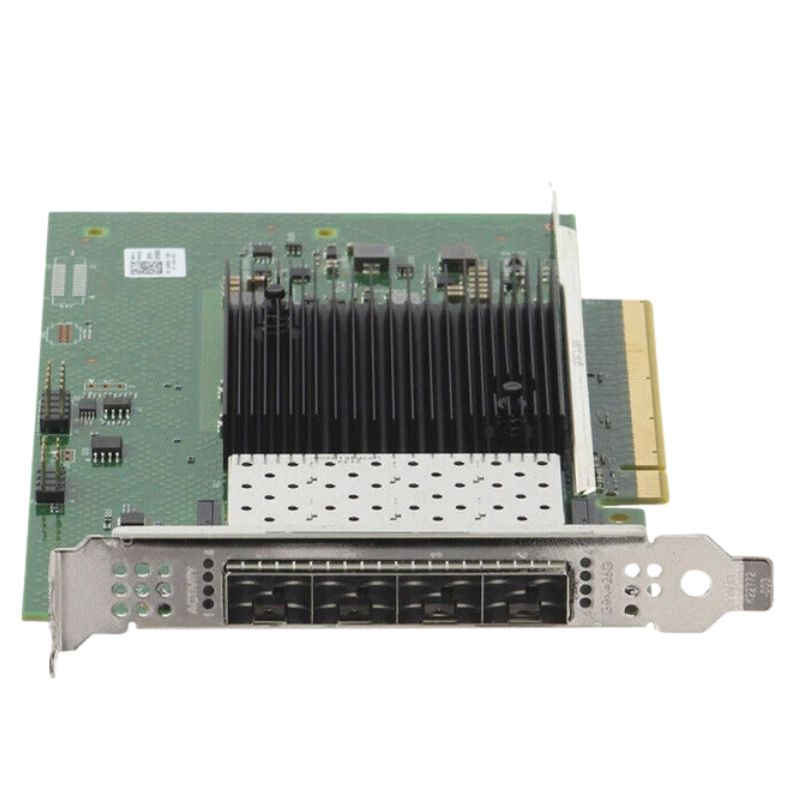


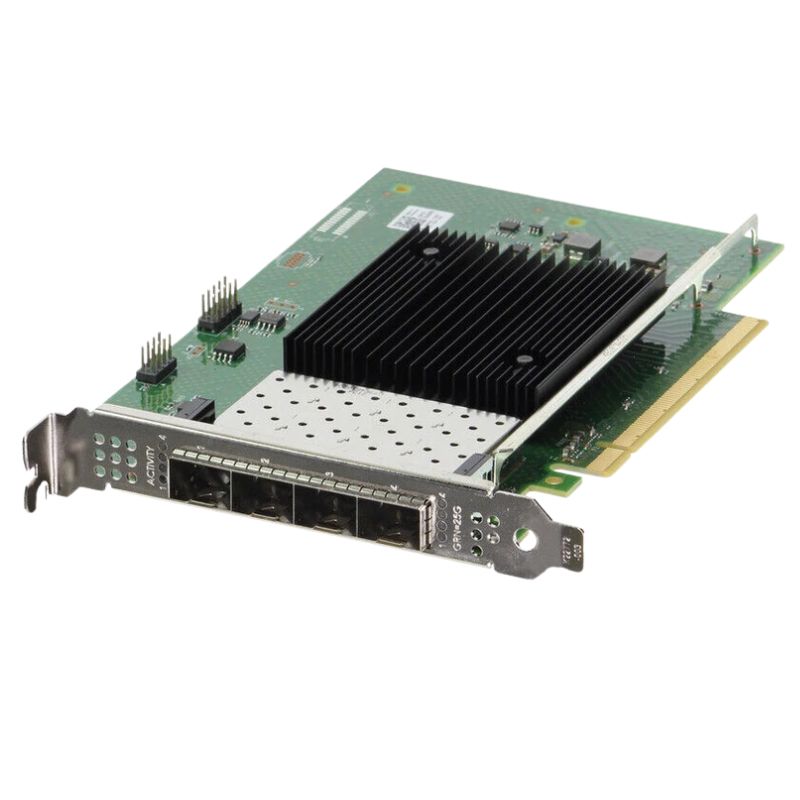
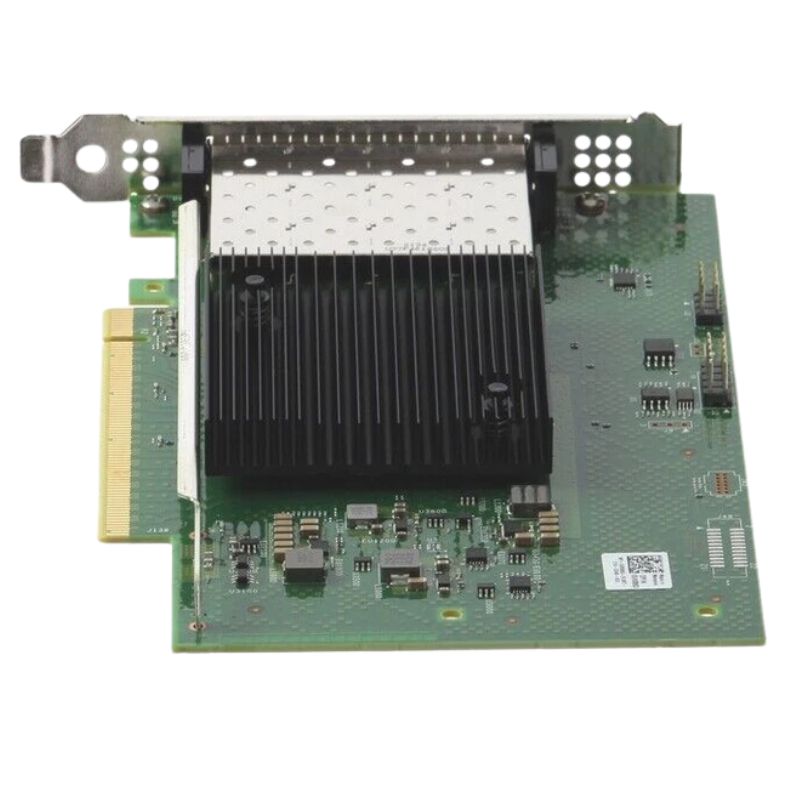
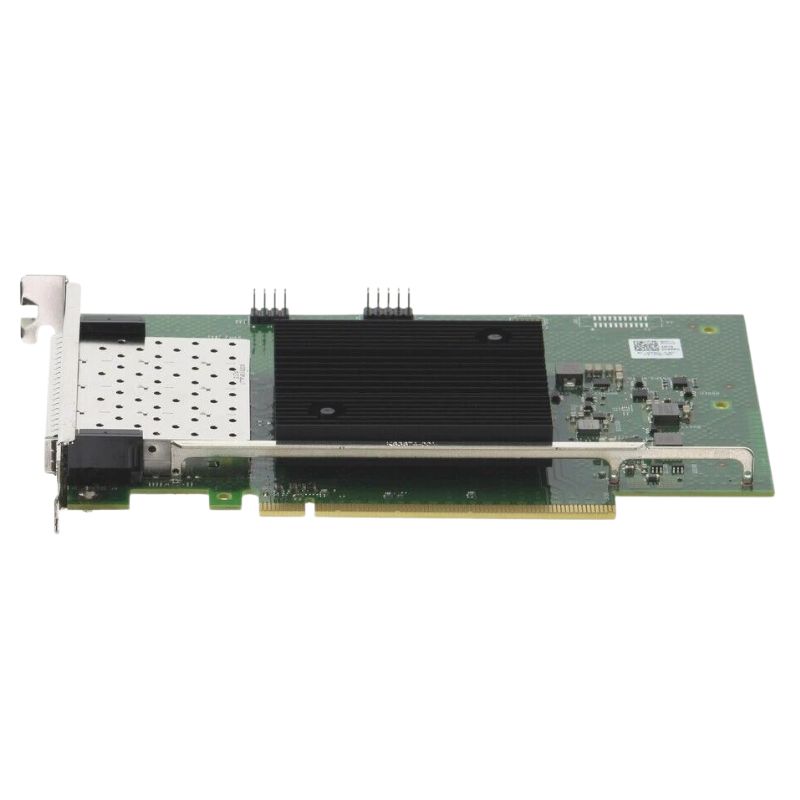
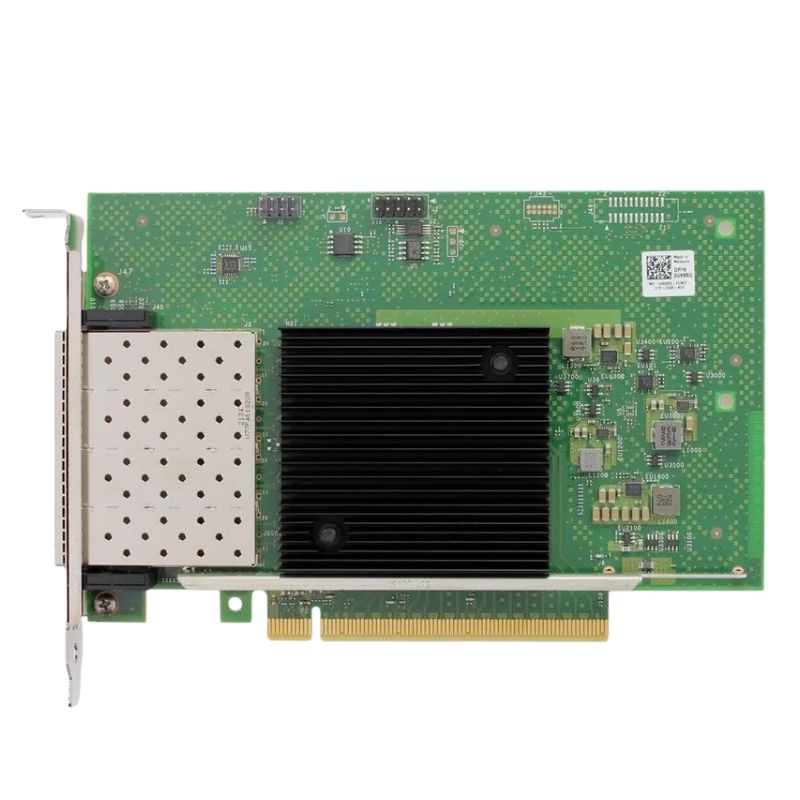
Intel X722DA4BLK Quad Port 10GBPS Plug-in Card Low Profile 10 Gigabit Ethernet PCI-Express Network Adapters. New Sealed in Box (NIB) with 3 Years Warranty
The Intel X722DA4BLK Quad Port 10GbE Plug-in Card is a compact, low-profile PCI Express network adapter engineered to deliver high-speed Ethernet connectivity for modern data-driven infrastructures. Designed to support four independent 10 Gigabit Ethernet ports, this advanced adapter enhances bandwidth efficiency, reduces latency, and optimizes server communication performance in enterprise-grade environments. Built for scalability and reliability, it is suitable for virtualization workloads, cloud computing platforms, and high-performance data center networking applications.
The Intel X722DA4BLK Quad Port 10Gbps Plug-in Card Low Profile 10 Gigabit Ethernet PCI-Express Network Adapter represents a class of high throughput networking hardware designed for demanding enterprise, virtualization, and data center environments. Built around advanced Intel Ethernet controller architecture, this adapter is engineered to support scalable bandwidth aggregation, low latency packet processing, and efficient CPU offloading for multi-workload infrastructures. It is commonly deployed in environments where network stability, deterministic throughput, and multi-port redundancy are essential for continuous service availability.
At its core, this category of network adapter is intended to bridge server compute resources with high-speed Ethernet networks using PCI Express connectivity. By leveraging quad-port 10GBASE-T interfaces, it allows simultaneous multi-channel communication, enabling servers to handle parallel traffic flows without congestion bottlenecks. This architecture is especially valuable in virtualization clusters, software-defined networking environments, and storage-heavy workloads that require consistent throughput across multiple virtual machines and containerized applications.
The Intel X722 controller integrated into this adapter class is designed to deliver hardware-accelerated networking functions that reduce CPU overhead. It supports advanced packet processing capabilities such as checksum offload, segmentation offload, and intelligent interrupt moderation. These features allow the server processor to focus on application workloads while the network adapter handles repetitive and high-volume packet processing tasks.
In high-density computing environments, CPU efficiency is critical. The X722 architecture improves system performance by minimizing context switching between kernel and user space during network operations. This results in lower latency for time-sensitive applications such as financial trading systems, real-time analytics platforms, and high-frequency transaction processing systems.
The controller is also optimized for multi-core processor systems, distributing network processing tasks across available CPU cores. This parallel processing capability ensures that no single core becomes a bottleneck, maintaining consistent throughput even under heavy traffic loads.
One of the defining characteristics of this network adapter category is its quad-port configuration. With four independent 10 Gigabit Ethernet interfaces, the adapter provides enhanced flexibility for network segmentation, redundancy design, and traffic balancing strategies. Each port operates independently, allowing administrators to assign dedicated network paths for storage traffic, management traffic, backup replication, or virtual machine communication.
This multi-port design significantly improves infrastructure resilience. In environments where network uptime is critical, link redundancy ensures that if one port or cable fails, traffic can be automatically rerouted through remaining active interfaces. This capability is essential in enterprise-grade deployments where downtime can result in operational disruption or financial loss.
Additionally, quad-port adapters reduce the need for multiple single-port NICs, freeing up PCI Express slots for other expansion components such as storage controllers, GPU accelerators, or specialized compute modules. This contributes to more efficient server design and improved hardware consolidation.
The PCI Express interface is a key factor in determining the performance ceiling of high-speed network adapters. The Intel X722DA4BLK category typically utilizes a multi-lane PCIe connection, ensuring sufficient bandwidth between the network controller and the host system. This high-speed bus architecture prevents data bottlenecks and allows full utilization of 10Gbps per port simultaneously.
Modern server motherboards often provide PCIe Gen3 or Gen4 slots, and this adapter is designed to operate efficiently within those environments. The use of a high-throughput PCIe interface ensures that even under aggregated traffic conditions across four ports, the adapter maintains stable performance without packet loss or buffering delays.
This efficiency becomes particularly important in virtualization clusters where multiple virtual machines generate concurrent network traffic streams. The PCIe architecture ensures that each VM receives predictable network performance without interference from other workloads sharing the same physical adapter.
The low profile design of this network adapter category makes it suitable for rack-mounted servers, blade systems, and compact enterprise chassis configurations. Data centers often prioritize density and space optimization, and low profile hardware enables higher compute capacity per rack unit.
This compact design does not compromise performance. Instead, it allows integration into space-constrained systems while maintaining full quad-port 10Gbps functionality. Many server manufacturers design their systems to accommodate both full-height and low-profile expansion cards, making this adapter widely compatible across enterprise hardware platforms.
The thermal profile is also engineered for airflow efficiency. In high-density server racks where heat dissipation is a critical concern, low profile adapters help maintain optimal airflow paths, reducing thermal accumulation around PCIe slots and adjacent components.
The Intel X722DA4BLK class of adapters typically supports 10GBASE-T copper Ethernet connectivity, enabling use with standard RJ45 cabling infrastructure. This provides a significant advantage in environments where fiber deployment is not practical or cost-effective. Existing Cat6a or Cat7 cabling can often support 10Gbps transmission over short to medium distances, reducing infrastructure upgrade costs.
Copper-based 10 Gigabit Ethernet also simplifies deployment and maintenance. Network administrators can utilize familiar cabling systems without requiring specialized optical transceivers or fiber patch panels. This makes it ideal for enterprise offices, branch data centers, and hybrid cloud environments where flexibility and cost efficiency are priorities.
Additionally, 10GBASE-T interfaces support backward compatibility with lower speeds such as 1Gbps and 100Mbps, allowing gradual infrastructure upgrades without immediate full network replacement. This adaptability makes the adapter suitable for phased modernization strategies in large organizations.
Virtualization environments demand high efficiency in network resource allocation, and this adapter category is optimized for such workloads. Support for Single Root I/O Virtualization (SR-IOV) enables the physical network adapter to be partitioned into multiple virtual functions, each of which can be assigned directly to virtual machines.
This reduces hypervisor overhead and allows near-native network performance for virtual workloads. Each virtual function behaves like a dedicated physical NIC, providing consistent bandwidth and low latency communication between virtual machines and external networks.
In cloud computing environments, SR-IOV is a critical feature for achieving predictable performance in multi-tenant infrastructures. It ensures isolation between workloads while maintaining efficient utilization of hardware resources.
In addition to SR-IOV, virtualization optimization features such as VMDq and Intel Virtualization Technology for Connectivity enhance packet steering efficiency. These technologies distribute network traffic intelligently across CPU cores and memory buffers, improving scalability in virtualized systems.
The Intel X722-based network adapter includes a wide range of hardware offload functions designed to reduce CPU utilization. These include TCP segmentation offload, large send offload, and checksum offload for both IPv4 and IPv6 traffic. By handling these operations at the hardware level, the adapter reduces the need for software-based processing within the operating system network stack.
This results in improved system responsiveness, particularly under heavy network loads. Servers running database applications, web services, and distributed computing workloads benefit from reduced CPU contention, allowing more resources to be allocated to application logic rather than network processing.
The adapter also supports receive-side scaling, enabling incoming traffic to be distributed across multiple CPU cores. This ensures balanced workload distribution and prevents performance degradation caused by single-core saturation during high traffic bursts.
In modern enterprise environments, network adapters are not only responsible for general data communication but also play a critical role in storage connectivity. The Intel X722DA4BLK class supports efficient transport protocols for storage systems such as iSCSI and network-attached storage architectures.
High bandwidth and low latency communication are essential for storage replication, backup operations, and distributed file systems. Quad-port configurations allow administrators to dedicate specific ports for storage traffic, isolating it from general application traffic and improving overall performance stability.
In software-defined storage environments, this adapter contributes to efficient data movement across clustered nodes, ensuring consistent replication and synchronization between storage tiers.
Security is a fundamental requirement in enterprise networking, and this category of network adapter integrates hardware-based features that support secure communication and traffic isolation. VLAN tagging support allows logical segmentation of network traffic, enabling multiple isolated networks to operate over a single physical infrastructure.
Hardware filtering and packet inspection capabilities help reduce exposure to unauthorized traffic, while offload engines ensure that security processing does not become a performance bottleneck. These features are particularly important in environments that handle sensitive data or operate under strict compliance requirements.
Network administrators can implement layered security strategies using the adapter’s built-in capabilities combined with firewall and intrusion detection systems at the software level.
This category of network adapter is widely deployed across multiple infrastructure scenarios including virtualization clusters, cloud computing platforms, enterprise application servers, and high-performance storage networks. Its quad-port design makes it suitable for multi-network segmentation strategies, where different types of traffic are separated for performance optimization.
In virtual desktop infrastructure environments, the adapter ensures smooth user experience by maintaining consistent bandwidth for remote sessions. In analytics and big data environments, it supports rapid data ingestion from distributed sources. In web hosting environments, it enables load balancing across multiple network interfaces for improved service availability.
Its flexibility allows it to adapt to evolving infrastructure requirements, making it a long-term networking solution for organizations undergoing digital transformation.
The Intel X722DA4BLK category is supported across a wide range of operating systems including enterprise Linux distributions, Windows Server environments, and virtualization platforms such as VMware ESXi. Intel provides optimized drivers that ensure full feature support and performance tuning capabilities across these platforms.
In Linux environments, kernel-level driver integration allows seamless configuration of advanced networking features. In Windows Server deployments, administrative tools enable fine-tuning of offload settings and performance parameters. In virtualization platforms, compatibility ensures efficient integration with hypervisor networking stacks.
This broad compatibility makes the adapter suitable for heterogeneous IT environments where multiple operating systems coexist within the same infrastructure.
To maximize the performance of quad-port 10 Gigabit Ethernet adapters, administrators often implement advanced tuning strategies that align hardware capabilities with application requirements. These optimizations may involve adjusting interrupt moderation settings, configuring RSS queues, and balancing traffic distribution across ports.
Proper configuration ensures that network throughput is maximized while latency is minimized. In high-performance environments, even small configuration adjustments can significantly impact overall system efficiency.
Network segmentation strategies can also be implemented to dedicate specific ports to different types of workloads. This reduces contention and improves predictability of network performance under heavy load conditions.
As data centers continue to scale horizontally, the need for high-density networking solutions becomes increasingly important. Quad-port 10Gbps adapters provide a compact yet powerful solution for expanding network capacity without increasing physical footprint.
This scalability is particularly important in cloud-native architectures where compute nodes are frequently added or reconfigured. The ability to quickly integrate high-speed networking into new servers accelerates deployment cycles and improves infrastructure agility.
The Intel X722DA4BLK class supports this scalability requirement by delivering consistent performance across distributed environments, ensuring that network infrastructure grows in alignment with compute and storage capacity.


 Contact Us
 Information
 Catalog
 Solid State Drives (SSD)
 Network Switches
 Hard Disk Drives
 HBA & Controllers
 PC & Servers
 PC & Server Memory
 CPU & Processors
 Network Routers
 Power Supplies
 Tape Drives & Libraries
 Network Devices
 Computer & Network Cables