(7% discount is applied at checkout)
Cart is empty
Your go-to destination for cutting-edge server products
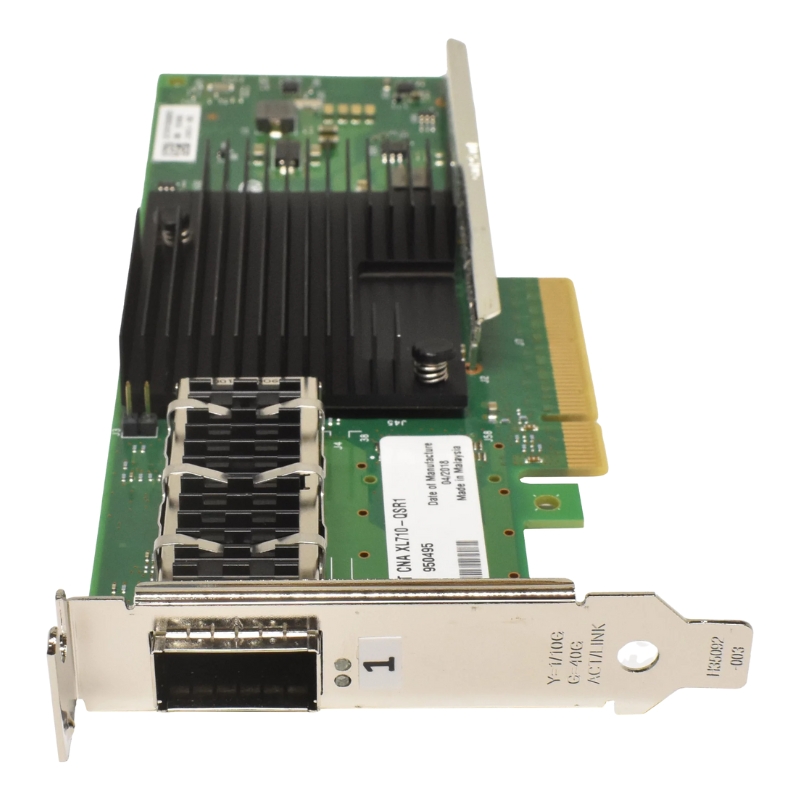


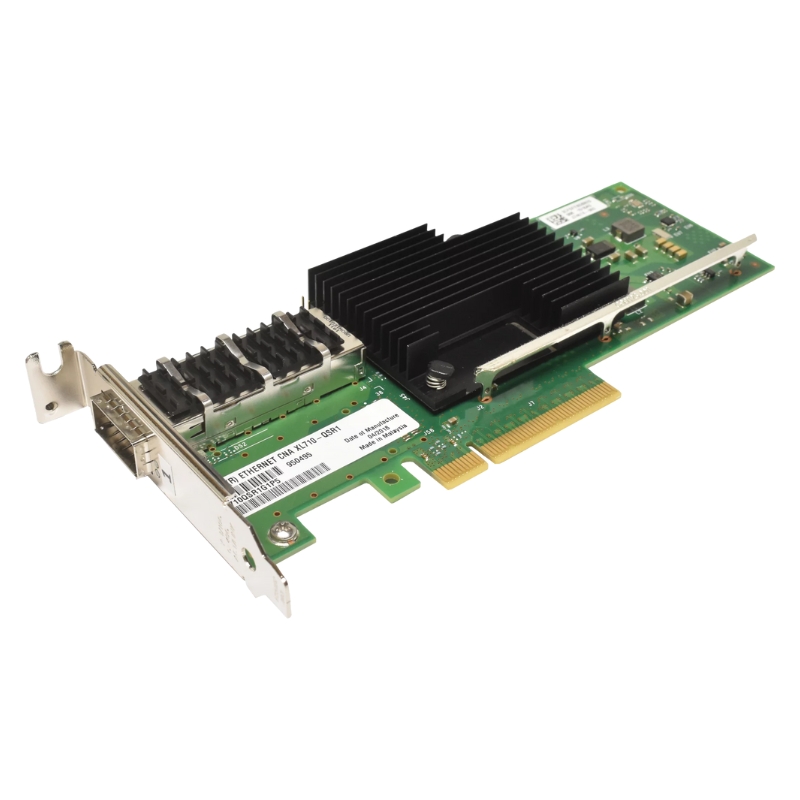
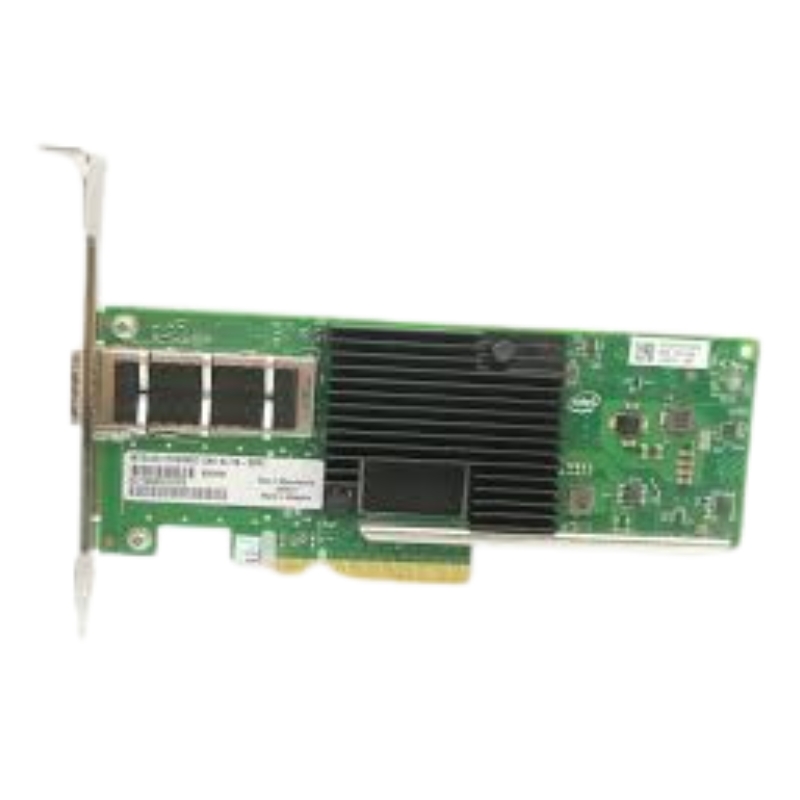
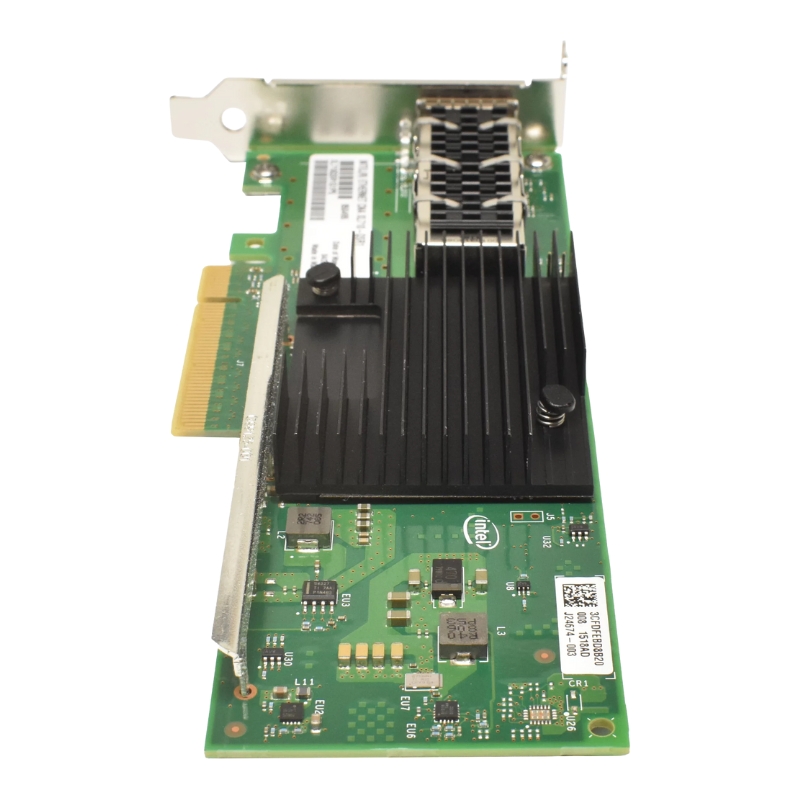
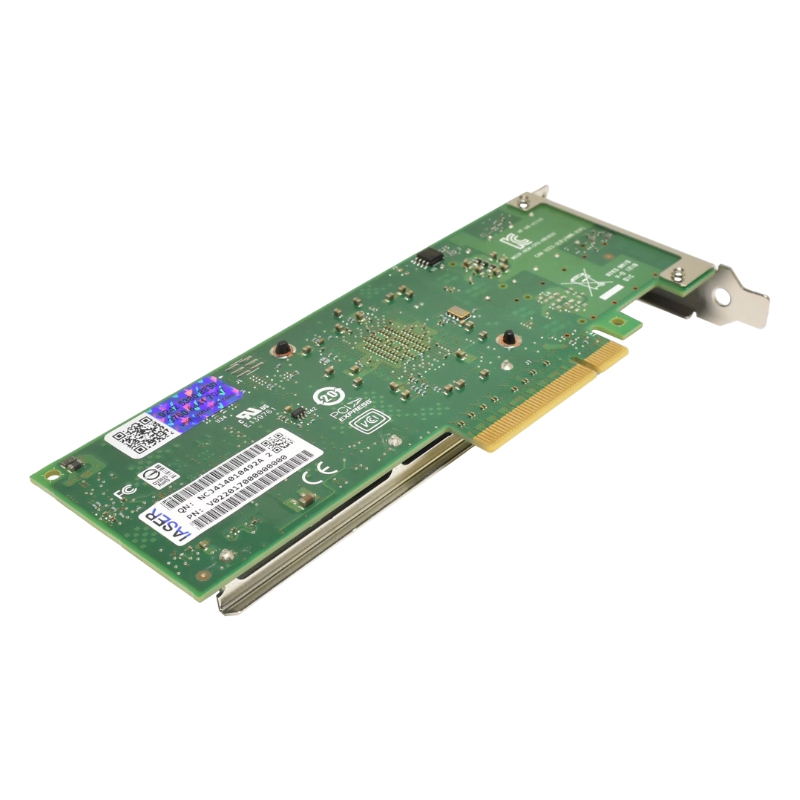
Intel XL710-QSR1 Single Port 40 Gigabit Ethernet PCI-Express Network Adapter. Excellent Refurbished with 1 year replacement warranty
The Intel XL710-QSR1 Single Port Converged Network Adapter is a high-performance solution designed for enterprise networking. Featuring 40 Gigabit Ethernet QSFP+ connectivity, this PCIe 3.0 x8 card delivers exceptional throughput, advanced virtualization support, and energy-efficient performance for modern data centers.
The XL710-QSR1 Single Port 40 Gigabit Ethernet PCI-Express Network Adapter represents a high-performance networking solution engineered for modern data center environments that demand ultra-low latency, massive throughput, and scalable virtualization capabilities. Designed around the Intel XL710 controller architecture, this adapter is optimized for 40GbE connectivity using QSFP+ interfaces and delivers enterprise-grade reliability for cloud infrastructure, enterprise servers, storage networks, and high-performance computing clusters. Its architecture is specifically built to address bandwidth-intensive workloads such as virtualization, real-time analytics, distributed databases, and large-scale storage synchronization.
As part of the XL710 product family, this adapter integrates advanced hardware acceleration features, offloading network processing tasks from the CPU to improve system efficiency. It is widely deployed in environments where deterministic performance and consistent packet processing are critical. The single-port design simplifies deployment in dense server configurations while still maintaining exceptional data transfer capabilities.
At the core of the Intel XL710-QSR1 is a dedicated high-performance network controller optimized for 40 Gigabit Ethernet throughput. This controller is designed to manage packet processing, checksum offloading, segmentation, and flow control directly at the hardware level. By reducing CPU dependency, the adapter ensures that server resources remain available for application workloads instead of being consumed by network stack operations.
The adapter utilizes a PCI Express interface designed for high-bandwidth communication between the network card and the host system. This ensures minimal bottlenecks when transferring large data streams between network and memory subsystems. The PCIe architecture supports efficient parallel data handling, which is essential for maintaining stable throughput in multi-threaded and virtualized environments.
The PCIe lane configuration is optimized to support sustained 40GbE data rates without congestion. This allows the adapter to maintain consistent packet flow even under peak traffic loads. The architecture is particularly beneficial for workloads that involve heavy east-west data movement within data centers.
The 40GbE capability of the XL710-QSR1 enables extremely high-speed data transmission suitable for next-generation data centers. This level of bandwidth is essential for applications such as real-time analytics, machine learning model training, and high-frequency trading systems where data velocity directly impacts performance outcomes.
The adapter is designed to minimize latency across all network operations. Hardware-level packet processing reduces delays introduced by software-based networking stacks. This ensures faster response times for applications that require immediate data exchange between distributed systems.
Advanced flow control mechanisms ensure that network congestion is effectively managed, preventing packet loss and maintaining stable throughput. This is especially important in virtualized environments where multiple workloads share the same physical network infrastructure.
The XL710-QSR1 utilizes QSFP+ transceiver technology, enabling compatibility with a wide range of optical modules and direct attach copper cables. This flexibility allows data center administrators to customize network configurations based on distance requirements and infrastructure constraints.
The QSR1 designation typically indicates optimization for short-range connectivity, making it ideal for intra-rack and inter-rack communication within data centers. This ensures efficient communication between servers without requiring long-distance fiber infrastructure.
The optical interface is engineered to maintain signal integrity even at maximum throughput. Error correction and signal optimization techniques reduce packet retransmissions and ensure reliable data delivery across connected endpoints.
The XL710-QSR1 supports Single Root I/O Virtualization (SR-IOV), enabling multiple virtual machines to share a single physical network adapter while maintaining isolated and high-performance virtual interfaces. This significantly enhances virtualization density and efficiency in cloud environments.
Each virtual function operates independently, ensuring secure and isolated data transmission between tenants. This is essential in multi-tenant cloud architectures where security and performance separation are critical requirements.
The adapter integrates seamlessly with major hypervisor platforms, enabling efficient distribution of network resources across virtual workloads. This improves overall system utilization and reduces overhead in virtualized infrastructures.
One of the key features of the XL710-QSR1 is its ability to offload TCP/IP processing tasks from the host CPU. This includes checksum calculation, segmentation offload, and large send offload, significantly improving system efficiency.
The adapter includes advanced packet steering mechanisms that distribute network traffic evenly across CPU cores. This improves parallel processing efficiency and ensures balanced workload distribution in multi-core server environments.
Queue management is handled directly at the hardware level, enabling efficient prioritization of network traffic. This is particularly beneficial in environments where certain applications require guaranteed bandwidth allocation.
The XL710-QSR1 is widely used in cloud data centers where scalability and high throughput are essential. It supports large-scale virtualization platforms and distributed computing frameworks, enabling efficient resource sharing across multiple tenants.
In HPC environments, the adapter provides the necessary bandwidth for inter-node communication, which is critical for parallel processing tasks such as scientific simulations, weather modeling, and genomic analysis.
The adapter enhances storage network performance by enabling faster data replication and backup operations. This is particularly useful in enterprise SAN and NAS environments where data integrity and speed are critical.
The XL710-QSR1 is supported across multiple operating systems including enterprise Linux distributions, Windows Server environments, and virtualization platforms. This ensures broad compatibility across diverse IT infrastructures.
Drivers are optimized to integrate seamlessly with system network stacks, enabling efficient packet handling and reduced overhead. This ensures that the adapter performs consistently across different workloads and system configurations.
Regular firmware updates enhance stability, security, and performance. These updates ensure that the adapter remains compatible with evolving data center standards and emerging networking protocols.
The adapter includes built-in packet filtering capabilities that enhance network security by identifying and managing suspicious traffic patterns at the hardware level.
Error detection and correction systems ensure that transmitted data maintains integrity throughout the communication process. This reduces the risk of corruption in mission-critical environments.
The network adapter supports redundancy configurations that help maintain network continuity in the event of hardware or link failures, ensuring minimal downtime in enterprise systems.
The compact single-port design of the XL710-QSR1 makes it ideal for high-density server environments where space optimization is crucial. It allows organizations to maximize network performance without increasing hardware footprint.
Organizations can scale their network infrastructure seamlessly by integrating multiple XL710 adapters across server clusters. This supports dynamic workload expansion without compromising performance.
The adapter is designed to support evolving networking standards, ensuring long-term usability in rapidly changing IT environments. Its architecture allows for adaptability in next-generation data center deployments.
High-speed data transfer capabilities significantly improve database query performance and analytics processing speed. This is essential for enterprise systems handling large-scale transactional and analytical workloads.
The adapter enhances content delivery networks by enabling fast and reliable data distribution. This is particularly beneficial for media streaming platforms and content-heavy applications.
Applications that require real-time data exchange benefit from reduced latency and increased throughput, ensuring smooth and uninterrupted performance even under heavy load conditions.
The adapter supports intelligent load balancing that distributes network traffic efficiently across available resources. This ensures optimal utilization of network capacity.
Critical applications can be assigned higher priority levels to ensure consistent performance even during peak traffic conditions. This enhances service quality in enterprise environments.
Bandwidth allocation is dynamically adjusted based on workload demands, ensuring efficient use of network resources across multiple applications and services.


 Contact Us
 Information
 Catalog
 Solid State Drives (SSD)
 Network Switches
 Hard Disk Drives
 HBA & Controllers
 PC & Servers
 PC & Server Memory
 CPU & Processors
 Network Routers
 Power Supplies
 Tape Drives & Libraries
 Network Devices
 Computer & Network Cables