(7% discount is applied at checkout)
Cart is empty
Your go-to destination for cutting-edge server products
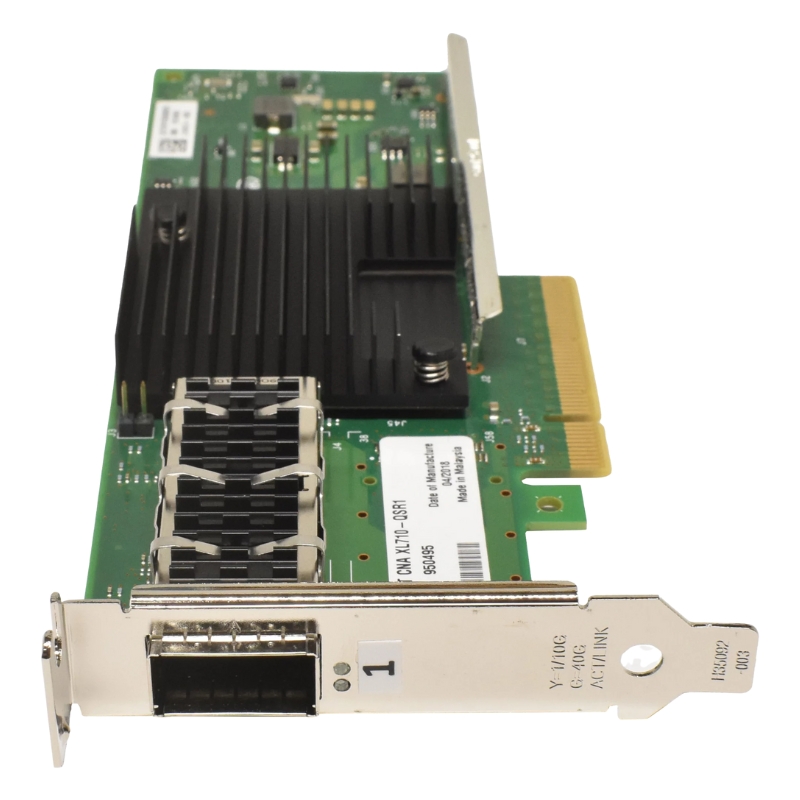


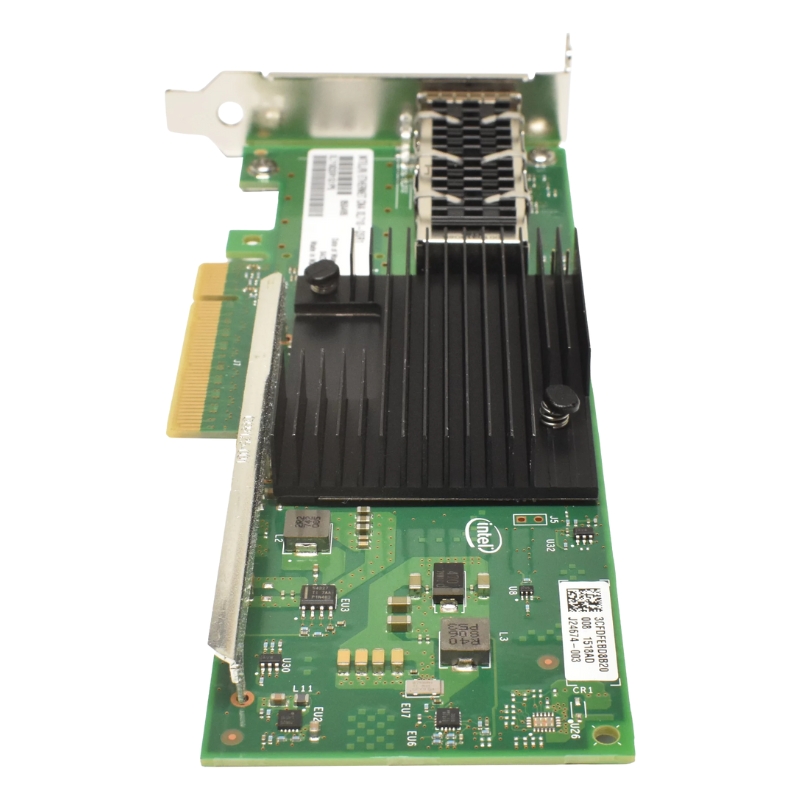
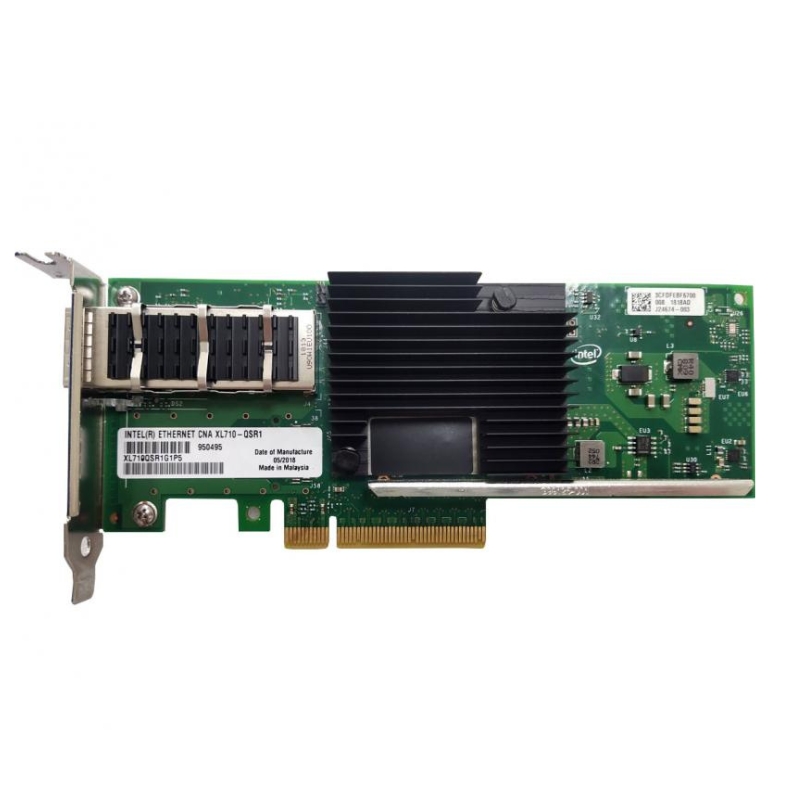
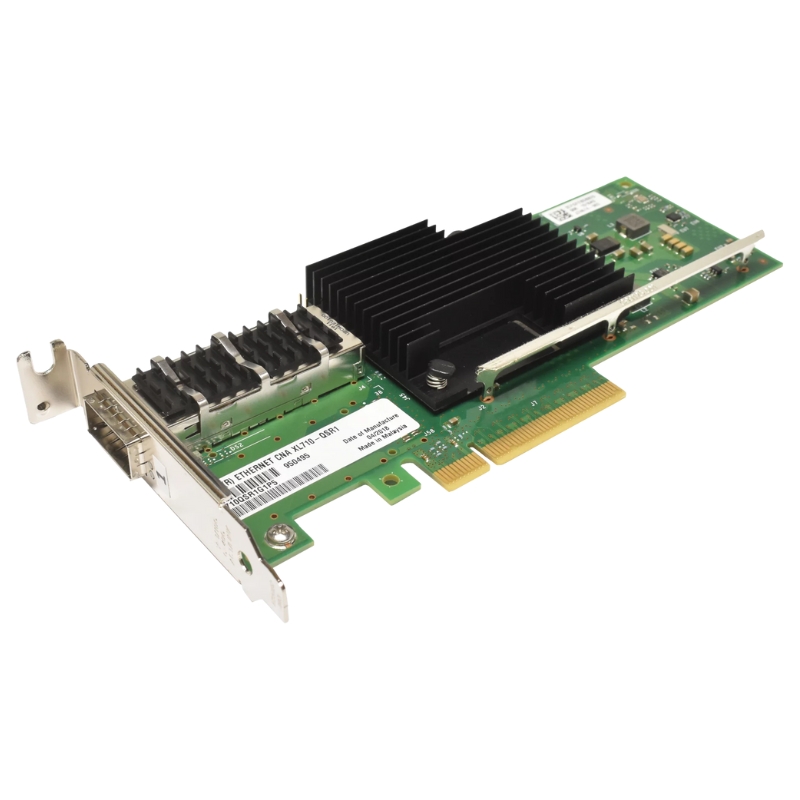
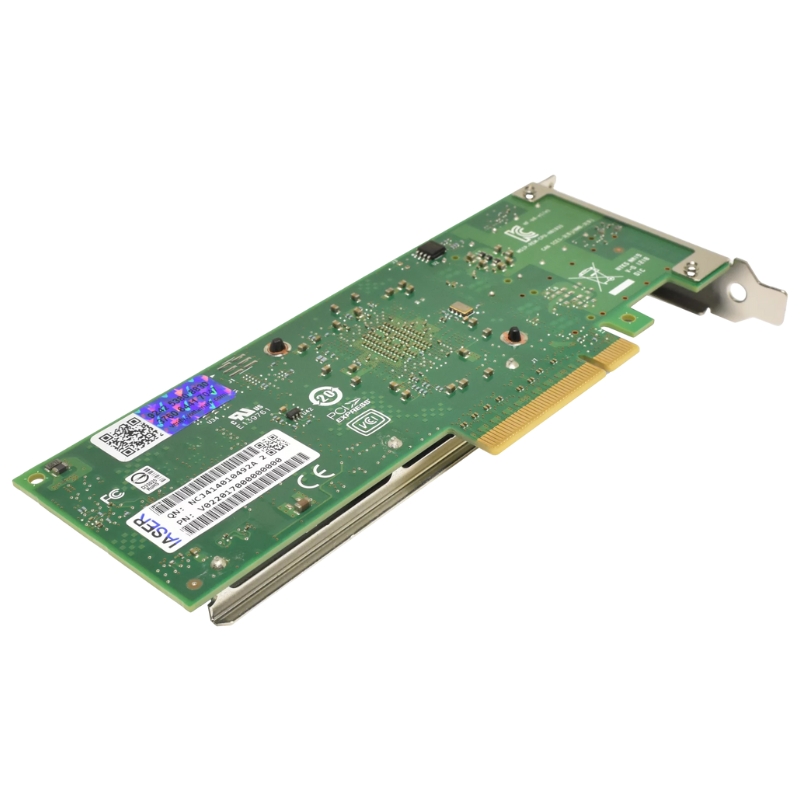
Intel XL710QSR1G1P5 Single Port 40 Gigabit Ethernet PCI-Express Network Adapter. Excellent Refurbished with 1 year replacement warranty
The Intel XL710QSR1G1P5 Single Port Converged Network Adapter is a high-performance solution engineered for enterprise networking. Featuring 40 Gigabit Ethernet QSFP+ connectivity, this PCIe 3.0 x8 low-profile card ensures exceptional throughput, advanced virtualization acceleration, and optimized efficiency for modern data centers.
The Intel XL710QSR1G1P5 Single Port 40 Gigabit Ethernet PCI-Express Network Adapter represents a high-density, enterprise-grade networking solution designed for environments where extreme bandwidth, ultra-low latency, and predictable throughput are essential. Built around Intel’s advanced Ethernet controller architecture, this adapter is engineered to meet the demands of modern virtualized infrastructures, cloud data centers, high-frequency trading systems, and large-scale storage networks.
As data center workloads continue to evolve toward distributed computing and software-defined architectures, the requirement for stable, high-speed network interfaces has become critical. This 40GbE PCIe network adapter delivers a balance between raw performance and efficient CPU utilization, enabling servers to process large volumes of traffic without becoming bottlenecked at the network interface layer.
At the heart of the Intel XL710QSR1G1P5 is a design philosophy focused on scalability, offloading efficiency, and multi-queue packet processing. The adapter integrates seamlessly into PCI Express-based server architectures, ensuring that data throughput is maximized while minimizing CPU overhead through intelligent offload engines and hardware acceleration capabilities.
The single-port QSFP+ configuration ensures stable 40 Gigabit Ethernet connectivity while maintaining compatibility with a wide range of optical modules and DAC (Direct Attach Copper) cables, making it suitable for both short-range rack-level deployments and long-distance interconnects within enterprise data centers.
The PCI Express interface is one of the most critical components of any high-speed network adapter, and the Intel XL710QSR1G1P5 is optimized for PCIe Gen3 architectures. This ensures that the adapter can fully utilize available system bandwidth without introducing congestion or packet loss during peak traffic conditions.
By leveraging multiple PCIe lanes, the adapter achieves a balanced data flow between system memory and network interface, allowing for efficient packet processing and reduced latency. This architecture is particularly beneficial in virtualized environments where multiple virtual machines simultaneously access network resources.
The adapter employs advanced memory mapping techniques that allow direct data placement into system memory buffers. This reduces unnecessary CPU intervention and improves packet processing speed, especially under heavy network loads. The result is a more efficient system where CPU cycles are preserved for application-level workloads rather than network handling tasks.
One of the defining characteristics of this PCIe network adapter is its ability to reduce latency through hardware-level acceleration. Packet filtering, checksum offloading, and segmentation are handled directly by the network controller, significantly reducing processing time and ensuring deterministic network behavior in latency-sensitive applications.
The Intel XL710QSR1G1P5 utilizes a QSFP+ (Quad Small Form-factor Pluggable Plus) interface, which is widely adopted in enterprise-grade 40GbE deployments. This interface supports both optical fiber transceivers and direct attach copper cables, enabling flexible deployment across diverse networking environments.
This flexibility allows data center architects to design scalable topologies without being constrained by physical medium limitations. Whether deployed in spine-leaf architectures or high-density server clusters, the adapter ensures consistent performance across all supported media types.
Signal integrity is a critical factor in 40 Gigabit Ethernet environments. The adapter incorporates advanced signal conditioning and error correction mechanisms that ensure stable transmission even under high electromagnetic interference conditions. This is particularly important in dense server racks where multiple high-speed components operate in close proximity.
The QSFP+ interface is designed to support a wide range of optical modules, enabling network administrators to choose appropriate transceivers based on distance and infrastructure requirements. This adaptability makes the adapter suitable for both intra-data center and inter-building connectivity scenarios.
The Intel XL710QSR1G1P5 is engineered with advanced virtualization support, including Single Root I/O Virtualization (SR-IOV). This feature allows a single physical network adapter to be partitioned into multiple virtual functions, enabling direct assignment of network resources to virtual machines.
By bypassing traditional software-based networking stacks, SR-IOV reduces overhead and improves network performance for virtualized workloads. This is particularly important in cloud computing environments where high VM density requires predictable and isolated network performance.
In virtualized infrastructures, network function offloading plays a crucial role in maintaining system efficiency. The adapter offloads tasks such as packet classification, filtering, and segmentation, allowing hypervisors to allocate more resources to compute-intensive tasks.
When integrated with virtual switches, the adapter enhances packet routing efficiency between virtual machines. This reduces internal network latency and ensures smooth communication between workloads running on the same physical host.
The Intel XL710QSR1G1P5 is designed for deployment in large-scale data centers where scalability and reliability are essential. Its 40GbE throughput allows multiple high-demand applications to operate simultaneously without network congestion, making it ideal for clustered computing environments.
In modern data center architectures, east-west traffic between servers often exceeds north-south traffic. This adapter is optimized for such scenarios, ensuring efficient internal communication between distributed systems.
Cloud service providers rely on high-speed networking to maintain performance consistency across distributed workloads. This network adapter supports such environments by ensuring predictable bandwidth allocation and minimizing packet loss during peak usage periods.
Efficient load balancing is essential in cloud environments. The adapter contributes to improved traffic distribution by supporting multi-queue processing and intelligent packet steering, ensuring that workloads are evenly distributed across available resources.
The Intel XL710QSR1G1P5 is well-suited for storage-intensive environments where high-speed access to distributed storage systems is required. It supports protocols such as iSCSI and NFS, enabling efficient data transfer between storage arrays and compute nodes.
In enterprise storage networks, bandwidth consistency is crucial to avoid performance degradation during large-scale data operations. This adapter ensures stable throughput even during peak storage access workloads.
Storage environments often require low-latency access to ensure fast read and write operations. The adapter’s hardware acceleration capabilities reduce delays in packet transmission, improving overall storage performance and responsiveness.
For backup and replication systems, high throughput is essential to minimize data synchronization windows. The 40GbE interface allows rapid replication of large datasets across geographically distributed storage clusters.
The Intel XL710QSR1G1P5 offers broad operating system compatibility, supporting major enterprise environments including Linux distributions, Windows Server editions, and virtualization hypervisors. This ensures seamless integration into existing infrastructure without requiring extensive configuration changes.
Driver optimization plays a key role in achieving maximum performance. Intel provides regularly updated drivers that enhance compatibility, security, and throughput optimization across supported platforms.
In Linux-based environments, kernel-level drivers enable fine-grained control over packet processing, interrupt moderation, and queue management. These optimizations contribute to improved system stability and reduced CPU utilization.
Network administrators benefit from advanced monitoring capabilities that allow real-time performance tracking, diagnostics, and configuration management. This ensures proactive network maintenance and reduced downtime in mission-critical environments.
Security is a fundamental requirement in enterprise networking, and the Intel XL710QSR1G1P5 incorporates hardware-based mechanisms designed to enhance data integrity and protect against network-level threats. These features include packet filtering, checksum validation, and secure offloading processes.
By handling security functions at the hardware level, the adapter reduces reliance on CPU-based security processing, improving both performance and reliability in high-throughput environments.
In multi-tenant infrastructures, maintaining isolation between virtual machines is critical. The adapter’s virtualization-aware architecture ensures that network traffic remains properly segmented, reducing the risk of data leakage between tenants.
Error detection mechanisms embedded within the adapter ensure that corrupted packets are identified and corrected or discarded before impacting system performance. This contributes to overall network reliability and data accuracy.
Despite its high-performance capabilities, the Intel XL710QSR1G1P5 is engineered with power efficiency in mind. Advanced power management techniques allow the adapter to dynamically adjust energy consumption based on workload intensity, ensuring optimal efficiency in both idle and high-traffic scenarios.
Thermal design is a key consideration in high-density server environments. The adapter is designed to maintain stable operating temperatures even under sustained high-throughput conditions, ensuring long-term reliability and hardware longevity.
Energy-aware processing mechanisms help reduce unnecessary power usage during low network activity periods. This contributes to lower operational costs in large-scale deployments where hundreds or thousands of network interfaces operate simultaneously.


 Contact Us
 Information
 Catalog
 Solid State Drives (SSD)
 Network Switches
 Hard Disk Drives
 HBA & Controllers
 PC & Servers
 PC & Server Memory
 CPU & Processors
 Network Routers
 Power Supplies
 Tape Drives & Libraries
 Network Devices
 Computer & Network Cables