(7% discount is applied at checkout)
Cart is empty
Your go-to destination for cutting-edge server products


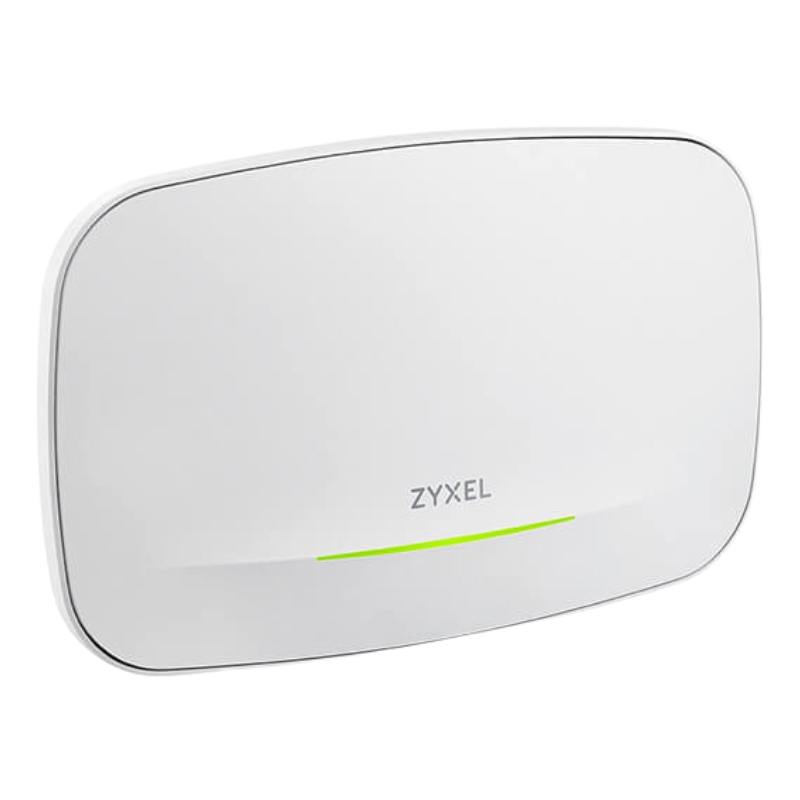
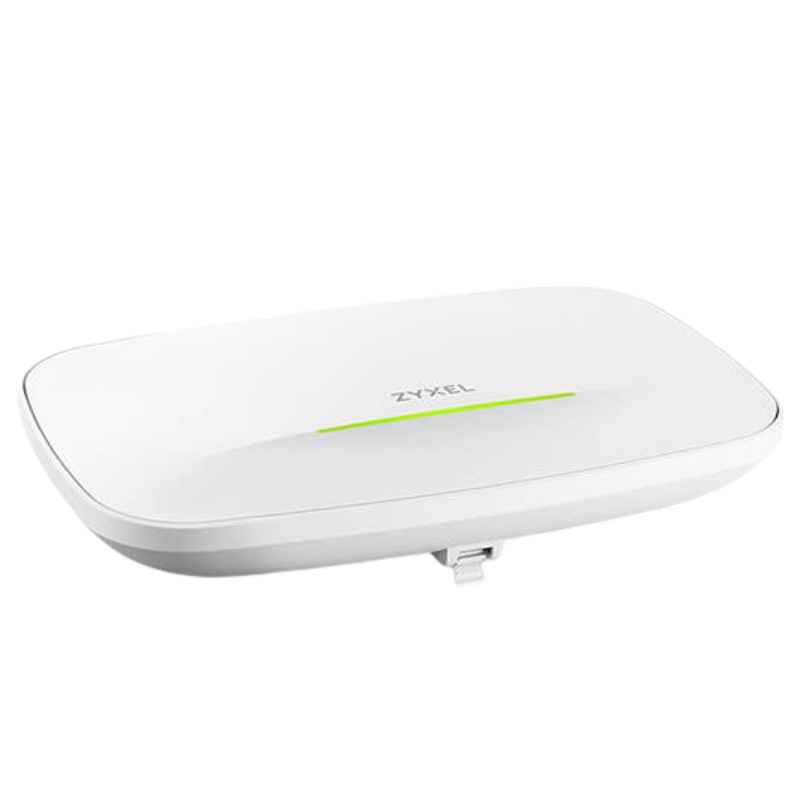
Zyxel WBE630S BE12300 6 Stream WiFi 7 Dual Radio 2 X 2.5GbE Ports NebulaFlex Pro Wireless Access Point. New Sealed with 1 Year Replacement Warranty
The Zyxel WBE630S belongs to the elite class of WiFi 7 (802.11be) access points engineered for ultra-high-density environments and future-ready enterprise networks. As a BE12300 6-stream dual-radio device, it leverages the full potential of the 6 GHz spectrum, 320 MHz channel bandwidth, and 4K QAM modulation. This model is strategically positioned within Zyxel's NebulaFlex Pro™ lineup, offering unparalleled flexibility between cloud-managed and on-premises control.
The Zyxel WBE630S BE12300 6 Stream WiFi 7 Dual Radio 2 x 2.5GbE Ports NebulaFlex Pro Wireless Access Point represents a high-efficiency enterprise wireless infrastructure component engineered for next-generation connectivity demands. Built around the IEEE 802.11be WiFi 7 standard, this access point delivers ultra-high throughput, deterministic latency control, and spectrum optimization for dense client environments. The internal architecture integrates advanced RF filtering, adaptive antenna technology, and multi-link operation capabilities to ensure consistent performance across both frequency bands. Designed for modern deployments requiring simultaneous device communication, the hardware platform combines optimized signal processing with enterprise-grade firmware to maintain reliable wireless sessions under heavy network loads.
The WBE630S dual radio system allows simultaneous operation across multiple spectrum ranges, providing dedicated transmission paths for different classes of wireless clients. This architecture reduces congestion by isolating high-bandwidth applications from legacy traffic. The 6-stream spatial configuration enhances throughput capacity while enabling multiple concurrent device communications. By leveraging spatial multiplexing and advanced modulation schemes, the device supports high data-rate transfers without compromising signal stability. This makes it suitable for environments requiring continuous bandwidth such as cloud applications, HD streaming, real-time collaboration platforms, and latency-sensitive enterprise services.
The six spatial streams increase theoretical bandwidth while improving spectral efficiency. Each stream operates as an independent transmission channel, enabling the access point to communicate with multiple endpoints simultaneously. This architecture enhances throughput in multi-user scenarios and reduces wait times for packet transmission. Combined with WiFi 7 modulation enhancements, the multi-stream design supports extremely high aggregate speeds, ensuring smooth connectivity for dozens of active devices within a single coverage cell.
With multi-user MIMO and orthogonal frequency division multiple access integration, the system dynamically allocates channel resources to connected clients. This reduces contention and optimizes airtime usage, allowing more devices to operate concurrently without performance degradation. The scheduling algorithm continuously monitors traffic patterns and adjusts allocation parameters to maintain consistent data delivery.
The WBE630S BE12300 classification reflects the combined maximum theoretical throughput across supported bands. This high aggregate bandwidth ensures that enterprise users benefit from uninterrupted high-speed connectivity even during peak network usage. The chipset supports wide channel bandwidths, high-order modulation, and advanced error correction technologies that maximize transmission efficiency. The result is a wireless platform capable of delivering fiber-like speeds to compatible client devices while maintaining backward compatibility with earlier WiFi generations.
Support for expanded channel widths enables the device to transmit larger amounts of data per cycle. Wider channels increase throughput potential and reduce transmission overhead. The access point intelligently selects channel widths based on environmental interference conditions, ensuring optimal balance between speed and stability. In low-interference environments, maximum channel width can be utilized for peak performance, while in crowded RF spaces narrower channels may be selected to preserve signal integrity.
High-order quadrature amplitude modulation increases the number of bits transmitted per symbol. This technology significantly enhances data throughput without requiring additional spectrum. The modulation engine dynamically adjusts modulation levels depending on signal quality, ensuring reliable transmission even when devices are located near the edge of coverage.
The presence of two 2.5GbE Ethernet ports ensures that the wired backhaul can match the high throughput delivered by the wireless interface. These multi-gigabit ports support high-capacity switching infrastructures and allow link aggregation for increased bandwidth or redundancy. By providing more than standard gigabit capacity, the wired interface eliminates bottlenecks that could otherwise limit wireless performance.
Link aggregation technology allows the two Ethernet ports to operate together as a single logical connection. This configuration doubles available throughput and provides failover protection in case one cable or switch port becomes unavailable. Network administrators can configure aggregation through compatible switching platforms to maximize reliability and performance.
The access point supports Power over Ethernet deployment, enabling a single cable to provide both electrical power and network connectivity. This simplifies installation, reduces cable clutter, and allows placement in optimal coverage locations such as ceilings or walls without requiring nearby electrical outlets.
The integrated NebulaFlex Pro management capability enables centralized configuration, monitoring, and analytics through a unified interface. Administrators can manage multiple access points across distributed locations using a single dashboard. The management system supports remote firmware updates, performance diagnostics, and traffic monitoring. This cloud-based architecture simplifies large-scale deployments and reduces operational overhead associated with manual configuration.
Configuration profiles can be applied remotely, allowing rapid deployment across multiple sites. Settings such as SSID parameters, security policies, and radio power levels can be adjusted centrally. This eliminates the need for on-site configuration and ensures consistent policy enforcement across all access points.
The security architecture integrates advanced encryption protocols, authentication mechanisms, and intrusion detection capabilities. Enterprise-grade encryption protects wireless transmissions from unauthorized interception. Authentication frameworks support secure access control, ensuring that only approved devices can connect to the network. Continuous monitoring identifies suspicious activity and alerts administrators to potential threats.
Support for modern authentication standards allows integration with directory services and identity management systems. Role-based access policies can be applied to different user groups, enabling granular control over network privileges. This ensures that employees, guests, and IoT devices each receive appropriate access levels.
The WBE630S implementation of WiFi 7 technology introduces significant performance enhancements compared to previous wireless standards. Multi-link operation enables simultaneous data transmission across different frequency bands, reducing latency and increasing throughput. Improved channel utilization algorithms ensure efficient spectrum usage, minimizing interference and maximizing reliability. These advancements make the access point suitable for bandwidth-intensive applications such as augmented reality, high-resolution streaming, and real-time data synchronization.
Multi-link capability allows devices to send and receive data across multiple channels at once. This parallel transmission reduces delays and improves responsiveness, especially for time-sensitive applications. The access point intelligently distributes traffic across links to maintain optimal performance.
Latency reduction technologies prioritize real-time data packets and minimize retransmissions. This ensures smooth performance for applications requiring immediate feedback, such as video conferencing, remote control systems, and interactive cloud services.
The hardware and firmware design support scalable deployment across growing network infrastructures. Multiple units can be deployed within the same environment without causing interference due to coordinated channel management and power adjustment features. As network demand increases, additional access points can be integrated seamlessly into the management system.
Automatic radio optimization adjusts channel selection and transmission power based on environmental conditions. This feature ensures consistent coverage while preventing overlapping interference between neighboring units. Continuous monitoring allows the system to adapt dynamically to changes in device density or signal obstacles.
Client distribution algorithms balance connections across available access points. This prevents individual units from becoming overloaded while others remain underutilized. Balanced distribution improves overall network performance and maintains stable connection speeds for all users.


 Contact Us
 Information
 Catalog
 Solid State Drives (SSD)
 Network Switches
 Hard Disk Drives
 HBA & Controllers
 PC & Servers
 PC & Server Memory
 CPU & Processors
 Network Routers
 Power Supplies
 Tape Drives & Libraries
 Network Devices
 Computer & Network Cables