
(7% discount is applied at checkout)
Cart is empty
Your go-to destination for cutting-edge server products
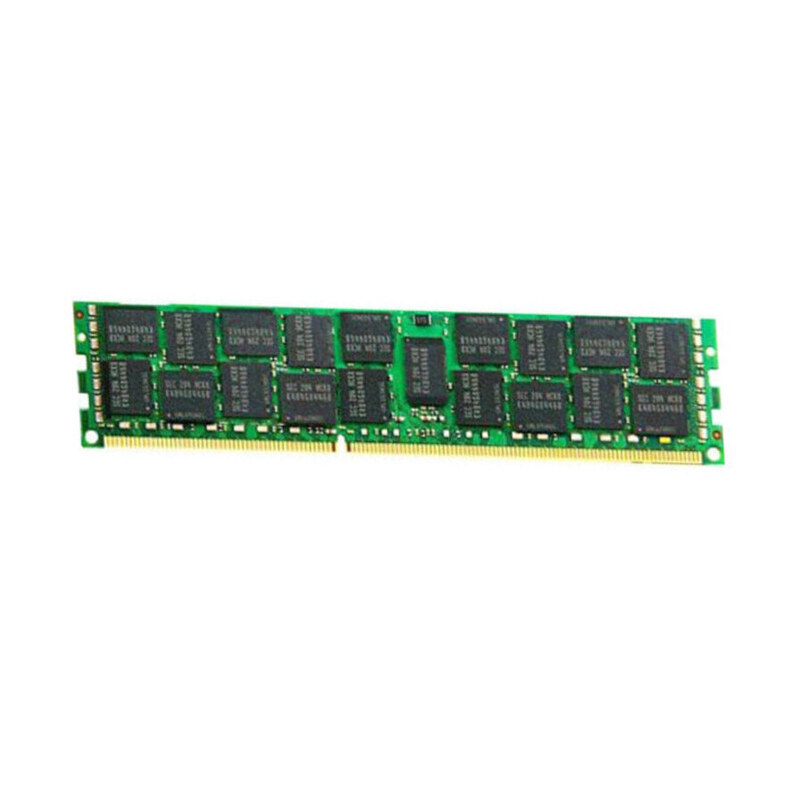
Supermicro MEM-DR416LD-ER26 16GB Pc4-21300r DDR4-2666MHz 2rx8 Ecc Registered RAM. New (System) Pull with 1 year replacement warranty - Micron Version
The Supermicro MEM-DR416LD-ER26 is a high-performance 16GB DDR4 SDRAM module designed for enterprise-grade servers and workstations. Built with ECC registered technology, it ensures stability, reliability, and seamless multitasking for demanding computing environments.
The Supermicro MEM-DR416LD-ER26 16GB PC4-21300R DDR4-2666MHz 2Rx8 ECC Registered RAM represents a high-performance memory solution engineered specifically for enterprise-grade servers and workstation environments. Designed with reliability, efficiency, and scalability in mind, this memory module delivers consistent performance under demanding workloads while ensuring data integrity through advanced error correction capabilities. Its architecture is optimized for compatibility with modern server platforms that require stable and efficient memory handling across virtualization, database management, cloud computing, and mission-critical applications.
DDR4 technology marked a significant advancement over previous memory generations by improving bandwidth, reducing power consumption, and increasing density. The 2666MHz frequency rating of this module enables faster data transfer rates, making it suitable for systems that process large volumes of data simultaneously. This higher frequency contributes to improved responsiveness in applications such as real-time analytics, virtualization clusters, and enterprise resource planning systems.
Operating at PC4-21300 speeds, this RAM module achieves a theoretical bandwidth of 21.3GB/s. This ensures that processors receive data quickly, reducing bottlenecks and enabling smoother multitasking across multiple virtual machines or applications. The increased efficiency also benefits high-performance computing environments where latency and throughput are critical performance factors.
One of the defining features of the Supermicro MEM-DR416LD-ER26 is its ECC Registered design. ECC, or Error-Correcting Code, memory automatically detects and corrects single-bit memory errors. This capability is essential in environments where even minor data corruption can lead to system crashes, inaccurate computations, or loss of critical information.
Registered memory, also known as buffered memory, enhances stability by placing a register between the DRAM modules and the system's memory controller. This reduces electrical load and allows systems to support more memory modules without compromising reliability. As a result, servers can scale to higher capacities while maintaining consistent performance and stability.
ECC memory plays a crucial role in industries such as finance, healthcare, and scientific research, where data accuracy is paramount. By automatically correcting errors, ECC memory reduces the risk of data corruption and system downtime. This leads to improved system uptime, increased trust in computational results, and reduced maintenance costs over time.
Registered memory allows systems to operate with a greater number of DIMMs per channel. This is particularly important in server environments where maximizing memory capacity is essential for virtualization and large-scale data processing. The buffered architecture ensures signal integrity, which becomes increasingly important as memory capacity grows.
The 2Rx8 configuration refers to the module being dual-rank with x8 chip organization. Dual-rank modules effectively provide two sets of memory banks that the memory controller can access, improving performance through interleaving. This allows for more efficient data handling and better utilization of memory bandwidth.
The x8 organization indicates that each chip processes 8 bits of data at a time. This configuration strikes a balance between performance and reliability, making it suitable for a wide range of server applications. The combination of dual-rank design and x8 architecture enhances throughput while maintaining compatibility with enterprise systems.
Dual-rank memory modules provide increased performance by allowing the memory controller to switch between ranks, reducing idle time and improving data throughput. This leads to better overall system performance, especially in multitasking and multi-threaded environments where efficient memory access is critical.
The Supermicro MEM-DR416LD-ER26 is designed to integrate seamlessly with a wide range of server motherboards and systems. Its adherence to industry standards ensures compatibility with Intel and AMD server platforms that support DDR4 Registered ECC memory. This makes it an ideal choice for system builders and IT professionals seeking reliable and scalable memory solutions.
Compatibility is further enhanced by the module’s standardized voltage and timing specifications, which align with modern server requirements. This reduces the need for manual configuration and ensures stable operation across different hardware environments.
In modern data centers, memory plays a critical role in enabling virtualization, containerization, and cloud-based services. This RAM module supports these architectures by providing the necessary capacity and performance to handle multiple workloads simultaneously. Its reliability ensures consistent performance in environments that operate around the clock.
DDR4 memory is known for its improved power efficiency compared to previous generations. Operating at a lower voltage, typically 1.2V, the Supermicro MEM-DR416LD-ER26 reduces overall power consumption, contributing to energy savings in large-scale deployments. This is particularly beneficial in data centers where power efficiency directly impacts operational costs.
Thermal performance is also optimized through advanced design and manufacturing processes. Efficient heat dissipation ensures that the module operates within safe temperature ranges, even under heavy workloads. This enhances reliability and extends the lifespan of the memory.
Lower power consumption translates to reduced cooling requirements and lower energy bills. In large data centers, even small improvements in efficiency can result in significant cost savings over time. This makes DDR4 memory an attractive choice for organizations aiming to optimize their infrastructure.
High-performance computing applications require fast and reliable memory to handle complex calculations and large datasets. The 2666MHz speed and dual-rank architecture of this module provide the necessary performance to meet these demands, making it suitable for scientific research, engineering simulations, and data analysis.
Extensive testing ensures that the module meets performance and reliability benchmarks. This includes testing under high loads, varying temperatures, and different system configurations. Such rigorous validation ensures that the memory can handle demanding workloads without issues.
Installing the Supermicro MEM-DR416LD-ER26 is straightforward, thanks to its standardized form factor and compatibility with server motherboards. Proper installation involves ensuring that the module is securely seated in the DIMM slot and that the system recognizes it during boot.
Configuration is typically automatic, as modern server systems detect and configure memory settings based on the module’s specifications. However, advanced users can fine-tune settings in the BIOS to optimize performance for specific workloads.
Following best practices during installation helps ensure optimal performance and reliability. This includes handling the module with care to avoid static discharge, installing it in the correct slot configuration, and verifying compatibility with the system.


 Contact Us
 Information
 Catalog
 Solid State Drives (SSD)
 Network Switches
 Hard Disk Drives
 HBA & Controllers
 PC & Servers
 PC & Server Memory
 CPU & Processors
 Network Routers
 Power Supplies
 Tape Drives & Libraries
 Network Devices
 Computer & Network Cables