(7% discount is applied at checkout)
Cart is empty
Your go-to destination for cutting-edge server products
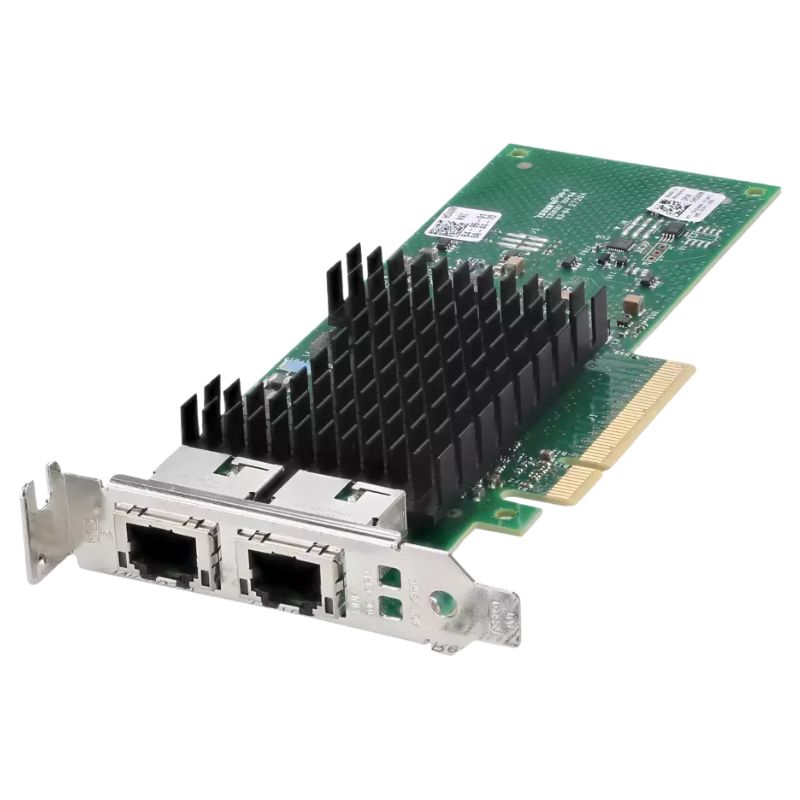


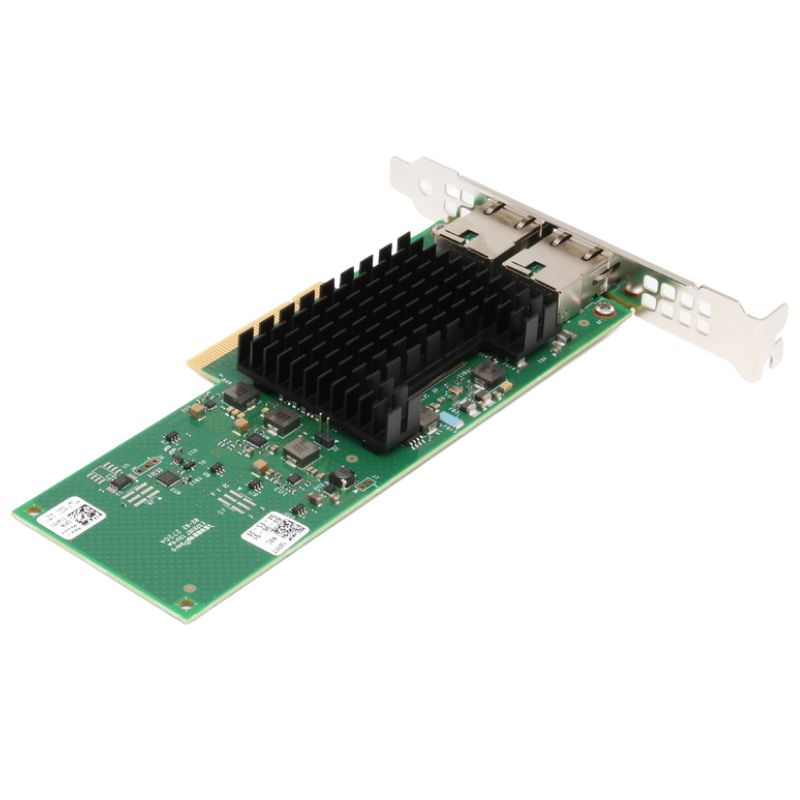
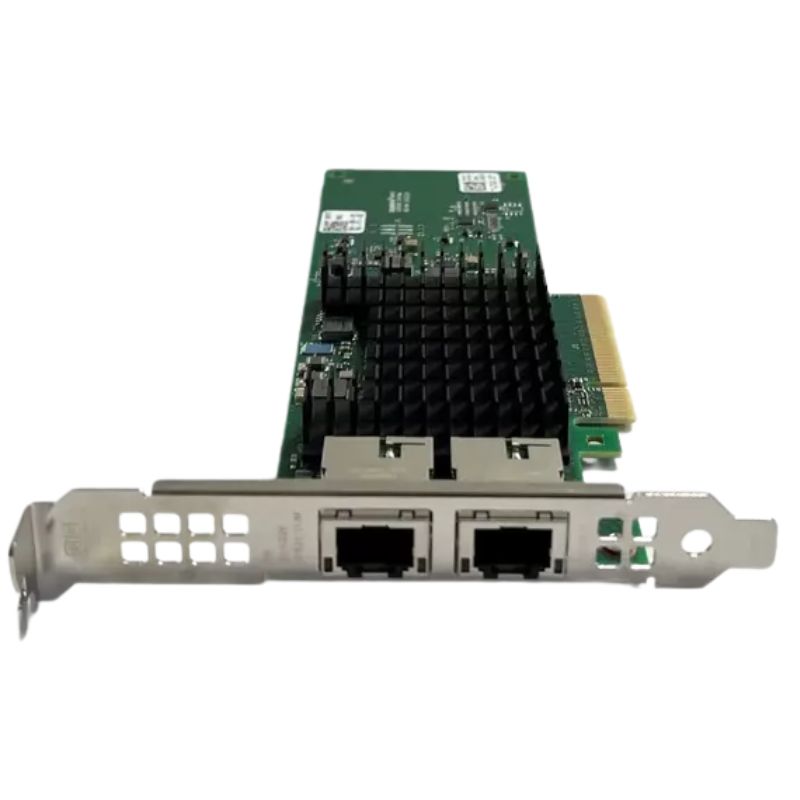
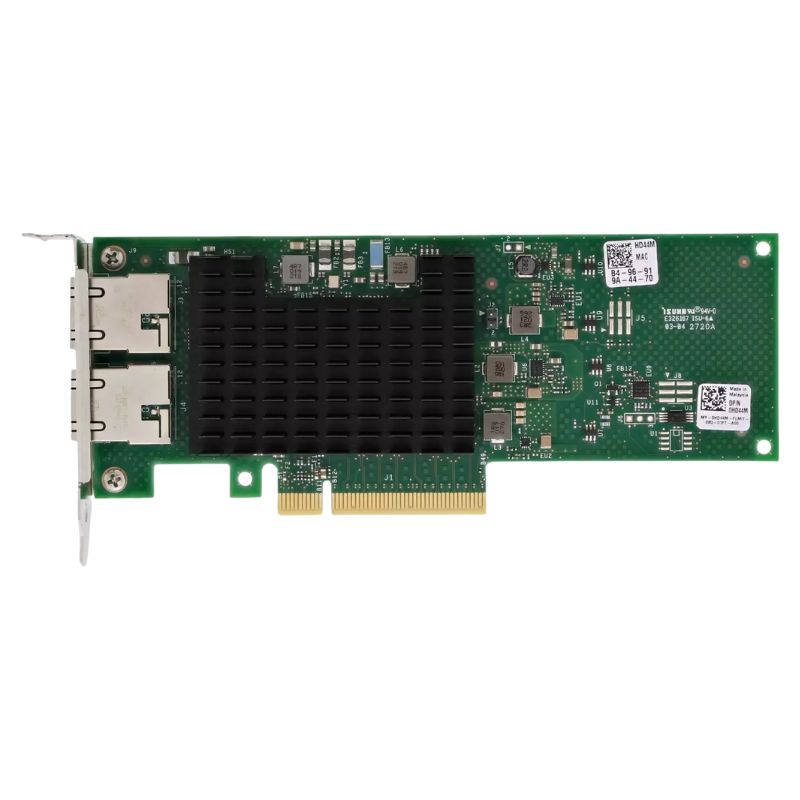
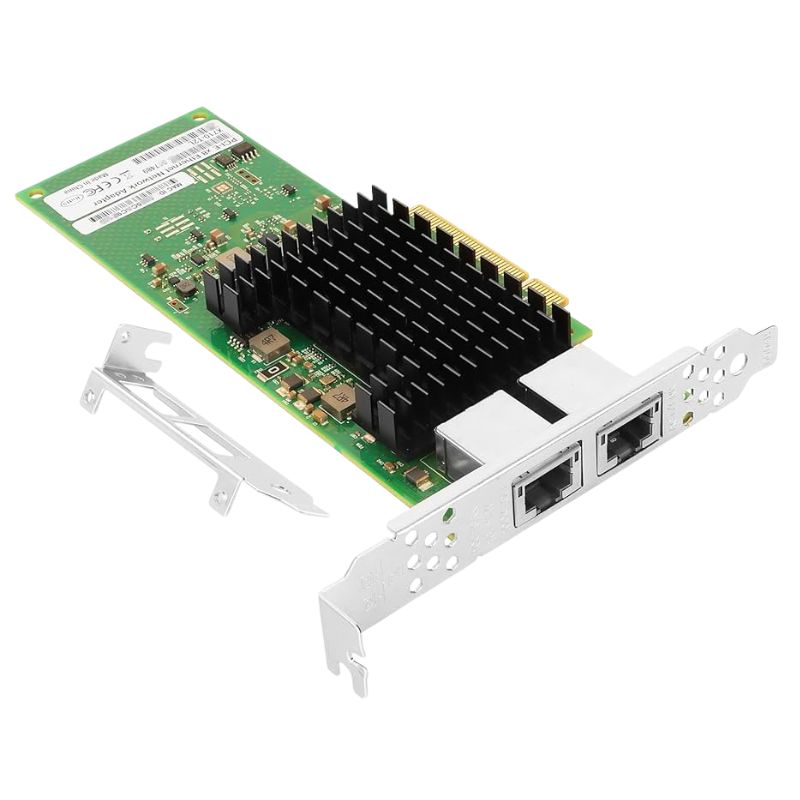
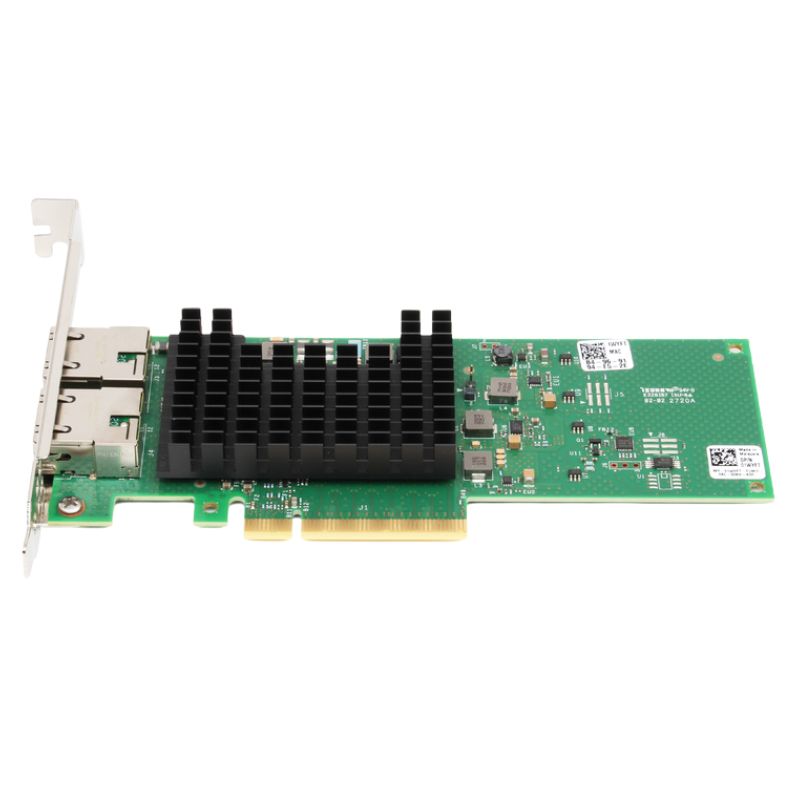
Dell 1WYFT Intel X710-T2L Dual Port 10GBE Base-T PCI-E Adapter. New Sealed in Box (NIB) with 1 Year Warranty - Intel Version
| SKU/MPN | Warranty | Price | Condition | You save |
|---|---|---|---|---|
| 1WYFT | 1 Year Warranty | $228.00 | Excellent Refurbished | You save: $79.80 (26%) |
| 1WYFT | 1 Year Warranty | $305.00 | New Sealed in Box (NIB) | You save: $106.75 (26%) |
The DELL 1WYFT Intel X710-T2L is a high-performance dual-port 10GbE network adapter designed to deliver superior data transfer capabilities. This PCIe adapter accommodates a range of Ethernet speeds, making it a perfect solution for diverse networking environments, from enterprise settings to small businesses.
The category of high-performance PCI Express network adapters designed for enterprise environments represents one of the most critical components in modern data communication infrastructure. Within this category, the Dell 1WYFT Intel X710-T2L Dual Port 10GbE Base-T PCIe Adapter with Full-Height Bracket occupies a significant position due to its ability to deliver reliable, high-throughput connectivity across demanding server and workstation deployments. This class of network interface cards is engineered to address the increasing need for scalable bandwidth, low latency communication, and efficient traffic handling in environments where traditional gigabit networking is no longer sufficient.
As data consumption continues to grow across virtualization platforms, cloud computing architectures, and distributed storage systems, the demand for dual-port 10 Gigabit Ethernet solutions has expanded rapidly. This category includes adapters designed with Intel’s X710 controller architecture, which is widely recognized for its robustness, offloading capabilities, and compatibility with enterprise-grade operating systems. These adapters are typically integrated into rack-mounted servers, blade systems, and high-performance computing nodes where consistent and predictable network throughput is essential for operational stability.
PCI Express-based network adapters form the backbone of internal system-to-network communication in enterprise servers. The Dell 1WYFT Intel X710-T2L adapter category leverages the PCIe interface to establish a high-speed data path between the system motherboard and the external network infrastructure. This ensures that network traffic is not bottlenecked by legacy interfaces or slower onboard controllers. The PCIe architecture also allows for scalable lane allocation, ensuring that bandwidth can be efficiently distributed across multiple communication channels.
Within this category, dual-port configurations offer a substantial advantage by enabling simultaneous connections to separate network switches or redundant pathways. This improves both load balancing and failover capabilities, which are essential for mission-critical applications. In environments where downtime is unacceptable, such as financial services, healthcare systems, and cloud hosting platforms, this redundancy ensures continuous data flow even in the event of partial network failure.
At the core of this category lies the Intel X710 controller architecture, which is engineered to handle high-throughput networking tasks with minimal CPU intervention. This architecture incorporates advanced offloading technologies that shift processing tasks such as checksum calculations, segmentation, and virtualization packet handling away from the host CPU. As a result, system resources are preserved for application-level workloads, improving overall efficiency and responsiveness.
The X710 chipset is designed to support multiple traffic classes and virtualization-aware networking features. This makes it particularly suitable for environments where multiple virtual machines or containers share the same physical hardware. The ability to intelligently distribute network workloads ensures that no single process monopolizes bandwidth or processing resources, thereby maintaining system equilibrium under heavy load conditions.
Dual-port network adapters within this category introduce a significant improvement in network flexibility and redundancy. Each port operates independently, allowing administrators to configure them for separate network segments, aggregated links, or failover configurations. This architecture enhances data distribution efficiency and ensures that network traffic can be dynamically rerouted based on system demand or link status.
In high-density computing environments, dual-port functionality reduces the need for additional hardware while increasing total available bandwidth. This contributes to more efficient server design and improved rack space utilization. It also simplifies network topology by reducing the number of individual adapters required to achieve high availability configurations.
The 10 Gigabit Ethernet Base-T standard represents a major advancement in copper-based networking technology. Unlike fiber-based solutions, Base-T uses traditional RJ45 connectors, making it compatible with existing Ethernet cabling infrastructure. This significantly reduces deployment costs and complexity, especially in environments where structured cabling systems are already in place.
The Dell 1WYFT Intel X710-T2L adapter category leverages this standard to deliver high-speed connectivity over twisted-pair copper cabling. This allows organizations to upgrade network performance without completely overhauling their physical infrastructure. The ability to maintain compatibility with Cat6a or higher cabling ensures that deployment can be executed efficiently while still achieving 10GbE performance targets.
Maintaining signal integrity at 10GbE speeds over copper cabling requires sophisticated encoding and error correction techniques. Within this category, network adapters utilize advanced modulation and noise reduction algorithms to ensure consistent performance even in electrically noisy environments. This is particularly important in data centers where dense cabling and high electromagnetic interference are common.
Bandwidth optimization is further enhanced through intelligent traffic shaping and queue management. These features allow the adapter to prioritize critical network packets, ensuring that latency-sensitive applications such as real-time analytics, voice communication, and virtual desktop infrastructure maintain optimal performance levels.
The Dell 1WYFT Intel X710-T2L dual-port adapter category is widely deployed in modern data centers where high-throughput and low-latency networking are essential. In cloud infrastructure environments, these adapters facilitate rapid data exchange between compute nodes, storage arrays, and virtualization clusters. Their ability to handle sustained high-bandwidth traffic makes them suitable for multi-tenant cloud platforms and large-scale SaaS deployments.
In distributed storage systems, these adapters play a critical role in ensuring that data replication and synchronization processes occur efficiently across multiple nodes. This helps maintain data consistency and system resilience even during peak usage periods or partial system failures.
Virtualized environments benefit significantly from the advanced offloading capabilities of this category of network adapters. By reducing CPU overhead associated with network processing, virtual machines can achieve higher density per physical host. This leads to improved resource utilization and reduced operational costs.
Software-defined networking frameworks also leverage these adapters to implement dynamic traffic routing and network segmentation. The ability to abstract physical network interfaces into programmable logical units allows administrators to optimize traffic flow based on application requirements and security policies.
Compatibility with major enterprise operating systems is a key factor in the adoption of this category of network adapters. The Dell 1WYFT Intel X710-T2L architecture supports a wide range of drivers designed for Linux distributions, Windows Server environments, and virtualization hypervisors. These drivers are optimized to ensure stable performance and minimal latency across different system configurations.
Driver-level optimizations include interrupt moderation, receive-side scaling, and multi-queue processing. These features allow the adapter to efficiently distribute network processing tasks across multiple CPU cores, enhancing parallel processing capabilities and reducing bottlenecks in high-traffic environments.
Network adapters operating at 10GbE speeds generate a measurable amount of heat due to continuous high-speed data processing. The Dell 1WYFT Intel X710-T2L category incorporates efficient thermal design principles that allow for effective heat dissipation even in densely populated server chassis. Full-height bracket designs contribute to improved airflow alignment, ensuring that heat is directed away from critical components.
In rack-mounted systems, thermal management is a critical factor in maintaining long-term reliability. Proper airflow design ensures that network adapters do not become thermal bottlenecks that could compromise system stability or lead to performance throttling under sustained workloads.
Energy efficiency is another important consideration in enterprise networking hardware. The X710 architecture is designed to minimize power consumption while maintaining high throughput levels. This contributes to reduced operational costs in large-scale deployments where hundreds or thousands of network adapters may be in use simultaneously.
Quality of Service mechanisms integrated into this category of network adapters allow for intelligent traffic prioritization. This ensures that critical workloads receive appropriate bandwidth allocation even during periods of network congestion. Applications such as database replication, live migration of virtual machines, and real-time analytics benefit significantly from these optimizations.
Traffic management capabilities also enable administrators to configure bandwidth allocation policies that align with organizational priorities. This ensures that mission-critical applications maintain consistent performance regardless of overall network load.
By reducing reliance on CPU-based packet processing, these adapters ensure that data transmission occurs with minimal delay, improving responsiveness in latency-sensitive applications such as financial trading systems, online gaming infrastructure, and real-time communication platforms.
Security is an integral component of modern network adapter design. Within this category, hardware-level features contribute to the protection of data in transit by ensuring that packet processing is handled in a controlled and verifiable manner. This reduces the risk of packet tampering or unauthorized interception within internal network pathways.
Additionally, virtualization-aware security features enable isolation between different virtual machines sharing the same physical adapter. This ensures that network traffic remains segregated and secure across multi-tenant environments.
Firmware integrity mechanisms ensure that only authorized firmware versions are executed on the adapter hardware. This prevents unauthorized modifications that could compromise system security or introduce vulnerabilities into the network infrastructure.
The scalability of this category of network adapters makes them suitable for evolving enterprise environments. As organizations expand their digital infrastructure, the ability to integrate additional bandwidth capacity without redesigning the entire network architecture becomes essential. Dual-port 10GbE adapters provide a foundation for such scalability, allowing incremental expansion without significant infrastructure overhaul.
This adaptability ensures long-term value and compatibility with future networking standards and evolving enterprise requirements. The modular nature of PCIe-based networking hardware allows for straightforward upgrades and replacements, further enhancing system longevity.
As networking technologies continue to evolve, this category of adapters remains relevant due to its compatibility with emerging software-defined and cloud-native architectures. Their ability to interface seamlessly with virtualized networking stacks ensures continued applicability in future IT environments where automation and orchestration play increasingly dominant roles.


 Contact Us
 Information
 Catalog
 Solid State Drives (SSD)
 Network Switches
 Hard Disk Drives
 HBA & Controllers
 PC & Servers
 PC & Server Memory
 CPU & Processors
 Network Routers
 Power Supplies
 Tape Drives & Libraries
 Network Devices
 Computer & Network Cables