(7% discount is applied at checkout)
Cart is empty
Your go-to destination for cutting-edge server products
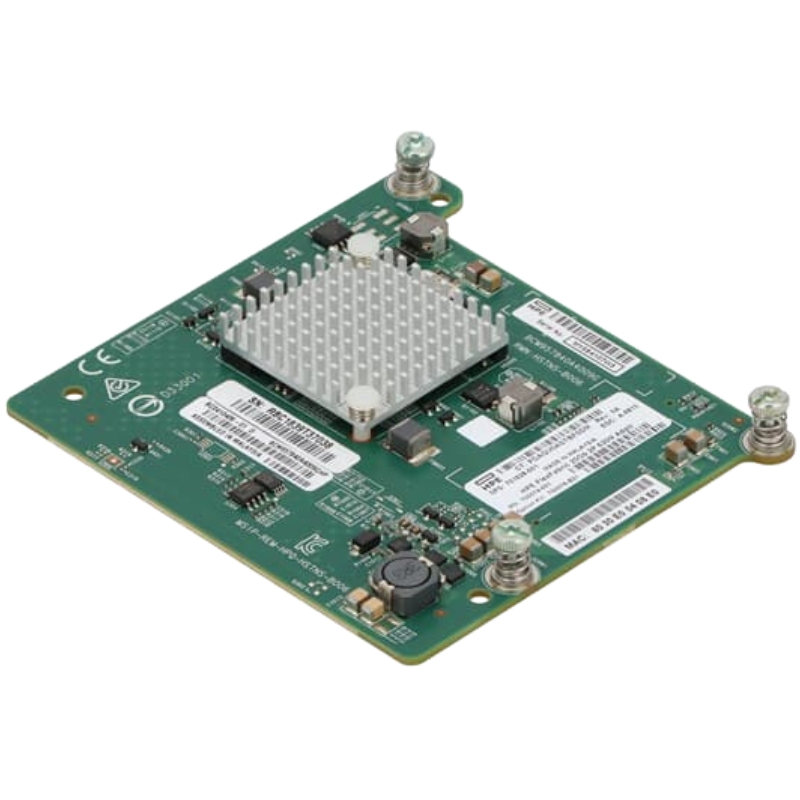


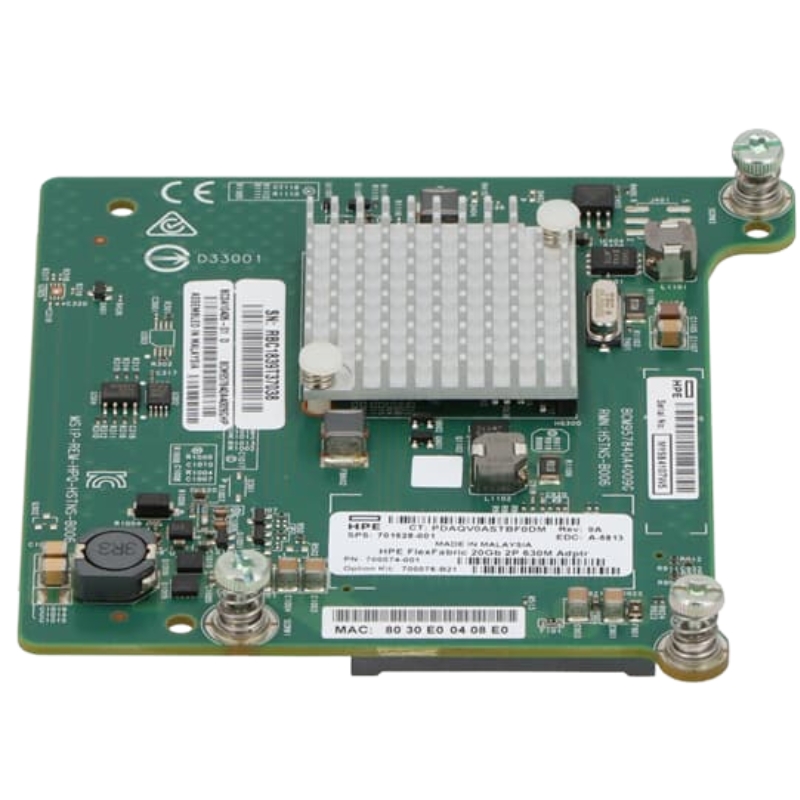
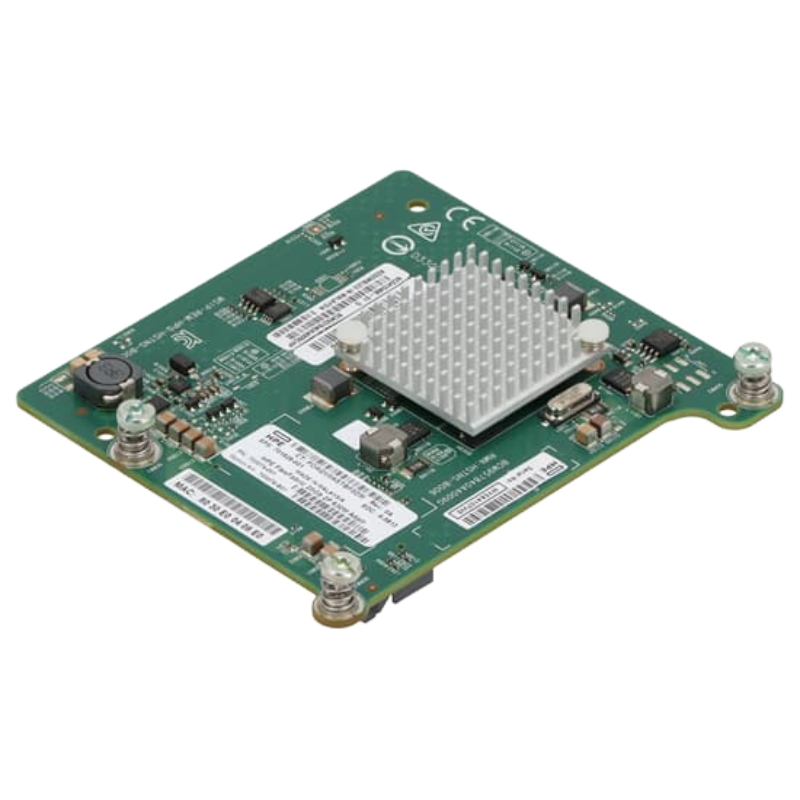
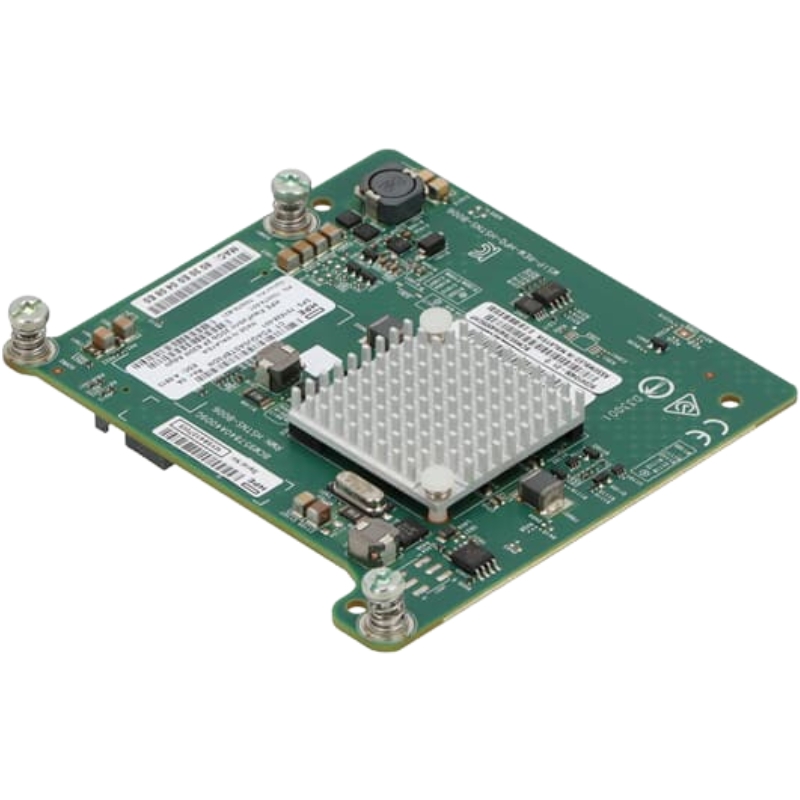
HPE 701530-001 Flexfabric 10GB Ethernet PCI Express 2.0X8 Network Adapter for ProLiant Gen8 Server. New Sealed with 1-Year Replacement Warranty
| SKU/MPN | Warranty | Price | Condition | You save |
|---|---|---|---|---|
| 701530-001 | 1 Year Warranty | $75.00 | Factory-Sealed New in Original Box (FSB) | You save: $26.25 (26%) |
| 701530-001 | 1 Year Warranty | $57.00 | New Sealed in Box (NIB) | You save: $19.95 (26%) |
This enterprise-grade networking solution is designed to deliver ultra-fast connectivity, optimized virtualization support, and reliable data transfer performance for modern data center environments. Built for scalability and stability, it enhances server communication efficiency across demanding workloads.
HPE ProLiant BL420c Gen8, BL460c Gen8, BL465c Gen8, BL660c Gen8, BL660c Gen8 Performance, WS460c Gen9 Graphics
The HPE 701530-001 FlexFabric 10Gb Ethernet PCI Express 2.0 x8 Network Adapter is a high-performance server networking solution designed specifically for enterprise-grade Hewlett Packard Enterprise ProLiant Gen8 servers. This adapter belongs to the advanced FlexFabric family, which integrates high-speed Ethernet connectivity with enhanced virtualization capabilities, optimized data throughput, and reduced latency for modern data center workloads. Built to support bandwidth-intensive applications, cloud computing infrastructures, and large-scale virtualization environments, this network adapter is engineered for organizations requiring stable, scalable, and efficient network performance across mission-critical systems.
As part of HPE’s FlexFabric architecture, the adapter provides convergence-ready networking features that allow multiple traffic types such as LAN and storage data to coexist over a unified fabric. This significantly reduces infrastructure complexity while improving utilization efficiency. The PCI Express 2.0 x8 interface ensures a robust connection between the server motherboard and the adapter, enabling consistent 10 Gigabit Ethernet speeds that are essential for high-demand enterprise workloads.
The architecture of the HPE 701530-001 adapter is designed to maximize throughput while minimizing CPU overhead. It incorporates advanced offloading capabilities that shift processing tasks such as checksum calculation, TCP segmentation, and interrupt moderation from the server CPU to the network adapter itself. This hardware-level optimization allows servers to allocate more processing power to application workloads rather than network management tasks.
The PCI Express 2.0 x8 lane configuration ensures a wide data path between the adapter and the system bus. This architecture supports high packet-per-second processing rates, which is crucial for virtualization-heavy environments and high-frequency transaction systems. The adapter’s internal controller is optimized for low-latency packet forwarding and supports multiple queues for efficient traffic segmentation.
Additionally, the FlexFabric design integrates support for converged network protocols, enabling unified communication across storage and data networks. This reduces the need for separate network interface cards, lowering hardware costs and simplifying infrastructure design.
The HPE 701530-001 FlexFabric adapter is specifically engineered for compatibility with HPE ProLiant Gen8 servers, ensuring seamless integration with the server’s firmware, BIOS, and system management tools. This compatibility ensures stable performance, optimized driver support, and full utilization of hardware acceleration features.
ProLiant Gen8 servers are widely used in enterprise environments for virtualization, database hosting, and cloud applications. The adapter enhances these systems by delivering consistent 10GbE connectivity, allowing faster data exchange between server nodes, storage arrays, and external networks. This makes it an essential component for businesses scaling their IT infrastructure or upgrading legacy 1GbE environments.
The HPE FlexFabric 10Gb Ethernet adapter delivers significantly higher bandwidth compared to traditional Gigabit Ethernet adapters. With 10Gbps throughput capacity, it supports data-intensive applications such as large-scale database transactions, cloud storage replication, and high-performance computing clusters.
In virtualized environments, the adapter ensures that multiple virtual machines (VMs) can communicate simultaneously without network congestion. Its multi-queue architecture allows traffic segmentation, ensuring fair distribution of network resources across workloads. This improves overall system responsiveness and reduces bottlenecks in data-heavy operations.
Latency reduction is another critical performance advantage. The adapter minimizes packet processing delays through hardware acceleration, making it ideal for applications that require real-time data exchange such as financial trading systems, telecommunications infrastructure, and distributed cloud services.
FlexFabric technology is a cornerstone of HPE’s converged networking strategy. It enables the consolidation of multiple network functions into a single adapter, including LAN and storage traffic. This convergence reduces the need for separate network interface cards, lowering operational costs and simplifying infrastructure management.
By using FlexFabric, enterprises can streamline their data center architecture, reducing cable complexity and switch port usage. It also improves scalability, allowing IT administrators to expand network capacity without significant hardware redesign. The technology is particularly beneficial in environments utilizing virtualization platforms and cloud orchestration systems.
The HPE 701530-001 adapter is optimized for virtualized environments where multiple virtual machines operate on a single physical server. It supports advanced virtualization features such as virtual NIC partitioning, SR-IOV (Single Root I/O Virtualization), and adaptive load balancing.
These capabilities allow each virtual machine to have dedicated or shared network resources while maintaining performance isolation. This ensures that high-demand workloads do not negatively impact other virtual machines running on the same host system.
In data center environments, the adapter contributes to improved resource utilization, reduced hardware redundancy, and enhanced network efficiency. It is commonly deployed in private cloud infrastructures, enterprise virtualization clusters, and hybrid cloud environments.
The HPE 701530-001 FlexFabric adapter is widely used across various enterprise scenarios where high-speed and reliable network connectivity is essential. Common use cases include cloud data centers, virtualization clusters, database servers, and high-performance computing environments.
In cloud infrastructures, the adapter supports dynamic workload distribution and rapid data synchronization between nodes. In virtualization environments, it ensures smooth VM migration and consistent network performance during workload balancing operations.
For enterprise storage systems, the adapter enables fast communication between storage arrays and application servers, improving data access speeds and reducing latency in transactional systems.
Reliability is a key focus of the HPE FlexFabric adapter design. It supports link aggregation, failover mechanisms, and redundant path configurations to ensure uninterrupted network connectivity. In case of a link failure, traffic is automatically rerouted to maintain service continuity.
Security features include support for network segmentation, VLAN isolation, and secure packet processing. These capabilities help protect sensitive data in multi-tenant environments and reduce the risk of unauthorized access.
Compared to traditional 1GbE network interface cards, the HPE 701530-001 offers a substantial performance upgrade. While standard NICs may be sufficient for basic networking tasks, they are not optimized for modern enterprise workloads that require high throughput and low latency.
The 10GbE capability of the FlexFabric adapter allows for significantly faster data transfer rates, making it ideal for virtualization, cloud computing, and large-scale storage systems. Additionally, its hardware offloading features reduce CPU overhead, which is not typically available in standard NICs.


 Contact Us
 Information
 Catalog
 Solid State Drives (SSD)
 Network Switches
 Hard Disk Drives
 HBA & Controllers
 PC & Servers
 PC & Server Memory
 CPU & Processors
 Network Routers
 Power Supplies
 Tape Drives & Libraries
 Network Devices
 Computer & Network Cables