(7% discount is applied at checkout)
Cart is empty
Your go-to destination for cutting-edge server products
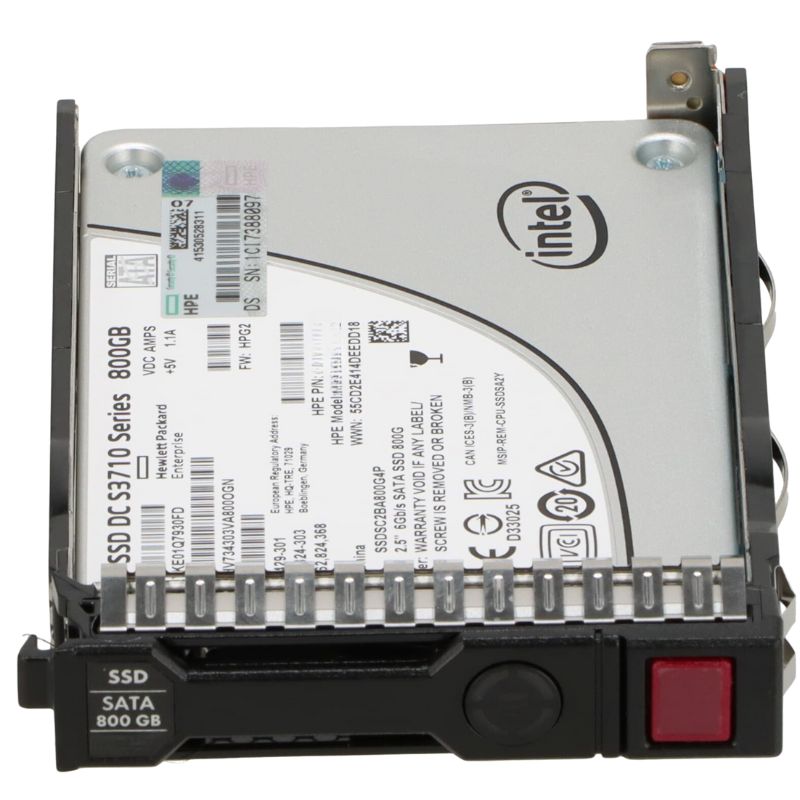


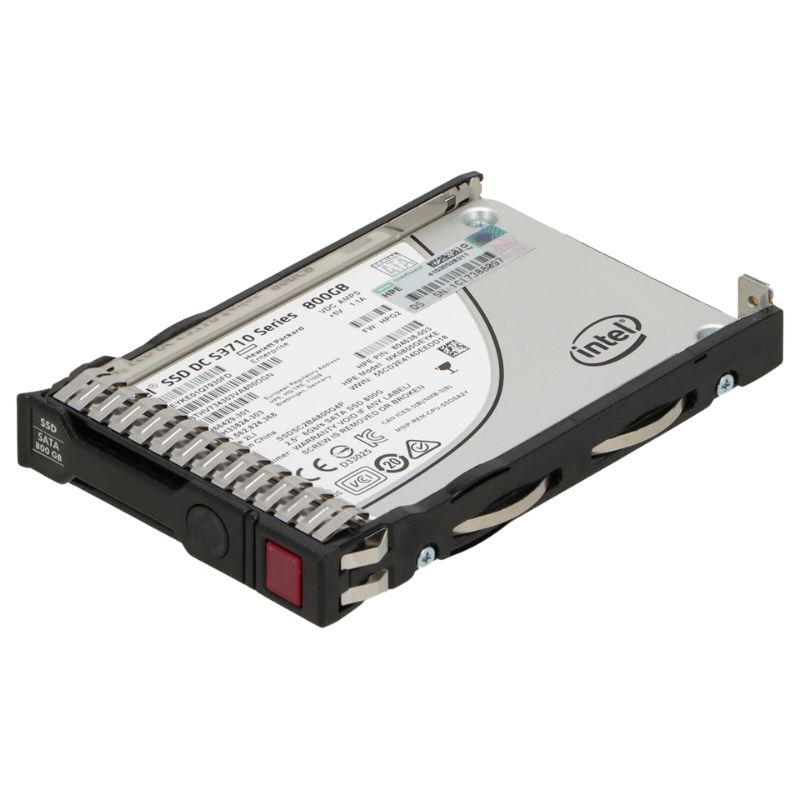
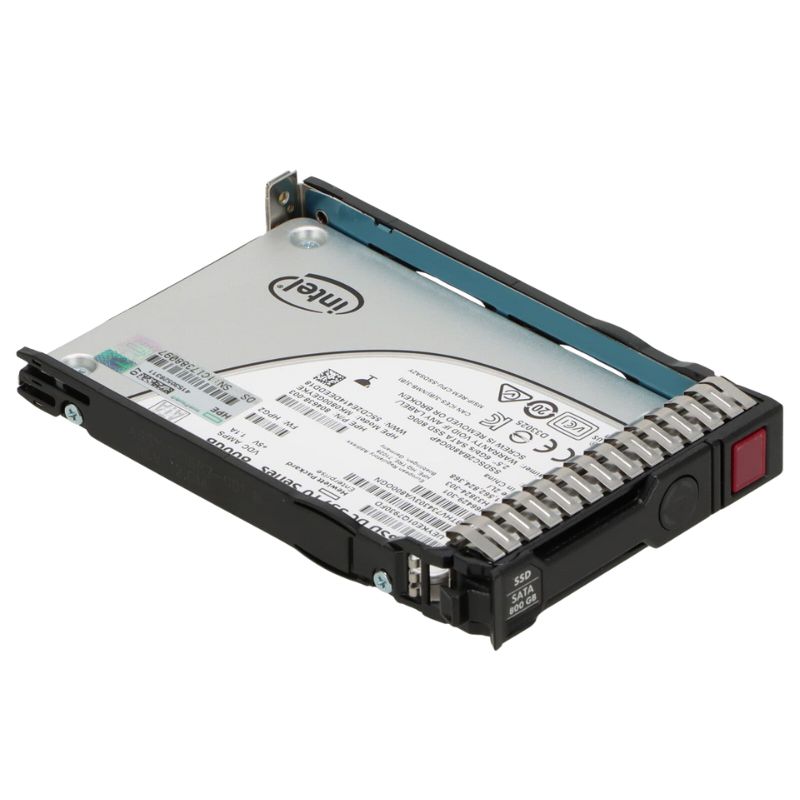
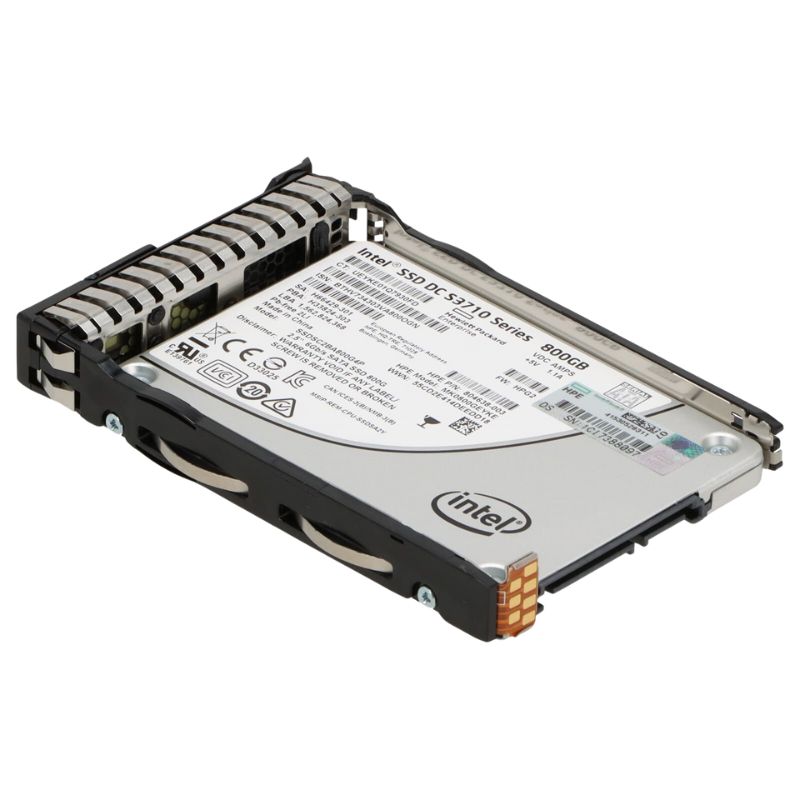
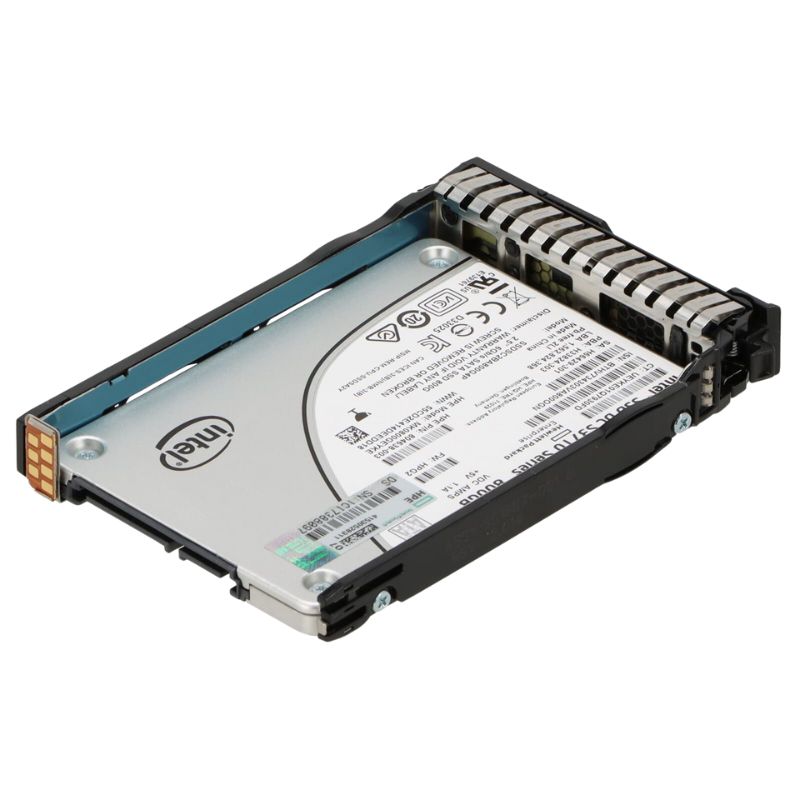
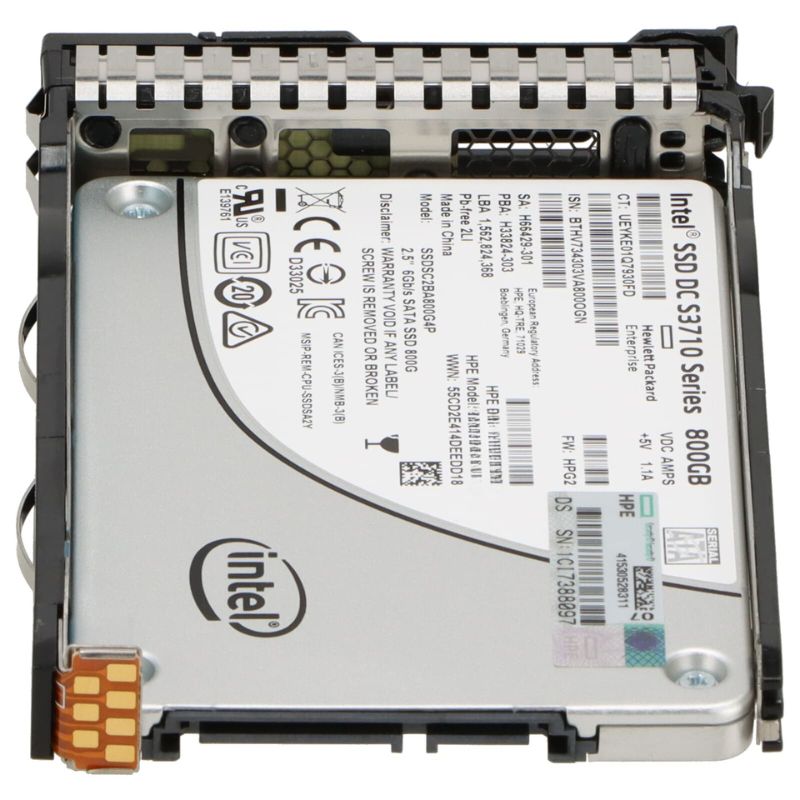
HPE 804612-003 800GB SATA-6GBPS SFF SC Mixed-Use PLP Hot-Swap Solid State Drive. Factory-Sealed New in Original Box (FSB) with 3 Years Warranty
The HPE 804612-003 800GB SATA-6GBPS SFF SC Mixed-Use PLP Hot-Swap G8 G9 Solid State Drive represents a purpose-built storage solution engineered for mixed-workload server environments where balance between capacity, endurance, and consistent latency is paramount. This category description explores the technical profile, real-world applications, integration considerations, and procurement guidance for the HPE 804612-003 and the subcategory of Mixed-Use SATA SFF SSDs with power-loss protection (PLP) designed for HPE ProLiant Gen8 and Gen9 platforms. Emphasizing the 800GB capacity and SATA-6Gbps interface, the drive sits at the intersection of cost-efficiency and enterprise reliability, offering IT teams a predictable performance envelope for virtualization, database logging, tiered storage, and read/write blended services.
This drive conforms to the small form factor (SFF) 2.5-inch physical profile and uses the SATA-6Gbps (SATA III) interface, which remains a widely supported and cost-effective protocol for boot, caching and mixed-use storage tiers in HPE server families. The HPE 804612-003 implements single connector compatibility for hot-swap bays and backplanes commonly found in G8 and G9 chassis, enabling non-disruptive replacement and serviceability. Power-loss protection circuitry is integrated to protect in-flight data on volatile caches during unexpected power events, preserving filesystem integrity and reducing the risk of write amplification anomalies that could otherwise affect endurance and data consistency.
Engineered for HPE ProLiant blade and rack configurations, the SFF form factor allows dense drive population without sacrificing airflow or thermal management. Compatibility is optimized for HPE Gen8 and Gen9 architectures, and while the drive will function in a broader range of systems with standard SATA backplanes, the tight integration with HPE firmware and management tools ensures optimal monitoring, SMART telemetry, and predictive failure analytics when deployed in official HPE hardware. The hot-swap capability supports rapid field service replacement, helping minimize downtime during maintenance windows or in response to a drive failure.
Designed as a Mixed-Use SSD, the HPE 804612-003 targets environments with balanced read/write ratios where consistency and endurance matter more than raw peak IOPS. Mixed-use drives are commonly specified for database transaction logs, virtual desktop infrastructure (VDI) boot storms, application servers with steady read-write cycles, and caching layers that absorb writes and accelerate reads. The SATA-6Gbps interface means the drive is not aimed at the ultra-high IOPS tier occupied by NVMe solutions; rather it delivers deterministic throughput and lower cost-per-gigabyte for mid-tier performance requirements. For administrators, the key benefit is predictable behavior under mixed I/O patterns and the ability to scale capacity across a large number of drives to increase aggregate throughput without a proportionate rise in cost.
While exact published IOPS and latency figures vary by firmware and test methodology, mixed-use SATA SSDs like the HPE 804612-003 emphasize sustained throughput at moderate IOPS levels and consistent low-latency access compared with traditional spinning media. The value proposition for latency-sensitive applications such as boot volumes, hypervisor swap space, caching volumes, and transactional front-end storage is improved application responsiveness even under heavy mixed read/write patterns. System architects should account for the SATA bus constraints when sizing arrays and consider RAID levels that preserve write performance while protecting against component failure.
Endurance is a paramount factor for mixed-use drives. The HPE 804612-003 implements NAND and controller firmware tuned to provide reliable retention over the rated drive life and delivers a write endurance that balances usable capacity and cost. Power-loss protection (PLP) is a critical feature in enterprise environments; PLP reduces the risk of metadata corruption or incomplete write transactions by preserving committed data in the event of sudden power loss. For storage administrators, PLP-equipped drives reduce the need for emergency write recovery procedures and lessen the potential for costly downtime or data inconsistency. Reliability is further supported by enterprise-grade error correction, wear-leveling mechanisms, and SMART reporting tailored for HPE management software.
The HPE 804612-003 800GB SATA Mixed-Use SSD excels in mid-tier workloads where a mix of reads and writes occur frequently and where SATA bandwidth is sufficient to meet application needs. Typical deployment scenarios include server boot volumes where fast boot times and dependable write behavior during OS updates are important; caching or tiered storage layers where the SSD layer improves read hit rates while handling write bursts; consolidated virtualization hosts providing VDI services to many simultaneous users; and database environments where log and temp volumes benefit from low, consistent latency. Because of the 800GB capacity, administrators can consolidate multiple small logical volumes onto fewer physical drives while retaining performance predictability and endurance across the workload.
Integration with HPE OneView, HPE Integrated Lights-Out (iLO), and array management utilities provides a consolidated view of server and storage health. These integrations expose drive-level telemetry that supports predictive analytics and automated incident workflows. When deploying large numbers of HPE 804612-003 drives, leveraging these management layers simplifies inventory, helps identify failing components early, and streamlines warranty claims and replacements through HPE support channels.
When used in RAID arrays, the characteristics of mixed-use SATA SSDs affect rebuild times, write amplification, and the choice of RAID level. RAID configurations that balance rebuild performance and capacity efficiency, such as RAID 6 for larger arrays or RAID 10 for higher write performance, are common when deploying HPE 804612-003 drives. The deterministic performance of SSDs shortens rebuild windows relative to HDDs, but administrators must still factor in rebuild IO impact on running workloads. Combining PLP-equipped SSDs with a correct RAID strategy enhances overall data protection and reduces the risk of data loss during component failures.
When selecting drives, decision-makers weigh SATA Mixed-Use SSDs against NVMe SSDs and traditional HDDs. NVMe drives provide far higher IOPS and lower latency and are preferable for extremely latency-sensitive or high-concurrency applications. HDDs, on the other hand, deliver much higher raw capacity at lower cost-per-gigabyte but cannot match SSD performance for random IO. The HPE 804612-003 occupies a middle ground: superior to HDDs for random reads and mixed workloads and more cost-effective than NVMe at scale, particularly when large capacities are needed with predictable endurance. For many enterprise workloads—such as medium-size databases, VM boot volumes, and caching tiers—the mixed-use SATA SSD approach offers the most pragmatic balance of performance, compatibility, and price.
Operational recommendations include keeping firmware current within validated bundles, configuring RAID and caching policies to match workload characteristics, using HPE management tools for telemetry and predictive alerts, planning spare inventories based on workload criticality, and conducting periodic capacity and endurance reviews. By instituting these practices, IT organizations can extend the useful life of HPE 804612-003 drives while extracting maximum performance and reliability from their storage tiers.


 Contact Us
 Information
 Catalog
 Solid State Drives (SSD)
 Network Switches
 Hard Disk Drives
 HBA & Controllers
 PC & Servers
 PC & Server Memory
 CPU & Processors
 Network Routers
 Power Supplies
 Tape Drives & Libraries
 Network Devices
 Computer & Network Cables