(7% discount is applied at checkout)
Cart is empty
Your go-to destination for cutting-edge server products
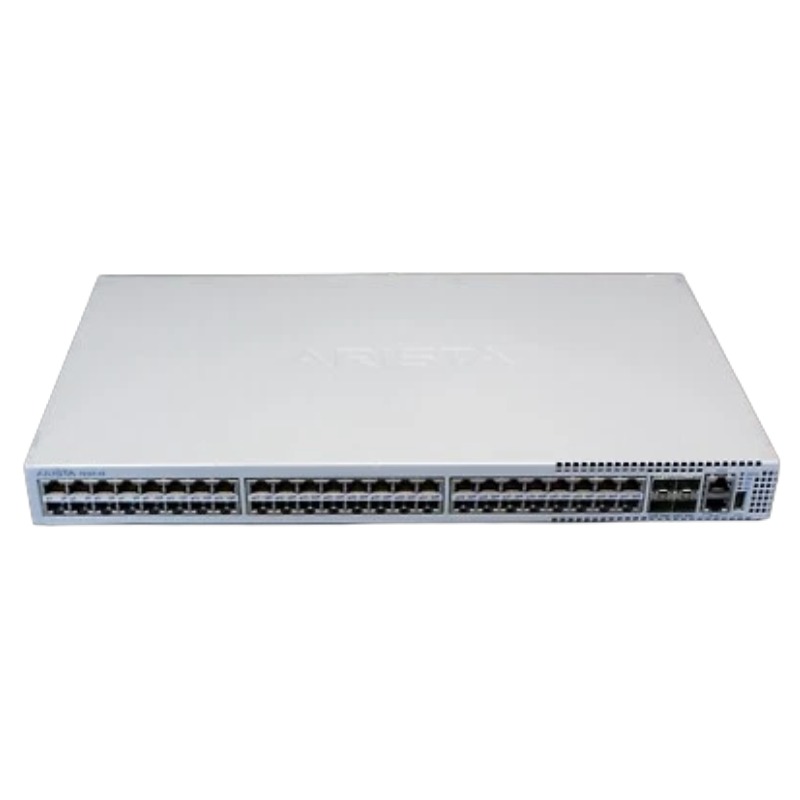


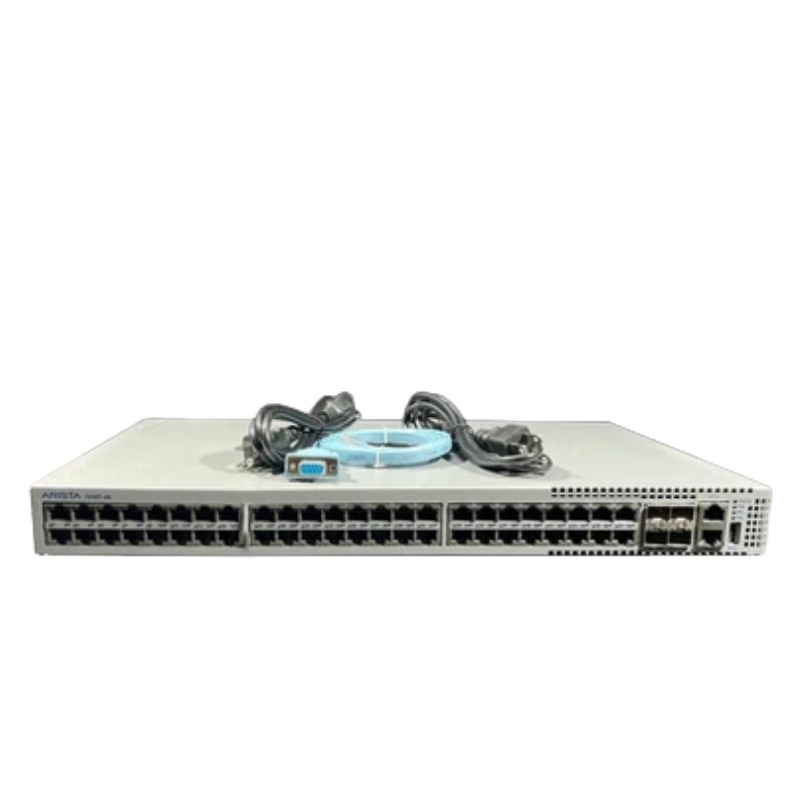
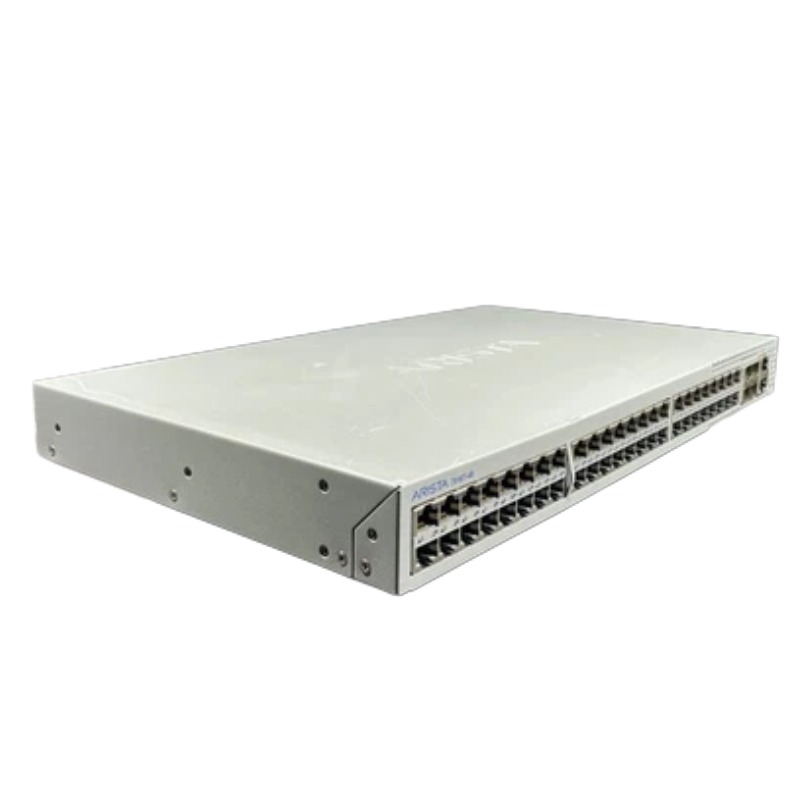
The Arista DCS-7010T-48-F is a high-performance managed network switch engineered for enterprise environments, virtualization platforms, aggregation layers, and modern data center deployments. Featuring 48 Gigabit RJ-45 interfaces alongside 4 high-speed 10GbE SFP+ uplinks, this switching platform delivers dependable throughput, low latency, and scalable connectivity for demanding infrastructures.
This Arista network switch is equipped with 48 dedicated 1GbE RJ-45 interfaces, making it suitable for server access, enterprise networking, virtualization clusters, and high-density switching applications. The copper Ethernet ports ensure broad compatibility with conventional network hardware and structured cabling systems.
The integrated 10 Gigabit SFP+ uplink ports provide fast inter-switch communication and efficient backbone connectivity for aggregation or core switching layers. These uplinks are optimized for low-latency traffic movement across enterprise and cloud networking environments.
The DCS-7010T-48-F switch is designed for high-throughput workloads with advanced packet processing capabilities and ultra-low forwarding delays. It is suitable for latency-sensitive deployments including cloud computing, financial networking, and storage traffic management.
The combination of fast packet forwarding and scalable switching architecture enables efficient handling of:
Arista integrates multiple management interfaces into the DCS-7010T-48-F to simplify deployment, monitoring, and administration tasks. These interfaces support streamlined configuration and operational flexibility across enterprise infrastructures.
The switch utilizes a powerful multi-core x86 processor combined with enterprise-grade memory resources to support reliable operation and advanced network services.
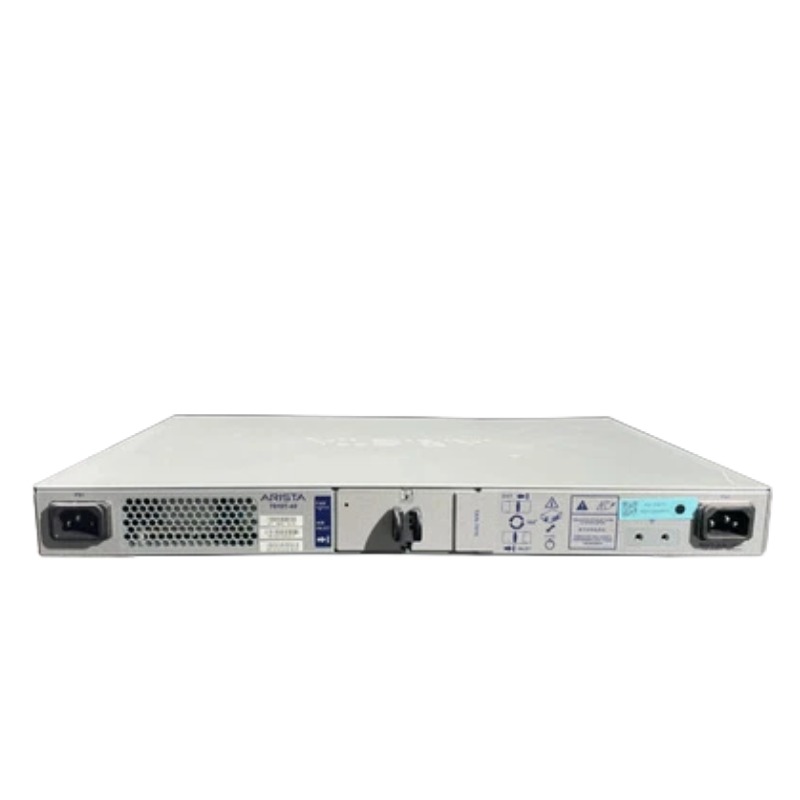
The front-to-back airflow layout is specifically engineered for hot aisle and cold aisle data center environments. This airflow direction helps maintain thermal efficiency and simplifies rack-level cooling management.
The Arista DCS-7010T-48-F 48 Ports 1GB RJ-45 4 Ports 10GB SFP+ Front-to-Back Airflow Switch is a high-performance enterprise-class Ethernet switching solution designed for modern data center environments, campus aggregation layers, and high-density access deployments. Built on Arista’s advanced EOS (Extensible Operating System), this switch combines reliability, scalability, and operational simplicity, making it a widely used platform for organizations seeking deterministic performance and predictable latency in Layer 2 and Layer 3 networking infrastructures.
As part of Arista’s 7010 series, this model focuses on delivering efficient 1GbE access switching with uplink flexibility through 10Gb SFP+ ports. The architecture is engineered for high availability, low power consumption, and advanced automation capabilities that align with next-generation cloud networking requirements.
The switch is equipped with 48 RJ-45 copper ports supporting 10/100/1000 Mbps connectivity. These ports are optimized for access-layer deployments where endpoints such as servers, workstations, IP phones, wireless access points, and IoT devices require reliable Gigabit Ethernet connectivity. The high port density ensures efficient rack utilization, reducing the need for multiple smaller switches in enterprise environments.
In addition to its access ports, the device includes 4 SFP+ uplink ports supporting 10Gb Ethernet connectivity. These uplinks are essential for aggregation and backbone connections, allowing seamless integration into higher-tier switches or spine-leaf architectures commonly found in modern data centers. The modular nature of SFP+ also allows the use of various optical transceivers or direct attach copper (DAC) cables depending on distance and performance requirements.
The front-to-back airflow design (denoted by the “-F” suffix) ensures efficient thermal management in hot aisle/cold aisle data center configurations. Air is drawn from the front of the chassis and exhausted through the rear, aligning with standard rack cooling systems. This airflow direction improves cooling efficiency, reduces thermal hotspots, and supports high-density rack deployments.
The Arista DCS-7010T-48-F is engineered with a non-blocking architecture that supports wire-speed forwarding across all ports simultaneously. This ensures that even under maximum load conditions, packets are processed efficiently without congestion or bottlenecks. The switch’s switching fabric is designed to handle large traffic volumes typical of enterprise and data center workloads.
One of the defining characteristics of Arista switches is their ultra-low latency forwarding behavior. This model maintains consistent latency performance, making it suitable for latency-sensitive applications such as financial trading systems, high-performance computing clusters, and real-time analytics platforms.
The device supports large MAC address tables and extensive routing entries, enabling deployment in complex Layer 2 and Layer 3 topologies. This scalability is essential for environments where thousands of endpoints and multiple VLANs coexist within a single network fabric.
The switch provides comprehensive Layer 2 functionality, including VLAN segmentation, Spanning Tree Protocol (STP), Link Aggregation Control Protocol (LACP), and advanced trunking capabilities. These features enable efficient traffic segmentation and loop-free redundant network designs.
VLAN support allows administrators to logically separate network traffic across different departments, services, or security zones. This improves security posture and enhances network performance by reducing broadcast domains.
LACP enables the combination of multiple physical links into a single logical interface, increasing bandwidth and providing redundancy. This is particularly beneficial for uplink connections using the 10Gb SFP+ ports.
In addition to Layer 2 switching, the Arista DCS-7010T-48-F supports Layer 3 static routing and dynamic routing protocols. This allows the device to function as both an access switch and a routing device in smaller network deployments or segmented routing environments.
Static routes enable predictable routing paths, while dynamic protocols such as OSPF allow for adaptive routing decisions based on network topology changes. This flexibility enhances resiliency and scalability in enterprise networks.
Arista EOS is built on a unique single binary image architecture that separates the control plane and data plane. This modular design enhances system stability and allows individual processes to be restarted independently without affecting overall system operations.
EOS is highly programmable, supporting Python-based scripting, REST APIs, and automation frameworks. This makes the switch ideal for DevOps-driven networking environments where infrastructure as code (IaC) is a key operational model.
The switch integrates seamlessly with automation platforms such as Ansible, Puppet, and Chef. This reduces manual configuration overhead and improves consistency across large-scale deployments.
Real-time telemetry capabilities allow administrators to monitor network performance, detect anomalies, and analyze traffic patterns. This visibility is critical for maintaining service quality and proactively identifying issues.
The switch is widely deployed in enterprise access networks where large numbers of endpoints require stable Gigabit connectivity. Its high port density makes it ideal for office floors, campus environments, and multi-tenant buildings.
In data center environments, the switch can serve as a Top-of-Rack solution, aggregating server connections and providing high-speed uplinks to spine switches. The 10Gb SFP+ ports ensure efficient data flow between racks.
The switch supports virtualized environments where multiple virtual machines require consistent and high-speed network connectivity. Its performance characteristics make it suitable for VMware, KVM, and container-based infrastructures.
With increasing adoption of hybrid cloud architectures, the switch plays a key role in connecting on-premise infrastructure with cloud services. Its programmability supports dynamic scaling and integration with cloud orchestration platforms.
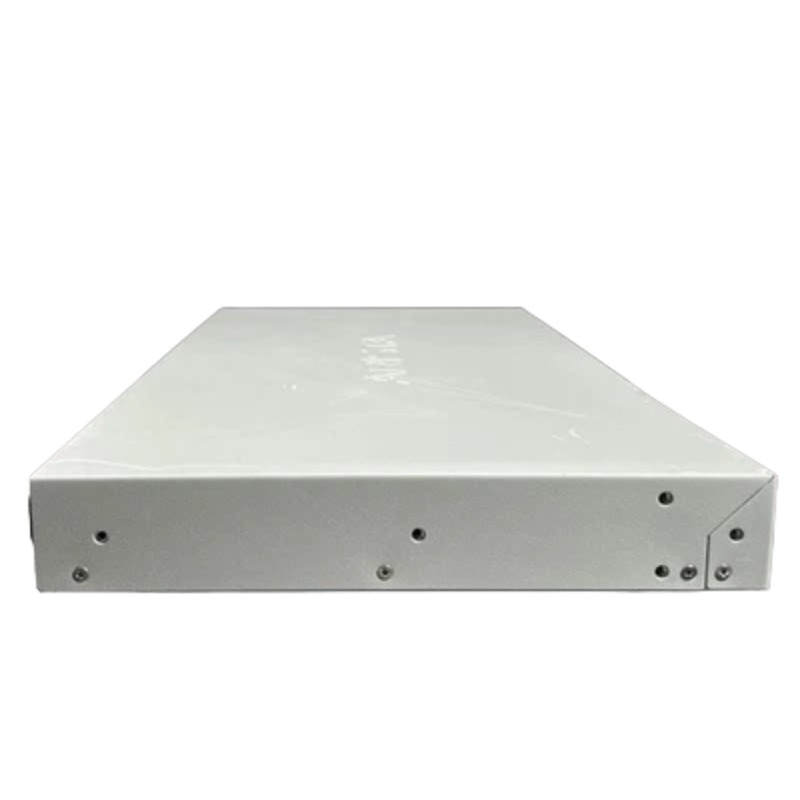
The device is designed in a compact 1U rack-mount form factor, making it suitable for dense rack environments. This helps optimize rack space while maintaining high port availability.
Many deployments benefit from redundant power supply options, ensuring continuous operation even in the event of a power module failure. This enhances network reliability and uptime.
The switch is engineered for energy efficiency, reducing operational costs in large-scale deployments. Intelligent power management features help minimize energy consumption without compromising performance.
Security features include port-based authentication, MAC address filtering, and integration with network access control systems. These tools ensure that only authorized devices can access the network.
The switch supports redundant network topologies, ensuring failover mechanisms are in place to maintain connectivity during hardware or link failures.
Broadcast, multicast, and unicast storm control mechanisms help prevent network congestion caused by excessive traffic bursts, maintaining stable network performance.


 Contact Us
 Information
 Catalog
 Solid State Drives (SSD)
 Network Switches
 Hard Disk Drives
 HBA & Controllers
 PC & Servers
 PC & Server Memory
 CPU & Processors
 Network Routers
 Power Supplies
 Tape Drives & Libraries
 Network Devices
 Computer & Network Cables