(7% discount is applied at checkout)
Cart is empty
Your go-to destination for cutting-edge server products
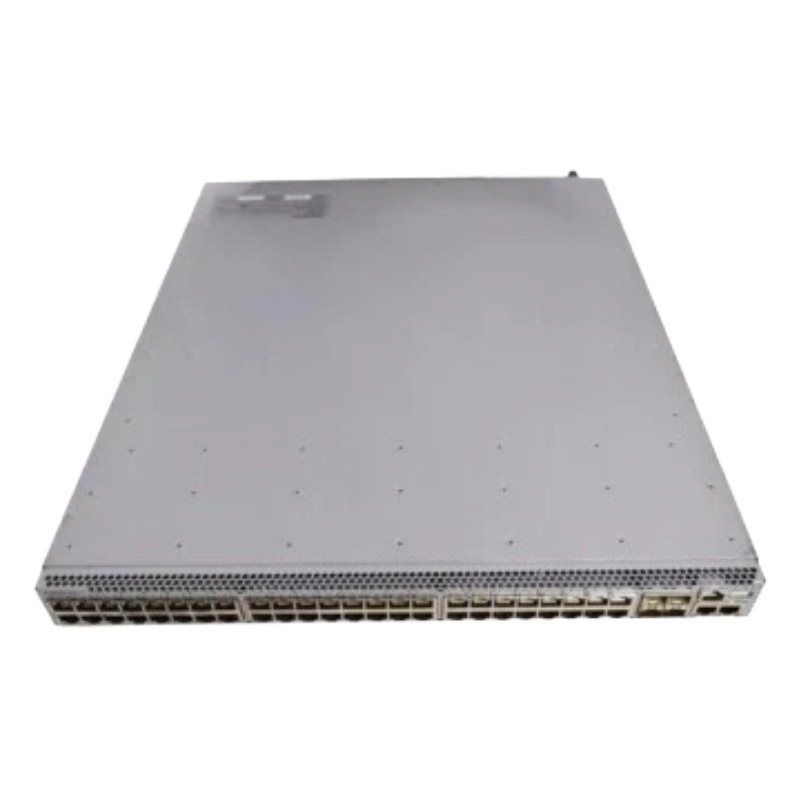


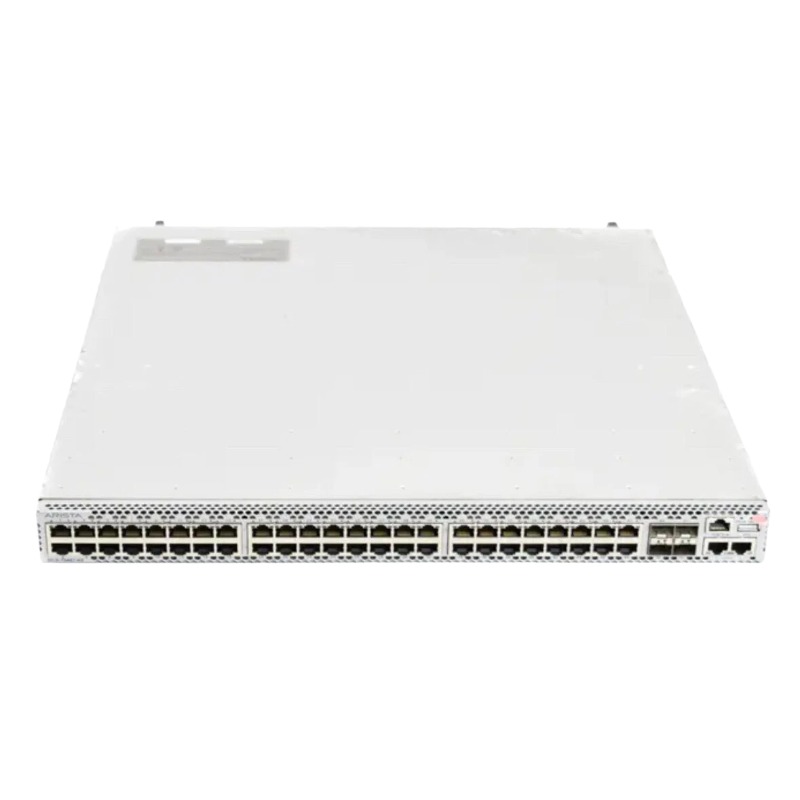
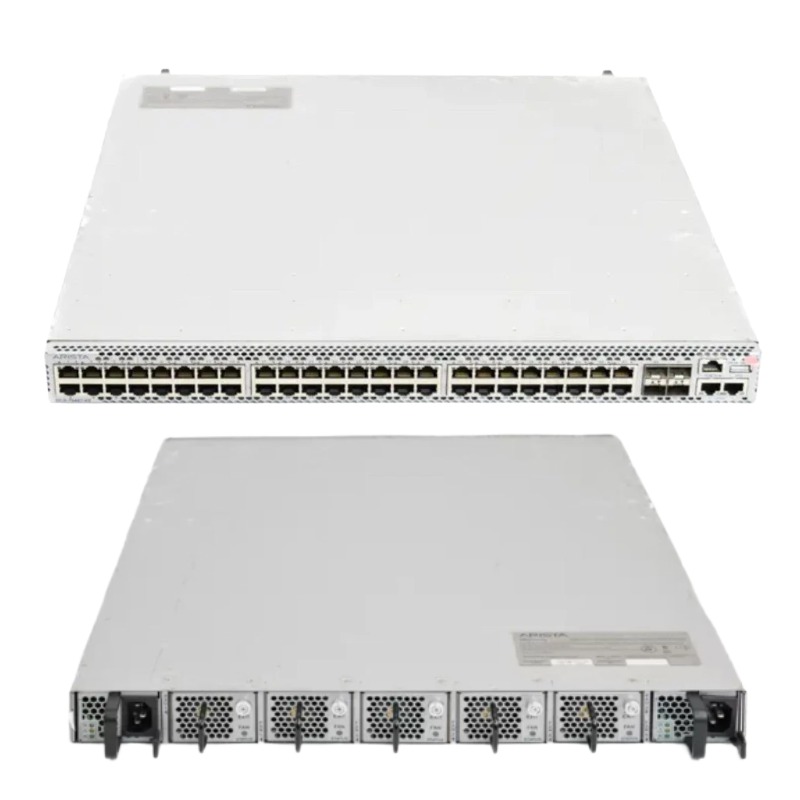
The Arista DCS-7048T-4S-F is a high-density, rack-mountable network switch engineered for modern enterprise and data center environments. It delivers reliable Layer 2 switching performance with a strong focus on scalability, speed, and flexible connectivity options.
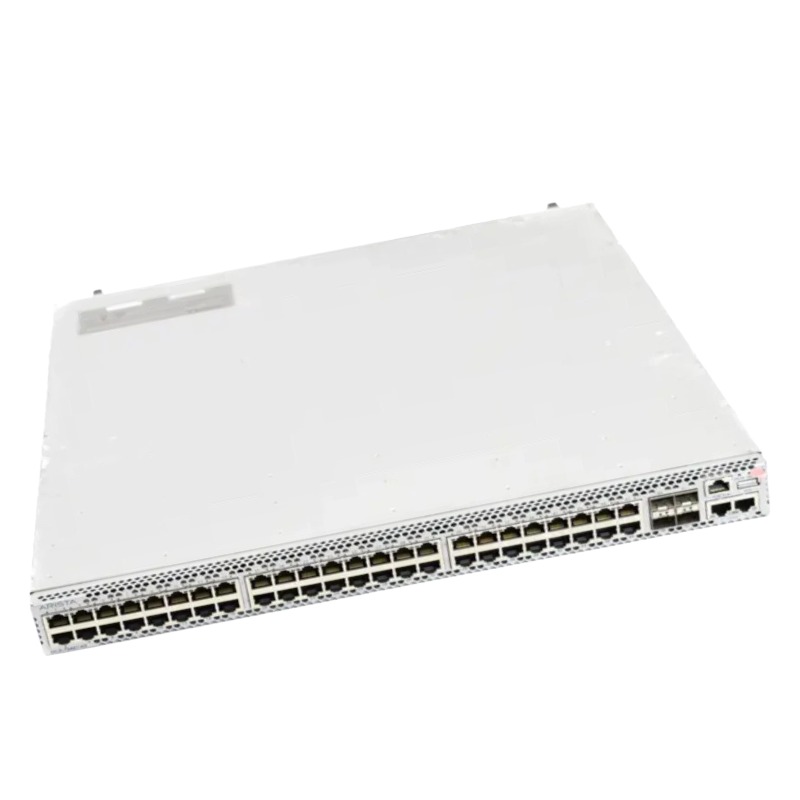
The Arista DCS-7048T-4S-F switch is engineered for high-performance enterprise networking, cloud data center environments, campus edge deployments, and low-latency network infrastructures requiring dependable Layer 2 and Layer 3 switching capabilities. Designed with 48 dedicated 10/100/1000BASE-T Ethernet ports and 4 high-speed SFP+ uplink interfaces, this switch platform delivers scalable connectivity, flexible deployment options, and advanced traffic management for organizations demanding consistent throughput and operational efficiency.
Organizations implementing modern virtualization, unified communications, IP surveillance, cloud services, and large-scale application environments require networking equipment capable of supporting continuous traffic loads while maintaining low latency and high reliability. The Arista DCS-7048T-4S-F switch addresses these demands through advanced hardware architecture, enterprise-grade operating system support, and extensive automation capabilities that simplify network operations and reduce administrative overhead.
The combination of copper Gigabit Ethernet connectivity and high-speed 10GbE SFP+ uplinks makes this switch suitable for aggregation layers, top-of-rack deployments, enterprise access layers, branch networking, and hybrid data center architectures. Businesses deploying high-density workstation environments, virtualization clusters, storage traffic, or converged infrastructures benefit from the switch’s capacity to manage demanding traffic flows with predictable performance.
The core networking capability of the Arista DCS-7048T-4S-F lies in its 48 RJ45 Ethernet ports supporting 10BASE-T, 100BASE-TX, and 1000BASE-T standards. These interfaces provide flexible connectivity for desktops, servers, IP phones, wireless access points, surveillance systems, and edge infrastructure devices.
High-density copper switching remains essential in enterprise environments where large numbers of endpoint devices require stable and scalable Ethernet access. The 48-port configuration enables organizations to consolidate network infrastructure while minimizing rack space consumption. IT administrators can deploy multiple VLANs, isolate traffic segments, and optimize bandwidth allocation across connected devices without introducing unnecessary hardware complexity.
The Gigabit Ethernet interfaces support auto-negotiation and automatic MDI/MDIX functionality, simplifying deployment and reducing manual configuration requirements. This improves operational efficiency during installations, expansions, and infrastructure upgrades.
Modern organizations depend on reliable network performance for productivity applications, VoIP communication, cloud collaboration platforms, and remote access solutions. The Arista DCS-7048T-4S-F switch provides stable Gigabit Ethernet connectivity that supports continuous traffic demands while maintaining consistent packet forwarding performance.
In large office environments, the switch can support extensive desktop deployments while maintaining quality of service policies that prioritize business-critical applications such as voice traffic, conferencing platforms, and enterprise resource planning systems.
Converged infrastructures combine voice, video, storage, and data traffic on a unified networking platform. The switch’s high-density copper ports allow organizations to connect multiple infrastructure types simultaneously while applying traffic segmentation and QoS controls to maintain optimal performance across all workloads.
Businesses implementing digital transformation strategies frequently require scalable access-layer switching capable of supporting wireless expansion, IoT devices, smart building systems, and edge computing technologies. The DCS-7048T-4S-F platform helps support these evolving connectivity requirements.
The four integrated SFP+ uplink ports provide 10 Gigabit Ethernet connectivity for aggregation, backbone interconnection, and high-bandwidth traffic forwarding between switches, servers, and storage systems.
High-speed uplinks are essential in environments where multiple Gigabit access ports aggregate traffic into core infrastructure layers. The SFP+ interfaces reduce bottlenecks by delivering significantly higher throughput compared to traditional Gigabit uplinks. This architecture supports improved application responsiveness, lower congestion levels, and enhanced overall network performance.
Data-intensive workloads such as virtualization, backup operations, media streaming, analytics platforms, and cloud applications benefit from the increased bandwidth available through 10GbE uplink connections.
The SFP+ ports support multiple connectivity options including fiber optic transceivers and direct attach copper cables. This flexibility enables organizations to deploy short-range or long-range uplinks depending on infrastructure requirements and physical network topology.
Fiber connectivity provides advantages in environments requiring electromagnetic interference resistance, extended cable distances, and secure high-speed transmission between racks, floors, or buildings.
The Arista DCS-7048T-4S-F can function effectively within aggregation and distribution layers by utilizing its SFP+ interfaces for inter-switch connectivity. Organizations deploying scalable multi-switch architectures benefit from the switch’s ability to integrate seamlessly into larger enterprise and data center environments.
Multiple switches can be interconnected using high-speed uplinks to support increased port density, redundancy, and traffic distribution across expanding network infrastructures.
The Arista Extensible Operating System (EOS) provides the software foundation for the DCS-7048T-4S-F switch. EOS is recognized for its modular architecture, programmability, operational stability, and advanced automation capabilities.
EOS utilizes a state-sharing architecture that separates individual processes into independent modules. This design improves system resiliency because software components can restart independently without affecting overall switch operation.
Network administrators benefit from improved uptime, simplified troubleshooting, and reduced maintenance disruptions. In mission-critical environments where network availability directly impacts business operations, the modular design contributes significantly to infrastructure reliability.
Modern IT operations increasingly depend on automation and programmable infrastructure to reduce operational complexity. EOS supports advanced programmability through APIs, scripting capabilities, and integration with automation platforms.
Administrators can automate configuration deployment, network monitoring, policy management, and provisioning tasks using orchestration tools and custom workflows. This reduces manual configuration errors while accelerating deployment timelines.
Organizations operating large-scale Arista environments benefit from consistent operating system behavior across switching platforms. Standardized command structures, APIs, and management procedures simplify training requirements and improve operational efficiency.
Consistency across network layers also reduces troubleshooting time and streamlines infrastructure scaling projects.
The Arista DCS-7048T-4S-F supports extensive Layer 2 and Layer 3 capabilities for enterprise and data center deployments requiring advanced traffic control, segmentation, and routing functionality.
Virtual LAN support allows organizations to segment traffic logically across departments, applications, security zones, and user groups. VLAN segmentation improves security, reduces broadcast traffic, and enhances overall network efficiency.
Businesses with multiple departments or tenants can isolate traffic while maintaining centralized switching infrastructure. VLAN tagging support also facilitates integration with virtualization environments and multi-site networking architectures.
Link aggregation technologies enable multiple physical connections to operate as a single logical interface. This improves bandwidth availability while increasing redundancy between switches and connected devices.
By combining multiple Ethernet interfaces, organizations can create resilient high-throughput uplinks supporting failover protection and load balancing capabilities.
The switch supports Layer 3 routing capabilities that enable traffic forwarding between subnets and VLANs. Static routing and dynamic routing protocols help optimize traffic paths across complex enterprise infrastructures.
Routing functionality is especially beneficial in distributed network environments where segmentation and efficient inter-network communication are required for scalability and security.
Arista switching platforms are widely recognized for low-latency packet forwarding capabilities. The DCS-7048T-4S-F is designed to support environments where rapid traffic processing and minimal delay are essential.
Virtualized workloads, distributed applications, and storage traffic demand low-latency switching to maintain application responsiveness and infrastructure efficiency. The switch’s architecture minimizes forwarding delays while supporting large traffic volumes.
Performance-sensitive applications such as financial trading systems, media production environments, and high-performance computing clusters benefit from predictable low-latency network behavior.
Efficient traffic management mechanisms help reduce congestion and packet loss during peak utilization periods. Buffer management and intelligent forwarding algorithms contribute to consistent application performance even under demanding network conditions.
Organizations handling continuous large-scale data transfers can maintain improved operational stability through optimized switching performance.
The Arista DCS-7048T-4S-F is well suited for integration into scalable data center infrastructures where flexibility, performance, and automation are critical operational requirements.
In top-of-rack configurations, the switch can connect servers within a rack while aggregating traffic through high-speed uplinks to spine or aggregation switches. This architecture simplifies cabling, improves airflow management, and supports modular infrastructure expansion.
Top-of-rack deployment models are commonly used in virtualization clusters, private cloud infrastructures, and enterprise application environments.
Virtualized environments generate east-west traffic patterns requiring efficient internal data center communication. The switch supports virtualization workloads by providing reliable bandwidth allocation, segmentation, and scalable connectivity.
Hypervisor hosts, storage appliances, and management systems can communicate efficiently through the switch’s high-density Gigabit interfaces and 10GbE uplinks.
Cloud computing environments demand scalable networking platforms capable of supporting rapid provisioning, workload mobility, and automation-driven management. The DCS-7048T-4S-F integrates effectively within private cloud and hybrid cloud deployments where operational flexibility is essential.
Enterprise security requirements continue to evolve as organizations face increasing cyber threats and compliance demands. The Arista DCS-7048T-4S-F supports multiple security mechanisms that help protect network resources and maintain operational integrity.
Access control lists enable administrators to regulate traffic flows based on IP addresses, protocols, ports, and policy requirements. ACL functionality helps organizations enforce segmentation strategies and restrict unauthorized access across network segments.
Granular policy controls improve visibility and security management across enterprise infrastructures.
Port security features allow administrators to limit device access on individual interfaces. This helps prevent unauthorized devices from connecting to the network while supporting controlled infrastructure access policies.
Organizations implementing endpoint security frameworks benefit from additional protection at the access layer.
Comprehensive monitoring capabilities assist network teams in analyzing traffic patterns, identifying anomalies, and troubleshooting performance issues. Visibility into network operations supports proactive infrastructure management and improved incident response.
Monitoring tools also contribute to compliance initiatives by supporting audit and reporting requirements.
Quality of Service functionality is essential in environments supporting latency-sensitive applications such as voice, video conferencing, streaming media, and real-time collaboration platforms.
The switch supports QoS mechanisms that classify and prioritize critical application traffic. Voice packets, conferencing sessions, and business-critical workloads can receive higher forwarding priority compared to less sensitive traffic types.
This improves user experience while minimizing disruptions caused by network congestion.
Traffic shaping and bandwidth allocation features help organizations maintain fair resource distribution across connected devices and applications. Administrators can implement policies preventing bandwidth-intensive workloads from affecting critical services.
Effective bandwidth management contributes to predictable performance across shared network environments.
Energy-efficient networking hardware helps organizations reduce operational costs and improve environmental sustainability within enterprise and data center facilities.
The Arista DCS-7048T-4S-F is engineered to deliver high switching performance while maintaining efficient power consumption characteristics. Reduced energy usage contributes to lower operational expenses and improved rack-level power optimization.
Organizations operating large-scale switching environments can benefit from cumulative energy savings over extended deployment periods.
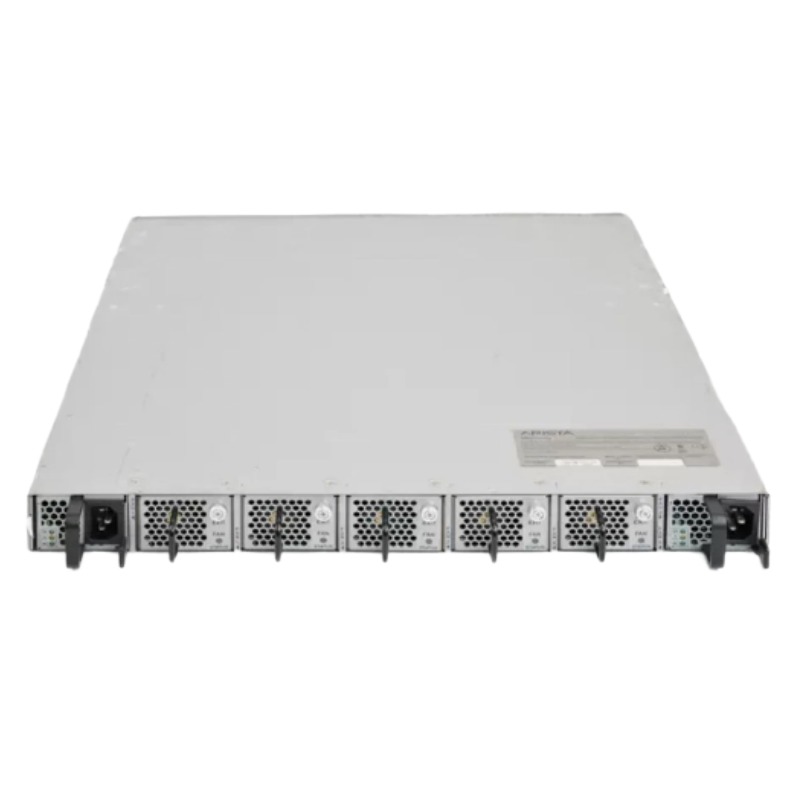
The “F” designation in the model number indicates front-to-rear airflow configuration, making the switch suitable for hot aisle and cold aisle data center designs. Proper airflow alignment supports thermal efficiency and improves cooling management within rack deployments.
Optimized airflow design contributes to improved equipment longevity and operational reliability.
Large enterprise office environments require dependable access-layer switching capable of supporting extensive workstation connectivity, wireless infrastructure, and IP communications. The 48-port configuration provides sufficient density for departmental deployments while supporting uplink integration with distribution layers.
Organizations implementing centralized management and segmented network architectures can utilize the switch for scalable office connectivity.
Schools, colleges, and universities often require scalable network infrastructures supporting classrooms, laboratories, wireless networks, and administrative systems. The DCS-7048T-4S-F can support high-density endpoint connectivity while enabling VLAN segmentation for different user groups and services.
Educational environments also benefit from reliable uplink connectivity supporting campus-wide networking architectures.
Healthcare organizations depend on secure and reliable networking for electronic medical records, imaging systems, VoIP communications, and connected medical devices. The switch supports traffic segmentation, high availability, and efficient network performance required in healthcare infrastructures.
Reliable connectivity helps ensure uninterrupted access to mission-critical applications and patient data systems.
Retail infrastructures often require connectivity for point-of-sale systems, wireless access points, inventory management systems, and surveillance devices. The switch’s high port density and Gigabit connectivity support diverse endpoint requirements across commercial deployments.
Traffic prioritization capabilities can also help maintain performance for payment processing and customer-facing services.
The Arista DCS-7048T-4S-F supports widely adopted Ethernet and networking standards that ensure interoperability across enterprise infrastructure environments.
Standards compliance enables seamless integration with routers, firewalls, servers, storage platforms, wireless systems, and third-party switching equipment. Organizations deploying heterogeneous environments benefit from broad interoperability support.
Standards-based networking also simplifies infrastructure expansion and long-term migration planning.
Modern enterprise infrastructures increasingly require IPv6 support to accommodate expanding address requirements and future-proof network deployments. The switch supports both IPv4 and IPv6 networking environments, enabling gradual migration strategies and hybrid deployments.
Dual-stack support helps organizations transition toward next-generation network architectures without disrupting existing services.
The compact rack-mount chassis design allows efficient use of valuable data center and network closet space. Organizations can deploy high-density connectivity while maintaining organized infrastructure layouts and effective cable management.
Efficient space utilization becomes increasingly important in facilities with growing infrastructure demands and limited rack capacity.
The switch’s professional hardware design aligns with enterprise and data center operational standards. Structured airflow, accessible port layouts, and durable chassis construction contribute to reliable long-term deployment.
Infrastructure teams benefit from simplified installation procedures and improved serviceability within rack environments.


 Contact Us
 Information
 Catalog
 Solid State Drives (SSD)
 Network Switches
 Hard Disk Drives
 HBA & Controllers
 PC & Servers
 PC & Server Memory
 CPU & Processors
 Network Routers
 Power Supplies
 Tape Drives & Libraries
 Network Devices
 Computer & Network Cables