(7% discount is applied at checkout)
Cart is empty
Your go-to destination for cutting-edge server products
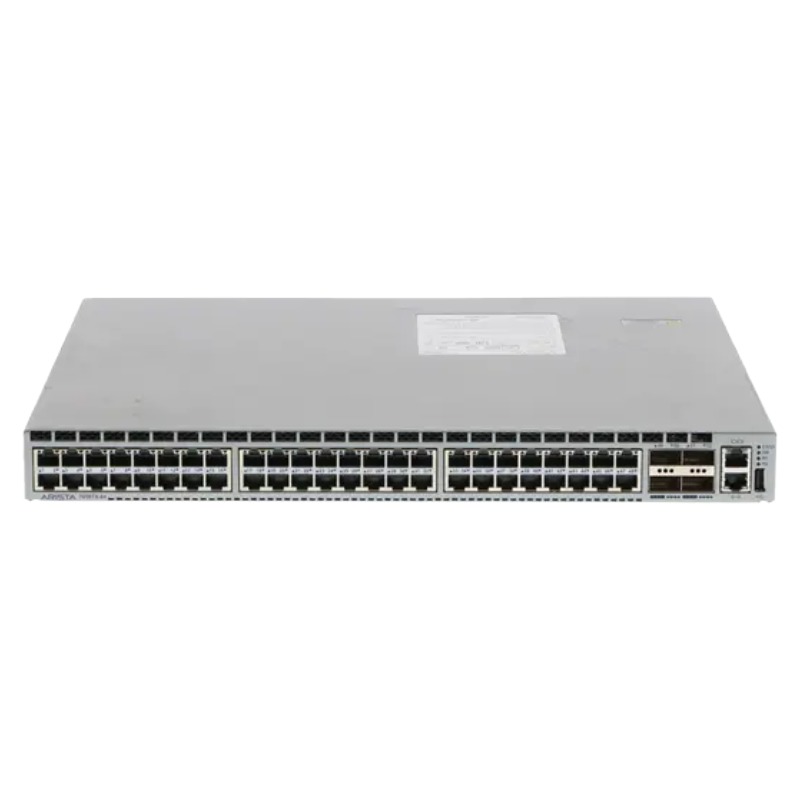


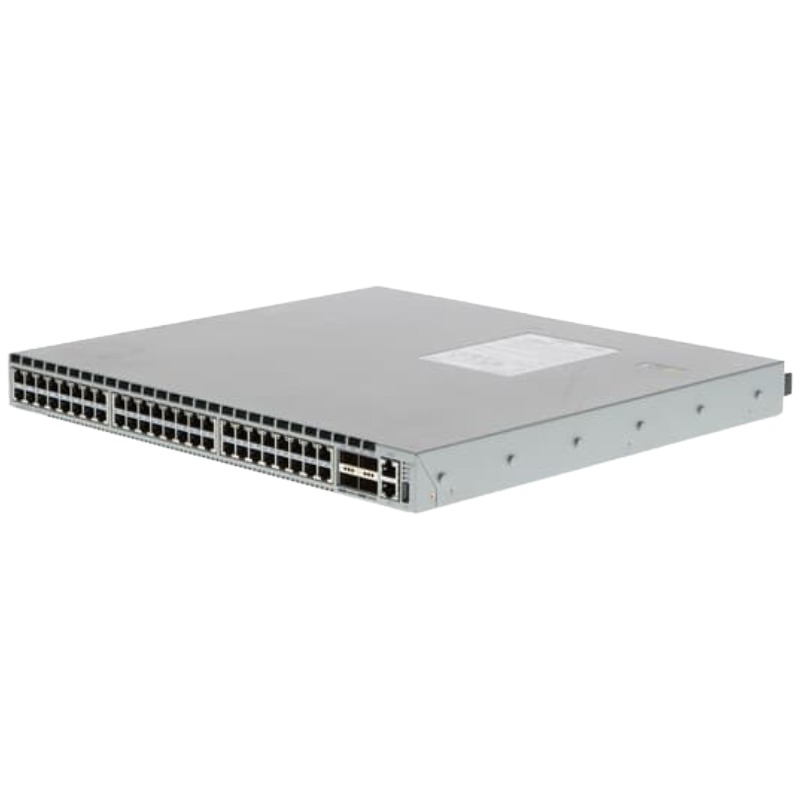
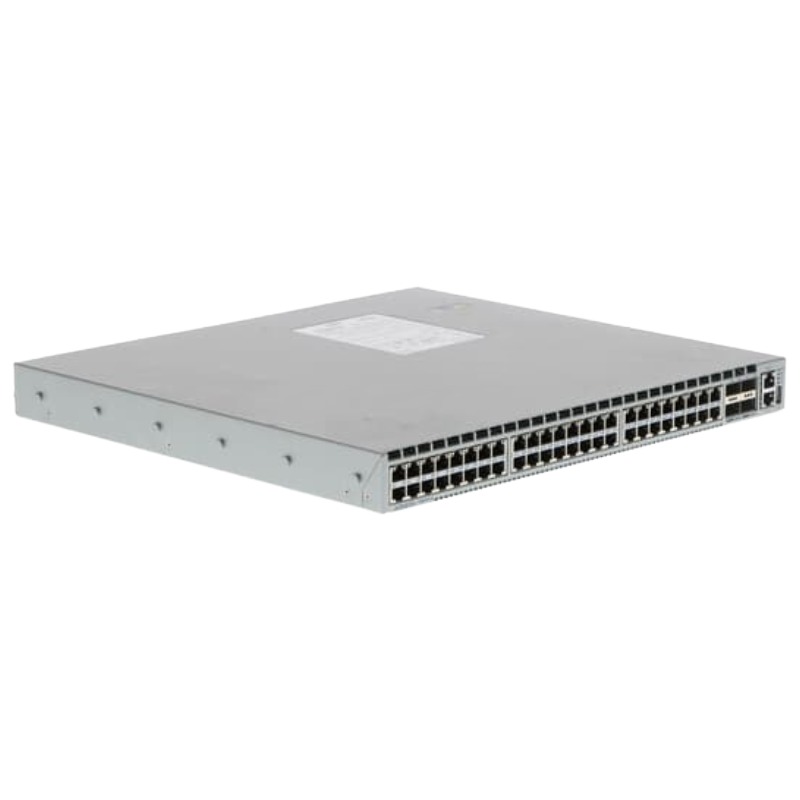
Arista DCS-7050T-64-R 7050 4x Ports 40GbE QSFP+ 48 Ports Airflow Layer 3 1U Rack Mountable Ethernet Switch. Excellent Refurbished with 1 Year Replacement Warranty
The Arista DCS-7050T-64-R belongs to the acclaimed Arista 7050 series, a family of high-performance, low-latency, and feature-rich Layer 3 Ethernet switches engineered for modern data center, enterprise campus, and high-frequency trading environments. As a 1U rack-mountable unit with a front-to-rear or rear-to-front airflow option indicated by the “-R” suffix, it is optimized for hot-aisle/cold-aisle containment strategies, ensuring thermal efficiency in dense deployments.
The Arista DCS-7050T-64-R Ethernet switch belongs to the advanced 7050 Series data center switching platform engineered for high-density Layer 2 and Layer 3 networking environments. Designed in a compact 1U rack mountable form factor, this enterprise-grade switch delivers extensive network scalability, low-latency packet forwarding, and high-throughput switching capabilities suitable for cloud networking, virtualization infrastructures, enterprise campus deployments, and modern data center fabrics.
Equipped with 48 dedicated 10 Gigabit Ethernet RJ-45 ports and 4 high-speed 40GbE QSFP+ uplink interfaces, the platform supports large-scale aggregation, east-west traffic optimization, virtualization clustering, and storage networking applications. The switch architecture is optimized for deterministic latency, wire-speed forwarding, and non-blocking throughput to support mission-critical workloads that demand uninterrupted connectivity and high-performance packet processing.
The 48 integrated 10 Gigabit Ethernet interfaces provide exceptional copper connectivity density for top-of-rack deployments, server aggregation layers, virtualization clusters, and enterprise core network designs. These RJ-45 interfaces support flexible deployment models while enabling compatibility with existing twisted-pair cabling infrastructures.
The switch supports automatic negotiation features, advanced traffic handling mechanisms, and high-bandwidth connectivity for enterprise servers, storage arrays, hyper-converged infrastructure appliances, and virtualization hosts. The copper-based 10GbE deployment model simplifies migration from legacy Gigabit Ethernet environments while enabling future-ready bandwidth scalability.
The 4 QSFP+ uplink interfaces provide ultra-high-speed interconnectivity for spine-leaf architectures, aggregation layers, data center interconnects, and core network uplinks. These interfaces enable scalable network expansion with high-bandwidth transport capabilities suitable for latency-sensitive applications and traffic-intensive workloads.
QSFP+ connectivity allows integration with fiber-optic infrastructure, high-capacity switching fabrics, and distributed computing environments. The uplink architecture reduces oversubscription ratios while improving east-west traffic efficiency within modern virtualized data centers.
The QSFP+ interfaces support multiple deployment scenarios including uplink aggregation, fabric extension, server cluster interconnectivity, and large-scale virtualization networking. This flexibility allows network architects to build resilient and scalable infrastructures that support growing bandwidth demands and future expansion requirements.
The Arista DCS-7050T-64-R supports advanced Layer 3 functionality for enterprise routing, data center segmentation, and intelligent traffic forwarding. Integrated routing services enable efficient packet delivery across multiple VLANs, subnets, and interconnected network environments.
Layer 3 support allows organizations to deploy the switch in aggregation, core, or distribution layer architectures while maintaining efficient network segmentation and traffic engineering. Routing functionality supports scalable data center designs that require predictable forwarding performance and extensive network visibility.
The platform supports dynamic routing capabilities designed for modern enterprise and cloud networking infrastructures. Routing intelligence improves traffic optimization while supporting scalable multi-tier network topologies.
Support for static routing, dynamic route propagation, multicast optimization, and policy-based forwarding enables administrators to design efficient and highly available network infrastructures with simplified traffic engineering controls.
The Layer 3 architecture improves data center fabric scalability by enabling high-speed inter-VLAN communication, optimized routing convergence, and distributed traffic forwarding. This capability is particularly beneficial for virtual machine mobility, software-defined networking environments, and storage-intensive workloads.
Modern virtualization and cloud environments generate substantial east-west traffic patterns. The Arista DCS-7050T-64-R efficiently processes these traffic flows while minimizing bottlenecks and maintaining low-latency communication between interconnected servers and application nodes.
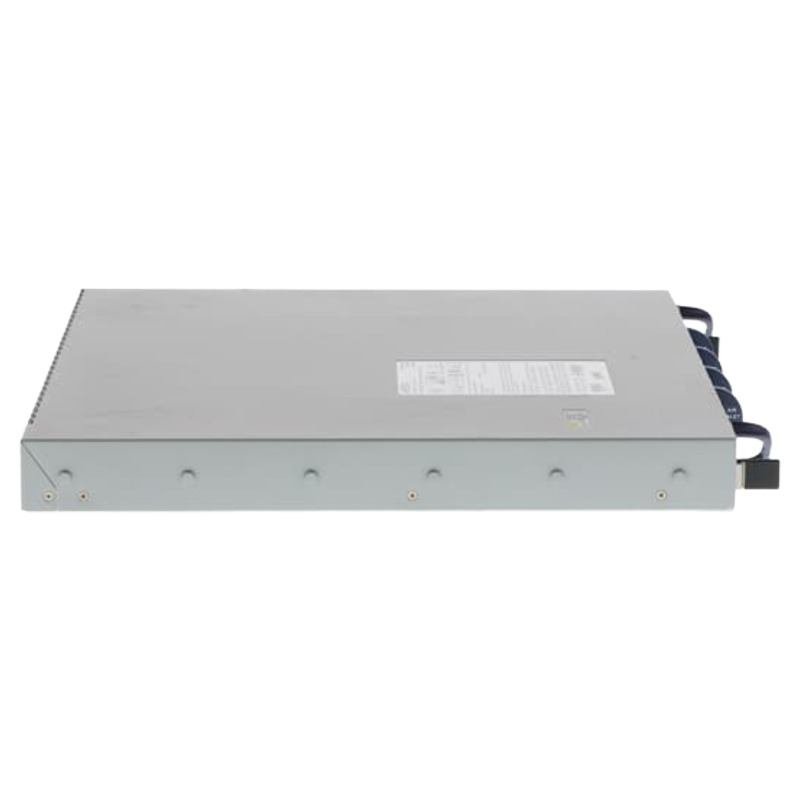
The compact 1U chassis design maximizes rack space efficiency while delivering high-density network connectivity and enterprise-class switching performance. This rack mountable design supports modern data center density requirements while simplifying deployment in colocation facilities, enterprise data centers, and edge computing environments.
The streamlined chassis layout facilitates organized cable management, simplified installation procedures, and efficient airflow optimization within high-density rack deployments. The switch form factor is engineered to support large-scale deployments where space utilization and operational efficiency are critical considerations.
The switch integrates seamlessly into standard rack environments while minimizing space consumption and supporting high-density server networking architectures. The compact physical profile allows organizations to deploy multiple switches within a limited rack footprint without sacrificing performance or scalability.
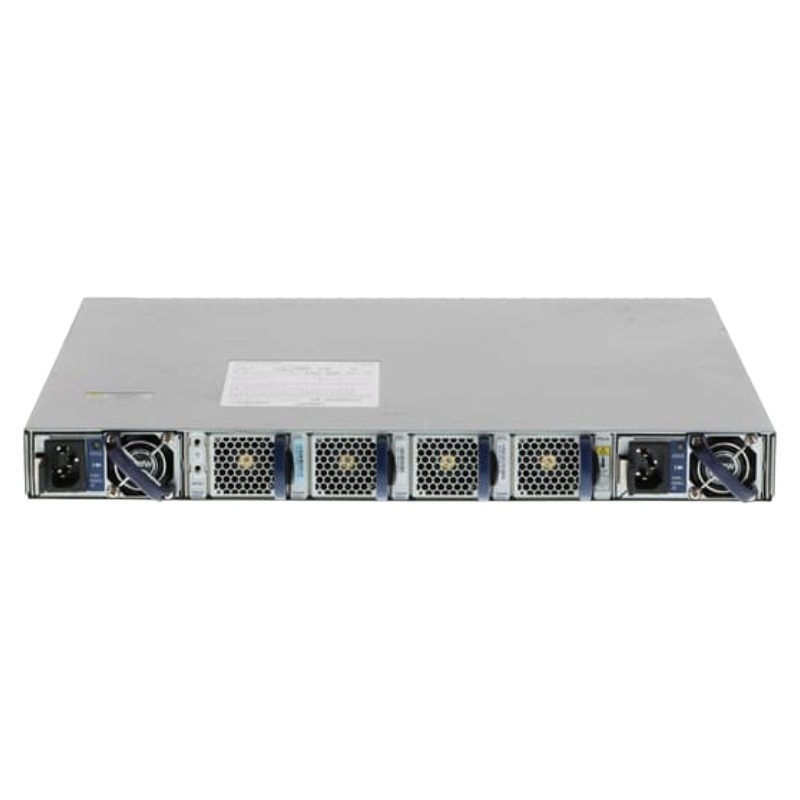
The chassis dimensions and rack mountable configuration are optimized for enterprise-grade deployment environments. This design supports structured cabling systems, redundant power integration, and organized airflow management strategies within modern networking facilities.
High-density port configurations combined with compact chassis dimensions enable efficient infrastructure consolidation. Organizations can reduce hardware sprawl while maintaining scalable connectivity and high-throughput networking performance.
The Arista DCS-7050T-64-R incorporates a reversible airflow cooling design engineered for hot aisle and cold aisle containment architectures commonly deployed in enterprise and hyperscale data centers. The airflow configuration supports optimized thermal management while maintaining hardware reliability under continuous high-performance operation.
The airflow direction is specifically engineered for compatibility with structured data center cooling strategies, enabling efficient thermal isolation and improved energy management across large-scale deployments.
The airflow architecture aligns with modern rack-level cooling methodologies, supporting consistent airflow patterns and optimized environmental control. This design helps maintain operational stability while reducing cooling inefficiencies within densely populated server environments.
Efficient heat dissipation mechanisms protect internal switching components, ASICs, processors, and power modules from excessive thermal stress. Continuous airflow management contributes to long-term operational stability and hardware durability.
The switch cooling system is engineered to support sustained wire-speed forwarding, large-scale traffic handling, and continuous enterprise workloads without compromising thermal efficiency or system reliability.
The Arista DCS-7050T-64-R utilizes a high-capacity switching fabric engineered for ultra-low latency packet processing and non-blocking throughput. The switching architecture is optimized for data center workloads that require rapid packet forwarding, minimal congestion, and predictable performance characteristics.
Modern applications such as virtualization platforms, cloud orchestration systems, storage networking, and distributed computing environments depend on consistent switching performance. The integrated switching fabric supports these demanding workloads while maintaining efficient traffic distribution across all interfaces.
The switch architecture minimizes forwarding delays through optimized ASIC design and high-speed packet processing mechanisms. Low-latency communication improves application responsiveness, database synchronization efficiency, and virtualization performance within interconnected environments.
All interfaces support wire-speed forwarding capabilities to eliminate packet processing bottlenecks during periods of elevated traffic demand. This ensures consistent bandwidth delivery across both access and uplink interfaces.
The switching platform is capable of handling large-scale traffic loads generated by virtualization clusters, cloud-native applications, storage replication processes, and enterprise application environments.
The Arista DCS-7050T-64-R is optimized for virtualization-intensive networking environments that require scalable bandwidth, low latency, and intelligent traffic handling capabilities. Virtualized data centers generate highly dynamic traffic patterns that demand advanced switching performance and operational flexibility.
The switch architecture supports efficient virtual machine communication, hypervisor integration, workload mobility, and software-defined networking implementations across enterprise and cloud infrastructures.
Virtual machine migration and workload balancing operations require uninterrupted low-latency communication between servers and storage systems. The switch architecture supports these operations while maintaining network stability and throughput consistency.
Cloud computing environments benefit from the switch’s scalable forwarding architecture, high-speed uplinks, and advanced Layer 3 functionality. These capabilities support elastic application scaling, distributed computing frameworks, and multi-tenant networking infrastructures.
The switch provides enterprise-grade Ethernet connectivity for large-scale organizational networks requiring high availability, traffic segmentation, and extensive bandwidth scalability. The integrated feature set supports mission-critical business operations, unified communications, and high-performance application delivery.
Organizations deploying enterprise Ethernet infrastructures benefit from the platform’s robust switching architecture, scalable routing functionality, and comprehensive traffic management capabilities.
Advanced VLAN capabilities support secure network segmentation, traffic isolation, and multi-department infrastructure design. VLAN implementation enhances security, improves traffic organization, and enables efficient resource allocation within enterprise environments.
Segmentation mechanisms reduce unnecessary broadcast traffic while improving network efficiency and performance consistency across large-scale deployments.
Logical network separation improves infrastructure security by isolating departmental traffic, application environments, and sensitive operational workloads.
The Arista DCS-7050T-64-R is highly suitable for spine-leaf network topologies that require predictable latency, scalable bandwidth distribution, and efficient east-west traffic forwarding. The combination of 10GbE access ports and 40GbE uplinks supports modern data center traffic patterns generated by virtualization clusters and distributed applications.
Spine-leaf architectures benefit from the switch’s low-latency forwarding characteristics and high-capacity uplink infrastructure, enabling scalable horizontal growth and simplified network expansion.
The switch functions effectively as a leaf-layer access switch connecting virtualization hosts, storage nodes, and enterprise application servers within distributed computing environments.
The integrated QSFP+ uplinks provide scalable interconnectivity with spine switches, aggregation layers, and core network fabrics to support efficient traffic distribution and low-latency communication.
Organizations implementing cloud-native infrastructure and software-defined networking architectures benefit from the switch’s scalable design, high-density connectivity, and enterprise-grade Ethernet switching performance.
High-bandwidth Ethernet connectivity and low-latency packet forwarding make the Arista DCS-7050T-64-R suitable for storage networking applications including IP storage environments, backup infrastructures, and distributed storage clusters.
Modern storage systems require reliable network transport with minimal latency and consistent throughput. The switch architecture supports these requirements through high-speed Ethernet interfaces and scalable switching performance.
Storage replication operations generate sustained network traffic that demands predictable throughput and low packet loss characteristics. The switch supports these workloads while maintaining traffic efficiency and forwarding consistency.
Virtualized storage platforms benefit from the switch’s scalable bandwidth architecture and high-density 10GbE connectivity, enabling efficient communication between storage arrays and application servers.
Backup operations and disaster recovery traffic can be processed efficiently through the switch’s high-capacity interfaces and non-blocking switching fabric.


 Contact Us
 Information
 Catalog
 Solid State Drives (SSD)
 Network Switches
 Hard Disk Drives
 HBA & Controllers
 PC & Servers
 PC & Server Memory
 CPU & Processors
 Network Routers
 Power Supplies
 Tape Drives & Libraries
 Network Devices
 Computer & Network Cables