(7% discount is applied at checkout)
Cart is empty
Your go-to destination for cutting-edge server products
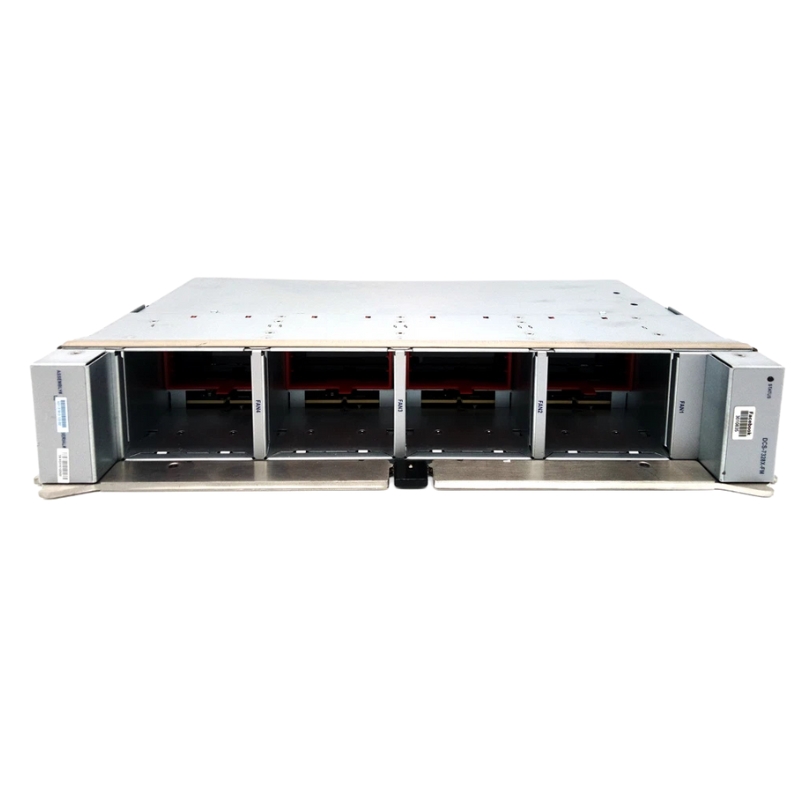


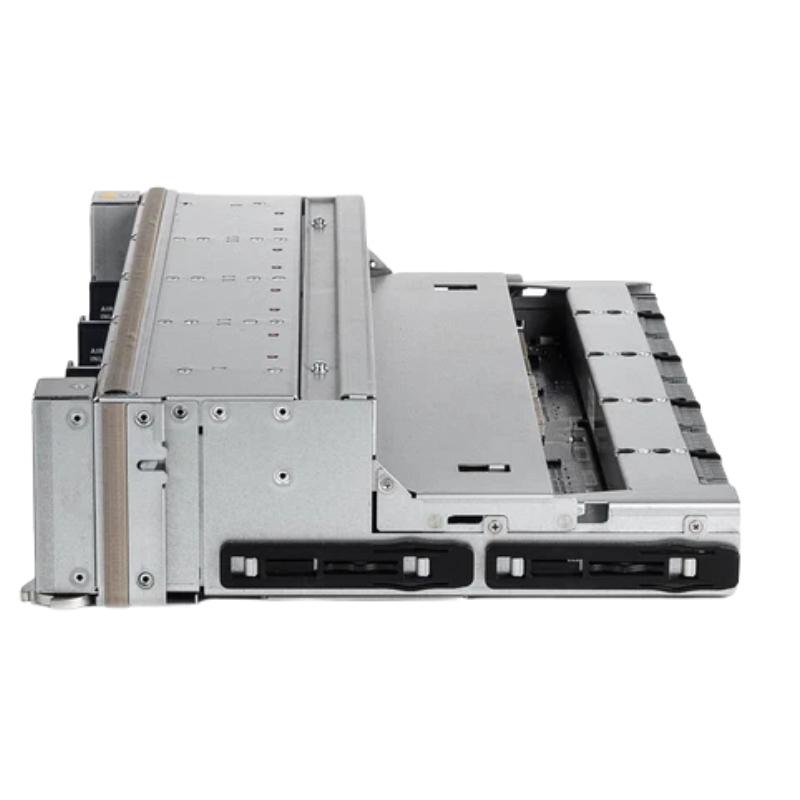
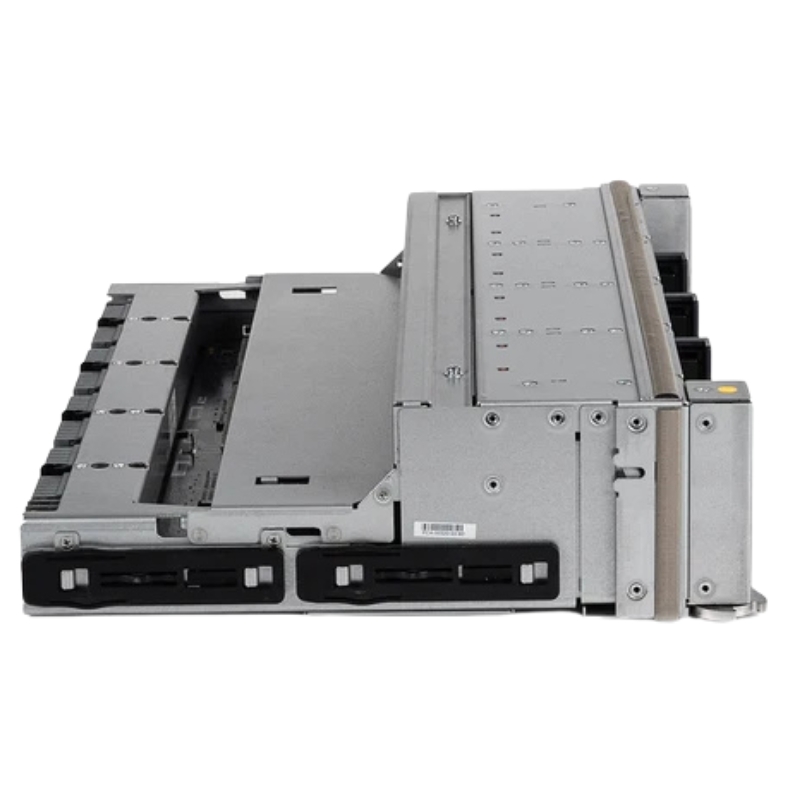
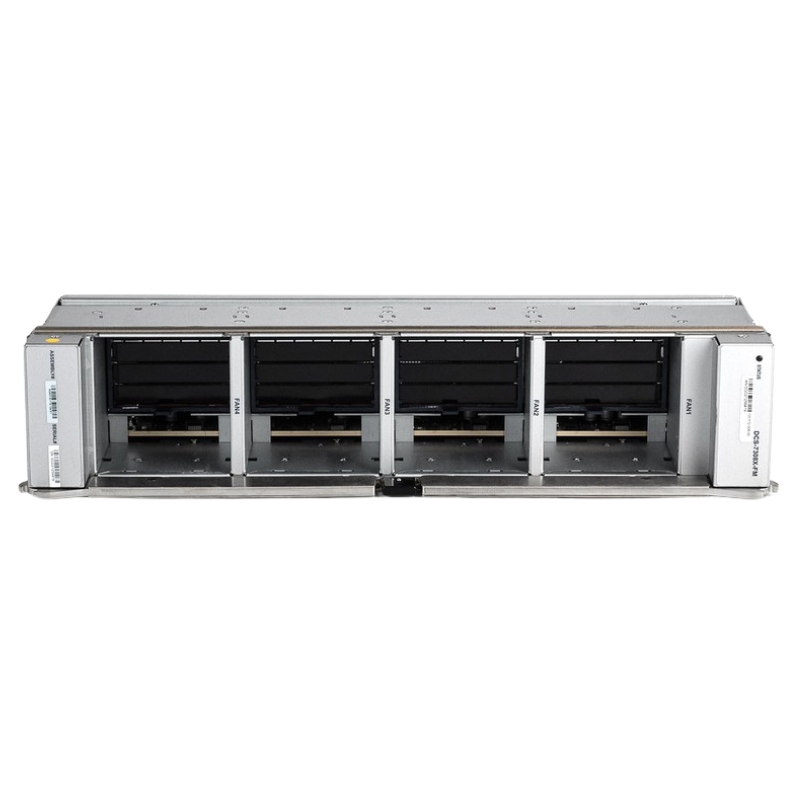
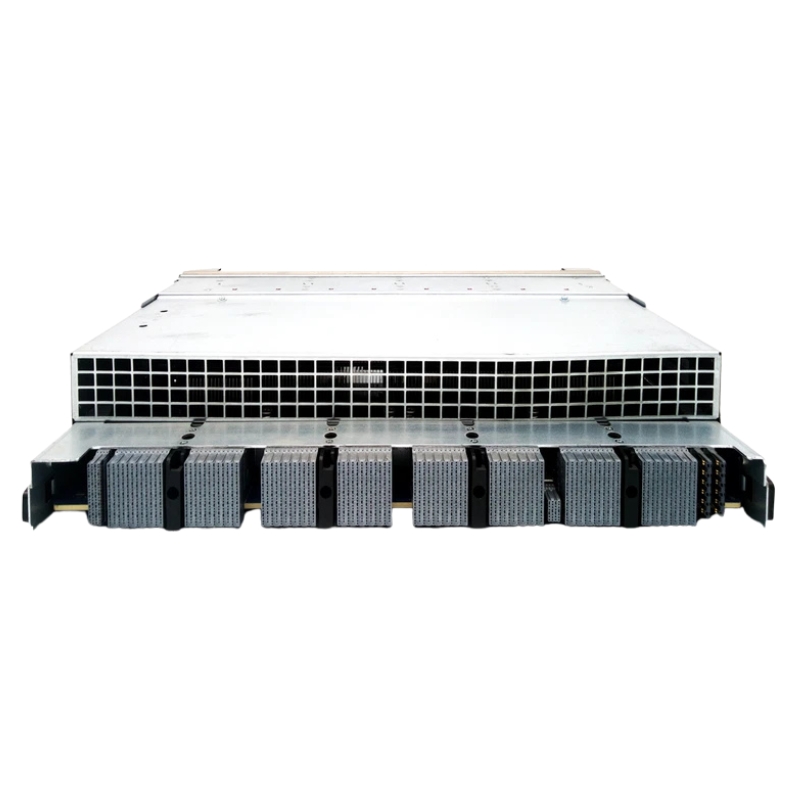
Arista DCS-7328X-FM 7320X 7308 Chassis Fabric Module. Excellent Refurbished with 1 Year Replacement Warranty
The Arista DCS-7328X-FM fabric module is engineered for the 7320X 7308 chassis, delivering advanced interconnectivity and optimized performance for large‑scale networking environments. It ensures efficient data flow and high reliability across enterprise and cloud infrastructures.
The Arista DCS-7328X-FM 7320X 7308 Chassis Fabric Module belongs to the high-performance modular data center switching category that is designed to support scalable, resilient, and ultra-low latency network architectures. This category focuses on fabric modules that act as the backbone of modular switch chassis, enabling massive east-west and north-south traffic flows across modern enterprise, cloud, and hyperscale environments. Fabric modules are not standalone switching devices; instead, they form the internal switching matrix that interconnects line cards, supervisors, and system controllers within a chassis-based platform.
In large-scale data center deployments, modular switching systems provide the flexibility and longevity that fixed-form switches cannot. The fabric module category ensures that traffic between line cards flows at wire speed with minimal contention, while also delivering high availability through redundant design principles. The Arista 7320X and 7308 chassis platforms rely on fabric modules such as the DCS-7328X-FM to maintain deterministic performance even as port density, bandwidth demands, and application complexity increase.
Fabric modules serve as the internal data plane of a modular switch, functioning as a non-blocking crossbar that interconnects all installed line cards. In this category, the fabric is engineered to handle aggregate throughput that can reach multiple terabits per second, ensuring that no single slot or module becomes a bottleneck. The design philosophy prioritizes consistent latency, predictable forwarding behavior, and seamless scalability.
Within Arista’s modular ecosystem, fabric modules are hot-swappable and operate in parallel, allowing systems to scale bandwidth incrementally while maintaining uninterrupted operation. This capability is essential for environments where downtime is unacceptable and where network growth must occur without disruptive upgrades.
The fabric module category emphasizes high-capacity switching matrix implementations that distribute traffic intelligently across multiple fabric planes. This multi-plane approach ensures load balancing, fault tolerance, and sustained throughput under peak traffic conditions. Each fabric module contributes a defined portion of the overall switching capacity, and together they form a resilient mesh that supports the full bandwidth potential of the chassis.
Advanced internal arbitration mechanisms manage packet flow between ingress and egress ports, minimizing congestion and head-of-line blocking. This is particularly important for latency-sensitive applications such as financial trading platforms, real-time analytics, and distributed storage systems.
The modular fabric category is defined by its ability to scale linearly as network requirements grow. The Arista DCS-7328X-FM fabric module supports this scalability by enabling additional bandwidth simply through the addition of fabric modules. This approach allows organizations to deploy an initial configuration that meets current needs and expand capacity over time without replacing the entire chassis.
Performance consistency is a key attribute of this category. Fabric modules are engineered to deliver predictable forwarding behavior regardless of traffic patterns, ensuring that bursty workloads, microservices communication, and large data transfers coexist without degradation. The internal fabric bandwidth is designed to exceed the aggregate capacity of installed line cards, preserving a non-blocking architecture.
Latency within the switching fabric is a critical metric in modern data centers. The fabric module category prioritizes ultra-low latency paths between line cards, reducing the time packets spend traversing the internal switch matrix. This low latency is achieved through optimized ASIC design, high-speed interconnects, and efficient buffering strategies.
By minimizing internal delays, fabric modules contribute to end-to-end application performance improvements. This is particularly beneficial in environments that rely on distributed computing frameworks, where inter-node communication latency directly impacts processing efficiency.
Fabric modules in this category are designed to support the rapid evolution of Ethernet speeds, including 10GbE, 25GbE, 40GbE, 100GbE, and beyond. The internal bandwidth of the fabric must accommodate these interfaces without oversubscription. The Arista 7320X and 7308 chassis platforms leverage fabric modules that align with current and future Ethernet standards, ensuring long-term relevance.
This forward-looking design enables data center operators to adopt new line cards with higher port speeds while maintaining a stable and capable internal switching fabric.
High availability is a foundational requirement in the modular switching fabric category. Fabric modules are deployed in redundant configurations, allowing the system to tolerate individual module failures without impacting overall operation. The Arista DCS-7328X-FM exemplifies this approach by supporting N+1 or greater redundancy models that ensure continuous data plane functionality.
Redundancy is complemented by intelligent traffic rerouting mechanisms that dynamically adjust forwarding paths in response to fabric module status changes. This resilience is critical in mission-critical environments where network outages can result in significant financial and operational consequences.
The ability to replace fabric modules without powering down the chassis is a defining characteristic of this category. Hot-swappable design allows maintenance and upgrades to occur during normal operation, reducing service disruption and maintenance windows. Fabric modules are engineered with robust connectors, alignment guides, and fault detection mechanisms to ensure safe insertion and removal.
Field-replaceable units simplify logistics and spare parts management, enabling rapid response to hardware issues and minimizing mean time to repair.
Fabric modules incorporate fault isolation features that prevent localized issues from propagating across the system. If a fabric plane experiences a fault, traffic is automatically redistributed across remaining planes, preserving overall throughput and connectivity. This design ensures graceful degradation rather than catastrophic failure.
System-level monitoring and telemetry provide real-time visibility into fabric module health, enabling proactive maintenance and predictive failure analysis.
The modular fabric category is tightly integrated with network operating systems that provide centralized control and visibility. In Arista environments, fabric modules operate under the management of Arista EOS, which delivers a unified control plane across all components of the chassis. This integration ensures consistent configuration, monitoring, and policy enforcement.
EOS leverages a modular architecture that aligns well with the modular nature of fabric-based switches. Fabric modules benefit from advanced telemetry, streaming analytics, and automation capabilities that enhance operational efficiency.
Fabric modules generate detailed telemetry data that is continuously streamed to management systems. This data includes metrics related to bandwidth utilization, error rates, temperature, and power consumption. Real-time visibility into fabric performance allows operators to identify congestion points, optimize traffic flows, and plan capacity expansions.
Telemetry-driven insights are particularly valuable in large-scale deployments where manual monitoring is impractical and where automated decision-making improves responsiveness.
The fabric module category supports automation through open APIs and standardized interfaces. Programmatic control enables dynamic adjustment of network behavior in response to application demands, traffic patterns, or infrastructure changes. This capability aligns with modern DevOps and NetOps practices, where infrastructure is treated as code.
Automation reduces configuration errors, accelerates deployment timelines, and ensures consistency across complex network environments.
The Arista DCS-7328X-FM fabric module category addresses a wide range of use cases that demand high performance and reliability. Enterprise data centers leverage modular fabrics to support core and aggregation layers, where large numbers of servers, storage systems, and edge devices converge. The non-blocking nature of the fabric ensures predictable performance for business-critical applications.
Cloud service providers rely on fabric-based architectures to deliver scalable, multi-tenant environments. Fabric modules enable rapid expansion of network capacity while maintaining strict isolation and performance guarantees between tenants.
High-performance computing clusters and big data platforms generate massive volumes of east-west traffic that must be handled efficiently. Fabric modules provide the internal bandwidth and low latency required to support parallel processing frameworks, distributed file systems, and real-time analytics engines.
In these environments, the ability to scale fabric capacity without redesigning the network topology is a significant advantage, enabling continuous growth and adaptation.
Modern storage architectures, including software-defined storage and hyper-converged infrastructure, place heavy demands on the network fabric. Fabric modules support these workloads by delivering consistent throughput and low latency between compute and storage nodes. This ensures fast data access, efficient replication, and reliable failover mechanisms.
The fabric module category is engineered with careful attention to mechanical robustness, thermal efficiency, and power delivery. Fabric modules are designed to operate within tightly controlled thermal envelopes, utilizing optimized airflow paths and heat dissipation techniques. This ensures stable operation even in densely populated chassis configurations.
Power efficiency is a critical consideration, as fabric modules contribute to the overall energy consumption of the switch. Advanced ASIC design and power management features help minimize energy usage while delivering high performance.
Fabric modules are precisely engineered to fit specific chassis platforms, ensuring seamless physical and electrical integration. The Arista DCS-7328X-FM is tailored for compatibility with the 7320X and 7308 chassis systems, aligning with their slot architecture and internal interconnects.
Mechanical design considerations include secure latching mechanisms, guided insertion paths, and vibration resistance, all of which contribute to long-term reliability in data center environments.
Continuous thermal monitoring enables proactive management of fabric module temperatures. Sensors embedded within the module provide real-time feedback, allowing the system to adjust fan speeds and airflow dynamically. This adaptive cooling approach ensures optimal operating conditions and extends hardware lifespan.


 Contact Us
 Information
 Catalog
 Solid State Drives (SSD)
 Network Switches
 Hard Disk Drives
 HBA & Controllers
 PC & Servers
 PC & Server Memory
 CPU & Processors
 Network Routers
 Power Supplies
 Tape Drives & Libraries
 Network Devices
 Computer & Network Cables