(7% discount is applied at checkout)
Cart is empty
Your go-to destination for cutting-edge server products
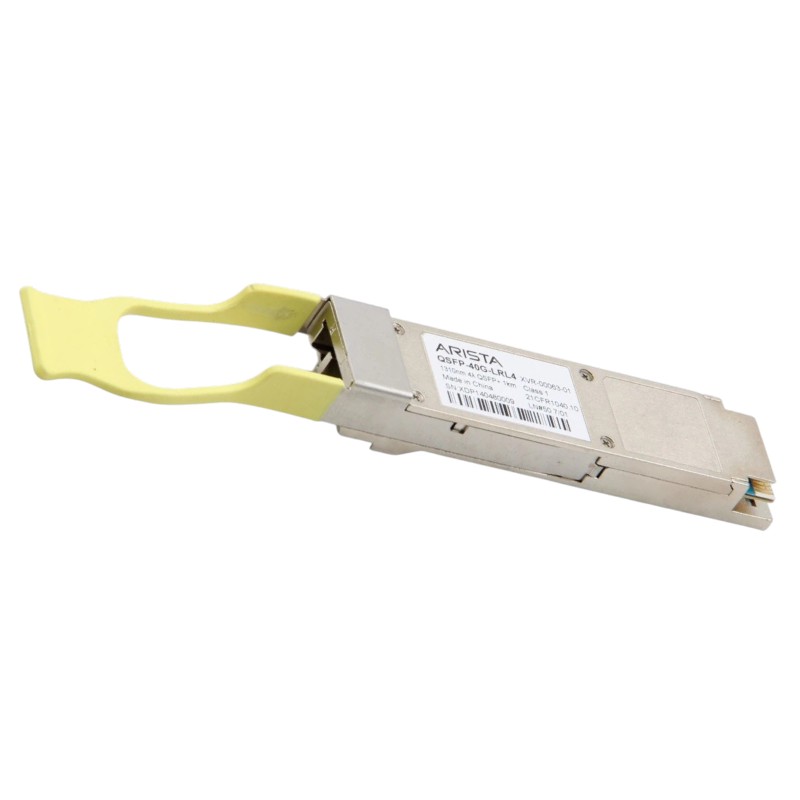


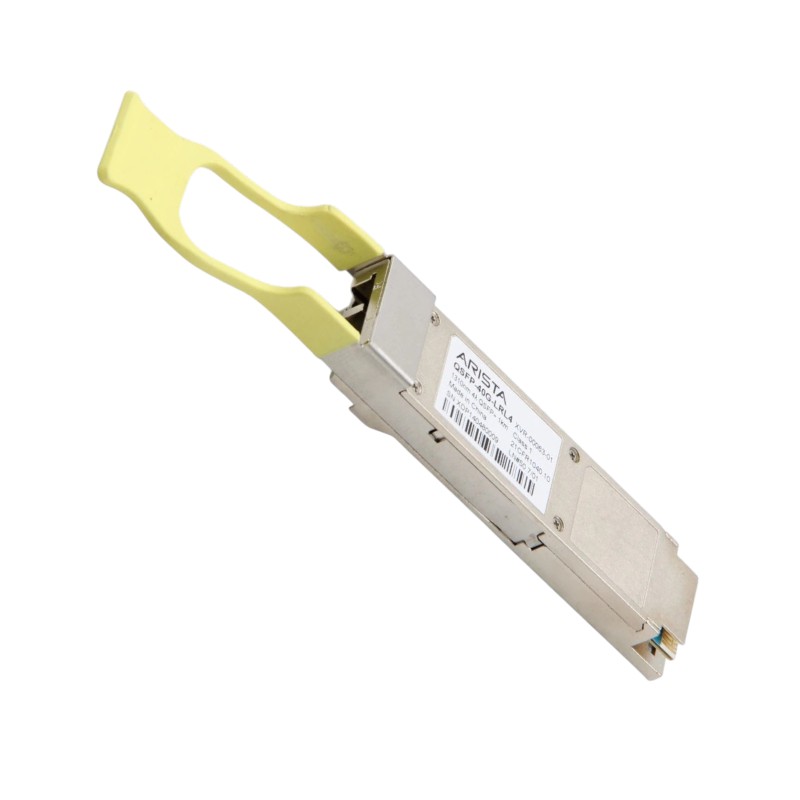
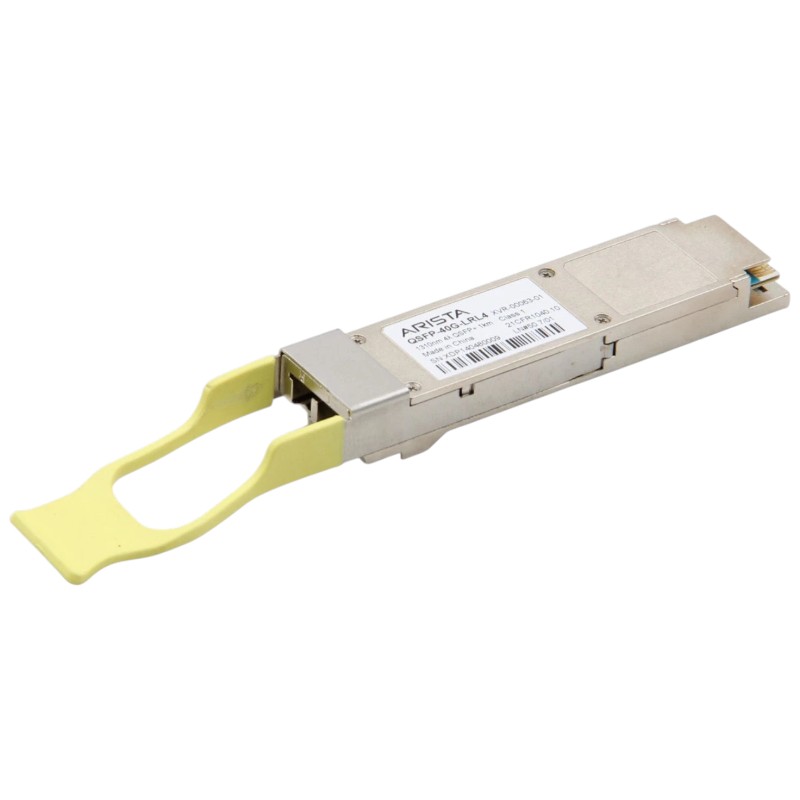
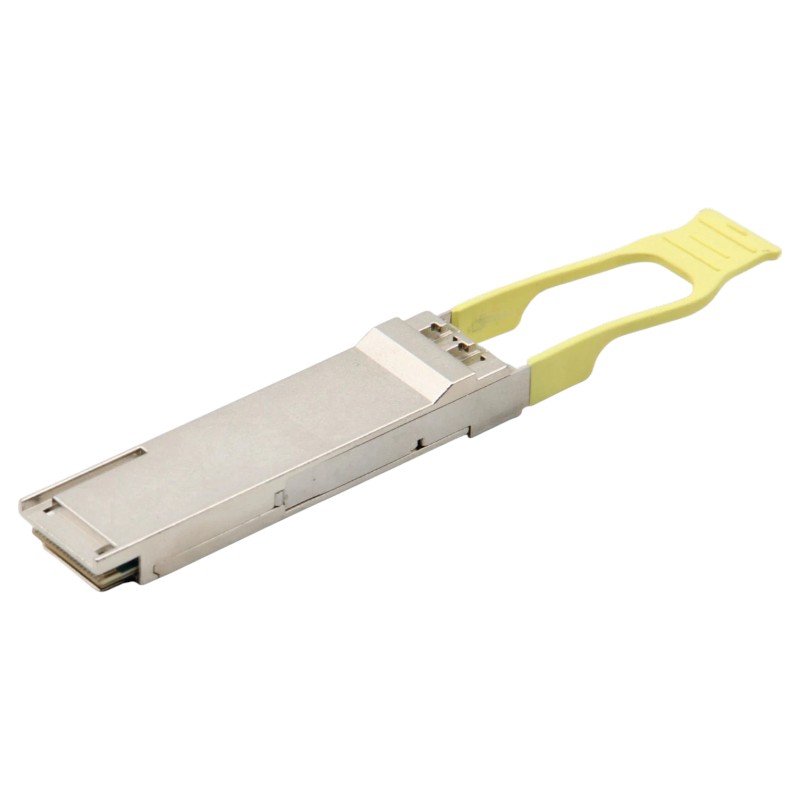
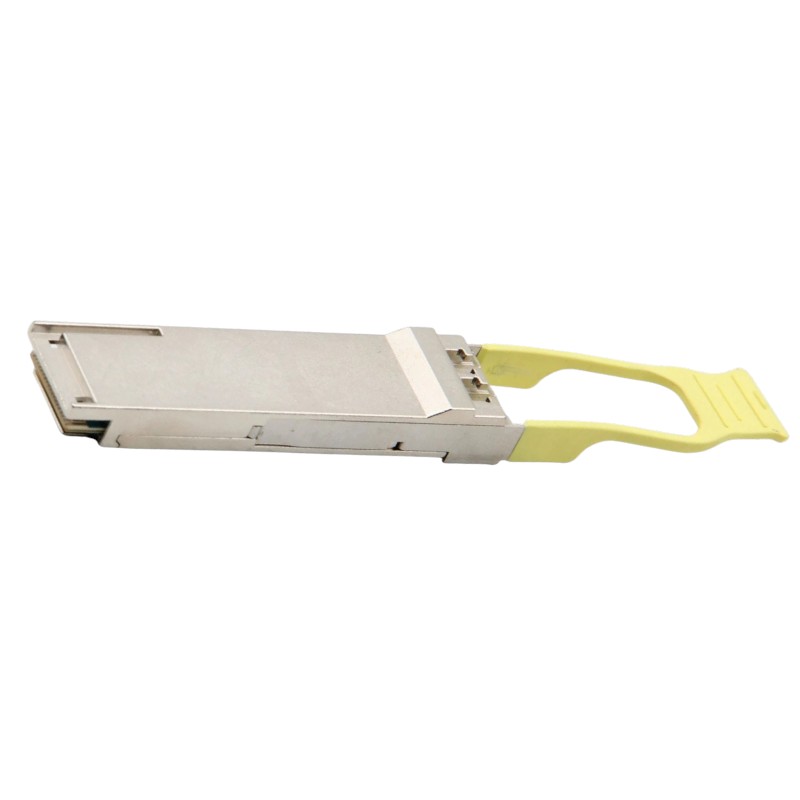
Arista QSFP-40G-LRL4 Compatible 40GBASE-LRL4 QSFP+ Transceiver Module. Excellent Refurbished with 1 Year Replacement Warranty
The Arista QSFP-40G-LRL4 compatible 40GBASE-LRL4 QSFP+ transceiver module is engineered to deliver dependable 40 Gigabit Ethernet connectivity across long-distance single-mode fiber infrastructures. Designed for modern enterprise networks, hyperscale data centers, and high-bandwidth applications, this optical transceiver offers stable performance, reduced latency, and efficient data transmission for mission-critical networking environments.
This 40G QSFP+ optical module supports 40GBASE-LRL4 network technology and is optimized for high-speed Ethernet deployments requiring superior signal integrity and extended transmission distance capabilities. The module is built to satisfy demanding networking standards while ensuring seamless interoperability with compatible Arista networking equipment.
The Arista QSFP-40G-LRL4 Compatible 40GBASE-LRL4 QSFP+ Transceiver Module is designed to support high-speed 40 Gigabit Ethernet connectivity across long-distance single-mode fiber infrastructure. Engineered for demanding enterprise environments, hyperscale data centers, cloud networking frameworks, and carrier-grade transport systems, this optical module delivers stable and efficient data transmission while maintaining compatibility with Arista switching platforms and networking ecosystems.
Modern network infrastructures require scalable bandwidth, low-latency communication, and dependable optical performance. The 40GBASE-LRL4 QSFP+ optical transceiver category addresses these requirements by enabling 40GbE transmission over duplex single-mode fiber using wavelength multiplexing technology. This allows organizations to optimize existing fiber resources while supporting high-capacity workloads and expanding digital infrastructure requirements.
Organizations implementing virtualization, software-defined networking, artificial intelligence clusters, distributed storage systems, and cloud computing architectures depend heavily on optical transceiver technologies capable of maintaining uninterrupted throughput. The Arista compatible QSFP-40G-LRL4 module offers exceptional interoperability, thermal efficiency, and signal integrity for mission-critical deployments.
The 40GBASE-LRL4 standard is engineered to provide 40 Gigabit Ethernet communication over long-range single-mode fiber links. Unlike short-range multimode optics, LRL4 technology supports significantly greater transmission distances by utilizing four independent optical wavelengths transmitted over duplex fiber infrastructure. Each wavelength carries approximately 10Gbps of traffic, which collectively forms the 40Gbps aggregate data rate.
This technology is particularly beneficial for organizations requiring inter-building connectivity, campus networking, data center interconnect applications, and metro Ethernet deployments. The wavelength division multiplexing approach enables efficient bandwidth utilization while minimizing the need for additional fiber strands. By leveraging CWDM principles, the QSFP-40G-LRL4 optical module supports long-distance communication without excessive cabling complexity.
Data-intensive environments benefit substantially from this architecture because it allows scalable expansion while maintaining operational simplicity. The compact QSFP+ form factor additionally enables high-density deployments in modern network switches, routers, and aggregation systems.
Arista-compatible QSFP-40G-LRL4 transceivers are specifically engineered to function seamlessly with Arista Ethernet switches and network operating environments. Compatibility validation ensures stable communication between the optical module and supported hardware platforms, reducing the likelihood of interface errors, interoperability limitations, or firmware recognition issues.
Network administrators frequently deploy compatible transceivers to achieve cost-effective infrastructure scaling without compromising performance standards. These optical modules are programmed and tested for operational consistency with Arista systems used in enterprise cores, cloud fabrics, spine-and-leaf architectures, and high-performance computing networks.
Compatibility extends beyond simple hardware recognition. Reliable Arista-compatible transceivers maintain Digital Optical Monitoring support, interface diagnostics, signal calibration accuracy, and low-level communication standards necessary for enterprise-grade operations. This ensures administrators can monitor optical health, temperature levels, voltage readings, receive power, and transmit power metrics effectively.
The defining advantage of the 40GBASE-LRL4 QSFP+ transceiver category is its ability to transmit data over extended distances using single-mode fiber cabling. Long-range connectivity is essential for organizations operating geographically distributed facilities or large campus infrastructures requiring high-bandwidth backbone communication.
Single-mode fiber transmission reduces attenuation and supports improved signal integrity across long distances compared to multimode alternatives. This makes LRL4 optics suitable for enterprise backbones, metropolitan area networks, and data center interconnect environments where transmission distance limitations would otherwise restrict deployment flexibility.
By supporting duplex single-mode fiber connectivity, organizations can leverage existing optical infrastructure investments while scaling network throughput to 40Gbps. This reduces infrastructure replacement costs and supports phased network modernization strategies.
The Quad Small Form-factor Pluggable Plus design provides exceptional port density and operational efficiency within modern networking equipment. QSFP+ modules occupy less physical space than multiple individual transceivers, enabling higher switch density and more efficient rack utilization.
Data centers focused on maximizing throughput per rack unit benefit greatly from QSFP+ technologies. High-density optical deployments contribute to simplified cable management, lower power consumption, and streamlined airflow optimization. These characteristics are essential for maintaining efficient thermal management within enterprise networking facilities.
The hot-swappable nature of QSFP+ transceivers also allows administrators to replace or upgrade modules without powering down network devices. This minimizes operational disruption and supports continuous network availability during maintenance procedures.
Optical networking environments demand stable signal transmission to maintain application responsiveness and data accuracy. The Arista QSFP-40G-LRL4 compatible module category incorporates advanced optical components designed to preserve signal integrity across long-range links.
Precision optical alignment, integrated laser technologies, and wavelength multiplexing mechanisms contribute to low bit error rates and stable communication performance. This is especially important for latency-sensitive workloads such as financial transactions, virtualization clusters, streaming platforms, and distributed databases.
Stable signal integrity additionally improves overall network reliability by minimizing packet retransmissions, reducing congestion events, and supporting predictable throughput characteristics.
Cloud service providers require scalable networking architectures capable of handling massive east-west traffic flows between servers, storage platforms, and virtualization systems. The Arista-compatible 40GBASE-LRL4 transceiver category enables high-capacity optical connectivity within large-scale cloud infrastructures.
Long-range optical communication allows cloud operators to connect separate halls, facilities, or campus buildings while preserving bandwidth consistency. This is essential for distributed computing environments where latency and throughput directly influence service delivery performance.
Cloud data centers also benefit from the power efficiency and compact design characteristics of QSFP+ optical modules. Reduced power consumption contributes to lower operational costs while supporting sustainability objectives in hyperscale deployments.
Enterprise organizations increasingly rely on high-speed optical backbone connectivity to support unified communications, enterprise resource planning systems, virtualization platforms, and remote collaboration services. The 40GBASE-LRL4 transceiver category supports these requirements by enabling reliable long-range Ethernet communication.
Large enterprise campuses often require backbone connections between data centers, distribution switches, and aggregation layers spanning substantial distances. Single-mode fiber compatibility allows organizations to implement stable optical communication channels while preserving scalability for future expansion initiatives.
Arista-compatible modules provide enterprises with flexibility in selecting optical infrastructure components while maintaining consistent network performance standards across core environments.
Data center interconnect applications require resilient high-bandwidth communication channels between geographically separated facilities. The QSFP-40G-LRL4 optical transceiver category supports these deployments by enabling stable 40GbE transmission over long-distance single-mode fiber links.
Organizations implementing disaster recovery systems, distributed cloud platforms, or geographically redundant infrastructures rely on DCI technologies to synchronize workloads and replicate critical data. High-capacity optical connectivity ensures these synchronization processes occur efficiently without introducing bottlenecks.
Reliable interconnect performance also enhances business continuity planning by supporting rapid failover capabilities and consistent application availability across distributed environments.
The 40GBASE-LRL4 optical architecture utilizes coarse wavelength division multiplexing principles to transmit multiple data channels over duplex single-mode fiber. Each wavelength independently carries a portion of the aggregate 40Gbps traffic stream.
This transmission method enables efficient utilization of existing fiber infrastructure while minimizing cable complexity. Instead of requiring multiple separate fiber pairs for individual channels, CWDM technology consolidates communication into a simplified optical topology.
Efficient wavelength multiplexing also contributes to improved scalability because organizations can increase bandwidth capacity without proportionally increasing cabling requirements. This simplifies network expansion and reduces long-term infrastructure management challenges.
Energy efficiency is a major consideration in modern networking environments. High-density switching infrastructures often contain hundreds or thousands of optical interfaces operating simultaneously. Efficient power consumption therefore directly influences operational expenses and cooling requirements.
The Arista-compatible QSFP-40G-LRL4 transceiver category is engineered with optimized optical and electronic components designed to maintain reliable operation while minimizing energy usage. Reduced power consumption helps data centers improve thermal efficiency and reduce environmental impact.
Efficient thermal characteristics additionally contribute to enhanced hardware longevity and operational stability in high-density deployments.
Successful deployment of QSFP-40G-LRL4 optical modules requires proper single-mode fiber infrastructure planning. Organizations must evaluate fiber quality, connector cleanliness, splice integrity, and link distance requirements before implementation.
Single-mode fiber cabling provides the foundation for long-range optical communication. Proper cable installation and maintenance practices are essential for minimizing attenuation and ensuring reliable transmission performance.
Fiber infrastructure planning additionally includes consideration of future scalability requirements. Organizations deploying long-range 40GbE connectivity often prepare their optical infrastructure for future migration toward higher Ethernet speeds.
Network switches and routers must support QSFP+ interfaces compatible with 40GBASE-LRL4 optical standards. Arista-compatible transceivers are typically validated across a wide range of supported switching platforms to ensure operational consistency.
Administrators should verify firmware compatibility, interface configuration requirements, and optical support matrices before deployment. Proper validation minimizes integration issues and ensures stable link establishment.
Compatibility testing also helps maintain warranty compliance and reduces operational risk within production networking environments.
High-density optical networking equipment generates substantial heat during operation. Effective airflow management and cooling design are therefore essential for maintaining transceiver reliability and preventing thermal-related failures.
The compact QSFP+ form factor supports efficient airflow patterns within enterprise switching equipment. However, proper rack design, ventilation planning, and environmental monitoring remain critical components of long-term operational stability.
Organizations implementing large-scale optical deployments often integrate thermal monitoring systems to maintain optimal operating conditions across data center environments.
Compatible optical transceivers offer organizations an effective strategy for managing networking infrastructure costs while maintaining enterprise-grade performance characteristics. Businesses scaling large optical deployments frequently seek cost-efficient alternatives that preserve interoperability with existing Arista hardware platforms.
Arista-compatible QSFP-40G-LRL4 modules enable enterprises to expand optical capacity while maintaining budget flexibility for additional networking investments. Cost optimization becomes particularly important in hyperscale data centers and cloud environments where optical interface counts may reach thousands of ports.
Organizations can allocate savings toward infrastructure modernization, cybersecurity enhancements, virtualization technologies, or cloud expansion initiatives.
Enterprise networking environments require consistent operational stability to support mission-critical applications and business continuity requirements. Compatible QSFP-40G-LRL4 optical modules are engineered and tested to maintain dependable communication performance under demanding workloads.
Stable optical transmission characteristics contribute to predictable application responsiveness and reduced downtime risks. Reliability is especially important in industries such as healthcare, finance, telecommunications, education, and government infrastructure.
Consistent performance additionally supports high availability architectures designed to minimize service interruptions and maintain uninterrupted digital operations.
Scalability remains a primary consideration in modern network architecture design. The 40GBASE-LRL4 optical category supports scalable deployment models by enabling organizations to expand bandwidth capacity without excessive infrastructure replacement.
Long-range single-mode fiber connectivity allows enterprises to extend network reach while preserving architectural flexibility. This supports evolving business requirements and future digital transformation strategies.
Scalable optical networking also simplifies migration planning toward higher Ethernet speeds, including 100GbE and beyond, by establishing robust single-mode fiber foundations.
Virtualized data center infrastructures generate significant east-west traffic flows between hypervisors, storage systems, and application platforms. The Arista-compatible QSFP-40G-LRL4 transceiver category provides the bandwidth necessary to support these demanding traffic patterns.
High-speed optical communication reduces latency bottlenecks and enhances workload mobility across virtualized clusters. Reliable 40GbE connectivity contributes to improved application performance and more efficient resource utilization.
Virtual machine migration, storage replication, and distributed application processing all benefit from stable long-range Ethernet connectivity.
Modern storage environments require fast and dependable communication between storage arrays, backup systems, and compute infrastructure. The 40GBASE-LRL4 optical category supports storage networking applications requiring consistent throughput and low-latency operation.
Distributed storage architectures frequently span multiple data center zones or buildings, making long-range single-mode fiber connectivity essential. High-bandwidth optical communication improves backup efficiency, replication speed, and disaster recovery performance.
Reliable storage networking contributes directly to data availability, operational continuity, and application responsiveness across enterprise environments.


 Contact Us
 Information
 Catalog
 Solid State Drives (SSD)
 Network Switches
 Hard Disk Drives
 HBA & Controllers
 PC & Servers
 PC & Server Memory
 CPU & Processors
 Network Routers
 Power Supplies
 Tape Drives & Libraries
 Network Devices
 Computer & Network Cables