(7% discount is applied at checkout)
Cart is empty
Your go-to destination for cutting-edge server products



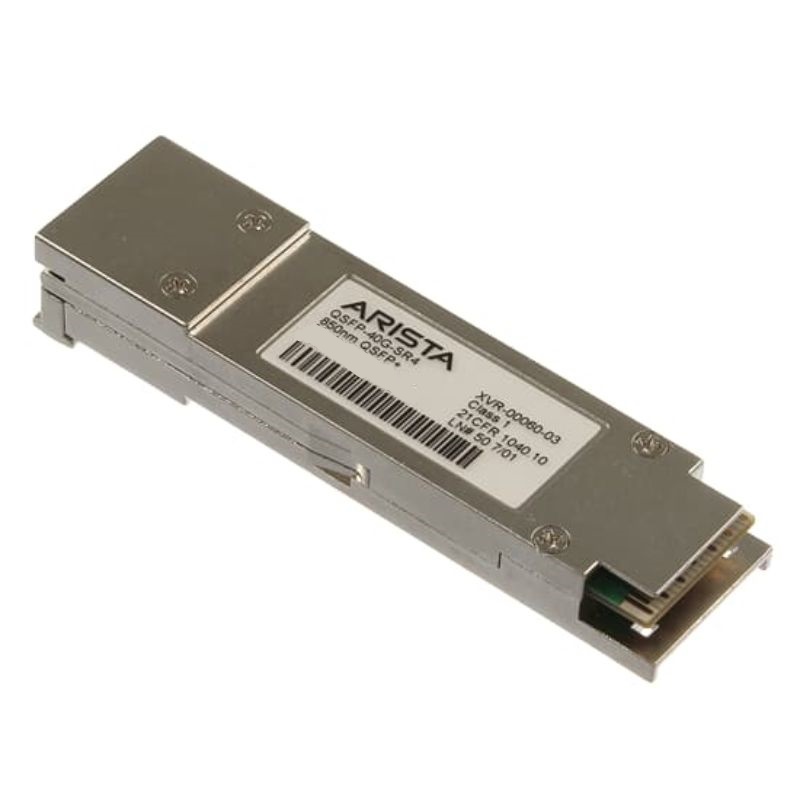
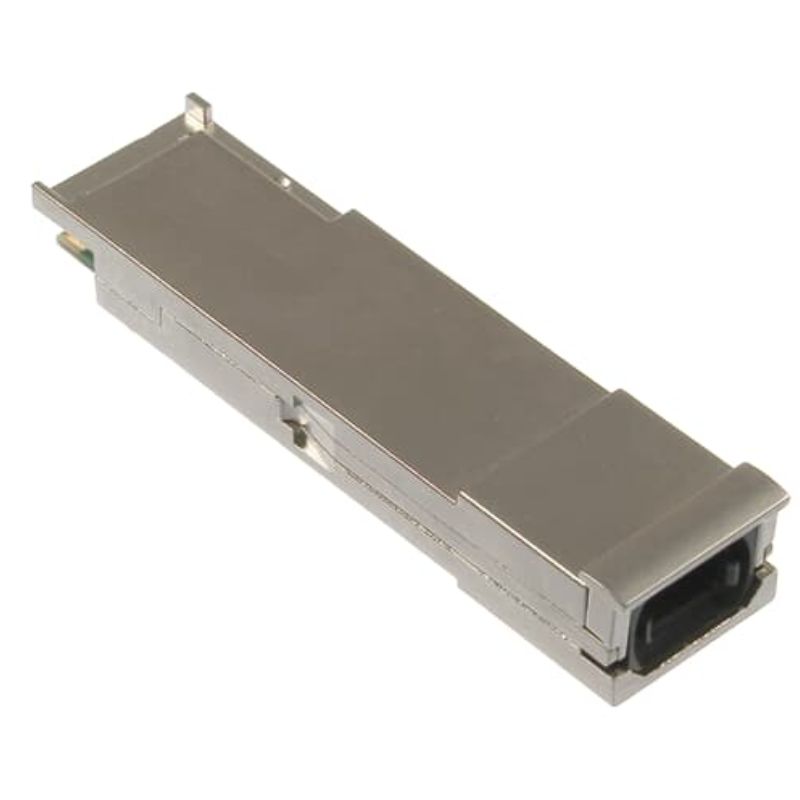
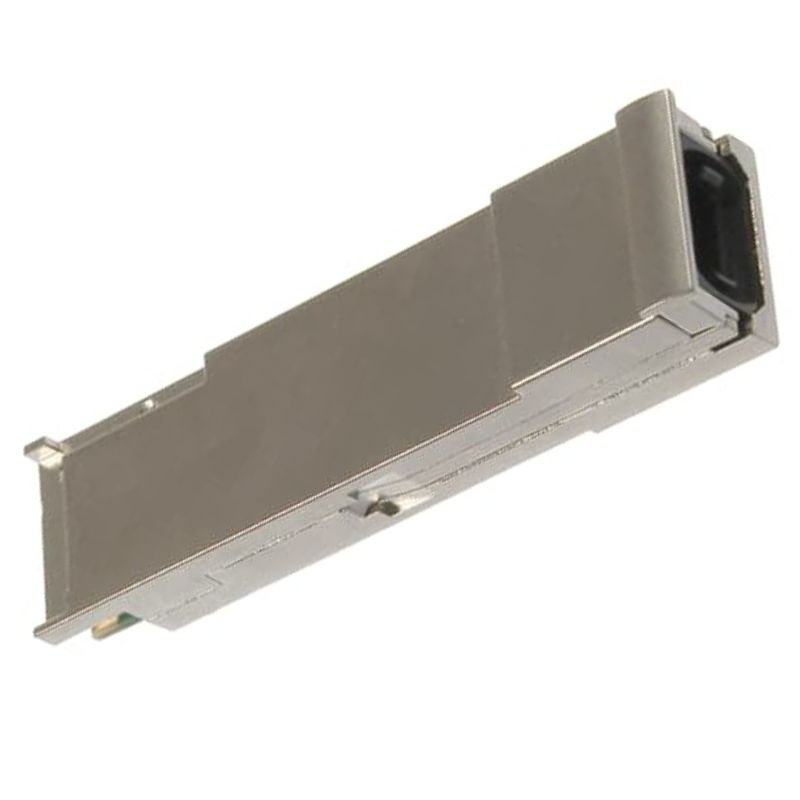
Arista QSFP-SR4 40GBASE QSFP+ 850nm 150m DOM MPO-12/UPC MMF Optical Transceiver Module. Excellent Refurbished with 1-Year Replacement Warranty
The Arista QSFP-SR4 40G transceiver is engineered for high-speed optical communication. Operating at 850nm wavelength, this module is ideal for short-reach multimode fiber (MMF) applications, ensuring efficient and reliable connectivity in modern data centers.
The Arista QSFP-SR4 40GBASE QSFP+ 850nm 150m DOM MPO-12/UPC MMF Optical Transceiver Module is engineered for modern high-density networking environments that require ultra-fast data transmission, reliable signal integrity, and scalable connectivity architecture. Designed for 40 Gigabit Ethernet deployments, this QSFP+ optical transceiver delivers exceptional performance across multimode fiber infrastructures while maintaining compatibility with enterprise, cloud, hyperscale, and data center networking ecosystems.
This optical module operates using an 850nm wavelength and supports transmission distances up to 150 meters over OM4 multimode fiber and shorter distances over OM3 fiber. The MPO-12/UPC connector interface enables parallel optical communication, allowing multiple transmit and receive channels to function simultaneously for high-bandwidth applications. As organizations continue to adopt virtualization, artificial intelligence workloads, high-frequency trading systems, and software-defined infrastructure, the importance of dependable 40G connectivity continues to grow across network architectures.
The compact QSFP+ form factor allows network administrators to maximize switch port density without increasing physical rack space requirements. This transceiver category is particularly suitable for spine-and-leaf data center topologies, storage area networks, high-performance computing clusters, and aggregation layers where bandwidth-intensive traffic flows continuously between servers, switches, and storage systems.
QSFP+ technology represents a significant advancement in Ethernet networking by consolidating four independent transmit and receive channels into a single compact module. Each lane typically carries 10Gbps of data, resulting in an aggregated throughput of 40Gbps. This architecture provides improved scalability while reducing cable congestion, power consumption, and hardware footprint within modern networking environments.
The Arista QSFP-SR4 transceiver category is optimized for short-range optical communication over multimode fiber infrastructure. This makes it an excellent choice for inter-rack and intra-data-center communication where low latency and high-speed performance are critical operational requirements.
Organizations deploying virtualization platforms, containerized applications, cloud orchestration frameworks, and distributed storage systems benefit significantly from the bandwidth efficiency and reliability offered by QSFP+ optical technology. The module supports rapid data movement between network devices while ensuring signal stability and minimal packet loss.
The 850nm wavelength utilized in QSFP-SR4 optical modules relies on Vertical-Cavity Surface-Emitting Laser technology, commonly known as VCSEL. VCSEL lasers are widely used in short-range multimode optical communication because they provide high modulation speeds, reduced manufacturing costs, and lower power requirements compared to long-range laser alternatives.
VCSEL-based optical communication is especially advantageous in dense networking environments because it maintains reliable performance while reducing thermal output. This contributes to improved energy efficiency inside high-density switching platforms and enterprise networking hardware.
Data centers operating continuous workloads demand consistent optical signal quality and low bit error rates. The 850nm VCSEL architecture helps maintain stable communication channels across parallel fiber connections while supporting rapid packet transmission in bandwidth-intensive workloads.
The MPO-12/UPC connector interface is one of the defining features of the Arista QSFP-SR4 transceiver category. MPO technology supports multiple optical fibers within a single compact connector housing, enabling simultaneous data transmission across parallel channels.
Traditional duplex fiber connections require multiple individual cable assemblies to achieve equivalent bandwidth levels. In contrast, MPO-based infrastructure simplifies cable management while increasing port density and reducing deployment complexity. This is especially beneficial in hyperscale data centers where efficient airflow and organized cable routing directly impact operational efficiency.
Parallel optical transmission also improves scalability for future network expansion projects. Enterprises planning migration paths toward higher Ethernet standards often deploy MPO-based structured cabling because it supports easier upgrades to 100G and beyond.
The Ultra Physical Contact polishing method used in MPO-12/UPC connectors enhances fiber alignment precision and minimizes optical reflection. Reduced insertion loss and back reflection are essential for maintaining signal quality across high-speed optical communication channels.
High-performance enterprise networks require exceptional signal consistency to support real-time applications, distributed databases, virtualization clusters, and large-scale storage synchronization. UPC-polished connectors contribute to improved optical efficiency by ensuring accurate fiber core alignment during transmission.
Signal integrity becomes increasingly important in environments utilizing low-latency communication protocols and mission-critical applications. The MPO-12/UPC design helps preserve network reliability while supporting continuous high-throughput data exchange.
Digital Optical Monitoring functionality provides administrators with real-time operational diagnostics for optical transceivers. The Arista QSFP-SR4 module category includes DOM support, enabling visibility into critical performance metrics such as optical output power, receive power levels, module temperature, supply voltage, and laser bias current.
Modern enterprise infrastructures depend heavily on predictive maintenance and proactive network monitoring. DOM technology helps network engineers identify potential issues before they lead to service disruptions or connectivity failures.
In high-availability environments where downtime can result in financial losses and operational interruptions, real-time transceiver diagnostics play a crucial role in maintaining network stability. Administrators can quickly isolate problematic optical links, detect abnormal thermal conditions, and optimize infrastructure performance using DOM data.
Troubleshooting optical network issues without diagnostic visibility can be time-consuming and disruptive. DOM-enabled QSFP+ transceivers simplify troubleshooting by offering immediate access to performance indicators directly through supported network operating systems and management platforms.
Engineers can evaluate signal degradation, monitor optical power fluctuations, and verify module health remotely without physically inspecting hardware components. This reduces maintenance overhead while improving response times during incident management procedures.
For organizations operating geographically distributed infrastructure, remote optical diagnostics are especially valuable because they minimize the need for on-site intervention and accelerate operational recovery processes.
The Arista QSFP-SR4 optical transceiver supports multimode fiber cabling standards including OM3 and OM4. These fiber types are commonly deployed within enterprise campuses and data centers due to their cost-effectiveness and strong performance characteristics for short-range optical communication.
OM3 multimode fiber supports transmission distances suitable for many enterprise deployments, while OM4 fiber extends the operational reach of the transceiver up to 150 meters. This flexibility allows organizations to optimize infrastructure investments according to deployment scale and performance requirements.
Multimode fiber infrastructure remains a preferred solution for short-distance high-speed networking because it offers lower transceiver costs and simplified installation compared to single-mode alternatives. The QSFP-SR4 module category leverages these advantages while delivering reliable 40Gbps throughput.
Low latency is a critical requirement in environments supporting real-time analytics, video processing, financial applications, and distributed computing frameworks. The optical architecture of the QSFP-SR4 transceiver enables rapid signal propagation with minimal transmission delay.
Compared to traditional copper-based networking solutions, optical communication provides superior electromagnetic interference resistance and reduced latency characteristics. These benefits are essential in high-density infrastructure where consistent data delivery directly influences application performance.
Organizations deploying cloud-native applications and distributed virtualization platforms require dependable low-latency communication to maintain synchronization between servers, storage devices, and network appliances. The QSFP-SR4 category supports these operational demands effectively.
Modern data centers frequently adopt spine-and-leaf network architectures to improve scalability, reduce bottlenecks, and support east-west traffic patterns. The Arista QSFP-SR4 optical transceiver category is particularly effective in these environments because it enables high-bandwidth interconnectivity between spine and leaf switches.
As virtualization density increases and workloads become more distributed, east-west traffic volumes continue to rise significantly. High-speed optical connectivity helps maintain consistent performance across switching layers while supporting efficient workload mobility and application availability.
The compact QSFP+ form factor also allows data center operators to maximize switch density within limited rack space. This contributes to better infrastructure utilization and simplified scaling strategies.
High-performance computing clusters require rapid communication between compute nodes to support parallel processing operations. The QSFP-SR4 module category delivers the bandwidth and low-latency performance needed for scientific simulations, artificial intelligence training, machine learning algorithms, and advanced analytics workloads.
Large-scale HPC environments generate enormous volumes of data that must move efficiently between processing resources and storage systems. Optical transceivers designed for 40GbE connectivity help minimize communication bottlenecks and maintain computational efficiency.
Reliable optical communication infrastructure is especially important in research institutions, engineering simulations, and financial modeling environments where application responsiveness and processing accuracy are critical operational factors.
Cloud infrastructure depends heavily on scalable and resilient networking technologies capable of supporting dynamic workload distribution. The Arista QSFP-SR4 optical transceiver category enables rapid communication between virtualization hosts, storage arrays, and aggregation switches.
Virtual machine migration, distributed storage replication, and container orchestration frameworks all require substantial network throughput. Optical QSFP+ modules provide the bandwidth necessary to maintain application responsiveness while supporting continuous service delivery.
As organizations increasingly adopt hybrid cloud and multi-cloud architectures, high-speed optical networking becomes essential for maintaining seamless connectivity between infrastructure components and service layers.
Power efficiency is a major consideration in modern networking infrastructure because rising energy demands directly affect operational costs and cooling requirements. The Arista QSFP-SR4 optical transceiver category is engineered to deliver high-speed optical performance while maintaining relatively low power consumption.
Lower thermal output contributes to improved cooling efficiency within switching platforms and networking racks. This helps reduce strain on HVAC systems and supports environmentally sustainable infrastructure strategies.
Efficient power utilization also enables higher transceiver density within networking equipment without exceeding thermal limitations. This is particularly beneficial in hyperscale and enterprise environments where maximizing rack efficiency is a critical design objective.
High-density networking equipment generates substantial heat during continuous operation. Optical transceivers deployed in these environments must maintain stable performance despite elevated thermal conditions.
The QSFP-SR4 module category is designed to support consistent operation in demanding infrastructure scenarios. Advanced thermal management characteristics help ensure reliable data transmission while minimizing the risk of performance degradation caused by excessive temperatures.
Reliable thermal behavior is essential for maintaining long-term operational stability in enterprise data centers, telecommunications facilities, and cloud computing environments.
The Arista QSFP-SR4 optical transceiver category is designed for compatibility with Arista networking platforms and operating systems. Seamless integration ensures simplified deployment procedures, reliable interoperability, and consistent network management experiences.
Arista switches are widely recognized for their performance, scalability, and low-latency switching capabilities. Pairing certified optical modules with compatible switching hardware helps maintain network reliability while reducing interoperability concerns.
Network administrators benefit from simplified provisioning workflows and accurate optical monitoring visibility when deploying compatible transceiver solutions within Arista ecosystems.
Modern enterprise environments often incorporate equipment from multiple vendors. Optical transceiver compatibility plays an important role in maintaining seamless communication across heterogeneous networking infrastructures.
The QSFP-SR4 module category supports industry-standard 40GBASE-SR4 specifications, enabling broad interoperability with supported networking devices and structured cabling systems. This flexibility simplifies infrastructure expansion and migration planning.
Organizations seeking scalable networking solutions can leverage standardized optical technologies to maintain operational consistency while adapting to evolving infrastructure requirements.
Many organizations implementing 40GbE networking today are simultaneously preparing for future migration toward 100GbE and beyond. MPO-based cabling infrastructure and QSFP+ optical architectures provide a practical foundation for long-term scalability.
Deploying structured fiber systems compatible with parallel optics simplifies future upgrade strategies by reducing the need for extensive recabling projects. This helps organizations preserve infrastructure investments while supporting evolving bandwidth requirements.
The Arista QSFP-SR4 optical transceiver category aligns effectively with scalable network design principles that prioritize flexibility, efficiency, and long-term operational sustainability.
Digital transformation continues to reshape enterprise networking requirements through increased reliance on cloud services, artificial intelligence, edge computing, and real-time analytics. High-speed optical communication infrastructure is essential for supporting these evolving operational demands.
The QSFP-SR4 transceiver category provides the bandwidth, reliability, and scalability necessary for organizations modernizing their IT infrastructure. Whether supporting private cloud deployments, virtual desktop infrastructure, or large-scale application environments, 40GbE optical networking remains a critical technology component.
As enterprises continue expanding digital services and interconnected applications, dependable optical transceiver solutions will remain central to maintaining performance, availability, and efficient data movement across modern networking ecosystems.


 Contact Us
 Information
 Catalog
 Solid State Drives (SSD)
 Network Switches
 Hard Disk Drives
 HBA & Controllers
 PC & Servers
 PC & Server Memory
 CPU & Processors
 Network Routers
 Power Supplies
 Tape Drives & Libraries
 Network Devices
 Computer & Network Cables