(7% discount is applied at checkout)
Cart is empty
Your go-to destination for cutting-edge server products



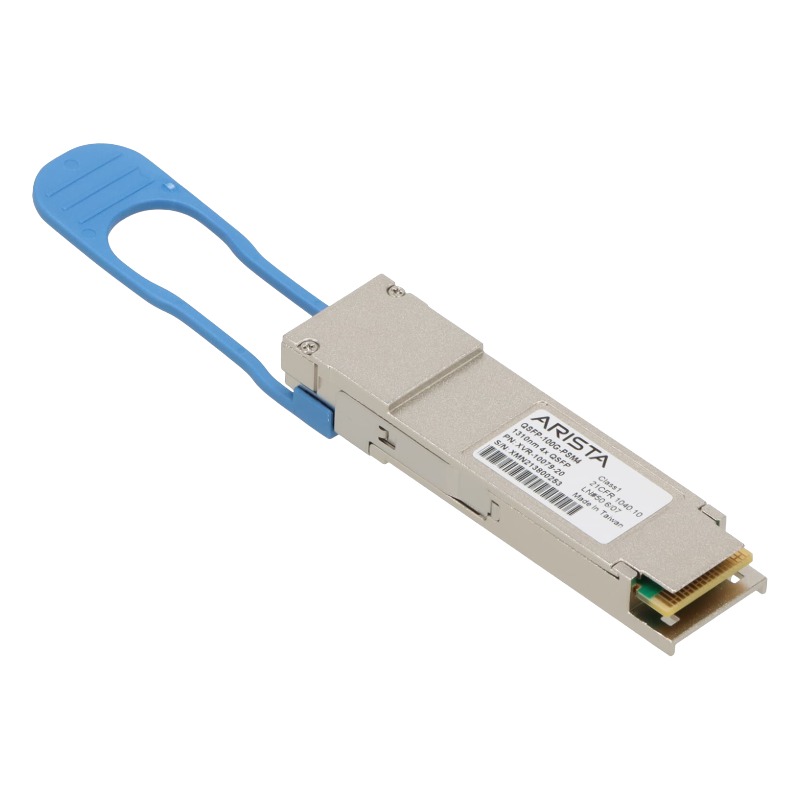
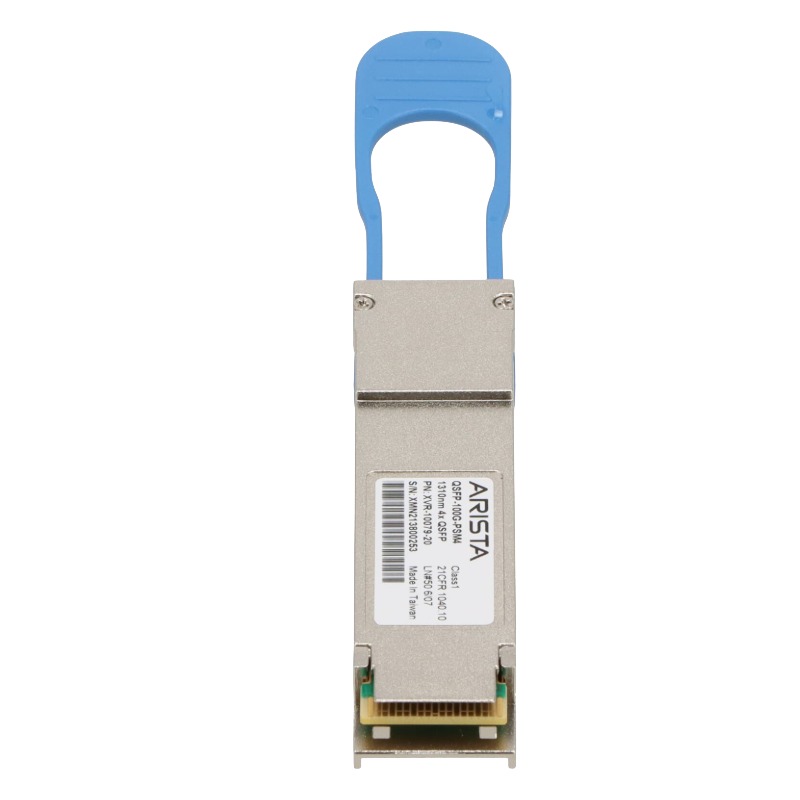
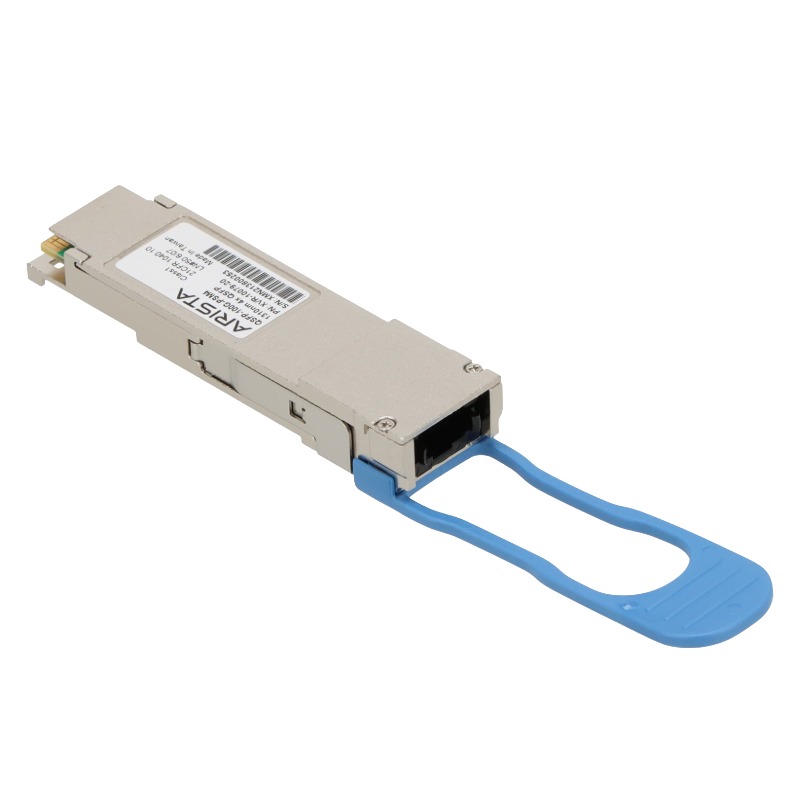
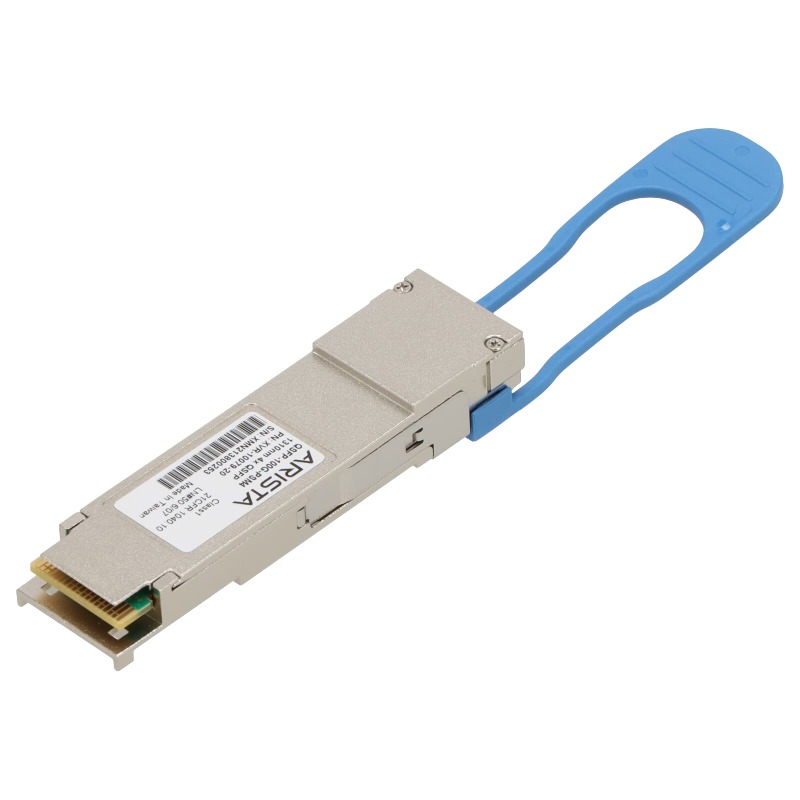
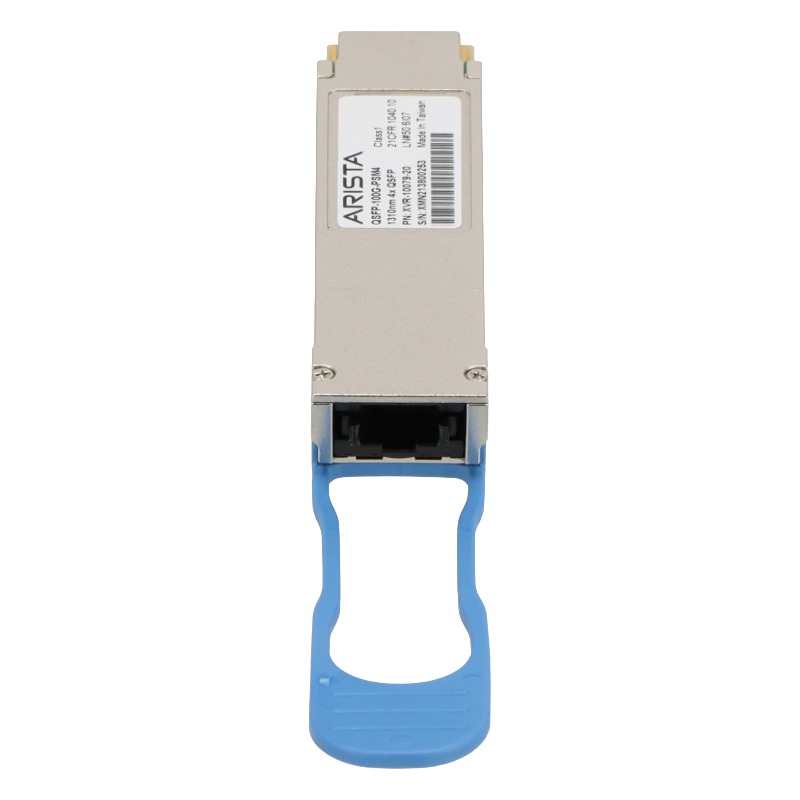
Arista XVR-10079-20 100GBASE-PSM4 QSFP Up to 500m Over Parallel SMF Optical Transceiver Module. Excellent Refurbished with 1 Year Replacement Warranty
The Arista XVR-10079-20 is a high-performance 100GBASE-PSM4 QSFP28 optical transceiver engineered for ultra-fast data transmission across parallel single-mode fiber (SMF) networks. Designed for modern enterprise, cloud computing, and hyperscale data center environments, this optical module delivers stable high-bandwidth connectivity with transmission distances of up to 500 meters.
The Arista XVR-10079-20 100GBASE-PSM4 QSFP optical transceiver module is engineered to support ultra-fast 100 Gigabit Ethernet connectivity across modern enterprise, hyperscale, and data center infrastructures. Designed for parallel single-mode fiber environments, this advanced optical networking solution enables reliable high-bandwidth transmission up to 500 meters while maintaining exceptional signal integrity and operational efficiency. Organizations deploying large-scale cloud architectures, virtualization platforms, storage networks, and high-performance computing environments benefit significantly from the superior capabilities offered by this 100G QSFP optical transceiver.
As data traffic continues to increase due to virtualization, AI workloads, streaming platforms, cloud applications, and edge computing, enterprises require scalable optical networking components capable of handling intensive bandwidth requirements without compromising stability. The Arista XVR-10079-20 transceiver module fulfills these demands by integrating high-density connectivity, energy-efficient performance, and low-latency optical transmission into a compact QSFP form factor suitable for modern network switching environments.
The 100GBASE-PSM4 technology utilized in this transceiver leverages parallel single-mode fiber transmission to deliver 100 Gigabit Ethernet throughput through four independent optical lanes. Each lane operates at 25Gbps, collectively enabling seamless 100G data communication for mission-critical applications. This architecture is highly beneficial for organizations seeking cost-effective high-speed optical deployment while maintaining compatibility with existing single-mode fiber infrastructures.
The Arista XVR-10079-20 optical transceiver is based on the 100GBASE-PSM4 Ethernet standard, which is specifically developed to support parallel optical communication over single-mode fiber. Unlike traditional duplex optical transmission systems, PSM4 technology uses multiple parallel lanes for simultaneous data transfer, allowing organizations to achieve significantly higher throughput levels with excellent efficiency and scalability.
Within the transceiver module, four separate transmit channels and four receive channels operate concurrently to establish stable 100Gbps communication. Each optical lane transfers data at 25Gbps using dedicated fibers, creating a highly reliable and low-latency communication environment ideal for demanding network architectures. The use of parallel optics also reduces electrical complexity within switching platforms and enables more predictable high-speed transmission performance.
PSM4 technology is particularly suitable for large-scale data center deployments where structured cabling systems require consistent performance across multiple racks and aggregation layers. The 500-meter transmission capability of the Arista XVR-10079-20 ensures that organizations can interconnect network devices across expansive facilities while maintaining signal quality and minimizing packet loss.
Parallel single-mode fiber architecture provides several operational and technical advantages for enterprise networking environments. The use of multiple dedicated optical lanes enables higher aggregate bandwidth while simplifying optical signal processing and reducing transmission overhead. Since single-mode fiber supports long-distance transmission with lower attenuation compared to multimode fiber, organizations gain enhanced deployment flexibility and improved infrastructure longevity.
The Arista XVR-10079-20 transceiver supports optimized communication between top-of-rack switches, spine switches, aggregation layers, and core network infrastructures. Enterprises adopting software-defined networking and leaf-spine architectures can utilize this optical module to ensure predictable performance and scalable bandwidth expansion as network demands increase over time.
Parallel single-mode optical communication also contributes to lower electromagnetic interference susceptibility, improved signal clarity, and superior long-term reliability in mission-critical environments. These characteristics are essential for financial institutions, healthcare organizations, telecommunications providers, and cloud service operators that require uninterrupted high-speed connectivity.
The compact QSFP form factor integrated into the Arista XVR-10079-20 optical transceiver allows organizations to maximize port density within modern switching and routing platforms. High-density networking environments often require hundreds or thousands of optical connections within limited rack space, making efficient transceiver design a critical component of scalable infrastructure planning.
The QSFP architecture enables network administrators to deploy multiple 100G optical connections within a compact footprint while minimizing power consumption and thermal output. This contributes to improved operational efficiency, reduced cooling requirements, and enhanced scalability within enterprise data centers.
Modern hyperscale environments depend heavily on high-density optical deployments to support massive east-west traffic generated by distributed computing workloads and virtualization platforms. The Arista XVR-10079-20 addresses these requirements by combining compact physical dimensions with enterprise-grade optical performance, allowing network operators to optimize infrastructure utilization without sacrificing connectivity quality.
The hot-pluggable capability of the Arista XVR-10079-20 optical transceiver simplifies installation, replacement, and maintenance procedures within live network environments. Network administrators can add or replace transceiver modules without powering down switches or disrupting critical services, significantly reducing maintenance downtime and operational interruptions.
Hot-swappable transceiver functionality is particularly valuable in enterprise and carrier-grade environments where continuous uptime is essential. Data centers supporting cloud applications, online transaction systems, video streaming platforms, and enterprise resource planning solutions benefit greatly from the ability to perform hardware maintenance without affecting production traffic.
The module’s standardized QSFP interface also ensures consistent compatibility across supported networking platforms, allowing IT teams to streamline inventory management and reduce deployment complexity throughout large-scale infrastructures.
The Arista XVR-10079-20 optical transceiver is manufactured to maintain reliable operation under demanding environmental conditions commonly encountered within enterprise and hyperscale data centers. Precision engineering and strict manufacturing standards contribute to long operational life and stable optical performance.
The transceiver housing is designed to support efficient thermal dissipation while protecting internal optical components from contamination and mechanical stress. Robust connector interfaces help maintain signal consistency and minimize insertion loss throughout extended operational cycles.
Organizations deploying high-performance networking equipment require optical modules capable of sustaining continuous data transmission under intensive workloads. The Arista XVR-10079-20 delivers dependable operation suitable for mission-critical enterprise networking applications where reliability directly impacts business continuity.
The 500-meter transmission range supported by the Arista XVR-10079-20 optical transceiver provides enterprises with substantial flexibility when designing and expanding network infrastructures. Medium-range optical communication is essential for interconnecting network equipment across large data halls, multi-row deployments, enterprise campuses, and distributed computing environments.
Single-mode fiber transmission enables superior distance capabilities compared to multimode alternatives while maintaining excellent signal quality and reduced attenuation. This makes the module highly suitable for organizations seeking future-ready optical infrastructure capable of supporting long-term bandwidth growth.
Within modern leaf-spine network architectures, consistent low-latency communication between switching layers is critical for application responsiveness and workload performance. The Arista XVR-10079-20 supports these requirements by delivering stable 100G optical transmission across medium-range single-mode fiber deployments.
Data center networking environments continue to evolve rapidly as organizations adopt artificial intelligence, machine learning, distributed storage, and containerized applications. These technologies generate substantial east-west traffic patterns that require scalable high-bandwidth optical communication between compute nodes, storage arrays, and switching platforms.
The Arista XVR-10079-20 optical transceiver is specifically optimized to support modern data center architectures requiring high-throughput interconnectivity and predictable latency performance. Its 100GBASE-PSM4 design facilitates rapid data transfer between top-of-rack switches and spine switches while supporting scalable infrastructure expansion.
Cloud providers and enterprise IT departments implementing virtualization technologies often require high-capacity optical links capable of supporting large volumes of virtual machine traffic and distributed application workloads. The transceiver’s stable 100Gbps throughput helps ensure seamless communication between virtualized resources and network infrastructure components.
Virtualized environments generate substantial network traffic due to workload mobility, storage synchronization, and distributed application communication. High-speed optical connectivity is essential for maintaining consistent performance across virtualized infrastructures and cloud computing platforms.
The Arista XVR-10079-20 optical module supports the bandwidth demands associated with large-scale virtualization deployments by enabling low-latency 100G communication between servers, switches, and storage systems. Organizations operating private clouds, hybrid clouds, and public cloud infrastructures can leverage this transceiver to enhance scalability and improve workload efficiency.
Reliable high-speed optical transmission also contributes to improved application responsiveness, faster data replication, and reduced network congestion during peak operational periods. These advantages are particularly valuable for businesses managing mission-critical applications and latency-sensitive services.
The Arista XVR-10079-20 100GBASE-PSM4 QSFP optical transceiver module supports a wide variety of enterprise networking applications across numerous industries and operational environments. Its combination of high bandwidth, medium-range transmission, and reliable optical performance makes it suitable for deployments requiring scalable and resilient communication infrastructure.
Large enterprise organizations commonly utilize 100G optical transceivers to establish high-capacity links between aggregation switches, core network devices, and distributed server environments. As enterprise workloads continue to increase due to cloud adoption and digital transformation initiatives, scalable optical networking solutions become increasingly essential.
Financial institutions rely on ultra-fast optical communication to support real-time transaction processing, market data distribution, and low-latency trading systems. Healthcare organizations deploy high-speed optical infrastructure to manage electronic medical records, medical imaging systems, and telemedicine platforms. Educational institutions utilize scalable 100G connectivity to support research computing environments, online learning platforms, and campus-wide network services.
Hyperscale data centers require massive network scalability to accommodate growing application workloads, cloud services, and distributed computing resources. The Arista XVR-10079-20 optical transceiver provides the high-bandwidth communication capabilities necessary for efficient hyperscale infrastructure operation.
Cloud service providers often deploy thousands of optical links across extensive server clusters and switching fabrics. The compact QSFP design of this transceiver allows operators to maximize switch port density while maintaining efficient power utilization and thermal management.
Parallel single-mode optical communication is especially valuable within hyperscale environments due to its ability to deliver predictable performance and reliable signal integrity across large-scale deployments. The module’s 500-meter transmission range further enhances deployment flexibility by enabling communication between network segments located throughout expansive facilities.
Storage networking environments require exceptionally fast and reliable connectivity to support data replication, backup operations, and distributed storage architectures. The Arista XVR-10079-20 transceiver facilitates rapid data movement between storage arrays and network infrastructure, helping organizations maintain efficient storage performance and business continuity.
High-performance computing environments also benefit significantly from low-latency 100G optical communication. Scientific research institutions, engineering organizations, and AI development facilities often process large datasets requiring high-throughput interconnectivity between compute nodes and storage resources.
The transceiver’s stable optical performance supports these intensive workloads by minimizing communication bottlenecks and enabling efficient parallel processing operations. Consistent high-speed data transfer contributes to faster computational results and improved infrastructure efficiency.
The Arista XVR-10079-20 optical transceiver is engineered to maintain superior signal integrity and consistent optical performance across high-bandwidth networking environments. Advanced optical components and precision manufacturing processes contribute to stable transmission quality, reduced bit error rates, and reliable long-term operation.
Maintaining signal integrity is particularly important within 100 Gigabit Ethernet environments where even minor transmission inconsistencies can impact application performance and network reliability. The transceiver utilizes optimized optical circuitry and advanced modulation techniques to ensure efficient data transmission across single-mode fiber infrastructure.
Low insertion loss and high optical sensitivity further enhance communication reliability by supporting stable signal reception throughout the supported transmission range. These characteristics are essential for enterprise environments requiring predictable network performance under demanding operational conditions.
Network latency directly affects application responsiveness, user experience, and overall infrastructure efficiency. The Arista XVR-10079-20 optical transceiver minimizes latency through optimized parallel optical communication architecture and high-speed data processing capabilities.
Low-latency optical communication is especially important for real-time applications such as financial trading systems, online gaming platforms, AI inference workloads, and distributed database environments. The transceiver’s efficient optical design supports rapid packet transmission while maintaining consistent throughput and minimizing retransmissions.
Efficient data transmission also contributes to improved network utilization and reduced congestion across enterprise infrastructures. Organizations deploying high-bandwidth workloads benefit from the transceiver’s ability to support large-scale data movement without compromising communication stability.
Power efficiency and thermal management are critical considerations within modern data center environments where large numbers of optical transceivers operate continuously. The Arista XVR-10079-20 is designed to maintain high optical performance while minimizing energy consumption and heat generation.
Efficient thermal dissipation mechanisms help ensure stable operation even under sustained high-bandwidth workloads. Reduced thermal output contributes to lower cooling requirements, improved hardware longevity, and enhanced operational sustainability within enterprise facilities.
Energy-efficient optical transceivers also support organizational sustainability initiatives by reducing overall power consumption across network infrastructures. As enterprises increasingly prioritize environmentally responsible IT operations, efficient networking components become essential elements of long-term infrastructure planning.
The Arista XVR-10079-20 optical transceiver is developed for seamless integration with compatible Arista networking platforms and high-performance Ethernet switching environments. Native compatibility ensures optimal operational stability, simplified deployment procedures, and reliable interoperability across enterprise infrastructures.
Organizations deploying Arista switches and routing platforms benefit from validated optical compatibility that helps reduce configuration complexity and minimize operational risk. Integrated transceiver monitoring capabilities allow network administrators to observe optical performance metrics, temperature levels, and signal characteristics in real time.
Comprehensive compatibility support also contributes to simplified network troubleshooting and improved infrastructure visibility. IT teams can efficiently manage optical connectivity across large-scale deployments while maintaining predictable network performance.
Scalable infrastructure expansion is essential for organizations experiencing rapid business growth and increasing digital transformation requirements. The Arista XVR-10079-20 optical transceiver supports long-term scalability by enabling high-capacity 100G connectivity suitable for future bandwidth expansion.
Enterprises transitioning from lower-speed optical technologies to 100G Ethernet infrastructures can utilize this transceiver to modernize network architectures while preserving operational flexibility. The module’s standardized QSFP design simplifies migration strategies and enables efficient infrastructure scaling.
As emerging technologies such as artificial intelligence, edge computing, and advanced analytics continue to increase network traffic demands, organizations require optical networking solutions capable of supporting future operational requirements. The Arista XVR-10079-20 provides the performance and reliability necessary for evolving enterprise networking environments.
Future-ready optical networking infrastructure must support increasing data volumes, evolving application requirements, and continuous technological innovation. The Arista XVR-10079-20 transceiver delivers the bandwidth, reliability, and deployment flexibility necessary for modern digital enterprises.
Its 100GBASE-PSM4 architecture supports scalable high-speed communication across cloud infrastructures, enterprise campuses, and hyperscale data centers. By combining efficient optical transmission with compact QSFP design and medium-range single-mode fiber support, the transceiver enables organizations to build resilient and adaptable network infrastructures.
Enterprises investing in advanced 100G optical networking technologies gain the ability to support next-generation workloads, improve operational efficiency, and maintain competitive performance within rapidly evolving digital environments. The Arista XVR-10079-20 optical transceiver represents a dependable high-performance solution for organizations seeking scalable and efficient 100 Gigabit Ethernet connectivity.


 Contact Us
 Information
 Catalog
 Solid State Drives (SSD)
 Network Switches
 Hard Disk Drives
 HBA & Controllers
 PC & Servers
 PC & Server Memory
 CPU & Processors
 Network Routers
 Power Supplies
 Tape Drives & Libraries
 Network Devices
 Computer & Network Cables