(7% discount is applied at checkout)
Cart is empty
Your go-to destination for cutting-edge server products
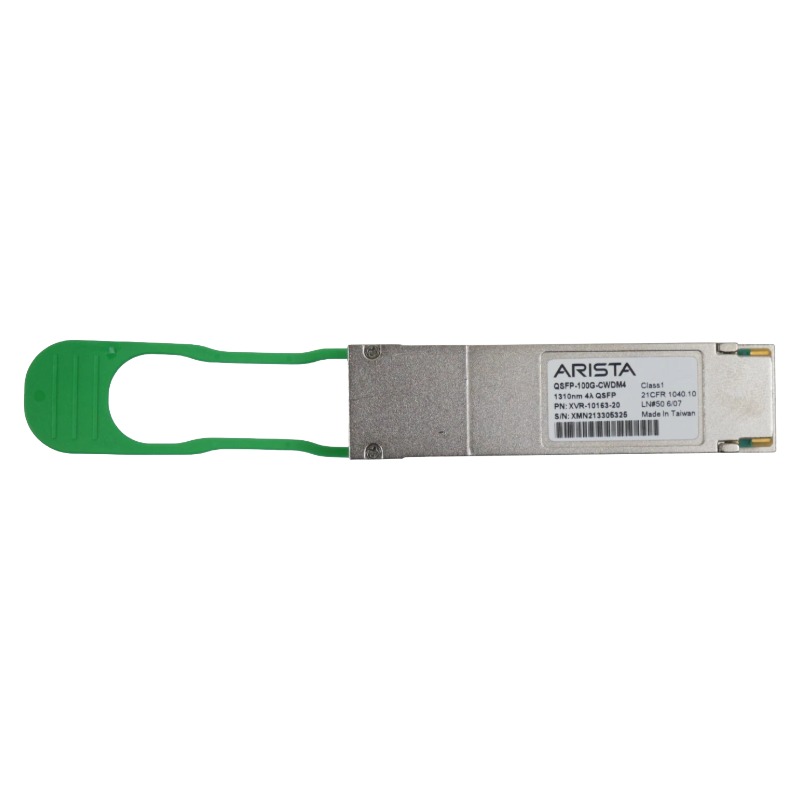


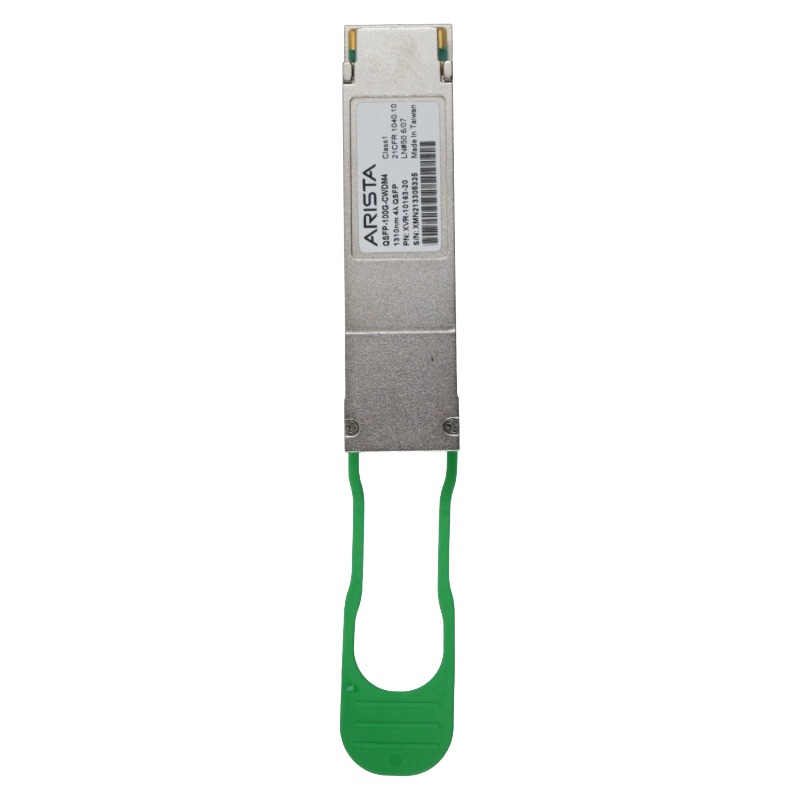
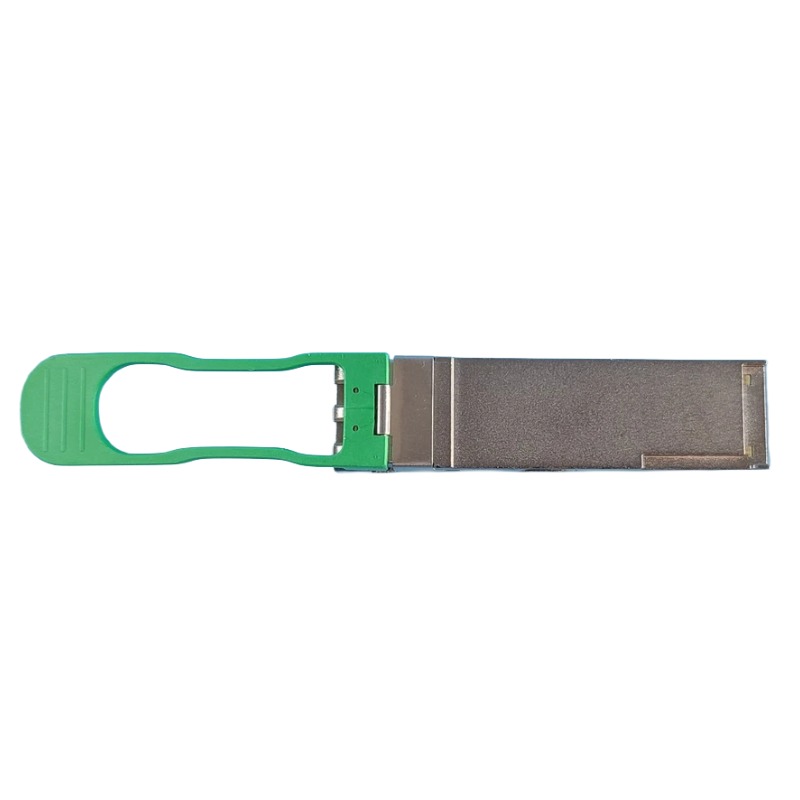
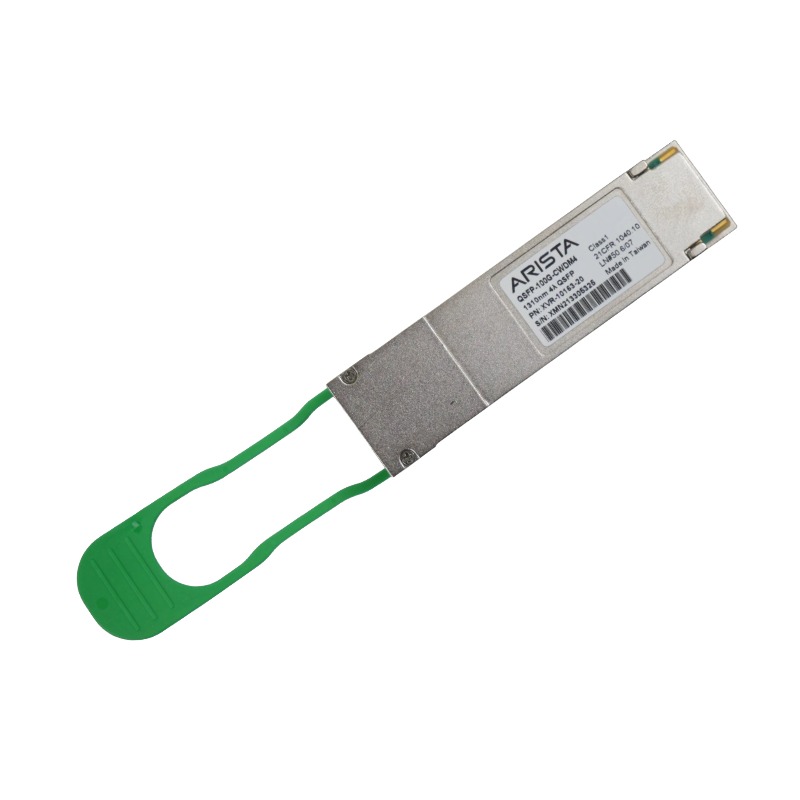
Arista XVR-10163-20 100GBase-CWDM4 QSFP Up to 2km Over Duplex SMF Optical Transceiver Module. Excellent Refurbished with 1 Year Replacement Warranty
The Arista XVR-10163-20 100GBase-CWDM4 QSFP28 optical transceiver is a premium-grade high-speed networking component designed for next-generation data center connectivity. Built for efficiency, scalability, and long-distance data transmission, this module enables seamless 100 Gigabit Ethernet communication over single-mode fiber infrastructure.
The Arista XVR-10163-20 100GBase-CWDM4 QSFP optical transceiver module is engineered to deliver dependable 100 Gigabit Ethernet connectivity across duplex single-mode fiber infrastructure for distances reaching up to 2 kilometers. Designed for modern data center deployments, enterprise aggregation layers, hyperscale environments, and cloud networking infrastructures, this QSFP transceiver module enables stable and energy-efficient high-bandwidth communication while maintaining compatibility with demanding networking architectures.
As organizations continue to expand virtualization environments, software-defined networking frameworks, and bandwidth-intensive workloads, the need for reliable 100G optical interconnect solutions has become increasingly critical. The Arista XVR-10163-20 module supports high-capacity data transmission using CWDM4 technology, which enables multiple wavelengths to travel simultaneously over duplex single-mode fiber. This optical architecture reduces fiber consumption while maximizing throughput and operational scalability across network infrastructures.
The CWDM4 optical standard represents an important advancement in high-speed optical communication technology. The Arista XVR-10163-20 transceiver uses coarse wavelength division multiplexing to transmit four separate optical wavelengths across duplex single-mode fiber. Each optical lane carries 25Gbps of data traffic, collectively achieving a total throughput of 100Gbps Ethernet connectivity.
This wavelength multiplexing approach allows enterprises and service providers to optimize existing fiber infrastructure without requiring additional fiber pairs. Instead of using multiple parallel fibers, the CWDM4 architecture consolidates transmission over standard duplex single-mode fiber cabling, significantly reducing infrastructure complexity and deployment expenses in modern networking environments.
The implementation of CWDM4 technology also contributes to enhanced scalability in large-scale networking environments. Data centers expanding toward spine-leaf topologies and high-density server deployments benefit from efficient optical connectivity that supports increasing traffic volumes while minimizing cabling congestion.
The Arista XVR-10163-20 module utilizes four optical transmit and receive channels operating on distinct CWDM wavelengths. Each lane operates independently at approximately 25Gbps, enabling simultaneous data transfer across multiple channels while maintaining signal integrity and transmission efficiency.
This multi-lane transmission architecture enhances redundancy and improves signal distribution efficiency within high-performance Ethernet infrastructures. The separation of optical wavelengths minimizes interference while maintaining consistent transmission quality over extended fiber distances.
The module’s internal signal processing mechanisms also support optimized lane synchronization, ensuring reliable packet delivery and minimal latency during high-volume data transmission operations.
The transceiver is specifically designed for duplex single-mode fiber connectivity, making it suitable for long-range enterprise and data center communication links. Single-mode fiber infrastructure provides lower attenuation and superior signal propagation characteristics compared to multimode alternatives, enabling reliable transmission up to 2 kilometers.
Duplex SMF deployment also simplifies cable management within structured cabling environments. Organizations can integrate the module into existing single-mode fiber infrastructures without requiring extensive modifications or costly network redesign projects.
Modern enterprise applications, virtualization platforms, cloud computing environments, and AI-driven workloads demand increasingly higher bandwidth capacities. The Arista XVR-10163-20 transceiver addresses these requirements by delivering stable 100 Gigabit Ethernet performance suitable for latency-sensitive and bandwidth-intensive applications.
High-density server clusters, virtualization hosts, storage arrays, and network aggregation layers rely on consistent low-latency communication to maintain operational efficiency. This optical transceiver module enables high-speed interconnection between switches, routers, storage devices, and compute resources while supporting large-scale data processing requirements.
As organizations transition from 10G and 40G infrastructures toward 100G Ethernet architectures, CWDM4 transceivers provide a practical migration path that balances scalability, performance, and infrastructure efficiency.
Latency reduction remains a primary consideration in modern networking environments. Applications such as cloud computing, financial trading platforms, artificial intelligence processing, and distributed storage systems require near-instantaneous communication between infrastructure components.
The Arista XVR-10163-20 optical transceiver minimizes transmission delays through advanced optical signal processing and optimized internal circuitry. The result is efficient packet forwarding and stable communication across high-speed Ethernet environments.
Reduced latency contributes directly to improved application responsiveness, enhanced workload synchronization, and better overall network efficiency within enterprise and hyperscale deployments.
Data centers increasingly prioritize high-density switching architectures to maximize rack efficiency and infrastructure scalability. QSFP form factor transceivers play an essential role in supporting compact networking hardware designs while enabling high-throughput connectivity.
The Arista XVR-10163-20 module supports dense port configurations commonly found in spine switches, aggregation switches, and high-performance networking equipment. Its compact QSFP design allows network administrators to deploy large numbers of 100G connections within limited rack space while maintaining efficient airflow and thermal performance.
This high-density capability is particularly valuable in environments where rack optimization and infrastructure consolidation are essential operational priorities.
Network traffic volumes continue to increase due to cloud applications, video streaming, virtualization, big data analytics, and edge computing initiatives. Scalable optical infrastructure becomes essential for supporting long-term network growth without introducing operational bottlenecks.
The Arista XVR-10163-20 transceiver provides a scalable foundation for bandwidth expansion strategies by enabling 100G connectivity across core network layers. Organizations can deploy high-speed uplinks, inter-switch connections, and aggregation links that accommodate increasing traffic demands while maintaining operational stability.
The QSFP form factor has become an industry-standard solution for high-speed Ethernet connectivity due to its compact dimensions, efficient thermal characteristics, and broad compatibility across enterprise networking equipment.
The Arista XVR-10163-20 optical transceiver incorporates the QSFP architecture to support simplified hardware integration within switches, routers, and network appliances. Its hot-swappable design enables administrators to install or replace modules without disrupting system operations, minimizing downtime during maintenance or infrastructure upgrades.
The compact design also contributes to improved airflow management within high-density networking hardware, supporting consistent thermal performance and operational reliability.
Hot-swappable functionality is essential for enterprise environments requiring continuous uptime and uninterrupted network operations. The Arista XVR-10163-20 module supports live insertion and removal, allowing administrators to perform maintenance tasks without powering down networking equipment.
This capability significantly reduces operational disruptions and simplifies maintenance procedures in mission-critical infrastructures. Service providers, cloud operators, and enterprise IT teams benefit from enhanced flexibility when managing optical connectivity resources.
Hot-swappable functionality also accelerates troubleshooting processes by enabling rapid module replacement during diagnostic procedures.
High-speed optical transceivers generate heat during operation, particularly within dense networking environments supporting multiple 100G connections. Effective thermal management is critical for maintaining stable signal transmission and preventing performance degradation.
The Arista XVR-10163-20 transceiver incorporates optimized thermal design characteristics that support efficient heat dissipation within QSFP networking platforms. This contributes to improved module longevity, operational consistency, and reduced thermal stress across network hardware.
Stable thermal performance is especially important in large-scale data centers where networking equipment operates continuously under high traffic loads.
The module adheres to established industry interface standards for both electrical and optical communication. Standardized integration ensures interoperability with compatible networking hardware while simplifying deployment across enterprise infrastructures.
Consistent electrical signaling and optical interface compatibility contribute to stable communication between interconnected devices, reducing configuration complexity and improving overall deployment efficiency.
Single-mode fiber cabling remains a preferred solution for long-distance and high-capacity networking environments due to its superior transmission characteristics. The Arista XVR-10163-20 transceiver is specifically optimized for duplex single-mode fiber applications, supporting transmission distances up to 2 kilometers.
Single-mode fiber infrastructure offers lower attenuation rates and reduced modal dispersion compared to multimode alternatives. These characteristics enable cleaner signal propagation, improved bandwidth performance, and more reliable long-range communication.
Organizations investing in scalable networking infrastructures often prioritize single-mode fiber deployments due to their long-term flexibility and compatibility with evolving Ethernet standards.
The 2-kilometer transmission range supported by the Arista XVR-10163-20 module makes it suitable for campus networking, data center interconnect applications, enterprise backbone deployments, and metropolitan infrastructure environments.
Extended-distance connectivity allows organizations to establish high-speed communication links between distributed facilities while maintaining reliable performance and minimal signal degradation.
Long-range optical transmission also supports business continuity initiatives by enabling geographically separated infrastructure components to communicate efficiently across secure high-bandwidth connections.
Signal attenuation represents a critical consideration in optical networking environments. Excessive attenuation can reduce transmission reliability and impact overall network performance.
Single-mode fiber infrastructure minimizes optical signal loss over long distances, enabling the Arista XVR-10163-20 module to maintain stable communication performance across extended deployments. Reduced attenuation contributes to improved packet integrity, lower error rates, and more consistent network operations.
Stable optical transmission characteristics are particularly important in environments supporting mission-critical applications and real-time data processing workloads.
Deploying single-mode fiber infrastructure alongside 100G CWDM4 transceivers provides long-term scalability advantages for enterprise and service provider networks. As bandwidth requirements continue to increase, existing single-mode fiber deployments can often support future Ethernet standards with minimal infrastructure modifications.
This future-proofing capability reduces long-term capital expenditures while enabling smoother transitions toward higher-speed networking architectures in coming years.
The Arista XVR-10163-20 100GBase-CWDM4 QSFP transceiver is suitable for a wide range of enterprise and cloud networking applications. Its combination of high throughput, extended transmission distance, and efficient fiber utilization makes it valuable across numerous deployment scenarios.
Modern data centers require reliable optical connectivity for server aggregation, storage networking, virtualization clusters, and inter-switch communication. The module’s 100G Ethernet performance supports these demanding operational requirements while enabling scalable infrastructure growth.
Spine-leaf architectures have become a dominant networking model in modern data centers due to their scalability, low-latency characteristics, and predictable performance. High-speed optical transceivers play a central role in enabling communication between spine and leaf switches.
The Arista XVR-10163-20 module supports high-capacity spine-leaf interconnects by providing stable 100G Ethernet communication over duplex single-mode fiber. This connectivity model enables efficient east-west traffic flow across virtualized and cloud-native infrastructures.
Reliable optical interconnects contribute to improved application performance, workload mobility, and infrastructure resilience within large-scale data center environments.
Cloud computing platforms and virtualization technologies generate substantial network traffic volumes due to dynamic workload migration, distributed resource allocation, and storage synchronization operations.
The Arista XVR-10163-20 transceiver supports these environments by enabling high-bandwidth communication between hypervisors, storage arrays, and network aggregation layers. Its low-latency optical transmission characteristics help maintain responsive virtual infrastructure performance under demanding workloads.
Efficient optical connectivity also improves resource utilization within cloud infrastructures by minimizing communication bottlenecks between compute and storage resources.
Storage networking environments increasingly require ultra-fast communication links to support backup operations, replication tasks, database synchronization, and large-scale data analytics workloads.
The Arista XVR-10163-20 module enables reliable 100G storage networking connectivity across enterprise infrastructures. Its high-throughput optical communication capabilities help accelerate data transfer operations while reducing storage access latency.
Organizations operating large-scale storage clusters benefit from enhanced performance consistency and improved operational efficiency through high-speed optical interconnect deployment.
Signal integrity is fundamental to maintaining stable Ethernet communication in high-speed networking environments. The Arista XVR-10163-20 transceiver incorporates advanced optical and electrical engineering techniques designed to preserve transmission quality across extended fiber links.
Reliable signal integrity contributes to reduced packet loss, minimized transmission errors, and enhanced application performance throughout enterprise infrastructures.
Network reliability depends heavily on accurate packet delivery and minimal transmission errors. The Arista XVR-10163-20 module supports stable packet forwarding through optimized optical signaling mechanisms and precision-engineered internal circuitry.
Reduced error rates improve operational efficiency across cloud applications, storage networks, virtualization platforms, and enterprise communication systems. Stable packet transmission also minimizes retransmission overhead, helping maximize effective bandwidth utilization.
Consistent signal quality becomes increasingly important in environments supporting latency-sensitive workloads and high-volume transactional applications.
Optical fiber communication offers inherent resistance to electromagnetic interference, making it highly suitable for enterprise and industrial networking environments where electrical noise may impact copper-based communication systems.
The Arista XVR-10163-20 transceiver benefits from fiber-optic transmission characteristics that protect data communication from external electromagnetic disruptions. This enhances communication stability while supporting reliable operation in electrically complex infrastructure environments.
Improved interference resistance contributes to more predictable network performance and reduced operational risk.
Enterprise organizations, cloud providers, and service operators require networking infrastructure capable of maintaining continuous operation under demanding conditions. The Arista XVR-10163-20 transceiver is engineered to support long-term reliability within mission-critical deployments.
Its stable optical transmission characteristics, thermal efficiency, and standards-based design contribute to dependable network performance across continuously operating infrastructures. Reliable transceiver operation helps minimize downtime risks and supports business continuity objectives in high-availability environments.
Compatibility remains an essential consideration when deploying optical transceivers within enterprise networking environments. The Arista XVR-10163-20 module is designed to integrate efficiently with compatible networking platforms supporting QSFP 100G Ethernet interfaces.
Standards-based integration simplifies deployment procedures while enabling consistent performance across interconnected network devices. Organizations can implement high-speed optical connectivity without introducing unnecessary operational complexity.
The module supports deployment across enterprise Ethernet switching and routing platforms that require 100G optical connectivity. This includes aggregation switches, core networking systems, data center interconnect platforms, and high-performance routing environments.
Reliable interoperability enables network administrators to expand bandwidth capacity while maintaining infrastructure consistency across existing network architectures.
Efficient integration also supports faster deployment timelines during network expansion projects and infrastructure modernization initiatives.
As enterprise networks continue evolving toward higher bandwidth capacities and cloud-native architectures, scalable optical connectivity solutions become increasingly important.
The Arista XVR-10163-20 transceiver supports infrastructure scalability by enabling flexible deployment across growing networking environments. Organizations can expand network capacity incrementally while preserving operational efficiency and maintaining compatibility with evolving Ethernet standards.
Scalable optical deployment strategies help reduce long-term infrastructure limitations while supporting future technology adoption initiatives.
High-performance optical transceivers represent an important component of enterprise networking investments. The Arista XVR-10163-20 module combines advanced CWDM4 optical technology, efficient fiber utilization, reliable 100G Ethernet performance, and scalable infrastructure compatibility to support long-term operational objectives.
Its combination of high-speed communication capabilities, extended transmission distance support, efficient thermal characteristics, and standards-based integration makes it a valuable solution for organizations building modern high-capacity networking infrastructures.


 Contact Us
 Information
 Catalog
 Solid State Drives (SSD)
 Network Switches
 Hard Disk Drives
 HBA & Controllers
 PC & Servers
 PC & Server Memory
 CPU & Processors
 Network Routers
 Power Supplies
 Tape Drives & Libraries
 Network Devices
 Computer & Network Cables