(7% discount is applied at checkout)
Cart is empty
Your go-to destination for cutting-edge server products
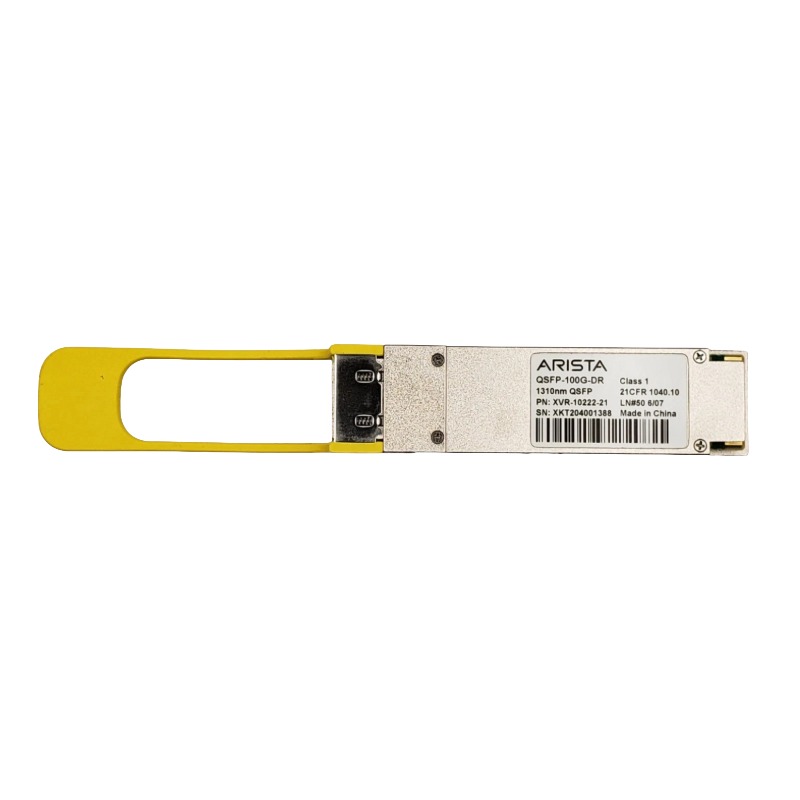


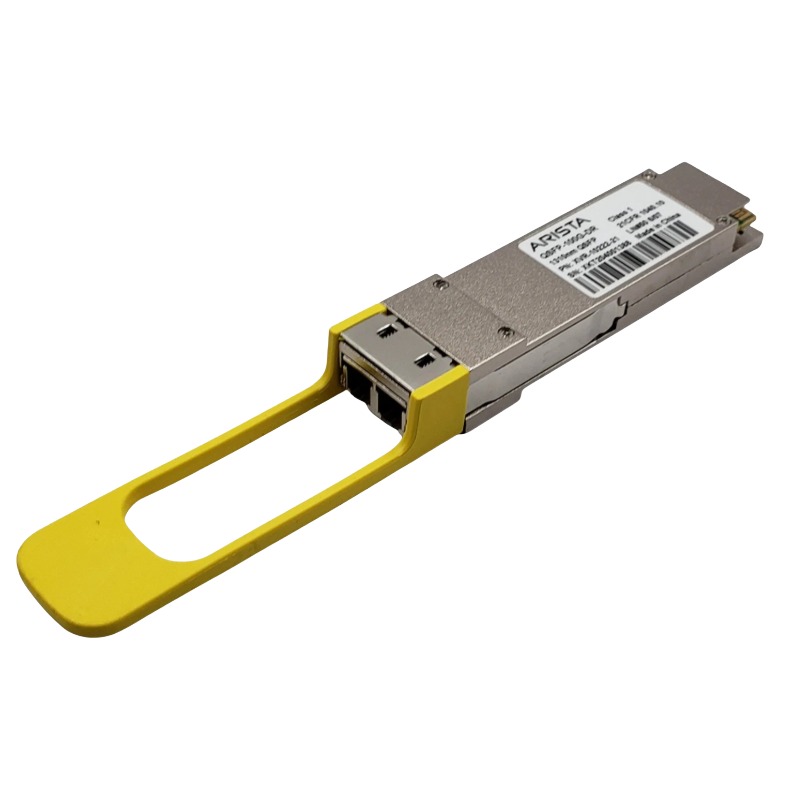
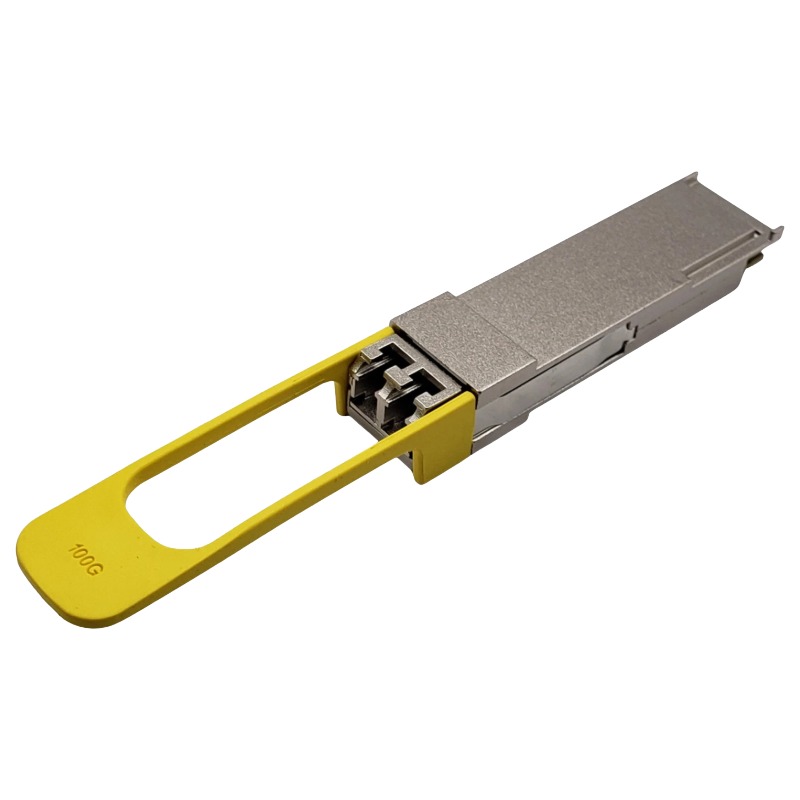
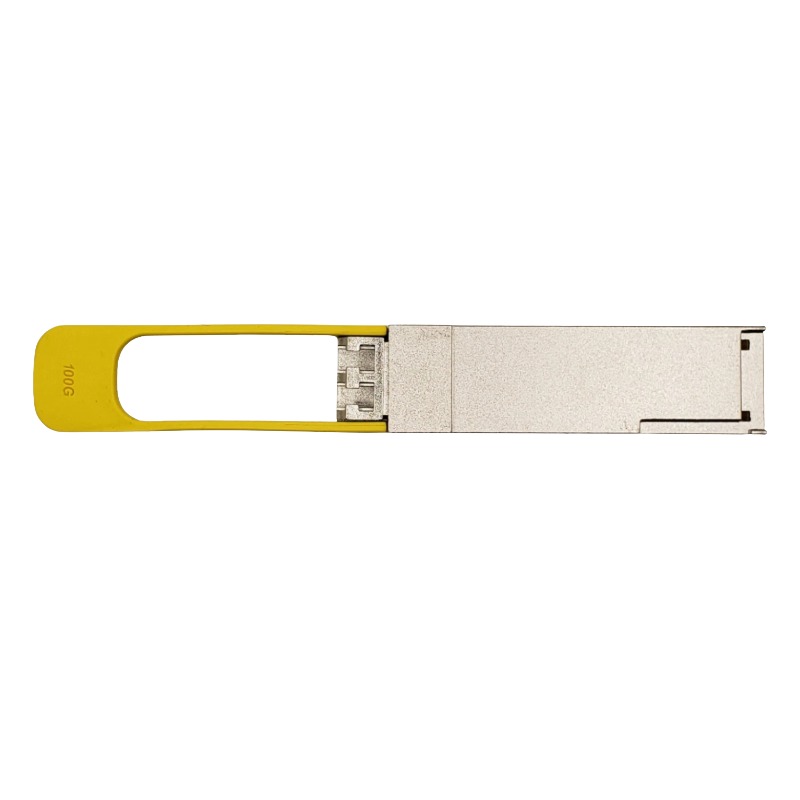
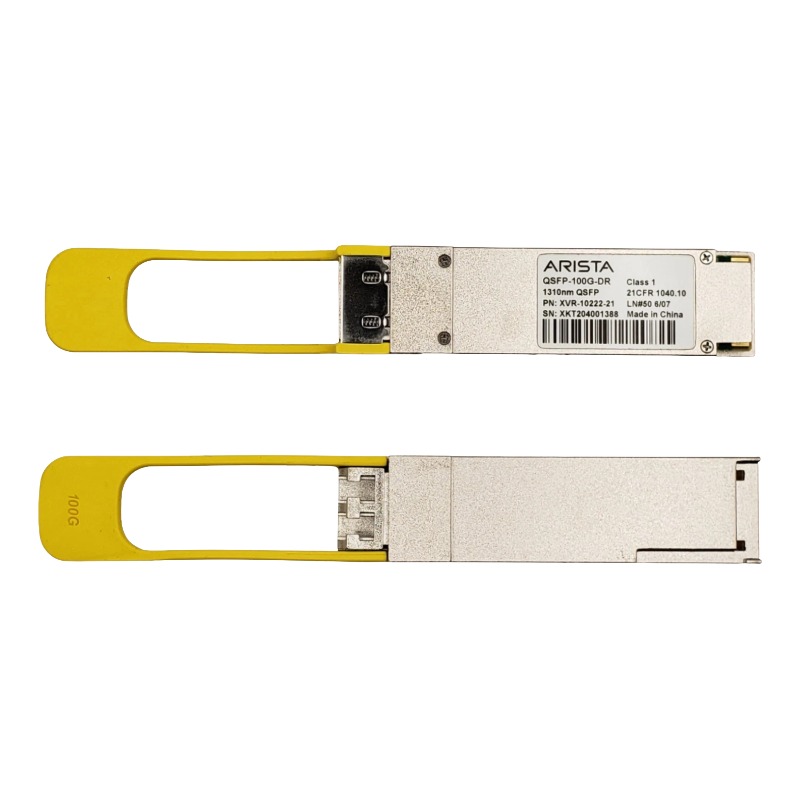
Arista XVR-10222-21 100GBASE-DR Single Lambda 1310nm 500m DOM Duplex LC SMF QSFP28 Optical Transceiver Module. Excellent Refurbished with 1 Year Replacement Warranty
The Arista XVR-10222-21 is a high-performance 100GBASE-DR single lambda optical transceiver designed for reliable high-speed data transmission over long-distance fiber networks. Built for modern data center and enterprise networking environments, this QSFP28 module delivers efficient connectivity with low latency and strong signal integrity.
The Arista XVR-10222-21 100GBASE-DR Single Lambda QSFP28 optical transceiver module is engineered to support ultra-fast Ethernet connectivity across enterprise, hyperscale, and cloud-based network infrastructures. Designed for 100 Gigabit Ethernet applications, this advanced optical transceiver delivers dependable performance using 1310nm wavelength technology over single-mode fiber cabling. The module is optimized for modern data center architectures that require scalable bandwidth, reduced latency, and consistent signal integrity over medium-range optical distances.
Supporting transmission distances up to 500 meters using duplex LC single-mode fiber, this optical module offers an ideal solution for high-density switching environments, aggregation layers, storage networks, and interconnect applications. The compact QSFP28 form factor enables efficient deployment in dense networking systems while maintaining excellent thermal and electrical performance.
The 100GBASE-DR standard is widely recognized for enabling high-performance optical communication within modern Ethernet infrastructures. The Arista XVR-10222-21 transceiver utilizes PAM4 modulation technology and single lambda optical transmission to maximize bandwidth efficiency while reducing fiber complexity. This architecture simplifies cabling requirements compared to legacy parallel optical solutions.
By leveraging a single wavelength operating at 1310nm, the module minimizes optical dispersion and supports stable signal delivery across extended single-mode fiber links. This makes it highly suitable for spine-leaf data center designs, cloud computing platforms, and virtualization-heavy environments where reliable high-speed connectivity is essential.
Single lambda optical transmission provides substantial advantages in next-generation networking environments. Instead of relying on multiple optical lanes and complex parallel fiber arrangements, the Arista XVR-10222-21 module consolidates transmission into a streamlined architecture that improves deployment flexibility and reduces infrastructure costs.
Organizations deploying large-scale Ethernet networks benefit from simplified fiber management, reduced cable congestion, and improved airflow within switching cabinets. The reduced number of fiber strands also contributes to easier maintenance and lower long-term operational overhead.
The module is engineered to maintain exceptional signal integrity even in demanding high-density networking environments. Its optical design helps reduce insertion loss and supports stable throughput for mission-critical applications. Data-intensive workloads such as artificial intelligence processing, virtualization, cloud storage, and distributed computing environments can benefit from the low-latency optical communication enabled by this transceiver.
The QSFP28 form factor remains one of the most efficient solutions for 100G Ethernet deployments. The Arista XVR-10222-21 module fits seamlessly into compatible QSFP28 ports across modern switching and routing platforms. Its compact dimensions allow network administrators to maximize port density without compromising cooling efficiency or hardware reliability.
High-density optical networking has become increasingly important in modern enterprise and hyperscale environments. Data centers supporting thousands of virtual machines, cloud applications, or distributed databases require transceivers capable of maintaining performance under continuous high traffic loads. This module is engineered for such scenarios, ensuring dependable optical transmission while minimizing power consumption.
As network infrastructures continue to expand, scalability becomes a primary consideration. The Arista XVR-10222-21 optical transceiver enables organizations to increase bandwidth capacity without redesigning their entire optical architecture. The module supports flexible scaling strategies that align with evolving traffic requirements and future infrastructure growth.
Its compatibility with standardized QSFP28 interfaces simplifies deployment across a wide variety of network switches and optical systems. This interoperability helps reduce integration challenges and supports smoother migration paths from lower-speed Ethernet technologies.
Thermal performance plays a critical role in maintaining network reliability within dense equipment racks. The module incorporates efficient heat dissipation mechanisms to ensure stable operation during sustained high-speed traffic conditions. Lower operating temperatures help preserve component longevity and contribute to reduced hardware failure rates.
Modern switching platforms often contain dozens of high-speed optical interfaces operating simultaneously. Efficient thermal characteristics therefore become essential for maintaining consistent performance and preventing overheating-related disruptions.
The use of 1310nm wavelength technology provides excellent compatibility with single-mode fiber infrastructure. This wavelength range is widely deployed in enterprise and carrier-grade optical networks due to its low attenuation and stable transmission characteristics. The Arista XVR-10222-21 module utilizes this wavelength to support reliable 100G Ethernet communication over distances reaching 500 meters.
Single-mode fiber connectivity offers significant advantages for medium-range and long-range optical networking applications. Compared to multimode alternatives, single-mode fiber supports superior bandwidth scalability and reduced signal degradation over extended distances.
Enterprise organizations increasingly rely on high-speed optical links to connect core switching layers, storage systems, virtualization clusters, and cloud gateways. The Arista XVR-10222-21 transceiver is designed to provide stable optical communication under continuous network load conditions.
Its advanced optical components help ensure low bit error rates and consistent signal quality, enabling reliable application performance across distributed network environments. This reliability is particularly important for latency-sensitive applications such as real-time analytics, video streaming, and transactional database systems.
Traditional parallel optical technologies may require multiple fiber pairs and complicated cabling arrangements. The single lambda design implemented in this module reduces optical complexity by minimizing fiber requirements while maintaining full 100G transmission capability.
Reduced cabling complexity simplifies installation procedures and improves manageability within crowded network racks. Organizations can achieve cleaner infrastructure layouts and enhanced operational efficiency while reducing the risk of cabling errors during deployment or maintenance.
The Arista XVR-10222-21 QSFP28 optical transceiver includes Digital Optical Monitoring functionality, commonly known as DOM. This monitoring capability enables network administrators to access real-time operational parameters directly from the module. Continuous monitoring helps improve visibility into optical performance and supports proactive maintenance strategies.
DOM functionality allows administrators to observe critical operating metrics including optical transmit power, receive power, temperature levels, supply voltage, and laser bias current. These diagnostics can help identify potential issues before they affect network availability.
Modern data center operations demand uninterrupted network availability. The integrated diagnostic capabilities within the module help support predictive maintenance by enabling early detection of abnormal operating conditions.
By analyzing optical performance metrics, administrators can quickly isolate degraded fiber connections, excessive signal loss, or environmental issues affecting transceiver performance. This visibility contributes to reduced troubleshooting time and improved overall infrastructure reliability.
Mission-critical networking environments require continuous monitoring to maintain service quality and operational uptime. The DOM functionality integrated into the Arista XVR-10222-21 module supports centralized management systems and automated network monitoring platforms.
These monitoring features provide valuable insights for capacity planning, performance optimization, and infrastructure management across enterprise and cloud networking environments.
The module is specifically designed for deployment over duplex LC single-mode fiber cabling. Single-mode fiber has become the preferred choice for modern high-speed Ethernet infrastructures due to its ability to support extended transmission distances and future bandwidth scalability.
Single-mode optical infrastructure offers improved investment protection because it can accommodate evolving Ethernet standards and higher transmission speeds without requiring complete cabling replacement. Organizations adopting single-mode fiber can prepare their infrastructure for long-term growth while maintaining excellent optical performance.
The duplex LC connector format provides compact, secure, and highly reliable optical connectivity. LC connectors are widely used throughout enterprise and carrier-grade environments due to their small footprint and consistent insertion performance.
The compact connector design allows higher port densities within network equipment while simplifying cable routing and management. This contributes to improved airflow and more efficient use of rack space in dense networking environments.
Structured cabling systems are essential for scalable network management within enterprise data centers. The Arista XVR-10222-21 module integrates effectively into structured optical cabling environments, enabling simplified deployment and standardized infrastructure design.
Organizations can maintain cleaner cable management practices and streamline future network expansion projects through standardized LC single-mode connectivity.
Modern cloud infrastructures and hyperscale data centers require high-bandwidth optical interconnect solutions capable of supporting massive data traffic volumes. The Arista XVR-10222-21 QSFP28 optical transceiver is optimized for such environments, providing reliable 100G Ethernet connectivity across distributed computing platforms.
Its performance characteristics make it suitable for top-of-rack switching, aggregation networking, spine-leaf architectures, and storage interconnect applications. The module supports low-latency communication essential for high-performance computing and cloud-native application environments.
Spine-leaf network designs depend on high-capacity east-west traffic communication between switching layers. The Arista XVR-10222-21 module enables fast and reliable optical links that help maintain consistent throughput across highly distributed infrastructures.
As virtualization, containerization, and microservices continue to increase network traffic demands, scalable 100G optical connectivity becomes increasingly important for maintaining application responsiveness and operational efficiency.
Virtualized infrastructures generate significant internal network traffic due to continuous communication between virtual machines, storage arrays, and orchestration platforms. The high-speed optical capabilities of this module help support these demanding workloads while minimizing latency and transmission bottlenecks.
Efficient data transfer between compute clusters and storage environments contributes to improved application performance and enhanced end-user experiences.
The Arista XVR-10222-21 transceiver is designed to deliver stable 100 Gigabit Ethernet performance across high-demand networking environments. Its advanced optical and electronic components enable efficient data transfer while maintaining signal stability and low error rates.
Reliable high-speed Ethernet communication is essential for modern enterprise applications including artificial intelligence workloads, cloud computing services, distributed databases, and high-frequency data processing environments.
Latency reduction is a critical objective within high-performance networking environments. Optical transceivers capable of maintaining rapid signal transmission and low processing overhead contribute to faster application response times and improved workload efficiency.
The Arista XVR-10222-21 module is engineered to support low-latency communication across optical links, making it suitable for performance-sensitive enterprise and cloud deployments.
Modern network infrastructures often experience continuous high-bandwidth traffic loads generated by virtualization platforms, cloud applications, storage replication, and analytics systems. The module is optimized to maintain stable throughput even during sustained peak traffic periods.
This operational consistency helps organizations avoid congestion-related performance degradation while supporting uninterrupted service delivery across critical network environments.
Energy efficiency has become a major consideration within modern data center design. Optical transceivers with optimized power consumption characteristics contribute to reduced operating expenses and improved sustainability initiatives.
The Arista XVR-10222-21 module is engineered to balance high-performance optical communication with efficient power utilization. Reduced power requirements help minimize heat generation and lower cooling demands within densely populated networking environments.
Efficient optical transceivers can significantly impact long-term operational costs within large-scale deployments. Lower power consumption contributes to reduced electricity expenses while also supporting improved thermal management across switching infrastructures.
Organizations operating hyperscale or enterprise data centers benefit from energy-efficient networking hardware that supports both performance objectives and sustainability goals.
Lower operating temperatures and optimized electrical performance help extend hardware lifespan and reduce the likelihood of premature component failure. Reliable transceiver operation contributes to improved network availability and reduced maintenance requirements over time.
Long-term operational stability is especially important in mission-critical environments where downtime can lead to productivity losses and service disruptions.
The Arista XVR-10222-21 QSFP28 optical transceiver is designed to support interoperability with compatible 100G Ethernet networking platforms. Standardized QSFP28 connectivity simplifies deployment across enterprise switching systems, aggregation devices, and cloud networking hardware.
Compatibility with industry-standard Ethernet technologies allows organizations to integrate the module into existing infrastructure with minimal disruption. This flexibility supports efficient network expansion and simplifies future upgrade strategies.
Enterprise IT environments require networking hardware capable of integrating smoothly with existing architectures. The module supports standardized optical communication protocols that help ensure interoperability across compatible systems.
Its deployment flexibility makes it suitable for a broad range of enterprise networking applications, including core switching, aggregation networking, storage interconnects, and cloud infrastructure connectivity.
Different networking environments generate varying traffic patterns and operational demands. The Arista XVR-10222-21 transceiver is engineered to provide dependable performance across diverse workloads, including storage replication, virtual desktop infrastructure, machine learning environments, and cloud service delivery platforms.
Its combination of optical efficiency, low latency, and scalable bandwidth capacity helps support evolving enterprise networking requirements while maintaining consistent operational reliability.


 Contact Us
 Information
 Catalog
 Solid State Drives (SSD)
 Network Switches
 Hard Disk Drives
 HBA & Controllers
 PC & Servers
 PC & Server Memory
 CPU & Processors
 Network Routers
 Power Supplies
 Tape Drives & Libraries
 Network Devices
 Computer & Network Cables