(7% discount is applied at checkout)
Cart is empty
Your go-to destination for cutting-edge server products
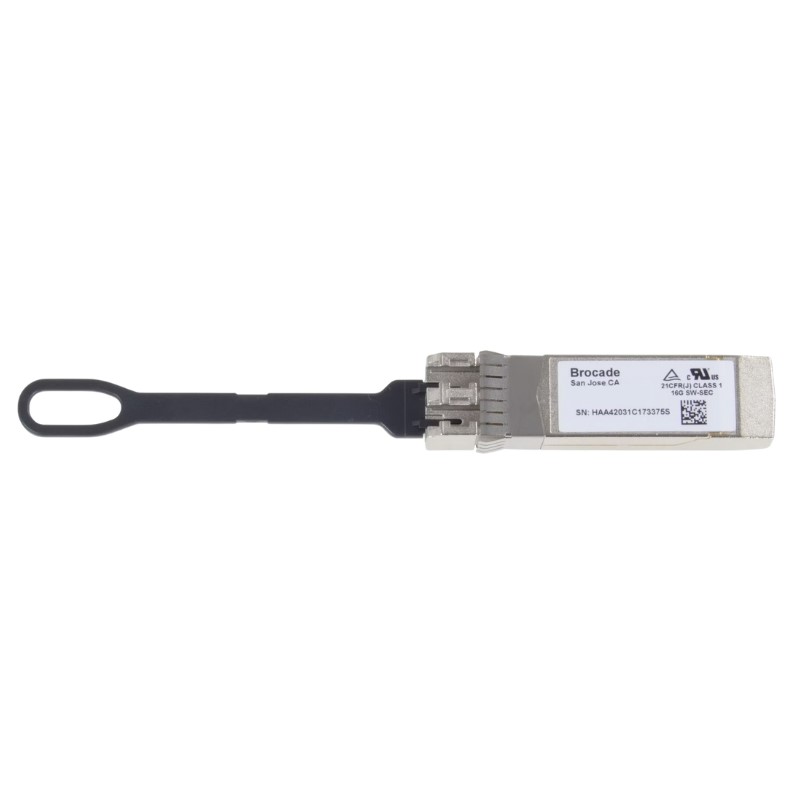


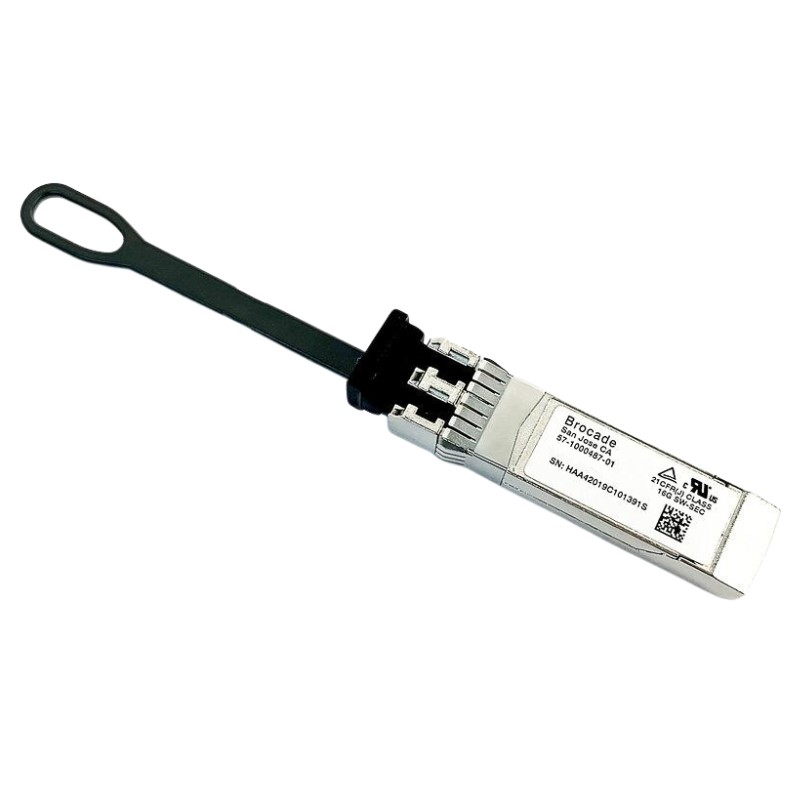
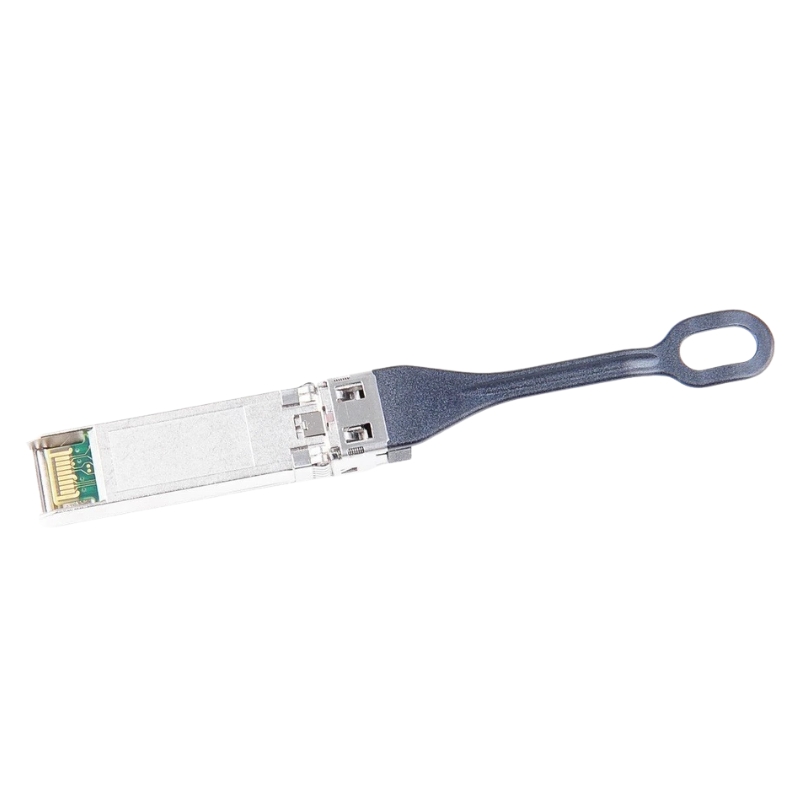
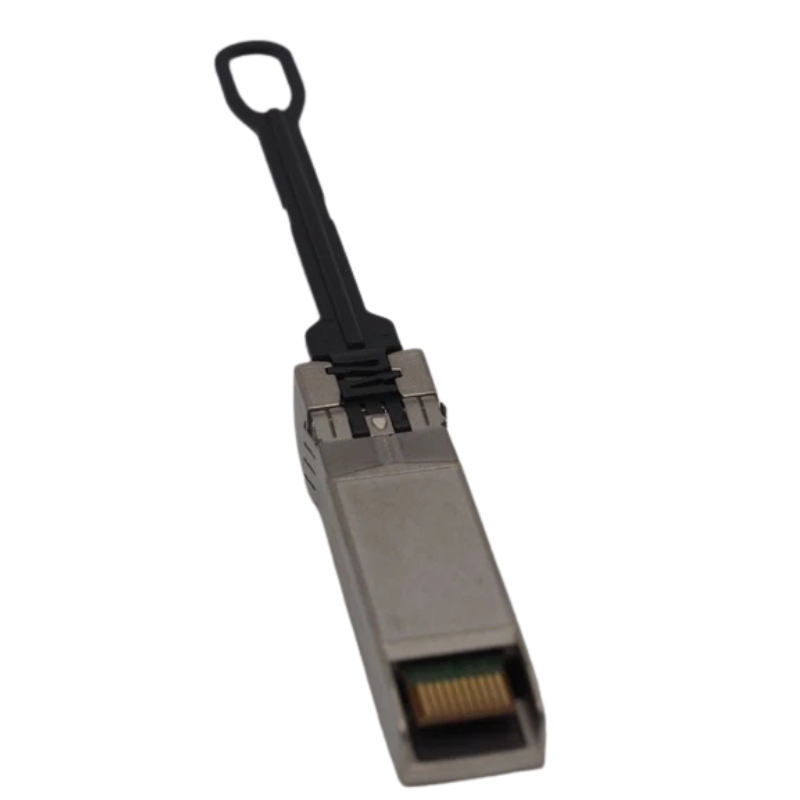
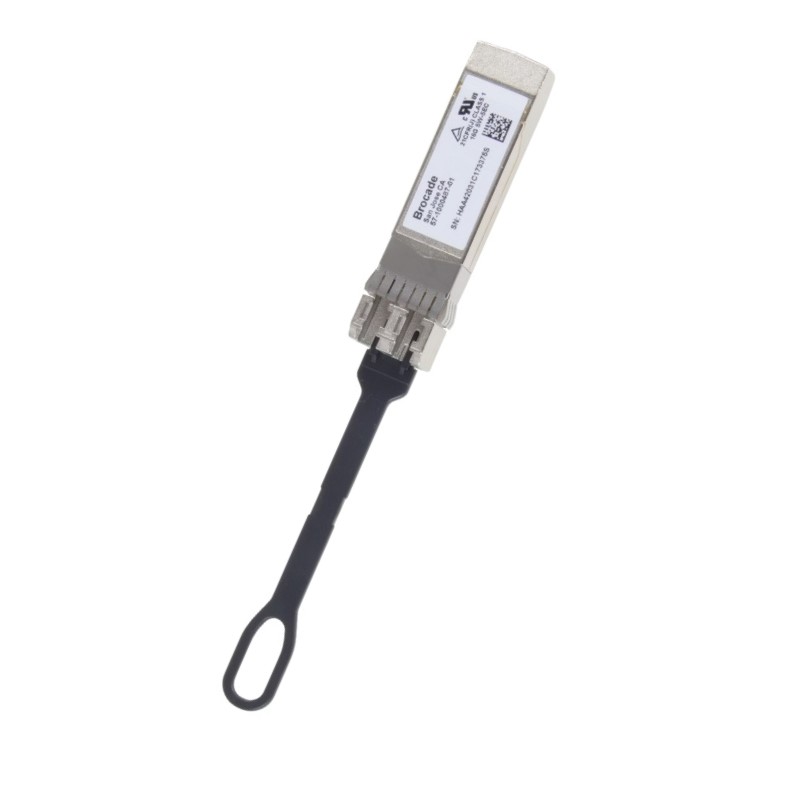
Brocade 57-1000487-01 16Gbps SwSFP+ Fibre Channel Duplex LC Single Pack MMF Transceiver. Excellent Refurbished with 1 year replacement warranty
| SKU/MPN | Warranty | Price | Condition | You save |
|---|---|---|---|---|
| 57-1000487-01 | 1 Year Warranty | $76.00 | Excellent Refurbished | You save: $26.60 (26%) |
| 57-1000487-01 | 1 Year Warranty | $91.00 | New Sealed in Box (NIB) | You save: $31.85 (26%) |
The Brocade 57-1000487-01 SwSFP+ Fibre Channel Transceiver Module is a high-performance optical networking component designed for fast, stable, and reliable data transmission in enterprise storage and networking environments. Built for 16Gbps Fibre Channel connectivity, this compact transceiver ensures efficient communication over multimode fiber (MMF) infrastructure with duplex LC connectors.
The Brocade 57-1000487-01 16Gbps SwSFP+ Fibre Channel Duplex LC Single Pack MMF Transceiver Module represents a critical component in modern high-speed storage area network (SAN) infrastructures, where reliability, low latency, and consistent throughput are essential for mission-critical workloads. This transceiver is engineered for 16 Gigabit per second Fibre Channel environments, enabling seamless optical communication over multimode fiber (MMF) links using duplex LC connectors. Designed and distributed within enterprise-grade networking ecosystems, it aligns with the stringent performance expectations of data centers, virtualization platforms, and high-density storage arrays.
The underlying technology that powers the Brocade 57-1000487-01 module is 16Gbps Fibre Channel, a high-speed networking standard specifically engineered for storage communications. Fibre Channel, recognized as a dedicated transport protocol for storage networking, provides deterministic performance and low overhead compared to general-purpose Ethernet networks. Within enterprise environments, Fibre Channel is commonly implemented to connect servers to storage arrays through dedicated SAN switches, ensuring predictable latency and high availability.
As part of the broader evolution of Fibre Channel technology, 16Gbps speed tiers were introduced to accommodate increasing demands from virtualization, cloud computing, and large-scale database systems. This module ensures compatibility with such infrastructures by providing consistent optical signaling performance across multimode fiber channels.
Fibre Channel operates as a highly optimized protocol designed for block-level storage access. Unlike traditional IP-based storage solutions, it reduces protocol overhead and enhances deterministic delivery of data frames. In enterprise SAN deployments, this ensures that latency-sensitive applications such as transactional databases and virtual machine storage remain highly responsive.
The 16Gbps SwSFP+ module contributes to this ecosystem by acting as the optical interface between switching hardware and fiber optic cabling infrastructure. It translates electrical signals into optical pulses and vice versa, ensuring data integrity across distances typically supported by multimode fiber cabling.
The architecture of the Brocade 57-1000487-01 transceiver is built around compact Small Form-factor Pluggable Plus (SFP+) design principles. This allows it to be hot-swappable, energy-efficient, and compatible with a wide range of Fibre Channel switches and storage networking devices. The SwSFP+ designation reflects its optimized switching compatibility, ensuring seamless integration into Brocade SAN switching environments.
The module operates using shortwave optical transmission typically centered around 850nm wavelength, which is ideal for multimode fiber applications. This wavelength supports high bandwidth over relatively short distances, typically within data center environments. The optical transmitter converts electrical signals into modulated light pulses, while the receiver reconverts these optical signals back into electrical form for processing by network switching hardware.
The efficiency of this optical conversion process is essential for maintaining low bit error rates (BER), which directly impacts the reliability of storage data transfers. In high-density SAN deployments, even minor signal degradation can result in performance bottlenecks or data retransmission events, making precision in optical signal handling crucial.
The duplex LC connector interface used in the Brocade 57-1000487-01 module provides a compact and reliable connection standard for fiber optic cabling. LC connectors are widely adopted in enterprise environments due to their small footprint and high-performance optical alignment characteristics. The duplex configuration allows simultaneous bidirectional communication, which is essential for full-duplex Fibre Channel operations.
Physical layer integration ensures that this module aligns seamlessly with multimode fiber (MMF) cabling systems, which are commonly deployed in data center racks and SAN switch interconnects. The use of MMF allows cost-effective short-range optical networking while maintaining high data throughput.
Multimode fiber plays a vital role in high-speed intra-data center connectivity. The Brocade 57-1000487-01 module is specifically optimized for MMF environments, ensuring that light dispersion and modal distortion are minimized across typical deployment distances. This makes it particularly suitable for top-of-rack switching, storage array connectivity, and inter-switch links within confined infrastructure layouts.
The optical design accounts for modal dispersion management, allowing multiple light paths to coexist within the fiber core while maintaining signal clarity. This ensures stable transmission even in dense cabling environments where multiple fiber channels operate simultaneously.
The deployment of the Brocade 57-1000487-01 module spans a wide range of enterprise storage networking scenarios. In virtualization-heavy environments, where multiple virtual machines rely on shared storage resources, this transceiver ensures consistent bandwidth allocation and low-latency access to storage arrays.
In large-scale database systems, where frequent read and write operations occur, the stability of Fibre Channel connectivity is essential. This module provides a robust optical transport layer that minimizes jitter and ensures deterministic data delivery.
In SAN architectures, multiple switches and storage nodes are interconnected through high-speed optical links. The SwSFP+ module enables scalable expansion of these networks by providing a compact and efficient transceiver solution. Its small form factor allows dense port configurations in enterprise switches, maximizing infrastructure efficiency without compromising thermal or power budgets.
The ability to deploy multiple 16Gbps links within a single switching chassis enables enterprises to scale storage performance horizontally while maintaining centralized control over data flow management.
Modern cloud environments rely heavily on shared storage systems to support virtual machine migration, redundancy, and workload balancing. The Brocade 57-1000487-01 module supports these workloads by ensuring that storage traffic is transmitted reliably between compute nodes and storage arrays. This is particularly important in environments utilizing hyper-converged infrastructure and distributed storage architectures.
By maintaining consistent optical performance, the module supports live migration operations and high-availability configurations where uninterrupted storage access is required.
The performance characteristics of the Brocade 57-1000487-01 module are defined by its ability to sustain 16Gbps data throughput with minimal latency variation. This is achieved through precision-engineered optical components and strict compliance with Fibre Channel standards.
Signal integrity is a key consideration in optical transceiver design. The module incorporates advanced error reduction mechanisms at the physical layer to ensure that transmitted data remains accurate across the fiber channel. This is especially important in environments with electromagnetic interference or dense cabling arrangements.
The combination of high-quality laser transmission components and precision photodetectors ensures that signal degradation is minimized, even under continuous operational loads typical of enterprise data centers.
Thermal management is a critical factor in high-density networking environments. The SwSFP+ form factor is designed to operate within tight thermal envelopes, ensuring stable performance without excessive heat generation. This allows multiple modules to be deployed within a single chassis without compromising system cooling efficiency.
Power efficiency is equally important, as large-scale SAN deployments may require hundreds or thousands of transceiver modules. The low-power design of this module contributes to reduced operational costs and improved overall energy efficiency within data center infrastructures.
Within enterprise networking environments, the Brocade 57-1000487-01 module is typically deployed alongside Fibre Channel switches and directors that support 16Gbps link speeds.
Fibre Channel fabric architectures rely on interconnected switches that form a resilient and scalable network topology. The SwSFP+ module plays a key role in maintaining fabric integrity by providing reliable optical links between switches and endpoints. This ensures that redundant paths and failover mechanisms operate effectively in the event of link degradation or hardware failure.
The modular nature of SFP+ transceivers allows administrators to dynamically adjust network configurations without requiring major hardware replacements, supporting agile infrastructure scaling.
Scalability is a core requirement in modern storage networking. The 16Gbps capability of this module allows organizations to expand storage bandwidth incrementally as demand increases. This prevents overprovisioning while ensuring that performance remains aligned with application requirements.
Distributed storage networks benefit significantly from this scalability, particularly in environments where data replication, backup, and disaster recovery operations are frequently executed.
Deploying the Brocade 57-1000487-01 module requires consideration of fiber type compatibility, link distance constraints, and switch port configuration. Proper alignment with multimode fiber specifications ensures optimal performance and prevents signal loss across transmission paths.
In structured cabling environments, the use of standardized duplex LC connectors simplifies installation and maintenance. Proper cable management practices contribute to improved airflow, reduced physical stress on connectors, and enhanced long-term reliability of optical links.
Data center engineers often design cabling layouts to minimize fiber congestion while maintaining accessibility for maintenance operations. This ensures that transceiver modules remain easily serviceable without disrupting surrounding infrastructure.
Enterprise-grade transceivers are expected to operate continuously under high utilization conditions. The Brocade 57-1000487-01 module is designed with long operational lifecycles in mind, ensuring consistent performance over extended deployment periods. Routine monitoring of optical signal quality and link performance helps maintain optimal operation throughout its service life.
Lifecycle management practices often include periodic inspection of fiber connectors, validation of signal strength levels, and verification of switch port configurations to ensure continued compatibility and efficiency.


 Contact Us
 Information
 Catalog
 Solid State Drives (SSD)
 Network Switches
 Hard Disk Drives
 HBA & Controllers
 PC & Servers
 PC & Server Memory
 CPU & Processors
 Network Routers
 Power Supplies
 Tape Drives & Libraries
 Network Devices
 Computer & Network Cables