(7% discount is applied at checkout)
Cart is empty
Your go-to destination for cutting-edge server products
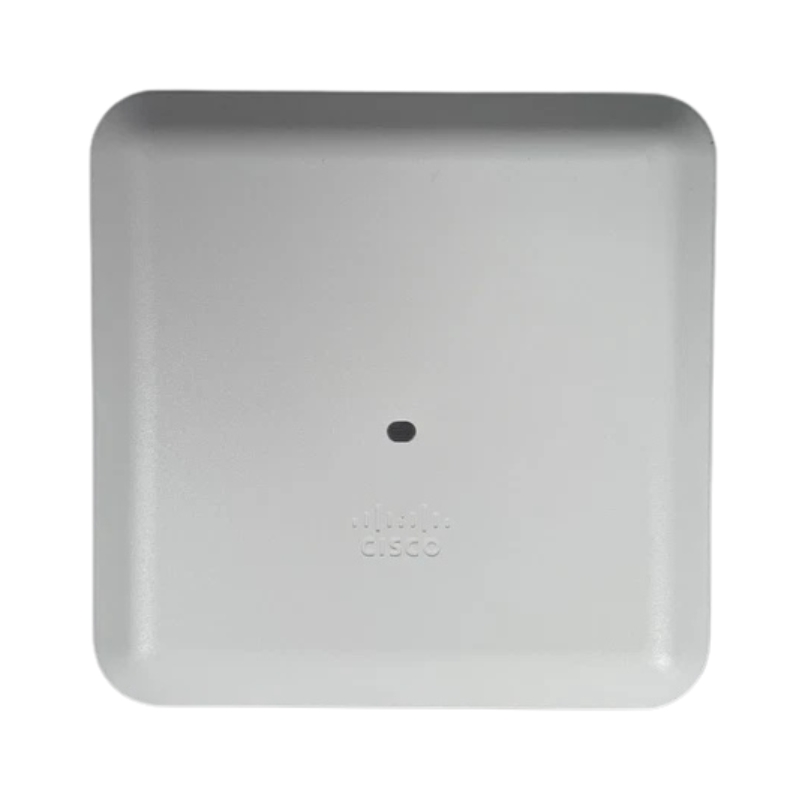


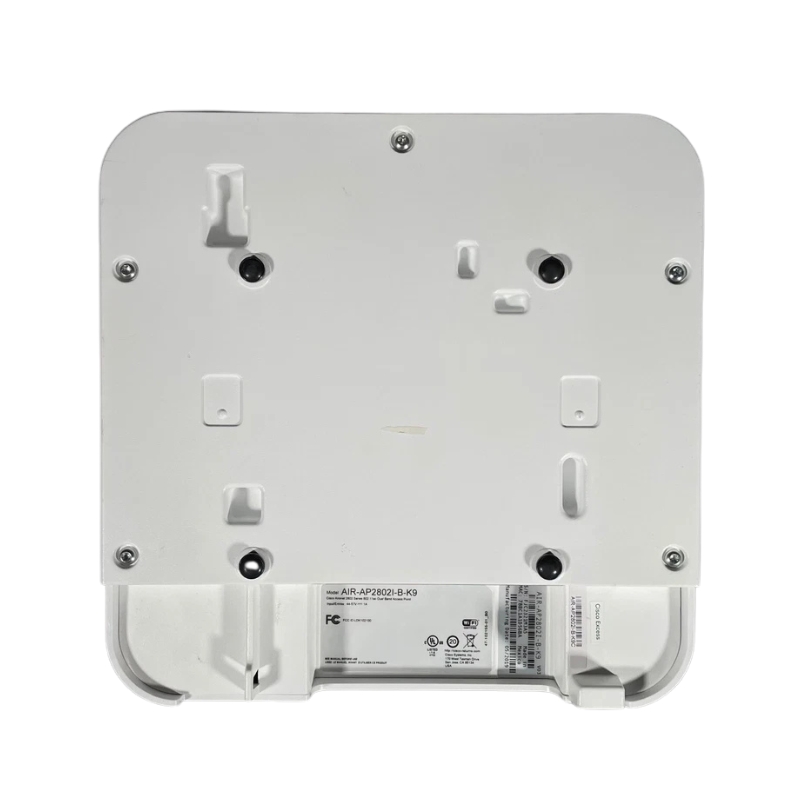
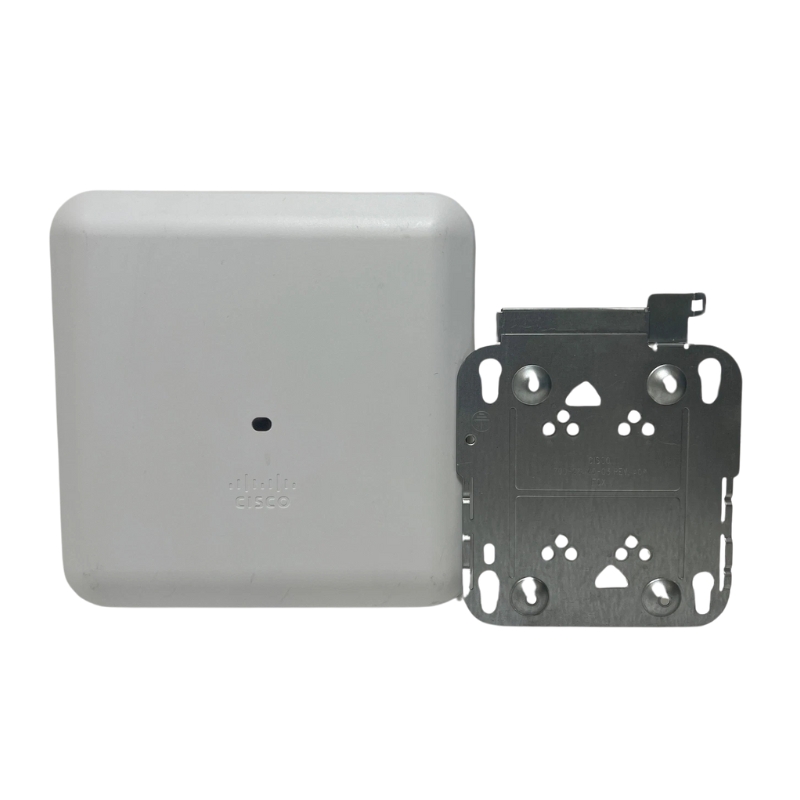
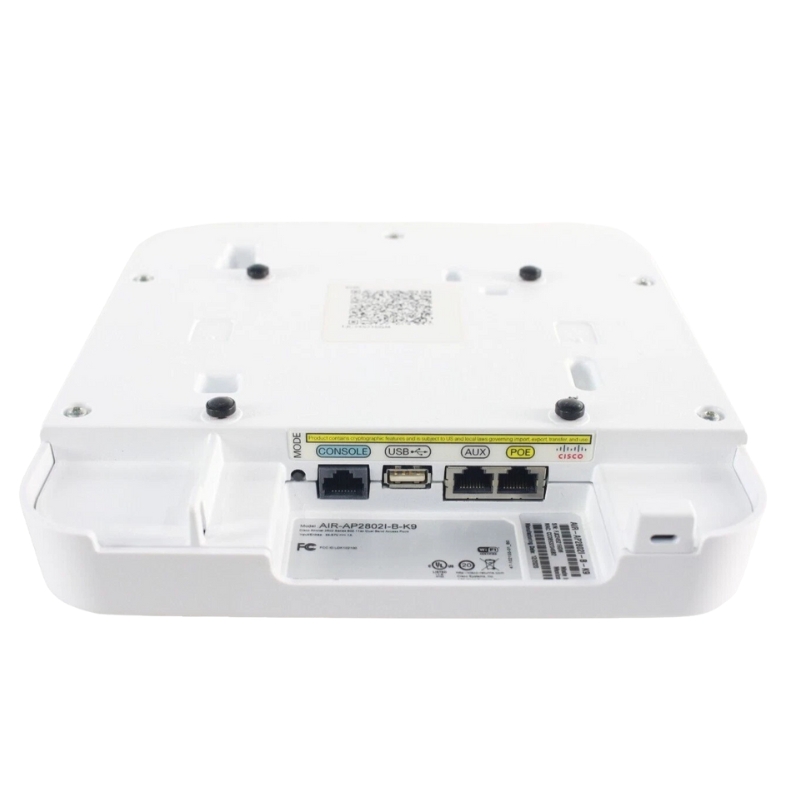
Cisco AIR-AP2802I-B-K9 Aironet Wireless Access Point AP2802I 5.2 GBPS Internal Antennas. Factory-Sealed New in Original Box (FSB) with 1 year replacement warranty
| SKU/MPN | Warranty | Price | Condition | You save |
|---|---|---|---|---|
| AIR-AP2802I-B-K9 | 1 Year Warranty | $48.00 | Excellent Refurbished | You save: $16.80 (26%) |
| AIR-AP2802I-B-K9 | 1 Year Warranty | $99.00 | New Sealed in Box (NIB) | You save: $34.65 (26%) |
The Cisco AIR-AP2802I-B-K9 Aironet AP2802I is a high‑performance indoor wireless access point equipped with internal antennas and engineered to deliver fast, stable connectivity. Designed for enterprise environments, it offers a powerful 5.2 Gbps wireless rate, intelligent radio optimization, and multi‑stream efficiency, ensuring dependable coverage and smooth operation across dense user areas and mission‑critical applications.
The
The wireless access point operates using a sophisticated dual-band architecture that supports simultaneous transmission across multiple frequency ranges. This allows it to manage traffic distribution intelligently, ensuring that devices are assigned optimal channels depending on their capabilities and network load conditions. The radio system is engineered to support high-capacity environments, ensuring smooth data flow even in peak usage scenarios where multiple applications compete for bandwidth resources. The internal antenna configuration plays a significant role in shaping the RF environment, offering controlled signal dispersion that enhances coverage consistency while minimizing interference overlap. This design approach ensures that wireless signals maintain integrity across open spaces, partitioned offices, conference facilities, and multi-floor environments where signal reflection and attenuation can otherwise reduce performance reliability.
This wireless access point is built to support aggregate data rates that can reach up to multi-gigabit performance levels under ideal conditions. The high throughput capability ensures that applications requiring large bandwidth allocations, such as high-definition video streaming, cloud-based collaboration platforms, virtual desktop environments, and real-time data analytics systems, can function without latency interruptions or packet loss. The system is optimized to manage simultaneous client connections while maintaining fairness in bandwidth distribution. This ensures that no single device monopolizes network resources, allowing for balanced performance across all connected endpoints. The internal processing architecture is designed to efficiently handle packet inspection, encryption processing, and routing decisions at wire-speed levels, reducing bottlenecks and improving overall responsiveness.
The wireless access point is suitable for a wide range of enterprise deployment scenarios, including corporate office environments, university campuses, healthcare facilities, hospitality networks, retail operations, and manufacturing plants. Each environment presents unique challenges in terms of density, interference, and physical layout, and the device is designed to adapt dynamically to these conditions. In office environments, the access point supports high-density workstation connectivity while maintaining stable performance for unified communications systems such as voice over wireless, video conferencing, and collaborative applications. In educational institutions, it supports large numbers of students accessing cloud-based learning platforms simultaneously without network congestion. In healthcare environments, it provides reliable connectivity for medical devices, patient monitoring systems, and secure data transmission across departments.
The internal antenna system is carefully engineered to optimize coverage patterns while maintaining compliance with enterprise RF planning requirements. Unlike external antenna models, internal antennas provide a streamlined deployment experience and reduce the risk of physical damage or misalignment. The radiation pattern is designed to ensure even signal distribution across both horizontal and vertical planes, making it suitable for multi-story buildings and complex architectural layouts. Signal optimization techniques embedded within the system allow it to adjust transmission power and channel selection dynamically based on environmental conditions. This ensures that interference from neighboring wireless networks or electronic devices is minimized, maintaining stable performance even in RF-dense environments such as business districts or shared office spaces.
Modern enterprise environments often involve hundreds of simultaneous wireless clients, including laptops, smartphones, IoT devices, and industrial sensors. The access point is engineered to handle high client density scenarios by distributing connections efficiently across available radio resources. The system monitors client behavior patterns and network usage in real time, adjusting resource allocation to ensure optimal performance. Devices requiring high bandwidth are prioritized during peak usage periods, while low-bandwidth devices are managed in a way that prevents network congestion. This intelligent load balancing ensures consistent user experience even under heavy network stress conditions.
Security is a fundamental component of the wireless architecture, with integrated mechanisms designed to protect data integrity, user authentication, and network access control. The system supports advanced encryption standards that secure wireless communication between client devices and the access point, preventing unauthorized interception of data transmissions. Authentication frameworks allow administrators to implement strict access control policies, ensuring that only authorized users and devices can connect to the network. The access point also supports segmentation strategies that isolate different types of network traffic, reducing the risk of lateral movement in the event of a security breach. Intrusion detection capabilities further enhance security by monitoring abnormal network behavior and identifying potential threats in real time. This layered security approach ensures that enterprise networks remain protected against evolving cybersecurity risks.
The access point integrates seamlessly into centralized wireless management systems that allow administrators to configure, monitor, and optimize network performance from a unified interface. This centralized approach simplifies large-scale deployments where hundreds or thousands of access points must be managed across multiple locations. Network administrators can monitor performance metrics, adjust configuration settings, and deploy firmware updates remotely, reducing operational overhead and improving network consistency. The system also supports automated optimization features that continuously analyze network conditions and adjust parameters to maintain optimal performance without manual intervention.
In environments where users frequently move between different physical locations, seamless roaming is essential to maintaining uninterrupted connectivity. The access point supports advanced mobility protocols that allow client devices to transition between access points without losing connection stability. This is particularly important in environments such as hospitals, warehouses, and large corporate campuses where users rely on continuous connectivity while moving across different coverage zones. The roaming process is optimized to minimize latency and prevent session drops, ensuring that applications such as voice calls and video streams remain uninterrupted during transitions.
Scalability is a core feature of the wireless system, enabling organizations to expand their network infrastructure as operational demands grow. The access point is designed to integrate seamlessly into large-scale deployments, supporting hierarchical network architectures that distribute traffic efficiently across multiple layers. As organizations expand, additional access points can be deployed without disrupting existing network configurations. The system automatically adjusts to new devices, ensuring consistent performance and minimizing administrative overhead associated with network expansion.
Wireless environments often contain various sources of interference, including neighboring networks, electronic equipment, and structural obstacles. The access point incorporates advanced interference mitigation techniques that continuously analyze the RF environment and adjust operational parameters accordingly. Channel selection algorithms dynamically identify the least congested frequencies, while signal adjustment mechanisms optimize transmission strength to maintain stability. This adaptive behavior ensures consistent performance even in environments with high levels of RF noise.
The physical design of the access point emphasizes durability and long-term operational stability. It is engineered to withstand continuous operation in demanding environments where network uptime is critical. Thermal management systems ensure that internal components remain within optimal operating temperatures, preventing performance degradation over extended usage periods. The hardware is designed for long lifecycle deployment, reducing the need for frequent replacements and minimizing total cost of ownership for enterprise network infrastructure.
The wireless access point supports flexible deployment options that make it suitable for both new installations and network upgrades. Its compatibility with modern enterprise switching infrastructure ensures seamless integration into existing network ecosystems. Whether deployed in centralized enterprise headquarters or distributed branch environments, the system maintains consistent performance and management capabilities.


 Contact Us
 Information
 Catalog
 Solid State Drives (SSD)
 Network Switches
 Hard Disk Drives
 HBA & Controllers
 PC & Servers
 PC & Server Memory
 CPU & Processors
 Network Routers
 Power Supplies
 Tape Drives & Libraries
 Network Devices
 Computer & Network Cables