(7% discount is applied at checkout)
Cart is empty
Your go-to destination for cutting-edge server products
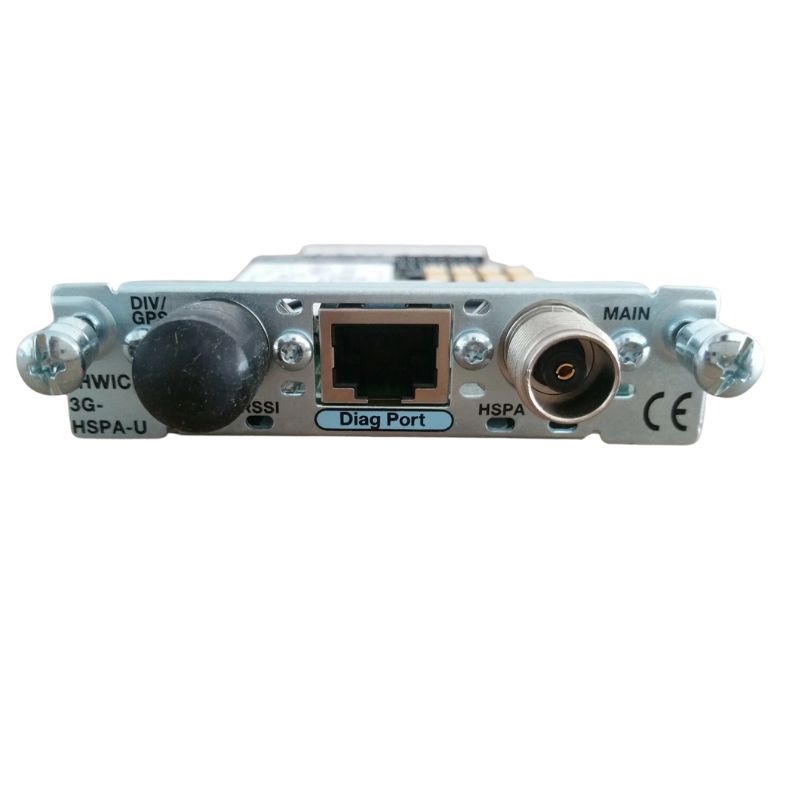


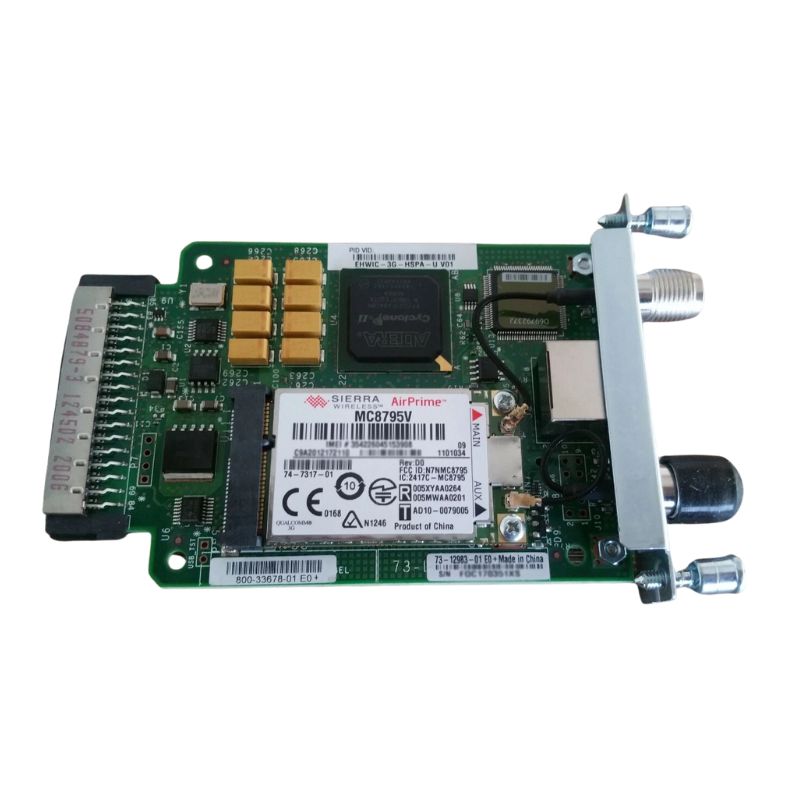
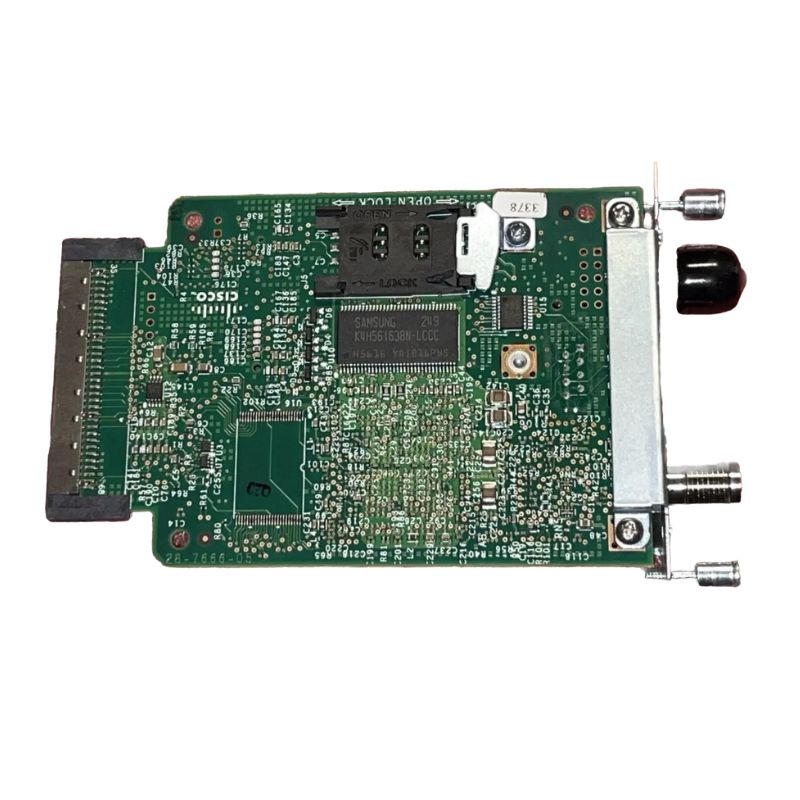
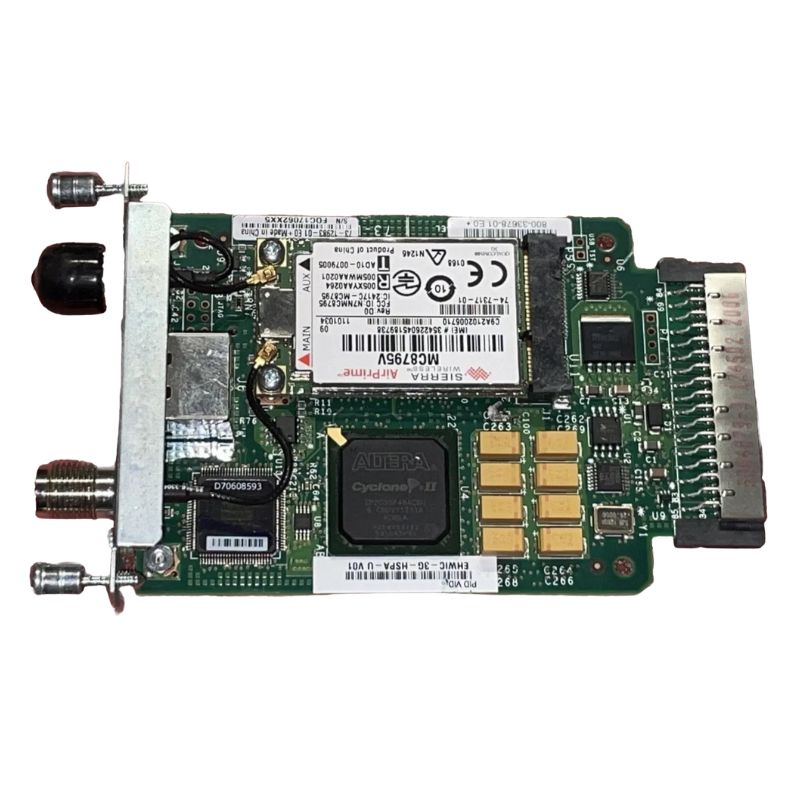
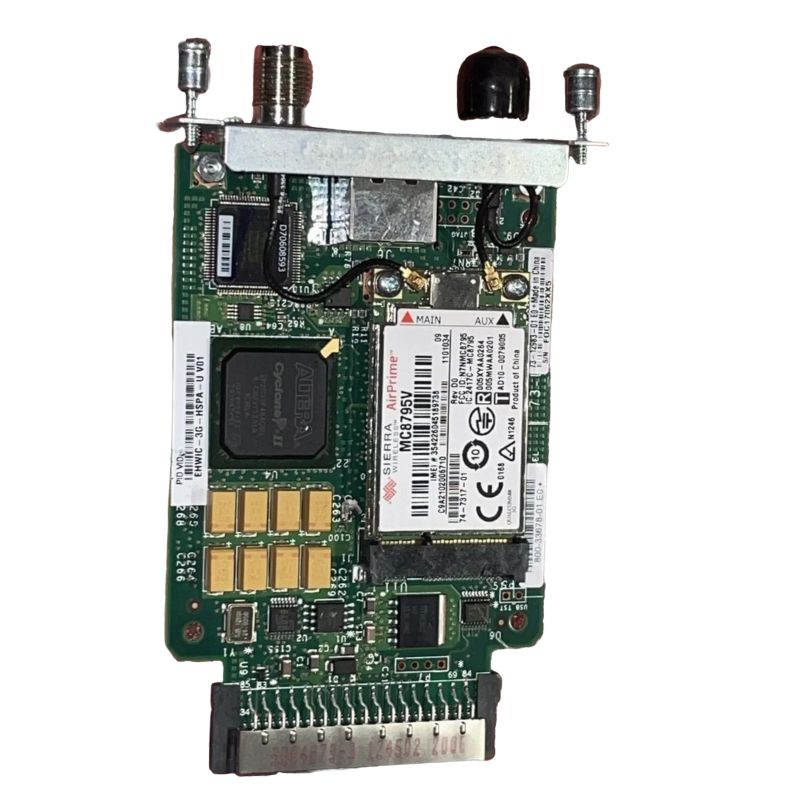
Cisco EHWIC-3G-HSPA-U Third-Generation Wireless Cellular Modem. Factory-Sealed New in Original Box (FSB) with 1 year replacement warranty
| SKU/MPN | Warranty | Price | Condition | You save |
|---|---|---|---|---|
| EHWIC-3G-HSPA-U | 1 Year Warranty | Contact us for a price | Excellent Refurbished | |
| EHWIC-3G-HSPA-U | 1 Year Warranty | $580.00 | Factory-Sealed New Retail in Original Box (FSB) | You save: $203.00 (26%) |
The Cisco EHWIC-3G-HSPA-U Third-Generation Wireless Cellular Modem is a high-performance embedded WAN interface card designed to deliver reliable mobile connectivity for enterprise networking environments. It enables seamless cellular communication through 3G technologies, ensuring stable data transmission for remote access, backup internet links, and field deployments where wired connections are limited or unavailable.
The Cisco EHWIC-3G-HSPA-U Third-Generation Wireless Cellular Modem is an enhanced network interface solution designed to extend wide area connectivity for enterprise routers using cellular mobile networks. Developed as part of modular WAN interface technology, it integrates directly into compatible router platforms, enabling organizations to maintain continuous connectivity even when wired broadband links fail or are unavailable. The design focuses on resilience, mobility, and flexible deployment across distributed environments where traditional wired infrastructure may be limited or unreliable.
This module belongs to the category of Embedded and High-Speed WAN Interface Cards (EHWIC), which are engineered to expand the functionality of enterprise routers by adding modular interfaces. It supports third-generation cellular communication technologies, primarily HSPA and UMTS, allowing data transmission over mobile operator networks with improved speed and reliability compared to earlier mobile standards. Its purpose is not only to provide primary internet access in remote locations but also to serve as a reliable backup link in mission-critical environments.
In modern enterprise networks, continuous connectivity is essential for maintaining communication between branch offices, centralized data centers, cloud applications, and remote users. The Cisco EHWIC-3G-HSPA-U plays a crucial role by acting as a failover mechanism when primary wired connections experience downtime. It ensures uninterrupted business operations by automatically switching traffic to a cellular network interface.
This capability is particularly valuable in industries where downtime can result in financial loss, operational delays, or service disruption. By leveraging cellular infrastructure, the module ensures that routers remain connected to the internet or private enterprise networks even in geographically challenging environments.
The architectural design of the Cisco EHWIC-3G-HSPA-U is based on modular integration with Cisco Integrated Services Routers. The hardware is compact and engineered to fit into the EHWIC slot of supported router models, allowing seamless installation without external devices. The internal components include a cellular radio transceiver, processing interface, SIM card reader, and antenna connectors.
At the core of the device is the cellular radio module that enables communication with 3G mobile networks. This radio supports multiple frequency bands depending on regional operator compatibility. It handles modulation, signal processing, and communication with base stations, ensuring stable data transmission across varying signal conditions.
The SIM card slot allows the device to authenticate with mobile network providers. Once a SIM card is inserted, the module establishes a secure connection with the carrier network using subscriber credentials. This authentication process enables the router to access mobile data services and utilize assigned network resources.
The antenna system plays a critical role in ensuring signal quality and transmission stability. External antennas can be connected to improve reception in areas with weak cellular coverage. Proper antenna placement significantly affects throughput, latency, and connection reliability, especially in rural or industrial environments where signal strength may fluctuate.
The Cisco EHWIC-3G-HSPA-U operates using third-generation mobile communication standards, primarily HSPA (High-Speed Packet Access) and UMTS (Universal Mobile Telecommunications System). These technologies provide significantly improved data rates compared to earlier 2G systems and offer more reliable packet-based communication suitable for internet and enterprise applications.
UMTS serves as the foundational 3G technology, offering digital voice and data transmission capabilities. HSPA builds upon UMTS by enhancing downlink and uplink speeds, allowing faster data transfers and more efficient bandwidth usage. This combination enables the module to support applications such as VPN access, email synchronization, and cloud connectivity.
The module is designed for compatibility with a range of Cisco Integrated Services Routers that support EHWIC slots. These routers are widely used in branch offices, enterprise edge deployments, and remote connectivity environments. The integration allows network administrators to manage both wired and wireless WAN interfaces from a unified system.
Configuration is typically performed through router operating systems that support cellular interface management. These systems allow administrators to define routing policies, failover conditions, and traffic prioritization rules. The seamless integration ensures that the cellular interface behaves like any other network interface within the router architecture.
Network configuration involves assigning interface parameters, setting APN profiles, and enabling routing protocols. Administrators can define how traffic is routed between primary and backup connections. This ensures that critical applications maintain connectivity even during primary link outages.
The installation process of the Cisco EHWIC-3G-HSPA-U is designed to be straightforward, allowing deployment in both new and existing router infrastructures. The module is inserted into the EHWIC slot, secured, and then connected to external antennas for optimal signal reception. A SIM card is inserted to activate mobile network connectivity.
Administrators can implement access control policies to manage which devices or applications are allowed to use the cellular interface. Traffic shaping and prioritization features help optimize bandwidth usage, ensuring that critical applications receive sufficient network resources.
Optimizing the performance of the Cisco EHWIC-3G-HSPA-U involves careful configuration of antenna placement, signal monitoring, and routing policies. Signal strength directly impacts throughput and latency, making physical installation a key factor in performance.
Network administrators often monitor signal metrics such as RSSI and signal-to-noise ratio to determine optimal placement and configuration. Adjustments to routing rules and failover thresholds also help ensure efficient use of available bandwidth.
The Cisco EHWIC-3G-HSPA-U is widely used in industries such as logistics, retail, banking, transportation, and public services. In logistics, it enables tracking systems and fleet communication. In retail, it supports point-of-sale systems and transaction processing in locations without stable wired internet.
In banking environments, it serves as a secure backup communication channel for ATM networks and branch offices. Transportation systems utilize it for vehicle tracking and communication between control centers and field units. These use cases highlight its versatility in supporting mission-critical applications.
Signal quality is influenced by environmental conditions such as building density, distance from cellular towers, and weather conditions. Proper antenna selection and placement are essential for maximizing performance. External high-gain antennas can significantly improve connectivity in challenging environments.
Indoor installations may require careful positioning near windows or elevated locations to reduce signal obstruction. Outdoor installations often benefit from weather-resistant antenna configurations that maintain stable performance under varying environmental conditions.
Even in modern network architectures, the Cisco EHWIC-3G-HSPA-U can serve as part of a multi-layer redundancy system. It contributes to failover strategies and backup connectivity in environments where uptime is critical.


 Contact Us
 Information
 Catalog
 Solid State Drives (SSD)
 Network Switches
 Hard Disk Drives
 HBA & Controllers
 PC & Servers
 PC & Server Memory
 CPU & Processors
 Network Routers
 Power Supplies
 Tape Drives & Libraries
 Network Devices
 Computer & Network Cables