(7% discount is applied at checkout)
Cart is empty
Your go-to destination for cutting-edge server products


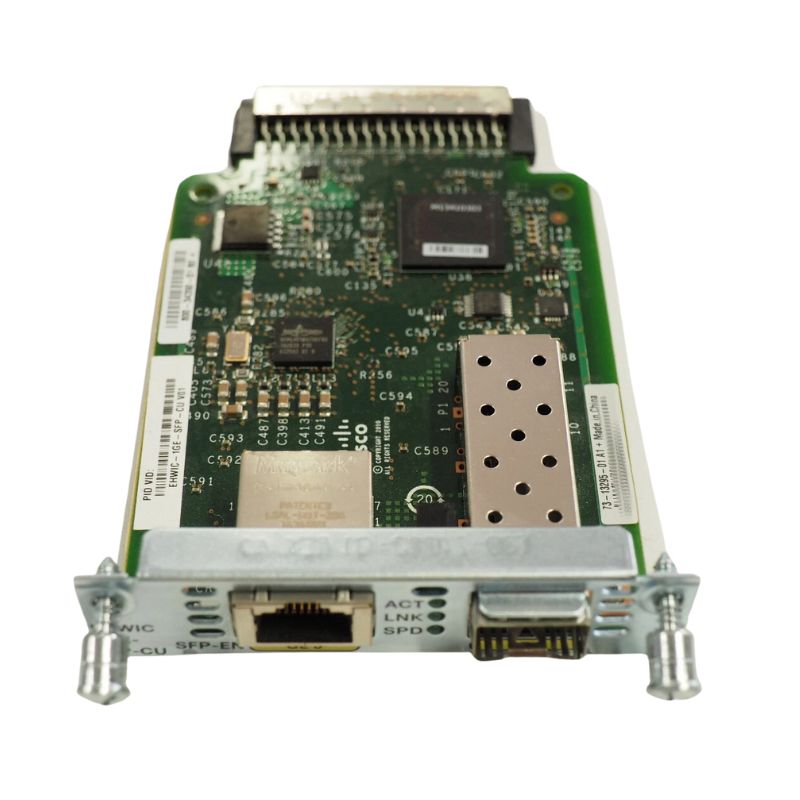
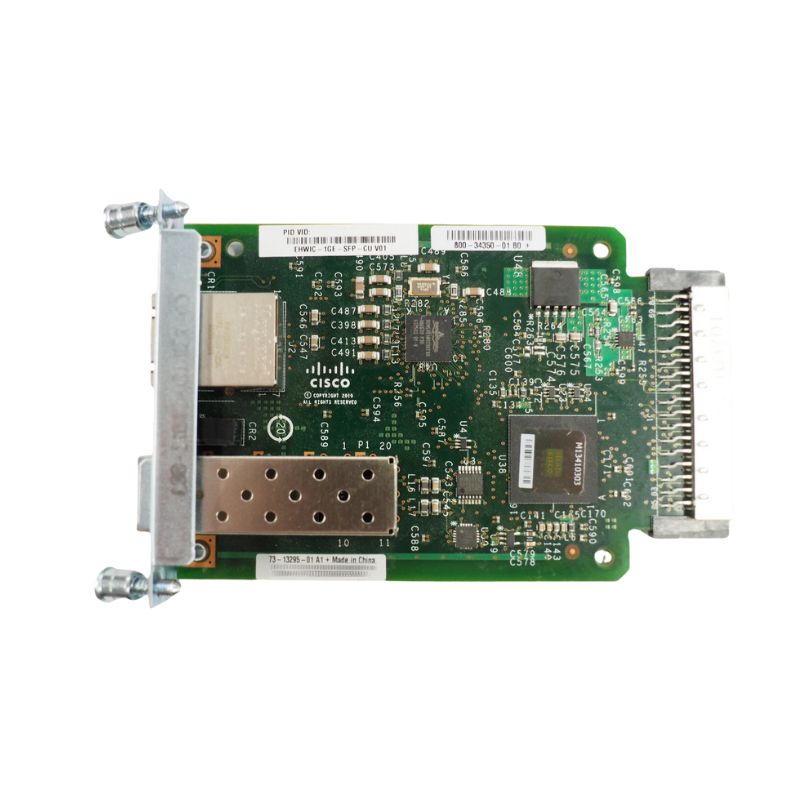
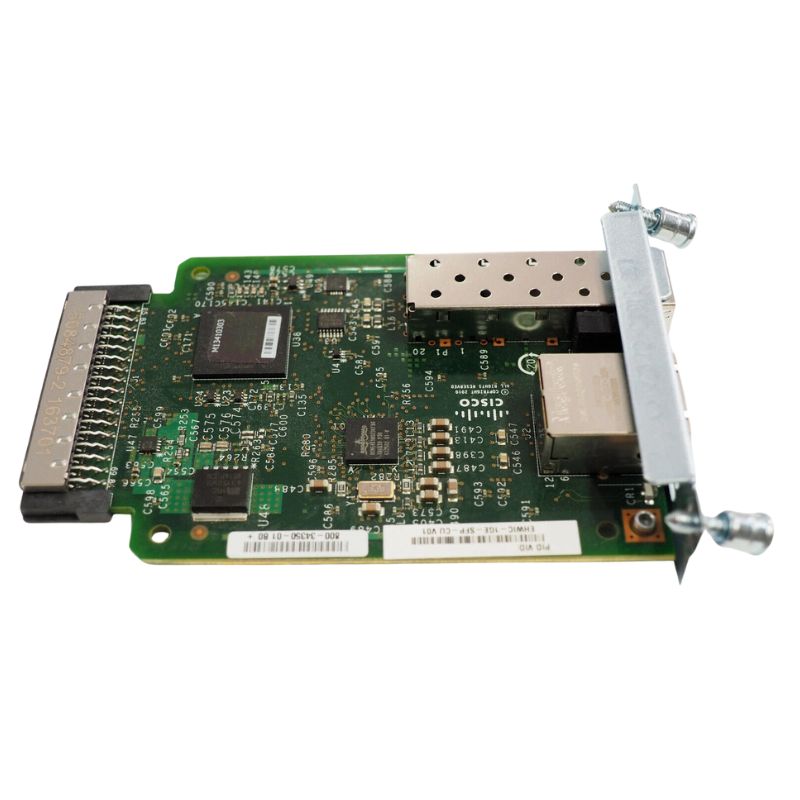
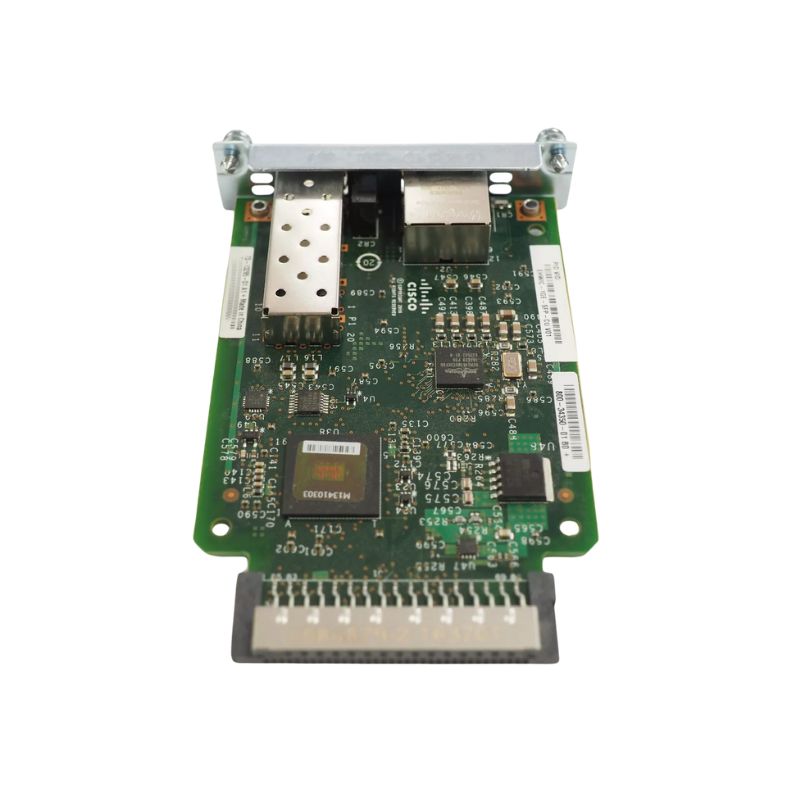
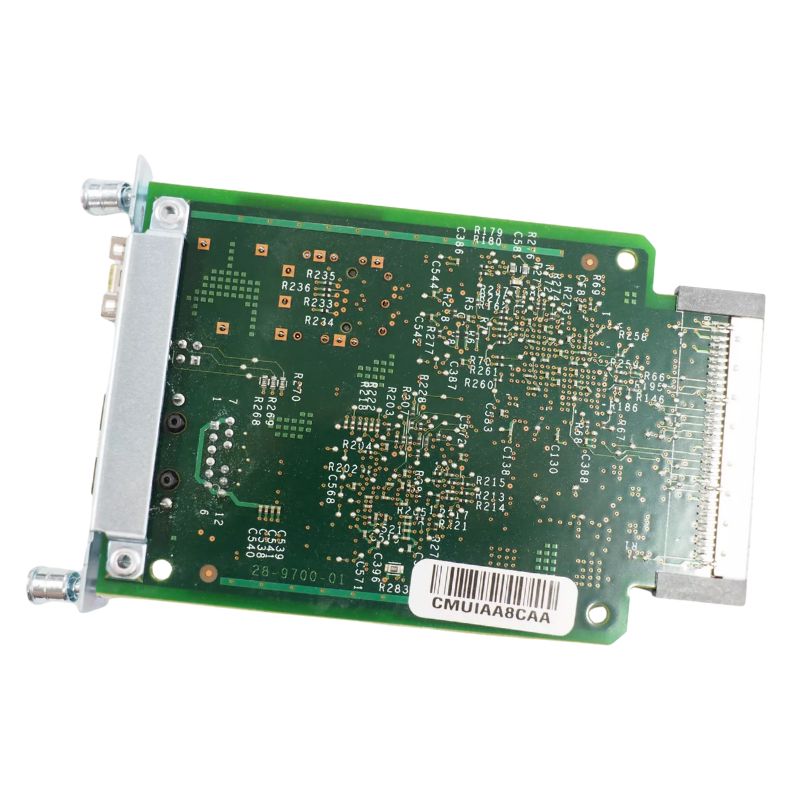
Cisco EHWIC-1GE-SFP-CU 1GBPS Expansion Module Gigabit Ethernet Interface Card. New Sealed with 1 Year Replacement Warranty
| SKU/MPN | Warranty | Price | Condition | You save |
|---|---|---|---|---|
| EHWIC-1GE-SFP-CU | 1 Year Warranty | $53.00 | Excellent Refurbished | You save: $18.55 (26%) |
| EHWIC-1GE-SFP-CU | 1 Year Warranty | $93.00 | New Sealed in Box (NIB) | You save: $32.55 (26%) |
The Cisco EHWIC-1GE-SFP-CU is a high-performance Gigabit Ethernet interface expansion card designed to enhance network connectivity and scalability in enterprise-grade routing environments. This 1 Gbps SFP-capable plug-in module enables flexible integration of copper and fiber Ethernet connections, supporting seamless data transmission across multiple network architectures. Built for reliability and efficiency, it delivers stable high-speed communication for demanding business and service provider applications while ensuring smooth interoperability with Cisco routing platforms.
The Cisco EHWIC-1GE-SFP-CU 1 Gigabit Interface Card Expansion Module is a high-performance networking hardware component designed to extend the capabilities of compatible routing platforms. It enables flexible connectivity options by combining both copper and fiber connectivity in a single interface module. This hybrid design supports modern enterprise networking requirements where scalability, adaptability, and high-speed data transmission are essential for stable communication between branch offices, data centers, and distributed network environments.
This interface card is part of a modular hardware ecosystem that allows network administrators to expand router functionality without replacing entire systems. By introducing gigabit-level throughput and dual-medium support, the module helps organizations transition between legacy infrastructure and modern fiber-based networks while maintaining compatibility with existing copper-based systems.
The architectural design of the Cisco EHWIC-1GE-SFP-CU module is centered around flexibility and performance optimization. It integrates a single Gigabit Ethernet interface that can operate either through a Small Form-Factor Pluggable transceiver slot or through a built-in copper RJ-based connectivity path. This dual-mode structure ensures that network operators can select the most suitable transmission medium depending on deployment conditions and infrastructure availability.
Internally, the module communicates with the host router through a high-speed backplane connection that ensures minimal latency during data transfer. This allows efficient packet forwarding, reduced congestion, and stable throughput even under heavy traffic conditions. The system is engineered to maintain consistent signal integrity and error reduction across both fiber and copper transmission channels.
The Small Form-Factor Pluggable slot in the Cisco EHWIC-1GE-SFP-CU module supports a wide range of optical transceivers, enabling long-distance fiber communication over various wavelengths and transmission standards. This allows organizations to implement scalable fiber backbone connections that can span multiple kilometers without signal degradation, depending on the chosen transceiver type.
The flexibility of SFP-based expansion allows network architects to deploy different fiber types including single-mode and multi-mode configurations. This ensures compatibility with diverse infrastructure environments and simplifies network upgrades by allowing modular replacement of transceiver units instead of entire hardware components.
The module is equipped with automatic media detection functionality that identifies whether a fiber transceiver or copper connection is active. This reduces configuration complexity and ensures faster deployment during installation. The detection system also assists in maintaining optimal link performance by adjusting operational parameters according to the connected medium type.
The physical structure of the Cisco EHWIC-1GE-SFP-CU module is compact and engineered for integration into Cisco compatible routers designed for enhanced WAN and LAN expansion. Its form factor allows it to be inserted into expansion slots without requiring additional external hardware, which simplifies deployment in constrained networking environments.
Durability is a key design consideration, with components built to withstand continuous operation in enterprise environments. The circuit layout is optimized for heat dissipation and signal stability, ensuring consistent performance over extended operational periods.
The module includes a dual-interface configuration that supports both copper-based Ethernet connections and fiber-based SFP transceiver modules. This arrangement provides operational flexibility, allowing network administrators to choose the most efficient transmission method based on distance, bandwidth demand, and infrastructure availability.
The copper interface provides standard Ethernet connectivity suitable for short to medium-range communication. It is commonly used in office environments where devices are located within the same building or campus. The copper connection ensures stable gigabit throughput while maintaining compatibility with existing networking infrastructure.
The fiber interface supports high-speed long-distance communication with improved resistance to electromagnetic interference. This makes it ideal for inter-building connectivity, metropolitan network expansion, and environments where signal integrity is critical. The fiber channel significantly enhances bandwidth efficiency and supports future-ready networking requirements.
The Cisco EHWIC-1GE-SFP-CU module is widely used in enterprise networking scenarios where scalability and flexible connectivity are required. It is commonly deployed in branch office routers, campus networks, and service provider edge devices. Its ability to support both copper and fiber transmission makes it suitable for hybrid infrastructure models.
In enterprise environments, the module plays a key role in enabling reliable communication between distributed offices. It supports secure data transfer between headquarters and remote branches, ensuring stable connectivity for mission-critical applications such as database synchronization, cloud access, and internal communication systems.
Organizations that are transitioning from traditional copper networks to fiber-based infrastructure benefit significantly from this module due to its dual-medium compatibility. It allows gradual migration without disrupting existing operations.
Service providers utilize this module in edge routing systems where flexible interface options are required to connect to multiple customer networks. The ability to support both fiber and copper interfaces allows providers to accommodate diverse customer infrastructure setups without requiring separate hardware deployments.
The performance of the Cisco EHWIC-1GE-SFP-CU module is optimized for gigabit-level data transmission, ensuring efficient handling of high-volume traffic. It supports stable throughput rates that are essential for modern applications including cloud computing, virtualization, and real-time communication services.
Latency is minimized through efficient hardware processing and optimized routing pathways within the module. This ensures that packet delivery remains consistent even during peak traffic conditions. The module also supports advanced buffering mechanisms that help prevent data loss during temporary congestion.
Signal stability is maintained through advanced error detection and correction mechanisms integrated into the hardware architecture. These systems ensure that data integrity is preserved across both copper and fiber transmission channels. The result is a reliable networking experience with minimal downtime and reduced packet loss.
The module supports integration with centralized network management platforms, enabling administrators to monitor performance, configure interfaces, and troubleshoot issues remotely. This centralized approach improves operational efficiency and enhances visibility across network infrastructure.
The module supports standard Ethernet communication protocols used in modern networking environments. It is capable of handling data encapsulation, routing protocols, and traffic management techniques that are essential for enterprise-level communication systems.
Its compatibility with standard networking protocols ensures interoperability with a wide range of devices, enabling seamless communication across heterogeneous network environments.
The modular design of the Cisco EHWIC-1GE-SFP-CU module provides significant advantages in terms of scalability and cost efficiency. Organizations can expand network capabilities without replacing entire routing systems, which reduces infrastructure costs and simplifies upgrades.
This modular approach also supports long-term network evolution by allowing incremental improvements as technology advances. Instead of performing complete system overhauls, organizations can simply replace or upgrade individual modules.
The flexibility of supporting both copper and fiber interfaces ensures that network administrators can adapt to changing infrastructure requirements. This adaptability is especially important in environments where network expansion is ongoing or unpredictable.
Modern networking architectures often require hybrid solutions that combine legacy systems with advanced fiber-based infrastructure. The Cisco EHWIC-1GE-SFP-CU module fits into these environments by bridging the gap between different transmission technologies.
It is commonly deployed in hybrid WAN environments, campus backbone networks, and distributed enterprise systems where high-speed connectivity is required across multiple geographical locations.
In hybrid deployments, the module enables smooth interaction between copper-based local networks and fiber-based wide area networks. This ensures consistent communication performance regardless of the underlying transmission medium.


 Contact Us
 Information
 Catalog
 Solid State Drives (SSD)
 Network Switches
 Hard Disk Drives
 HBA & Controllers
 PC & Servers
 PC & Server Memory
 CPU & Processors
 Network Routers
 Power Supplies
 Tape Drives & Libraries
 Network Devices
 Computer & Network Cables