(7% discount is applied at checkout)
Cart is empty
Your go-to destination for cutting-edge server products
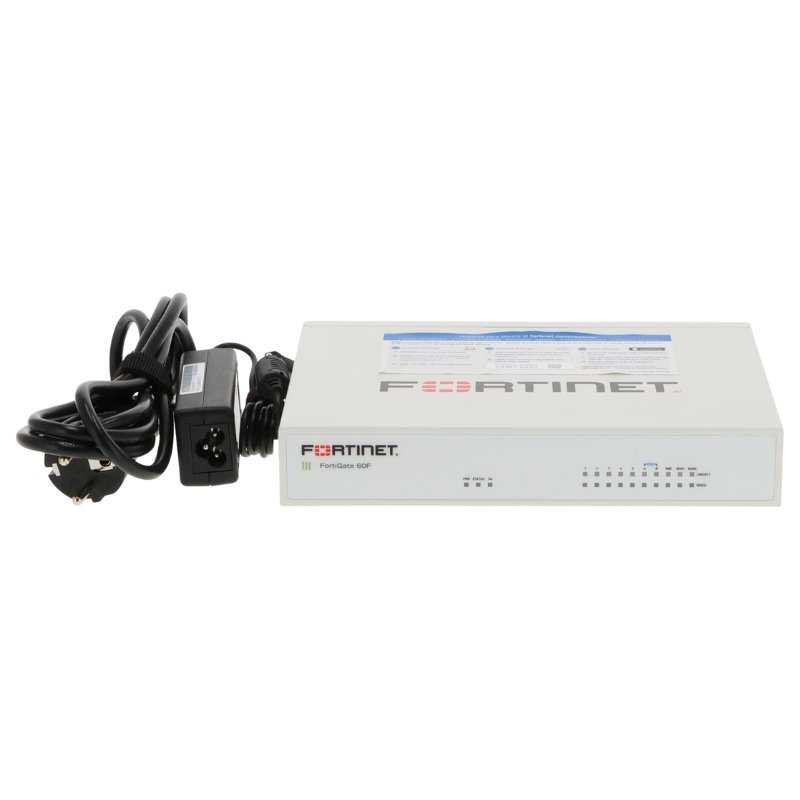


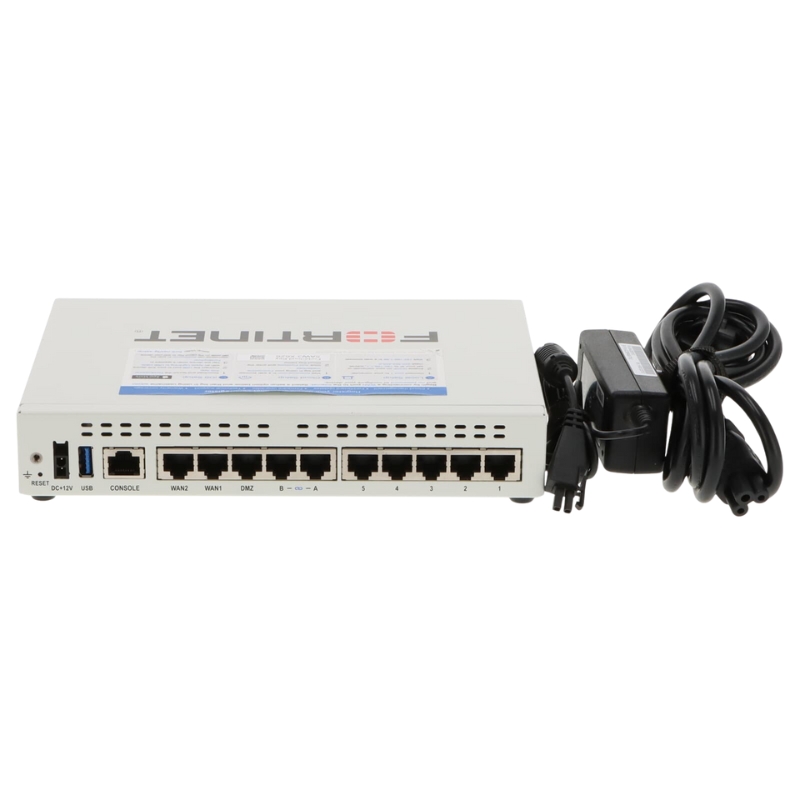
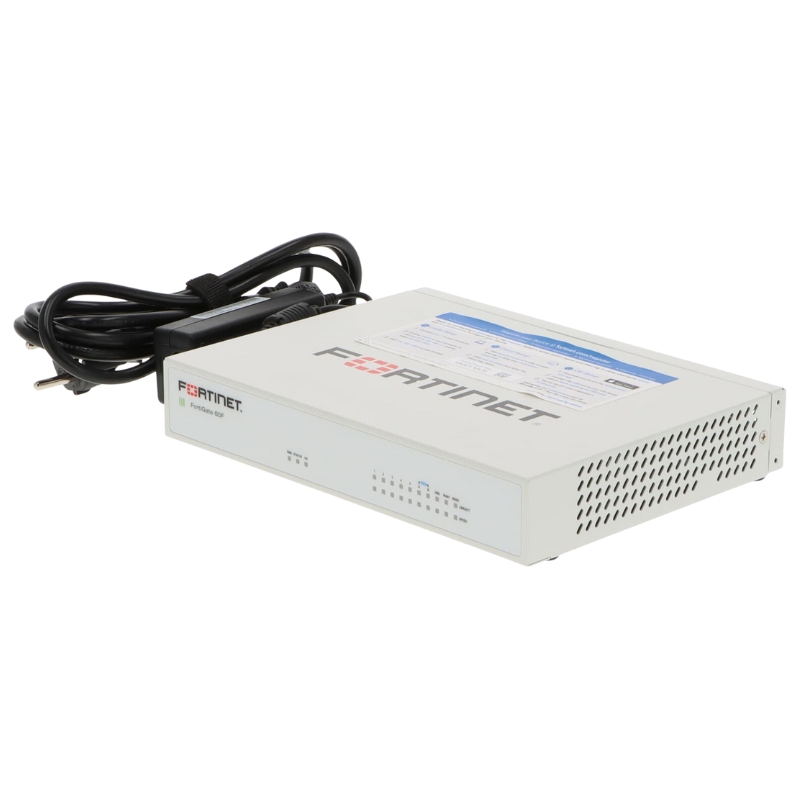
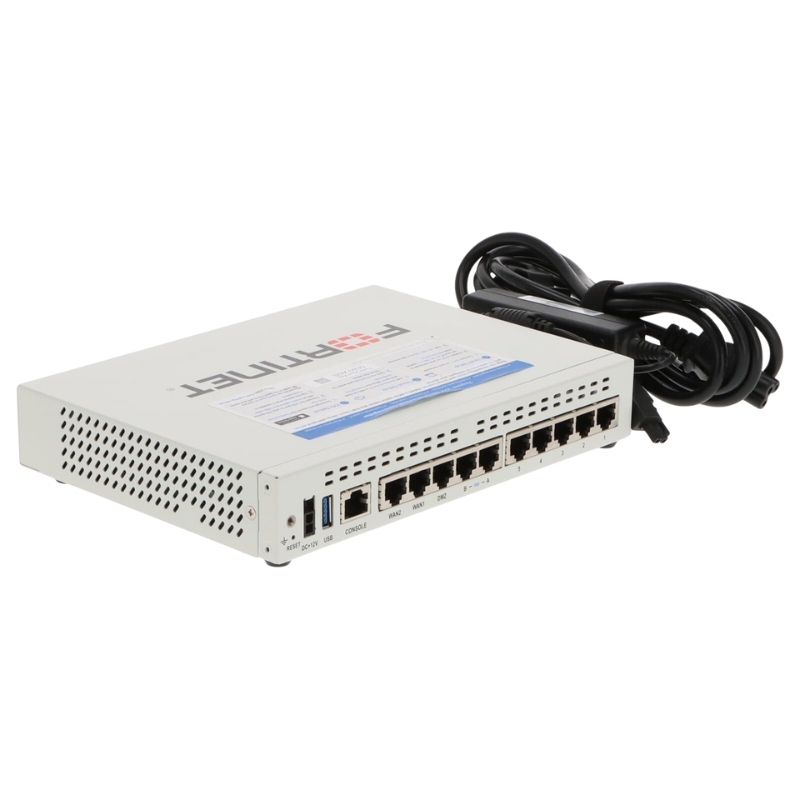
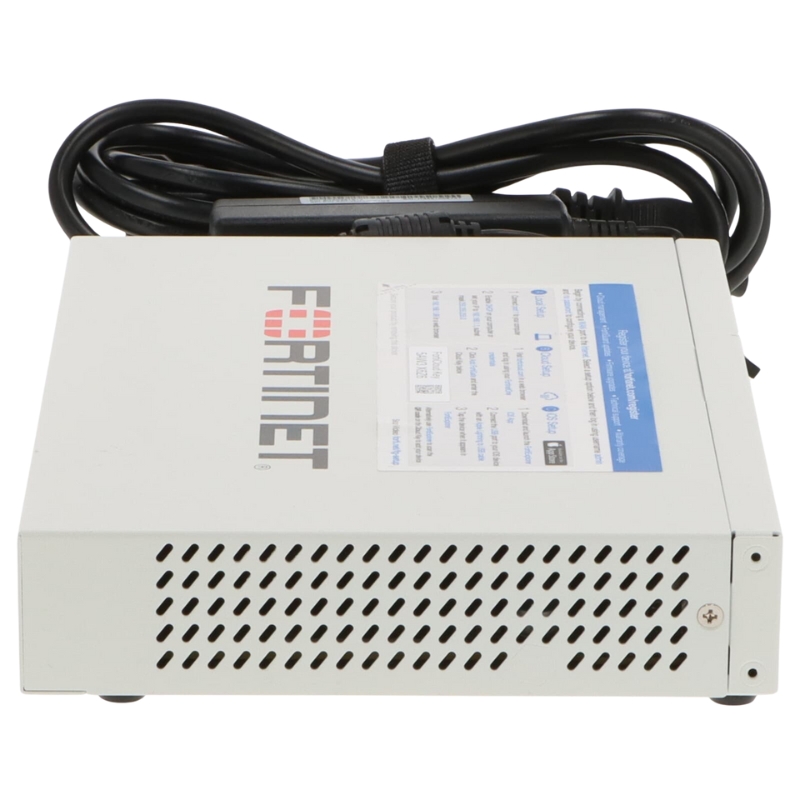
Fortinet FG-60F Network Security Appliance 10 Ports 60F 10x GE RJ45 Ports 2x WAN Ports. Factory-Sealed New in Original Box (FSB) with 3 Years Warranty
The FG-60F Network Security Appliance is a compact yet high-performance firewall solution designed for modern enterprise and branch office environments. It integrates 10 total ports including multiple Gigabit RJ45 interfaces and dedicated WAN connectivity, delivering secure, reliable, and high-speed network protection. Built for efficiency and scalability, this security appliance supports advanced threat mitigation, VPN connectivity, and optimized traffic management for business-critical operations.
The Fortinet FG-60F Network Security Appliance with 10 ports and dual WAN connectivity represents a compact yet highly capable next generation firewall solution designed for modern distributed enterprise environments. Developed within the security architecture of
The FG-60F platform is built around the concept of converged security and networking, where firewall protection, intrusion prevention, application control, VPN connectivity, and secure SD-WAN capabilities are unified into a single hardware appliance. This convergence reduces operational complexity while improving security visibility across distributed environments. The inclusion of 10 Gigabit Ethernet RJ45 ports and dual WAN interfaces ensures flexible network segmentation, redundancy, and performance optimization for business-critical traffic flows.
The core of the Fortinet FG-60F appliance is its next generation firewall processing architecture, which is designed to inspect traffic at high speeds while maintaining deep packet inspection capabilities. Unlike traditional firewalls that primarily rely on port and protocol filtering, this system applies contextual awareness, application-layer intelligence, and threat correlation to every data flow passing through the network perimeter.
This architecture enables real-time detection and prevention of sophisticated cyber threats including malware, ransomware, phishing attempts, and zero-day vulnerabilities. The appliance leverages integrated security services that continuously analyze traffic behavior patterns and correlate them with global threat intelligence feeds. This ensures that emerging threats are identified and mitigated before they can compromise network integrity.
The FG-60F processing engine is optimized for small branch environments where bandwidth efficiency and security enforcement must coexist without degradation of user experience. By offloading cryptographic operations and inspection workloads to dedicated hardware acceleration components, the system maintains consistent throughput even under heavy inspection loads.
The Fortinet FG-60F includes a carefully engineered interface layout featuring 10 Gigabit Ethernet RJ45 ports designed to support diverse network segmentation strategies. These interfaces enable administrators to define separate zones for internal users, guest access, IoT devices, and secure administrative networks. The flexibility of RJ45 connectivity ensures compatibility with standard enterprise cabling infrastructures while supporting high-speed data transmission requirements.
Dual WAN ports provide redundancy and load balancing capabilities, ensuring continuous connectivity even in the event of ISP failure or degraded performance. This dual-path architecture is essential for organizations that rely on uninterrupted access to cloud applications, remote services, and mission-critical systems. Intelligent routing mechanisms dynamically select the optimal WAN path based on latency, jitter, packet loss, and application priority.
The interface architecture supports modern network segmentation principles, allowing organizations to isolate sensitive workloads from general traffic. This segmentation enhances security posture while reducing the risk of lateral movement in the event of a breach.
The FG-60F appliance integrates secure SD-WAN capabilities that enable intelligent traffic steering across multiple WAN connections. This functionality is particularly important in distributed enterprise environments where cloud applications, SaaS platforms, and remote services require consistent performance and reliability.
Secure SD-WAN functionality dynamically evaluates network conditions and application requirements to determine the most efficient path for traffic delivery. This ensures that latency-sensitive applications such as voice communication, video conferencing, and real-time data processing are prioritized over less critical background traffic.
The SD-WAN engine also enhances cost efficiency by enabling organizations to utilize multiple types of internet connectivity, including broadband and dedicated circuits, in a unified architecture. Traffic optimization policies ensure that bandwidth resources are allocated efficiently while maintaining security enforcement across all connections.
Remote connectivity remains a critical requirement for modern enterprises, and the FG-60F appliance provides robust VPN encryption capabilities to support secure communication between distributed endpoints. The system supports encrypted tunnels that protect data in transit between branch offices, headquarters, cloud environments, and remote users.
VPN architecture within this appliance is designed for scalability and performance, ensuring that multiple simultaneous encrypted connections can be maintained without impacting network throughput. Hardware acceleration for encryption and decryption processes ensures that secure communication does not introduce latency or bottlenecks.
Organizations benefit from secure remote access capabilities that enable employees and partners to connect to internal resources without exposing sensitive data to public networks. This is particularly important in hybrid work environments where workforce mobility is a standard operational requirement.
The FG-60F integrates a powerful intrusion prevention system that continuously monitors network traffic for suspicious behavior patterns and known attack signatures. This system operates in real time, analyzing packets at multiple layers of the network stack to detect anomalies that may indicate malicious activity.
Threat detection is enhanced through continuous updates provided by global intelligence networks that aggregate information from millions of deployed sensors worldwide. This collective intelligence enables the system to recognize emerging attack patterns and apply protective measures proactively.
The intrusion prevention capabilities are designed to operate transparently within the network infrastructure, ensuring that legitimate traffic flows are not disrupted while malicious activity is blocked or quarantined. This balance between security enforcement and operational continuity is essential for maintaining productivity in enterprise environments.
Application control functionality within the FG-60F appliance enables administrators to define granular policies governing the use of network applications. This ensures that business-critical applications receive priority while non-essential or risky applications can be restricted or monitored.
Web filtering capabilities provide an additional layer of governance by controlling access to online content based on predefined categories and organizational policies. This helps organizations enforce acceptable use policies, reduce exposure to malicious websites, and maintain productivity standards across the workforce.
These capabilities are particularly important in environments where employees access a wide range of cloud-based services and internet resources. By applying consistent policy enforcement, organizations can maintain security and compliance without restricting necessary business operations.
Modern enterprise environments increasingly rely on hybrid infrastructure models that combine on-premises systems with cloud-based services. The FG-60F supports secure connectivity to cloud platforms, enabling organizations to extend their security policies across distributed environments.
Encrypted communication channels ensure that data transmitted between local networks and cloud services remains protected from interception or tampering. This is essential for organizations that rely on cloud storage, SaaS applications, and distributed computing resources.
Hybrid infrastructure protection also includes visibility into cloud application usage, enabling organizations to monitor and control how cloud resources are accessed and utilized across the network.
Network resilience is a fundamental requirement for business continuity, and the FG-60F incorporates features designed to maintain operational stability under varying conditions. Dual WAN connectivity ensures that alternative internet paths are available in the event of connectivity failure, while intelligent failover mechanisms automatically reroute traffic to maintain service continuity.
The appliance is engineered to handle fluctuating traffic loads while maintaining consistent security enforcement. This ensures that performance degradation does not occur during peak usage periods or unexpected traffic spikes.
Resilience is further enhanced through continuous system monitoring and automated recovery mechanisms that help maintain stable operation without manual intervention.
The FG-60F leverages dedicated hardware acceleration components to optimize performance across encryption, inspection, and routing operations. This ensures that security processing does not become a bottleneck in high-demand environments.
By distributing workloads across specialized processing units, the appliance maintains consistent throughput even when multiple security services are active simultaneously. This is particularly important for environments with heavy VPN usage, real-time application traffic, and continuous threat inspection requirements.
Performance optimization ensures that end-user experience remains smooth while maintaining strict security enforcement across all network layers.
The FG-60F integrates with centralized management platforms that provide administrators with comprehensive visibility into network activity, security events, and system performance. This centralized approach simplifies policy management and ensures consistent enforcement across multiple deployment sites.
Operational visibility includes real-time monitoring of traffic patterns, threat detection events, application usage, and network performance metrics. This information is essential for making informed security decisions and optimizing network configurations.
Centralized management also enables rapid deployment of policy updates and security configurations across distributed environments, reducing administrative overhead and improving response times to emerging threats.


 Contact Us
 Information
 Catalog
 Solid State Drives (SSD)
 Network Switches
 Hard Disk Drives
 HBA & Controllers
 PC & Servers
 PC & Server Memory
 CPU & Processors
 Network Routers
 Power Supplies
 Tape Drives & Libraries
 Network Devices
 Computer & Network Cables