(7% discount is applied at checkout)
Cart is empty
Your go-to destination for cutting-edge server products
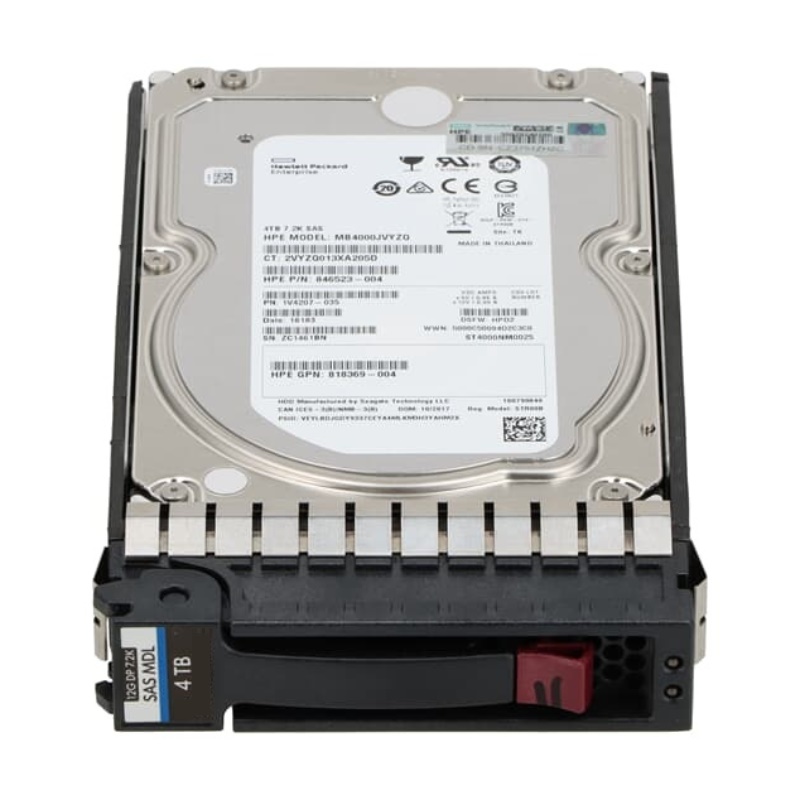


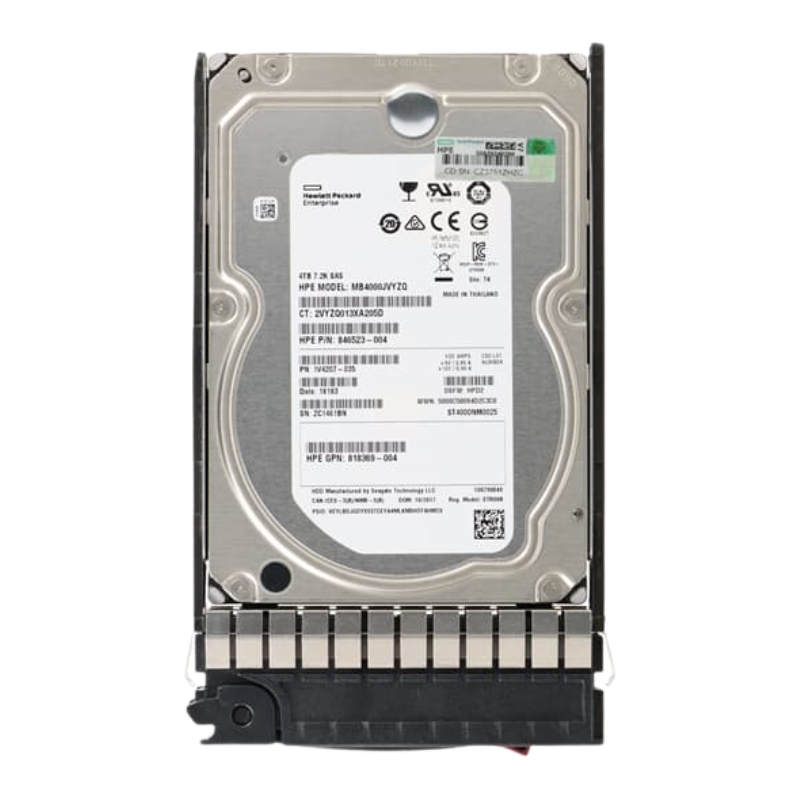
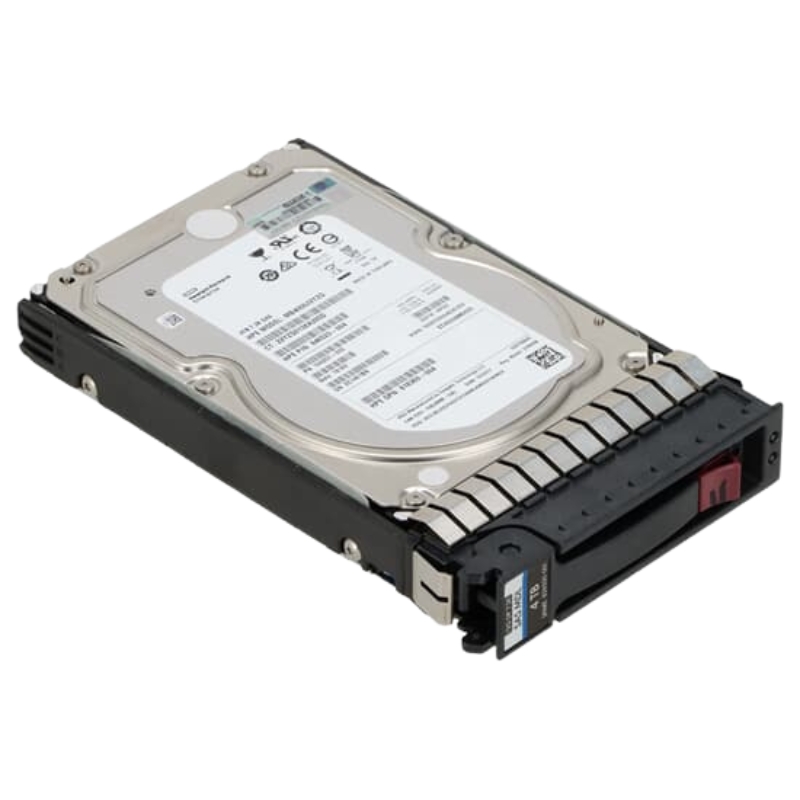
HPE 4TB 7.2K RPM SAS 12GBPS Midline Hard Drive - 846523-004. Factory-Sealed New in Original Box (FSB) with 3 Years Warranty
| SKU/MPN | Warranty | Price | Condition | You save |
|---|---|---|---|---|
| 846523-004 | 1 Year Warranty | $123.00 | Excellent Refurbished | You save: $43.05 (26%) |
| 846523-004 | 1 Year Warranty | $445.00 | Factory-Sealed New in Original Box (FSB) | You save: $155.75 (26%) |
The HPE 846523-004 is a high-performance enterprise-grade midline hard drive designed for reliable storage expansion in HPE ProLiant servers. Built for durability, speed, and scalability, this 4TB SAS drive delivers consistent performance for data-intensive workloads.
The HPE 846523-004 4TB 7.2K RPM SAS 12Gbps Midline Hard Drive belongs to a class of enterprise-grade storage devices engineered for scalable server environments and long-term data retention workloads. This category of midline hard drives is designed to bridge the gap between high-performance enterprise drives and cost-efficient bulk storage solutions. Within modern data infrastructure, these drives are frequently deployed in environments where capacity density, reliability, and sustained throughput are more important than ultra-low latency performance.
As part of Hewlett Packard Enterprise’s storage ecosystem, this hard drive model is aligned with server-grade architectures that support continuous operation under demanding workloads. The product is typically integrated into HPE ProLiant servers and storage arrays, where it functions as a dependable component for primary storage expansion, archival systems, and hybrid storage tiers.
Within enterprise IT ecosystems, midline SAS hard drives like the HPE 846523-004 are commonly deployed in environments requiring balanced cost-per-terabyte efficiency and predictable performance. These include large-scale virtualization clusters, data backup infrastructures, file storage servers, and cold or warm data repositories. The design philosophy behind this category prioritizes durability and sustained throughput under multi-user workloads rather than peak transactional speeds.
The SAS 12Gbps interface ensures that the drive can integrate seamlessly into modern enterprise storage backplanes, allowing high-speed communication with RAID controllers and storage fabric systems. This enables organizations to maintain stable performance even when multiple drives are operating simultaneously under heavy I/O loads.
The 4TB storage capacity of the HPE 846523-004 is engineered to provide a balance between density and manageability in enterprise environments. This capacity point is widely adopted in server infrastructures because it allows administrators to scale storage arrays efficiently without excessive drive count overhead. A moderate-capacity enterprise drive also contributes to improved rebuild times in RAID configurations, reducing system vulnerability during maintenance or failure recovery processes.
In large storage pools, 4TB midline drives are often used to optimize cost-per-gigabyte while still maintaining acceptable performance characteristics for sequential workloads such as backups, media storage, and large dataset processing.
The rotational speed of 7,200 RPM plays a critical role in defining the performance profile of this drive category. While not as fast as 10K or 15K RPM enterprise drives, 7.2K RPM models are optimized for capacity-heavy workloads where sustained data transfer is more important than extremely low seek times. This makes them suitable for sequential read and write operations commonly found in backup systems and archival storage environments.
The mechanical design is optimized to reduce wear while maintaining stable rotational consistency under continuous operation. This ensures predictable latency behavior across extended workloads, which is essential for enterprise reliability expectations.
The 12Gbps SAS interface is one of the defining characteristics of the HPE 846523-004 drive category. Serial Attached SCSI technology provides full-duplex communication, enhanced command queuing, and robust error correction capabilities. Compared to SATA interfaces, SAS offers superior scalability and reliability in multi-drive environments.
The 12Gbps transfer rate enables higher throughput potential, especially when multiple drives are aggregated in RAID arrays or storage enclosures. SAS architecture also supports dual-port connectivity, improving redundancy and failover capabilities in enterprise storage systems.
Midline drives are designed to occupy the middle tier between high-performance enterprise drives and nearline storage solutions. The HPE 846523-004 exemplifies this category by offering a combination of durability, moderate performance, and cost efficiency. These drives are engineered for workloads that do not require extreme IOPS but still demand continuous availability and reliability.
Midline drives are commonly used in environments where storage scalability and operational efficiency are key priorities, such as departmental servers, backup repositories, and large-scale file distribution systems.
The HPE 846523-004 is optimized for sequential read and write operations, making it well-suited for workloads that involve large file transfers or streaming data processing. In enterprise storage environments, sequential performance is often more valuable than random access speed, particularly in backup systems and archival storage arrays.
The SAS 12Gbps interface ensures that the drive can maximize its mechanical throughput capabilities by reducing interface bottlenecks. This allows storage systems to achieve consistent data flow even when multiple drives are operating concurrently.
Latency in a 7.2K RPM drive is inherently higher than that of SSD-based storage solutions, but the architecture is tuned for predictable performance under sustained workloads. Enterprise systems that utilize these drives typically rely on caching mechanisms and RAID controllers to mitigate latency impact.
The drive’s firmware and mechanical structure are optimized to reduce variability in response times, which is a critical factor in maintaining system stability in multi-user environments.
The HPE 846523-004 is best suited for workloads involving large sequential operations, such as backup scheduling, data archiving, and media storage. It is less suitable for high-frequency transactional databases or applications requiring ultra-low latency random access.
In hybrid storage architectures, this drive category is often paired with SSDs or higher-speed SAS drives to create tiered storage systems that balance performance and cost efficiency.
Enterprise-class midline drives are designed for 24/7 operation in data center environments. The HPE 846523-004 incorporates mechanical and firmware-level optimizations that support continuous workloads without significant degradation in performance or reliability over time.
The drive is built to withstand sustained vibration, temperature fluctuations, and heavy I/O cycles commonly found in rack-mounted server environments.
In dense server enclosures, vibration can significantly impact drive performance and longevity. The HPE 846523-004 is engineered with enhanced rotational vibration tolerance to maintain stability when multiple drives operate in close proximity.
This design ensures consistent read/write accuracy and reduces the likelihood of mechanical errors in high-density storage configurations.
Enterprise SAS drives include advanced error recovery systems that help preserve data integrity during read and write operations. These mechanisms are designed to detect inconsistencies and correct them before they impact system-level performance or data reliability.
The firmware architecture prioritizes enterprise-grade error handling over consumer-level performance tuning, ensuring that data consistency remains the primary operational objective.
The HPE 846523-004 is designed to integrate seamlessly with HPE server infrastructures, particularly ProLiant systems. These servers are optimized to recognize and manage HPE-certified drives, ensuring compatibility with firmware, RAID controllers, and storage backplanes.
This integration reduces configuration complexity and improves system stability, especially in large-scale deployments where uniform hardware compatibility is essential.
This drive category is frequently used in RAID configurations to enhance redundancy and performance. RAID systems benefit from the consistent behavior of midline SAS drives, particularly in RAID 5, RAID 6, and RAID 10 setups.
In such configurations, the drive’s moderate capacity and stable throughput help optimize rebuild times and reduce the risk of array degradation during failure recovery.
The HPE 846523-004 is commonly deployed in enterprise data centers where large-scale storage pools are required. These environments prioritize cost-effective capacity expansion while maintaining acceptable performance levels for non-latency-sensitive applications.
Typical deployments include file servers, document repositories, and centralized storage systems used across organizational departments.
Virtualization environments benefit from midline SAS drives when used for secondary storage tiers. These drives provide sufficient throughput for virtual machine storage, backup snapshots, and archived virtual instances.
While SSDs are often used for primary VM workloads, midline drives support long-term storage and backup retention layers within virtualized infrastructures.
Backup infrastructures rely heavily on cost-efficient high-capacity drives. The HPE 846523-004 is well-suited for scheduled backup operations, where large volumes of data are written sequentially and stored for long-term retention.
Archival systems benefit from the drive’s reliability and sustained operation capabilities, ensuring that stored data remains accessible over extended periods.
Compared to SATA-based enterprise drives, SAS drives like the HPE 846523-004 offer superior scalability, dual-port redundancy, and enhanced command processing capabilities. While SATA drives may provide similar capacity at lower cost, they lack the robustness required for mission-critical enterprise workloads.
SAS drives are preferred in environments where uptime, redundancy, and predictable performance are essential requirements.
Solid state drives offer significantly higher performance in terms of latency and IOPS; however, they come at a higher cost per terabyte. The HPE 846523-004 provides a more economical solution for large-scale storage needs where ultra-low latency is not a primary requirement.
In hybrid storage systems, SSDs are often used for caching or high-performance tiers, while midline HDDs handle bulk storage responsibilities.
High-performance SAS drives typically operate at higher spindle speeds such as 10K or 15K RPM, delivering faster access times but lower capacity efficiency. The HPE 846523-004 prioritizes storage density and cost efficiency, making it more suitable for capacity-oriented workloads.
Many HPE server systems support hot-swappable drive bays, allowing the HPE 846523-004 to be replaced or upgraded without system downtime. This feature is critical in enterprise environments where continuous availability is required.
Hot-swap functionality also simplifies maintenance operations and reduces operational disruption during hardware lifecycle management.
The drive firmware is designed to integrate with HPE management tools, enabling administrators to monitor drive health, performance metrics, and predictive failure indicators. This contributes to proactive maintenance strategies and reduces the risk of unexpected data loss.
In modern storage architectures, data is often segmented into tiers based on access frequency and performance requirements. The HPE 846523-004 is typically deployed in mid-tier or archival storage layers where capacity and cost efficiency are prioritized.
Tiered storage systems improve overall infrastructure efficiency by aligning storage media characteristics with workload requirements.
Midline SAS drives are engineered to balance performance with power efficiency. The HPE 846523-004 consumes significantly less power than high-RPM enterprise drives while still delivering stable throughput for sustained workloads.
This makes it suitable for large-scale deployments where energy efficiency contributes to overall data center cost optimization.
Thermal performance is a critical factor in server storage design. The HPE 846523-004 is optimized to operate within controlled temperature ranges typical of enterprise data centers. Proper airflow and rack design ensure long-term stability and prevent thermal-related degradation.
Enterprise storage planning requires careful lifecycle management. Midline drives like the HPE 846523-004 are typically deployed with expected multi-year operational lifespans under continuous usage conditions.
Predictable degradation patterns and structured replacement cycles help organizations maintain storage reliability over time without unexpected disruptions.


 Contact Us
 Information
 Catalog
 Solid State Drives (SSD)
 Network Switches
 Hard Disk Drives
 HBA & Controllers
 PC & Servers
 PC & Server Memory
 CPU & Processors
 Network Routers
 Power Supplies
 Tape Drives & Libraries
 Network Devices
 Computer & Network Cables