(7% discount is applied at checkout)
Cart is empty
Your go-to destination for cutting-edge server products
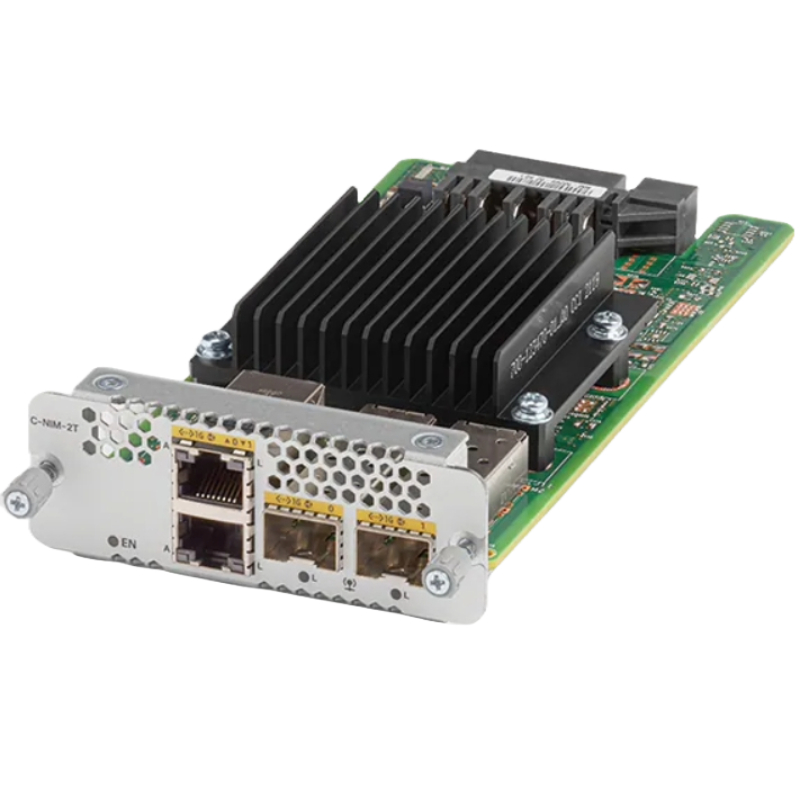


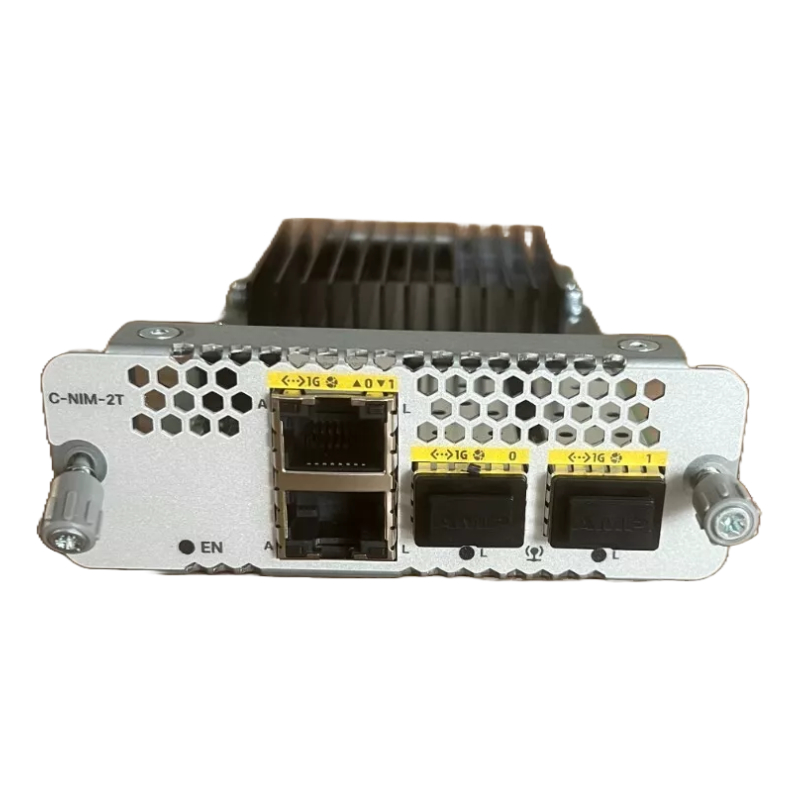
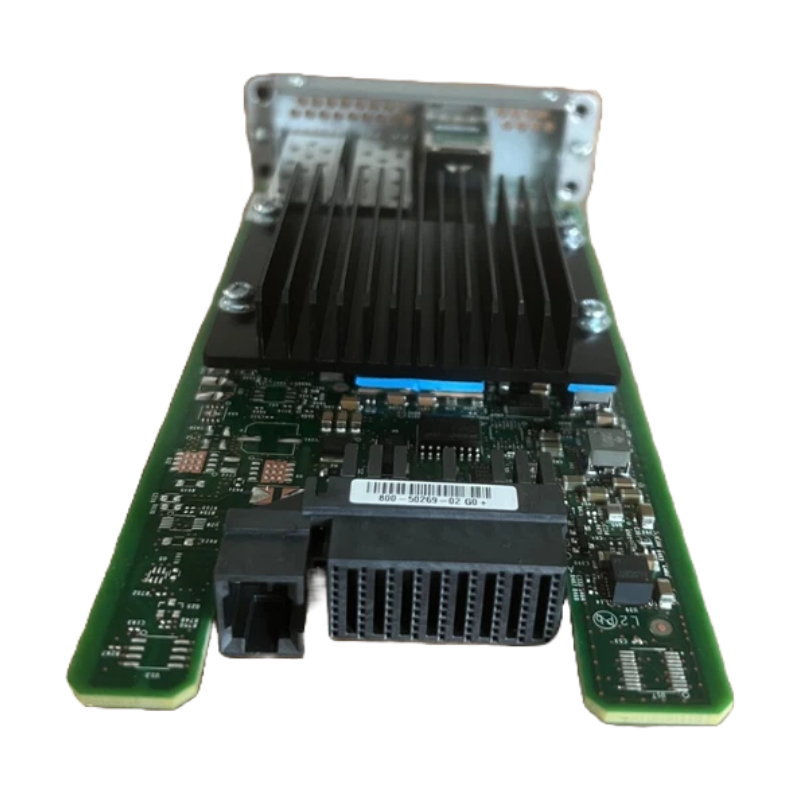
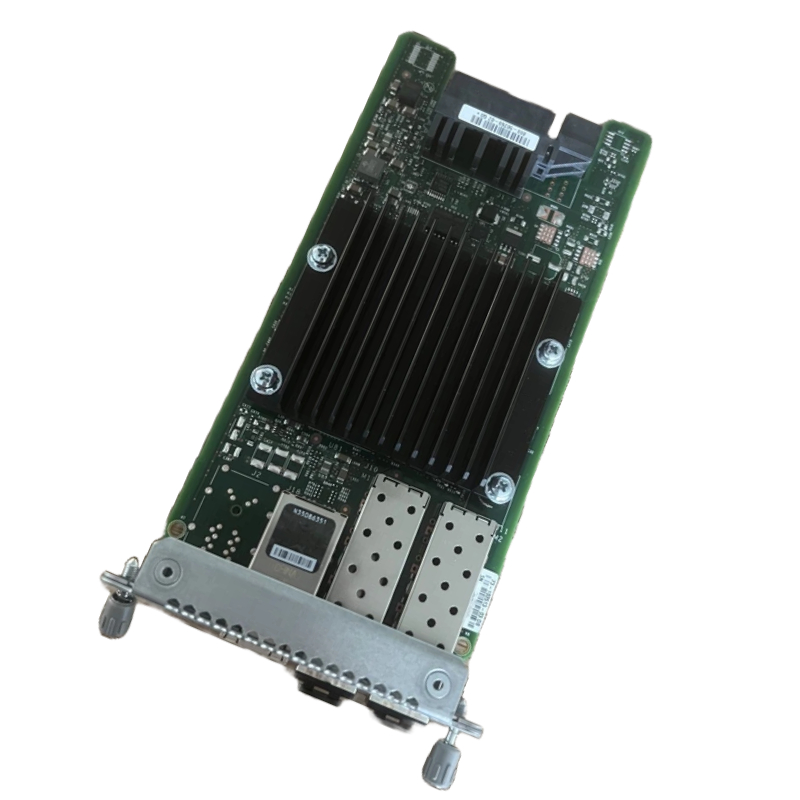
Cisco C-NIM-2T Catalyst 2-Ports 1GE SFP NIM Module with MACSec Network Switch. Factory-Sealed New in Original Box (FSB) with 1 year replacement warranty
The Cisco C-NIM-2T Catalyst 2-Port 1GE SFP NIM Module is a versatile networking solution designed to expand connectivity for enterprise-grade switches. With dual-port capability, SFP expansion, and compatibility with Cisco Catalyst Edge Switches, this module ensures reliable and scalable networking performance.
The CISCO C-NIM-2T Network Interface Module 100base-fx/1000base-x x 2 represents a specialized high-performance networking expansion component designed for enterprise-grade routing and switching environments. Integrated within modular network architectures, this interface module provides dual-port fiber connectivity supporting both Fast Ethernet and Gigabit Ethernet standards over optical fiber infrastructure. Developed within the ecosystem of this module is engineered to extend the capability of compatible routers and network devices, enabling scalable, resilient, and high-throughput communication across complex IT infrastructures.
This category of network interface modules is widely utilized in environments where reliable fiber optic communication is required, particularly in data centers, campus networks, service provider backbones, and enterprise WAN deployments. The dual-port configuration ensures redundancy, load distribution, and flexible network segmentation strategies while maintaining consistent performance under demanding traffic conditions.
The Cisco C-NIM-2T module is designed as a pluggable network interface expansion unit that integrates seamlessly into supported Cisco network platforms. Its architecture follows a modular philosophy that allows enterprises to customize their routing and switching hardware according to evolving bandwidth demands. By enabling hardware expansion without full system replacement, organizations can achieve cost efficiency and operational continuity.
The module connects internally through high-speed backplane interfaces that ensure minimal latency between the host device and the network module. This architecture supports predictable throughput and ensures that traffic between the interface module and the routing engine is handled efficiently, even in high-utilization scenarios.
At the core of the C-NIM-2T design is its dual-port fiber interface configuration. Each port supports both 100BASE-FX and 1000BASE-X standards, enabling compatibility with both legacy Fast Ethernet and modern Gigabit Ethernet optical networks. This dual-standard compatibility provides flexibility for network administrators managing mixed-generation infrastructure.
The fiber interface structure is optimized for low signal degradation, high electromagnetic immunity, and extended transmission distances compared to copper-based networking. This makes the module particularly suitable for long-distance inter-building connectivity and backbone aggregation layers.
The module incorporates advanced signal processing circuitry that ensures accurate optical signal conversion and data encapsulation. Incoming optical signals are converted into digital packets that are processed by the host router’s forwarding engine. Similarly, outgoing traffic is encoded into optical signals for transmission across fiber links.
Efficient buffering mechanisms and hardware-level packet handling reduce congestion and ensure consistent throughput performance even under peak network loads. This is essential for latency-sensitive applications such as voice communication, financial systems, and real-time enterprise applications.
The 100BASE-FX support allows integration into existing Fast Ethernet fiber networks, making the module suitable for organizations that still operate legacy infrastructure. This capability ensures that older network segments can remain functional while still being integrated into modern routing systems.
100BASE-FX operates over multimode fiber and supports moderate-distance transmission suitable for campus networks, industrial environments, and building-level connectivity. The module ensures stable performance even when bridging older infrastructure with newer systems.
The 1000BASE-X standard enables Gigabit Ethernet transmission over fiber optic cables, significantly increasing bandwidth capacity for enterprise applications. This makes the C-NIM-2T ideal for high-throughput environments where large data transfers, virtualization workloads, and cloud connectivity are required.
Gigabit fiber connectivity provides reduced latency and improved reliability compared to copper-based Gigabit solutions, especially in electrically noisy environments or long-distance deployments.
The module supports extended transmission distances depending on fiber type and transceiver configuration. Multimode fiber typically supports shorter-range connections within buildings or campuses, while single-mode fiber enables long-distance communication between remote sites or data centers.
Optical efficiency is enhanced through precision-engineered transceiver interfaces that minimize signal loss and maintain consistent performance across varying network conditions.
Within modern data centers, the C-NIM-2T module plays a critical role in ensuring high-speed connectivity between aggregation switches, core routers, and storage systems. Its Gigabit fiber capability supports virtualization environments, cloud infrastructure, and distributed computing systems that require constant high-bandwidth access.
The module’s reliability ensures uninterrupted communication between server clusters and network backbones, reducing downtime risks and improving service availability.
Educational institutions, corporate campuses, and government facilities utilize this module to extend fiber backbone networks across multiple buildings. The dual-port configuration allows for redundant links that enhance network resilience and prevent single points of failure.
Network segmentation across departments, laboratories, and administrative systems becomes more efficient through dedicated fiber pathways supported by this interface module.
Internet service providers and telecom operators deploy such modules in aggregation layers where multiple subscriber connections are consolidated into higher-capacity backbone links. The ability to handle both Fast Ethernet and Gigabit Ethernet traffic ensures compatibility with diverse customer infrastructures.
This flexibility allows service providers to gradually upgrade network capacity without requiring immediate large-scale infrastructure replacement.
The C-NIM-2T module is engineered for minimal latency in packet forwarding operations. By leveraging hardware-based switching and routing acceleration, the module reduces the processing burden on the main router CPU, ensuring faster packet delivery across network paths.
This is especially beneficial for latency-sensitive applications such as VoIP communications, video conferencing, and financial trading systems where milliseconds of delay can impact performance.
The dual-port architecture allows simultaneous data transmission across two independent fiber channels. This increases aggregate throughput and enables load balancing strategies that distribute network traffic efficiently.
In high-demand environments, this capability ensures that no single port becomes a bottleneck, thereby maintaining consistent network performance even under peak loads.
Quality of Service mechanisms ensure that critical network traffic receives priority handling. The module supports classification and prioritization of data packets based on application requirements, ensuring that essential services remain unaffected during congestion.
This is particularly important for enterprises running mixed workloads including voice, video, and data traffic simultaneously.
The module is specifically designed for compatibility with supported modular router platforms within ecosystems. It integrates through standardized network module slots, allowing seamless hardware recognition and configuration.
This plug-and-play capability reduces deployment time and simplifies network expansion processes for IT administrators.
The C-NIM-2T module is compatible with a wide range of fiber optic transceivers and cabling standards. This ensures interoperability with existing infrastructure investments, reducing the need for complete system overhauls during upgrades.
Support for both multimode and single-mode fiber further enhances deployment flexibility across diverse environments.
The module supports standard Ethernet protocols used in modern networking environments. This ensures compatibility with routing protocols, switching mechanisms, and network management systems commonly deployed in enterprise networks.
The dual-port design inherently supports redundancy, allowing network administrators to configure failover paths in case of link failure. This enhances network reliability and ensures continuous connectivity in mission-critical environments.
Hardware-level stability reduces the likelihood of packet loss and ensures consistent transmission quality across long operational periods.
The module is designed to operate efficiently under varying environmental conditions typically found in enterprise installations. Fiber optic connectivity inherently reduces susceptibility to electromagnetic interference, making it ideal for industrial environments with high electrical noise.
This resilience contributes to long-term operational stability and reduced maintenance requirements.
Advanced error detection mechanisms ensure data integrity during transmission. The module continuously monitors signal quality and minimizes transmission errors through optimized encoding and decoding processes.
In financial environments, low-latency and high-reliability connectivity are essential. The module supports rapid transaction processing and secure data transmission between trading systems and data centers.
Hospitals and healthcare providers utilize fiber-based networking for secure transmission of patient data, imaging systems, and administrative systems. The module ensures consistent performance in critical healthcare applications.
Universities and research institutions rely on high-speed connectivity for data-intensive applications such as simulations, remote learning systems, and distributed research networks.
Telecom operators integrate the module into backbone infrastructure to support large-scale data routing and subscriber aggregation across wide geographic areas.
Effective bandwidth allocation ensures optimal utilization of available fiber capacity. Administrators can configure traffic policies that balance load across both ports while maintaining service quality.
By leveraging hardware acceleration and optimized routing paths, the module minimizes latency across network segments. This is crucial for real-time communication systems and distributed applications.
The module integrates seamlessly into broader network architectures, enabling coordinated operation with routing protocols, switching systems, and network security frameworks.


 Contact Us
 Information
 Catalog
 Solid State Drives (SSD)
 Network Switches
 Hard Disk Drives
 HBA & Controllers
 PC & Servers
 PC & Server Memory
 CPU & Processors
 Network Routers
 Power Supplies
 Tape Drives & Libraries
 Network Devices
 Computer & Network Cables