(7% discount is applied at checkout)
Cart is empty
Your go-to destination for cutting-edge server products
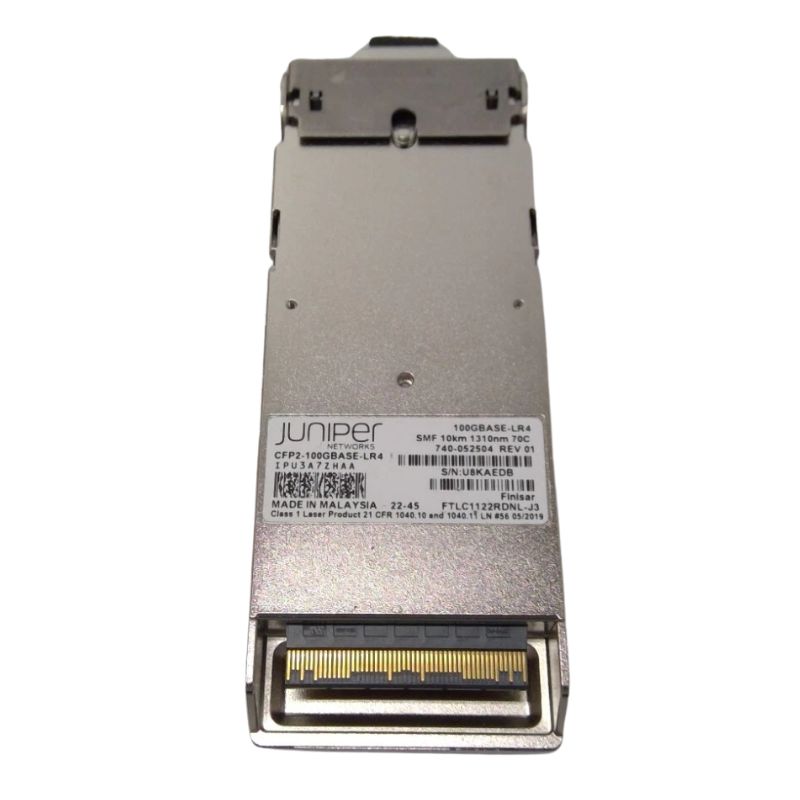


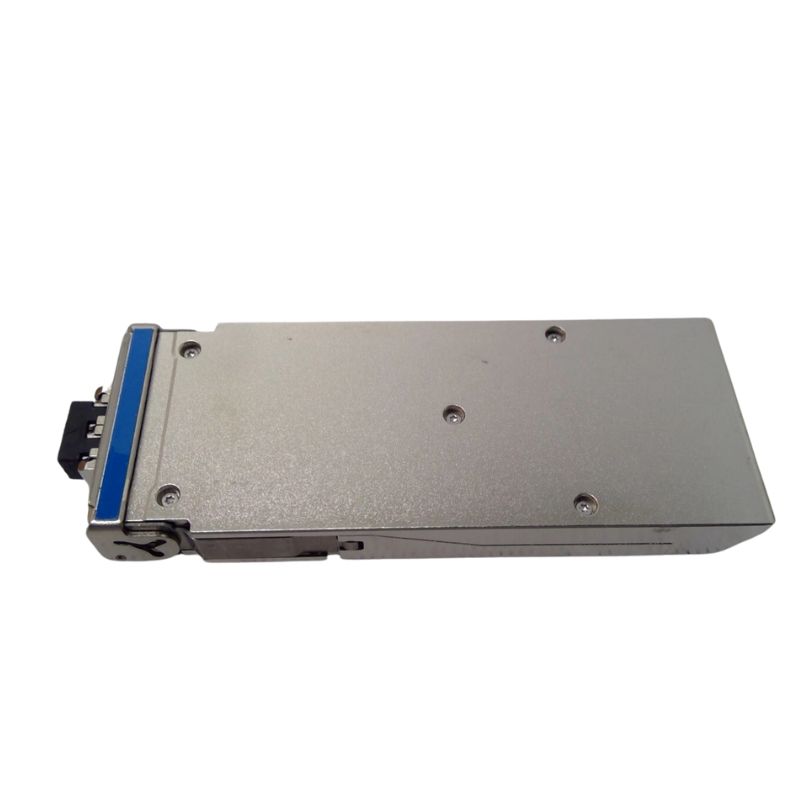
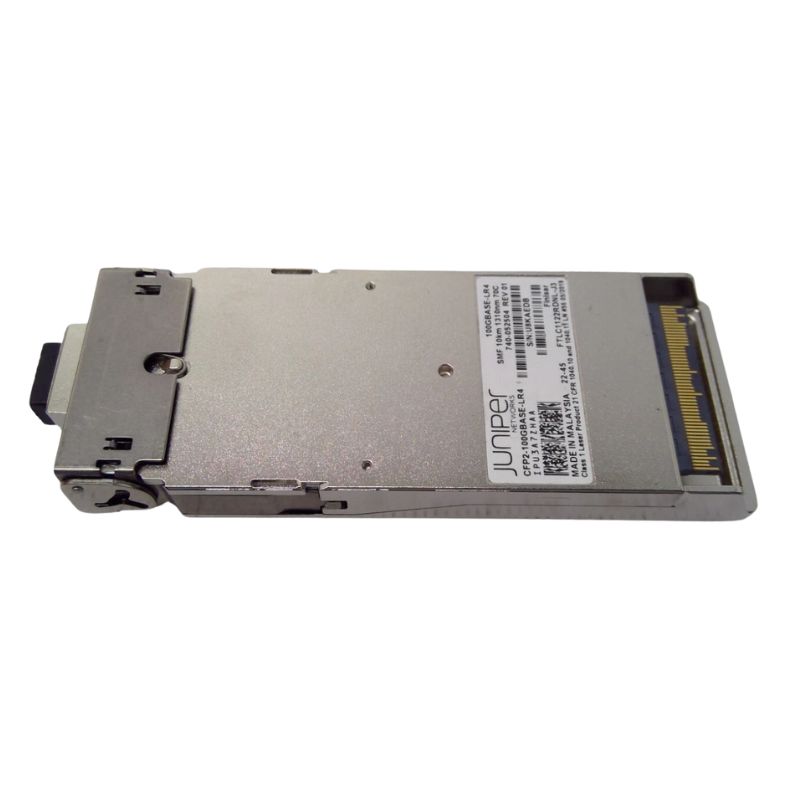
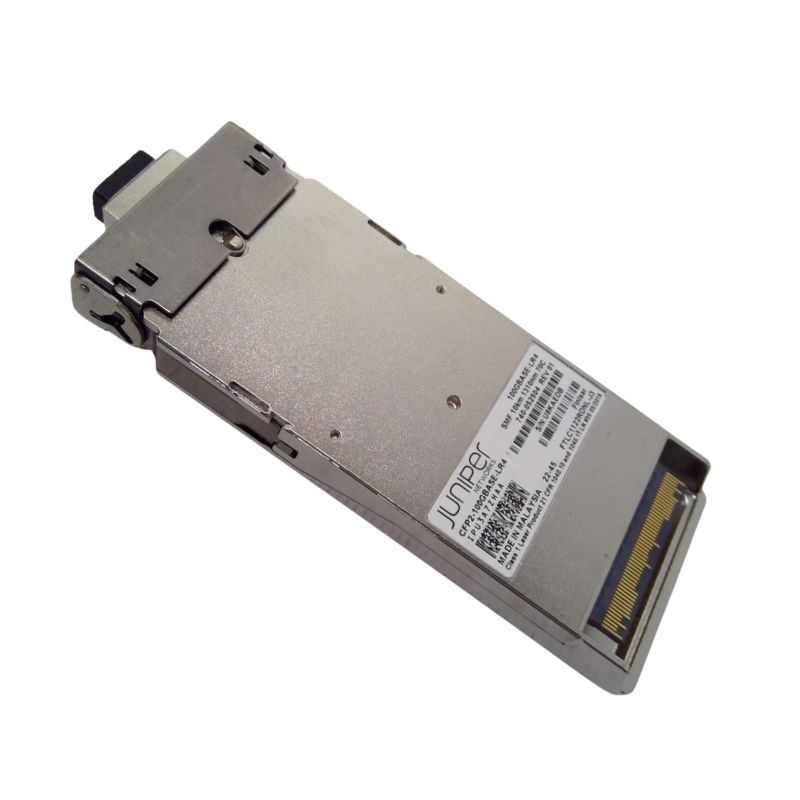
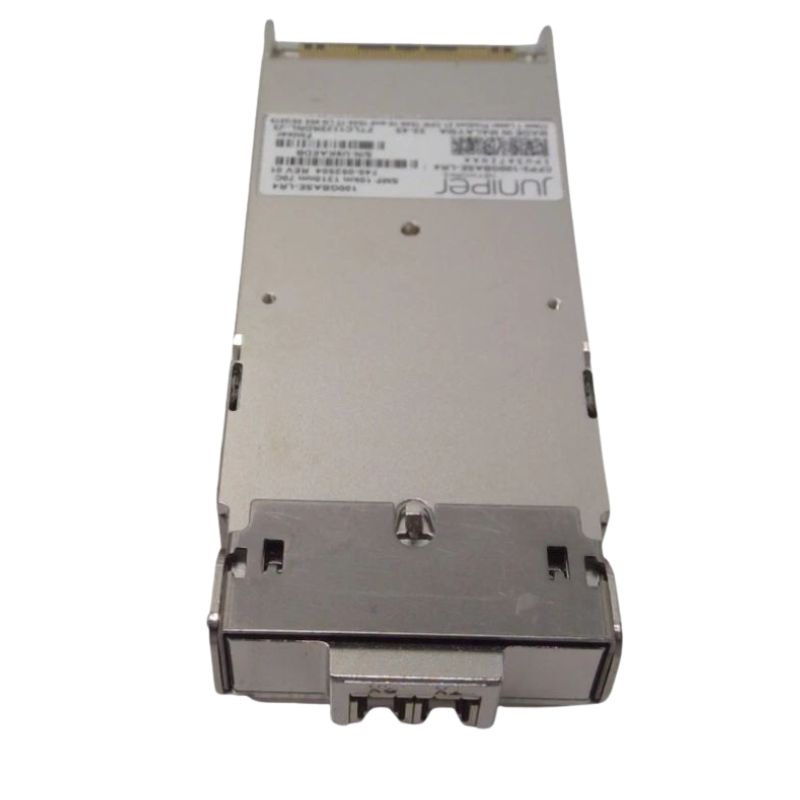
Juniper Network CFP2-100GBASE-LR4 Ethernet only CFP2 pluggable 100GB Transceiver Modular. Excellent Refurbished with 1 year Replacement Warranty
The Juniper Networks CFP2-100GBASE-LR4 is a high-speed Ethernet-only pluggable optical transceiver designed for reliable 100GbE long-range data transmission. Built for carrier-grade and enterprise networking environments, this module delivers efficient connectivity over single-mode fiber (SMF) with excellent signal integrity and monitoring capabilities.
The Juniper Network CFP2-100GBASE-LR4 Ethernet only CFP2 pluggable 100GB transceiver category represents a highly specialized segment of high-speed optical networking hardware designed for next-generation data center interconnects, enterprise backbone infrastructures, and carrier-grade telecommunications environments. This category is defined by its ability to deliver 100 Gigabit Ethernet transmission over long-range single-mode fiber using the LR4 (Long Range 4-wavelength) optical specification. As network demand continues to scale exponentially due to cloud computing, virtualization, artificial intelligence workloads, and hyperscale data centers, CFP2-based 100G optical modules have become an essential building block in modern high-throughput network architectures.
The CFP2 form factor, short for C Form-Factor Pluggable 2, is a compact evolution of the original CFP standard designed to reduce power consumption and physical footprint while maintaining extremely high bandwidth capacity. In the context of Juniper Network CFP2-100GBASE-LR4 Ethernet only transceivers, the CFP2 module is engineered for integration into compatible routing and switching platforms that support 100GbE interfaces. The reduced size compared to CFP allows for higher port density in networking equipment, enabling operators to maximize throughput per rack unit in data centers and telecom aggregation nodes.
The 100GBASE-LR4 standard defines long-reach 100 Gigabit Ethernet transmission over single-mode fiber using four separate wavelengths, typically multiplexed onto a single fiber pair. Each wavelength carries 25Gbps of data, which are combined using wavelength division multiplexing technology to achieve a total aggregated bandwidth of 100Gbps. The LR4 specification typically supports distances up to 10 kilometers, making it suitable for campus interconnects, metropolitan area networks, and data center inter-building links where high bandwidth and long reach are required without signal regeneration.
The Ethernet only designation in Juniper CFP2-100GBASE-LR4 transceivers indicates that the module is optimized strictly for Ethernet protocol environments. Unlike multi-protocol modules that may support OTN or Fibre Channel, Ethernet-only CFP2 modules are streamlined for IP-based traffic, making them highly efficient in environments dominated by cloud services, web-scale applications, and distributed computing architectures. This focus improves interoperability and reduces protocol overhead in high-speed switching and routing deployments.
At the core of CFP2-100GBASE-LR4 operation is advanced optical signal processing that combines four independent laser sources into a single fiber pair using dense wavelength division multiplexing. Each laser operates at a distinct wavelength in the 1310nm range, ensuring minimal interference and high signal integrity over long distances. On the receiving end, the optical signal is demultiplexed into four separate electrical data streams, which are then recombined into a unified 100GbE output. This architecture allows for efficient bandwidth scaling without requiring multiple physical fibers.
To maintain reliable data transmission across long distances, CFP2-100GBASE-LR4 transceivers utilize advanced forward error correction techniques that detect and correct transmission errors at the hardware level. These mechanisms significantly enhance link stability, especially in environments with electromagnetic interference, fiber attenuation, or optical dispersion. Juniper’s implementation ensures that packet loss is minimized and latency remains consistent even under heavy network loads.
The electrical interface between the CFP2 module and the host device, such as a Juniper router or switch, is designed to support high-speed differential signaling with minimal latency. This interface ensures seamless integration with the system’s ASIC-based packet forwarding engine, enabling full line-rate performance at 100Gbps. The module communicates with the host system for diagnostics, monitoring, and operational control through a standardized management interface.
In modern data center architectures, CFP2-100GBASE-LR4 modules are frequently deployed within spine-leaf topologies where high-bandwidth, low-latency interconnects are required between aggregation layers. The 100GbE capacity enables seamless east-west traffic flow, which is critical for distributed applications, containerized environments, and microservices-based systems. The LR4 optical reach allows interconnection between separate data halls or buildings within a campus environment without signal degradation.
Telecommunications providers leverage CFP2-100GBASE-LR4 transceivers to build scalable metropolitan area networks that connect multiple aggregation points across cities. The 10-kilometer reach capability ensures that core network nodes can communicate efficiently without requiring intermediate amplification. This reduces infrastructure complexity and operational costs while maintaining high throughput for residential broadband, enterprise connectivity, and mobile backhaul services.
Hyperscale cloud providers utilize CFP2-100GBASE-LR4 modules in backbone interconnects that link massive server farms and distributed storage clusters. These environments demand extreme scalability, and the 100GbE throughput ensures that virtualization workloads, database replication, and distributed computing tasks are executed without network bottlenecks. Juniper’s CFP2 implementation ensures compatibility with high-performance routing platforms commonly used in cloud data centers.
The CFP2-100GBASE-LR4 module is engineered to deliver consistent full-duplex 100Gbps throughput, ensuring symmetrical upload and download performance across network links. This is particularly important in environments where large data sets are continuously transferred between servers, storage arrays, and cloud endpoints. The optical design ensures minimal signal loss and maintains high spectral efficiency across long-distance fiber deployments.
One of the key advantages of the CFP2 form factor is its reduced power consumption compared to earlier CFP generations. Juniper’s CFP2-100GBASE-LR4 modules are optimized for energy efficiency, making them suitable for dense deployments where thermal management is a critical concern. Lower power usage translates into reduced cooling requirements, which is especially important in large-scale data centers where operational efficiency directly impacts total cost of ownership.
Latency is a critical performance metric in 100GbE environments, and CFP2-100GBASE-LR4 modules are designed to minimize transmission delay. By utilizing direct optical-to-electrical conversion with optimized signal pathways, these modules ensure that packet forwarding occurs with minimal processing overhead. This is essential for latency-sensitive applications such as financial trading platforms, real-time analytics, and high-frequency data processing systems.
The CFP2-100GBASE-LR4 Ethernet only transceiver is designed for compatibility with a wide range of Juniper routing and switching platforms that support CFP2 interfaces. These include high-end core routers, aggregation switches, and edge devices used in service provider networks. The module is recognized by the host system through standardized digital diagnostics monitoring, allowing administrators to track temperature, optical power levels, and link status in real time.
This category of transceiver is specifically engineered for single-mode fiber infrastructure, which is widely deployed in long-distance and high-capacity network environments. The LR4 specification ensures compatibility with standard OS2 fiber cabling, making it suitable for both new deployments and upgrades to existing optical networks. Proper fiber alignment and connector cleanliness are essential for maintaining optimal performance.
Advanced diagnostic features built into CFP2-100GBASE-LR4 modules enable continuous monitoring of optical signal strength, temperature fluctuations, and error rates. These metrics allow network operators to proactively identify potential issues before they impact service availability. Integration with Juniper network management systems provides centralized visibility across large-scale deployments.
The internal laser assemblies used in CFP2-100GBASE-LR4 modules are manufactured with extremely tight tolerances to ensure wavelength accuracy and signal stability. These lasers are temperature-controlled to maintain consistent performance across varying environmental conditions. High-precision manufacturing ensures that each module meets stringent industry standards for optical transmission quality and reliability.
Juniper CFP2-100GBASE-LR4 transceivers adhere to IEEE 802.3ba standards for 100 Gigabit Ethernet, ensuring interoperability with compliant networking equipment from other vendors. This standardization is critical in heterogeneous network environments where multi-vendor interoperability is required. Compliance also ensures long-term stability and future-proofing of network infrastructure investments.
Each CFP2 module undergoes extensive quality assurance testing, including thermal cycling, optical stress testing, and signal integrity validation. These processes ensure that modules can operate reliably in demanding enterprise and carrier environments. Long-term reliability is a key factor in reducing maintenance costs and ensuring uninterrupted network service.
The compact design of CFP2 modules allows for increased port density in networking equipment, enabling operators to scale bandwidth without significantly increasing physical footprint. This is particularly valuable in modern data centers where space efficiency is a critical design consideration. The ability to deploy multiple 100GbE interfaces within a single chassis enhances overall network capacity.
While CFP2-100GBASE-LR4 modules represent a high-performance optical solution, they contribute to long-term cost efficiency by reducing the need for additional networking hardware, fiber runs, and signal regeneration equipment. Their ability to support long-distance transmission over single-mode fiber reduces infrastructure complexity and simplifies network design.
AI and machine learning workloads require extremely high data throughput between compute nodes, making CFP2-100GBASE-LR4 modules ideal for backend interconnects. These environments rely heavily on distributed processing, and the high bandwidth ensures that model training and data synchronization occur efficiently across large compute clusters.
In 5G network infrastructure, CFP2 modules play a crucial role in connecting radio access networks to core processing systems. The high bandwidth and low latency characteristics of 100GbE links ensure that mobile data traffic is transmitted efficiently, supporting ultra-low latency applications and high-capacity mobile services.
The evolution of CFP2 technology continues to align with increasing network demands, with future enhancements focusing on higher modulation efficiency, improved energy consumption, and extended reach capabilities. As network architectures evolve toward 400G and beyond, CFP2 modules remain a foundational component in transitional network deployments.
Efficient thermal management is essential for maintaining optimal performance of CFP2-100GBASE-LR4 modules in high-density environments. Proper airflow design, chassis ventilation, and heat dissipation strategies are required to ensure stable operation under continuous high-bandwidth loads.
Over time, fiber optic infrastructure may experience signal degradation due to physical stress, contamination, or environmental factors. Regular inspection and cleaning of fiber connectors are essential to maintain optimal performance of CFP2-100GBASE-LR4 links.
CFP2 modules are designed to operate in a wide range of environmental conditions, including varying temperatures and humidity levels commonly found in data centers and telecom facilities. Robust design ensures consistent performance even in challenging operational environments.


 Contact Us
 Information
 Catalog
 Solid State Drives (SSD)
 Network Switches
 Hard Disk Drives
 HBA & Controllers
 PC & Servers
 PC & Server Memory
 CPU & Processors
 Network Routers
 Power Supplies
 Tape Drives & Libraries
 Network Devices
 Computer & Network Cables